Alexander McQueen: Biography, Tailoring and Runway Shows
From Savile Row to No.13, VOSS and Plato’s Atlantis: how cutting, collaborators and performance shaped the clothes.
ÉPOPLI ·
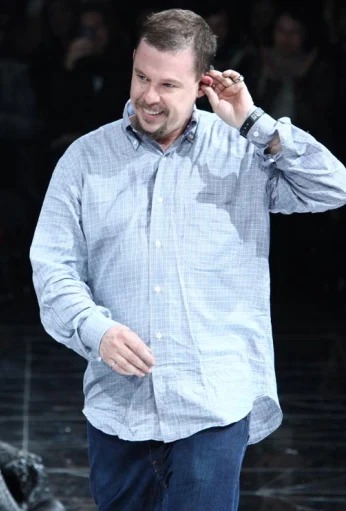
A dress changes during the show
No.13, the spring/summer 1999 collection presented in September 1998, turns Alexander McQueen house history into a study of clothes made visible through performance. Shalom Harlow stood on a rotating platform while two robots sprayed her white dress. Runway staging brought apparent production into the presentation itself.
This did not eliminate human work: her movement, the garment, timing and machinery jointly made the event. The V&A also identifies production designer Joseph Bennett and the collection’s interest in handcraft. The finale gains meaning when placed beside those other clothes.
Cutting before designing
Born in London in 1969, Lee Alexander McQueen left school at sixteen and trained at Anderson & Sheppard and Gieves & Hawkes. Theatre costumiers Angels & Bermans, Koji Tatsuno and Romeo Gigli followed. Alexander McQueen house history rests on these practical experiences.
Tailoring became a means to alter established silhouettes rather than simply reproduce suits. At Central Saint Martins he extended his design practice; Isabella Blow bought his 1992 graduate collection. Technical knowledge and conceptual exploration developed together.
Two different house contexts
He launched his label in 1992 and led Givenchy design from 1996 until 2001. Gucci Group acquired a majority stake in his company in 2000. Alexander McQueen house history combines independent expression with institutional resources and responsibilities.
Work for Givenchy and his own label must be identified separately. Tailoring skills could travel between them, but their clients, histories and production contexts differed. The documented tension should not be expanded into invented psychology; dates, roles and collections provide a more dependable account.
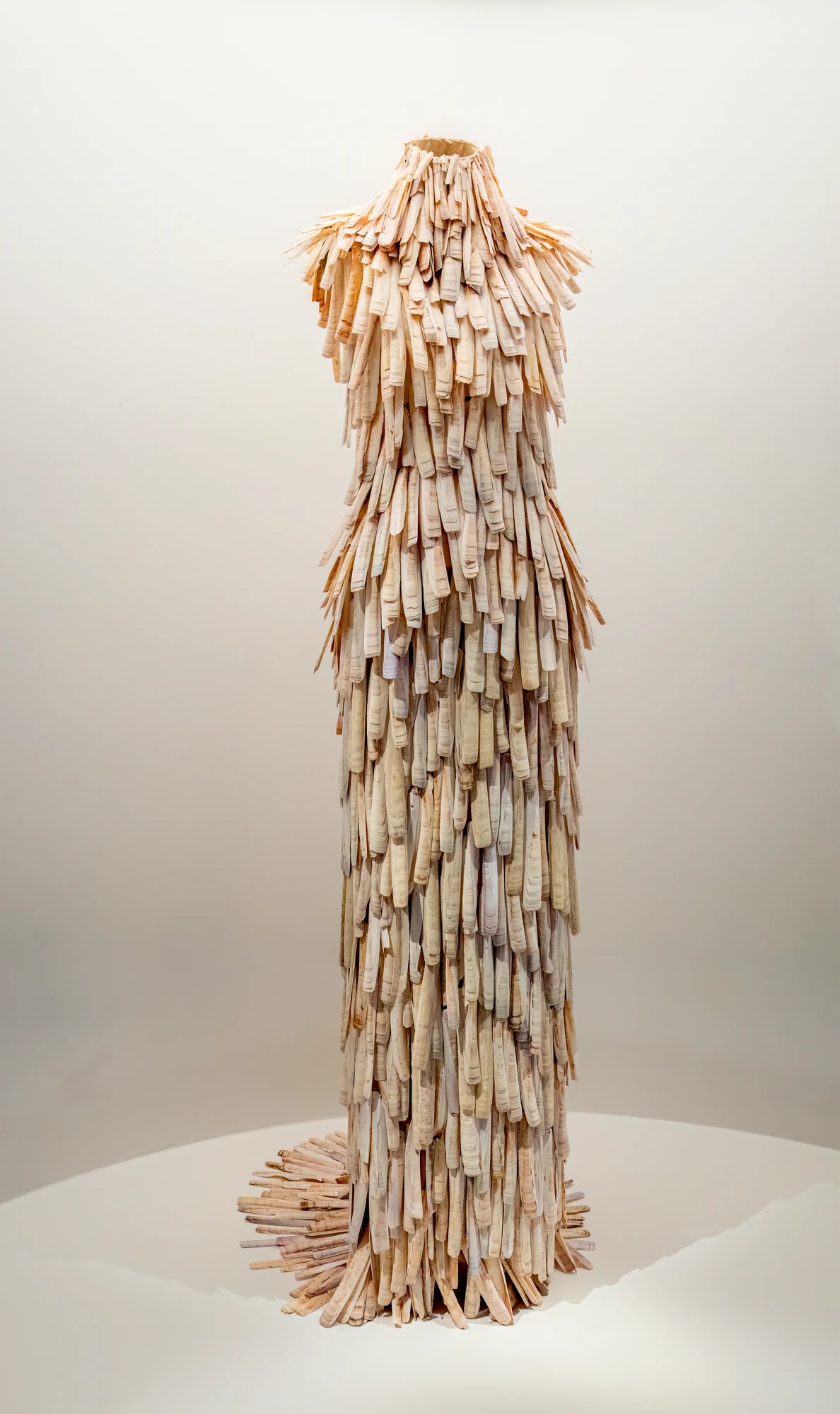

VOSS and the act of looking
VOSS, spring/summer 2001, used a glass box to make spectatorship part of the presentation. Alexander McQueen house history treats Runway staging as more than background. A shell-covered bodice brings brittle natural material to a moving body, raising questions about weight, support and vulnerability alongside its appearance.
Reflection and enclosure altered what viewers could see. We can examine those observable conditions without claiming access to the designer’s private emotions. The collection questions where the spectator stands in relation to the displayed body.
History and specialized collaboration
The Widows of Culloden, autumn/winter 2006, combined historical reference with a spectral Kate Moss inside a glass pyramid. Its effect recalled Pepper’s Ghost, a nineteenth-century stage technique. Alexander McQueen house history is therefore not a simple progression toward newer technology.
Philip Treacy and Shaun Leane collaborated on a bird’s-nest headdress. Natural motifs occupied real space beyond the body, while Tailoring established its clothing outline. Naming those specialists makes the production network visible.
Plato’s Atlantis
Plato’s Atlantis, spring/summer 2010, imagined human life returning to water. Sarah Burton described prints developed through species transformation, camouflage and aerial views. Alexander McQueen house history joins Natural motifs to engineered surfaces here.
The Met records a snake-pattern silk-jacquard dress with yellow enamel paillettes arranged like honeycomb. Film made with Nick Knight and online transmission expanded Runway staging beyond the room. The scenario is a creative fiction, not a scientific prediction, and does not require unsupported claims of technological priority.
The final collection and later work
McQueen died in February 2010. Sarah Burton completed the unfinished autumn/winter collection. Alexander McQueen house history must distinguish that work from his last fully realized presentation and from subsequent design leadership.
Natural motifs and dramatic shapes can persist without making later garments his personal creations. No.13, VOSS, The Widows of Culloden and Plato’s Atlantis demonstrate different relations between dress, event and spectatorship. His death should not be treated as a secret explanation for every earlier work; materials, collaborators and historical references offer concrete grounds for interpretation.
Timeline
- 1969 — Born in London
- 1992 — Graduate collection; own label
- 1996–2001 — Led design at Givenchy
- 1999 — No.13 spring/summer season
- 2010 — Plato’s Atlantis season; died in February
Sources
- V&A — No.13 collection
- V&A — Alexander McQueen, an introduction
- V&A — Museum of Savage Beauty
- The Met — Dress, Plato’s Atlantis
- The Met — Savage Beauty films and transcripts
- The Met — Alexander McQueen: Savage Beauty
Related reading
Paul Poiret: Couture, Cutting and Fashion Illustration · Elsa Schiaparelli: Surrealism, Knitwear and Couture · Vivienne Westwood: Punk, Corsets and the Mini-Crini · Rick Owens: Designer, Draping and Runway Performance · Shalom Harlow · Hubert de Givenchy · Designers