Hubert de Givenchy: Clothes and the Wearer
From the Bettina blouse to Hepburn films: clothes completed by their wearer.
ÉPOPLI ·
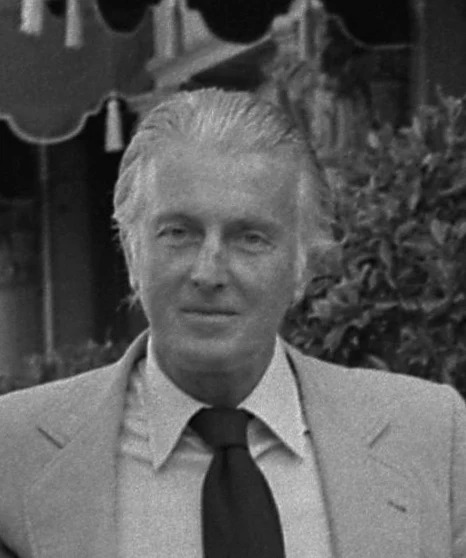
Clothes to combine
Hubert de Givenchy Givenchy history can begin with the 1952 Bettina blouse, named for model Bettina Graziani. White cotton and prominent sleeve decoration placed emphasis on shape rather than the weight of a precious fabric. Separates allow tops and bottoms to be recombined instead of fixing them as a single outfit.
That possibility gives the wearer a different role from choosing a complete evening gown. The Bettina blouse concentrates attention on the hands and arms while its quieter body supports the effect. It is not simply austere: ordinary material and conspicuous detail coexist.
Where decoration is placed matters more than an abstract opposition between plain and elaborate.
Learning in several houses
Born in Beauvais in 1927, he moved to Paris at seventeen to study art. Practical work beginning with Jacques Fath, followed by experience at Robert Piguet, Lucien Lelong and Elsa Schiaparelli, prepared him for independence. Hubert de Givenchy Givenchy history therefore predates the famous Hepburn partnership.
Sources distinguish a workroom opening in late 1951 from the February 1952 debut collection. These are not necessarily competing dates for one event. Independence combined inherited skills with different proportions and ways of serving clients.
His relationship with Balenciaga should likewise include advice, exchange and the later movement of customers rather than become a simplified apprenticeship story.
Sabrina and a character’s transformation
Following their 1953 meeting, collaboration with Hepburn crossed cinema and private wardrobes. Sabrina, released in 1954, is a key example. Hubert de Givenchy Givenchy history here involves costume as storytelling rather than merely publicity.
Contrasts between a defined waist and expansive skirt, and the lines around neck and shoulders, make transformation visible. Attribution needs care: Edith Head’s work on the film must remain distinct from clothes supplied by Givenchy. The actor also contributes movement, posture and dramatic context.
Official credits and garment records provide different kinds of evidence. A celebrated anecdote should not erase the labour of the wider costume team.
A black dress in a morning scene
Breakfast at Tiffany’s combines evening formality with an early-morning street and breakfast. Hubert de Givenchy Givenchy history does not require claiming that its designer invented the black dress. An established type of clothing became memorable through a particular performer, accessories and setting.
Gloves and jewellery frame the dark surface; the face and arms become clear boundaries within the image. Related garments in collections or auctions should not automatically be identified as the exact screen-used version. Construction variants and filming alterations matter.
The influence of this scene lies not only in imitations of a dress, but also in the urban character audiences imagined through it.
Different surfaces within black
An autumn–winter 1967–68 organza dress preserved by the FIDM Museum complicates the familiar image of restrained evening clothes. Hubert de Givenchy Givenchy history includes delicate overlapping surfaces as well as clean outlines. Thin silk layers change the passage of light and the shadows at their edges.
A composed silhouette from a distance can conceal considerable work at close range. Comparison with the museum’s feathered dress from the following season shows that a shared colour does not mean shared texture or movement. Workshop decisions about placing and joining material are as consequential as the original drawn line.
They are part of the work, not merely its execution.
Clients, quality and pressure for novelty
Hubert de Givenchy Givenchy history reaches beyond one actress to clients including Bunny Mellon and Jacqueline Kennedy. Their different lives required a range of clothes, from separates to evening wear. Yet an emphasis on refinement did not always appear forward-looking amid the rise of youth fashion.
Historical reservations deserve space alongside praise. The tension between rapid novelty and lasting use was also a business problem. LVMH acquired the house in 1988; its founder continued designing until his departure in 1995.
Ownership and creative responsibility changed at different moments, and should be recorded separately.
A name after its founder
He died in 2018, but subsequent collections belong to the designers who made them. Hubert de Givenchy Givenchy history becomes richer when the Bettina blouse, film costumes and textured evening clothes are treated as answers to different questions. One concerns choice in combining garments, another the visual development of a character, and another the relationship between surface and movement.
Separates and screen dressing meet in their attention to the wearer. His own involvement in a retrospective offers evidence of how he understood his career, not an independent verdict on it. Dates, materials and construction allow readers to replace the broad word elegance with more specific decisions.
Timeline
- 1927 — Born in Beauvais
- 1952 — First collection
- 1953 — Beginning of Hepburn collaboration
- 1988 — LVMH acquisition
- 1995 — Retired from the house
- 2018 — Died
Sources
- Thyssen-Bornemisza — Hubert de Givenchy
- ASU FIDM Museum — Fashion Birthday: Hubert de Givenchy
- Treccani — Hubert de Givenchy
- Christie’s — Hubert de Givenchy Collectionneur (PDF)
- BFI Sight and Sound — Audrey Hepburn, by Givenchy
- Vogue — Hepburn and Givenchy
- Vogue France — Givenchy, histoire de la maison