Models · 036
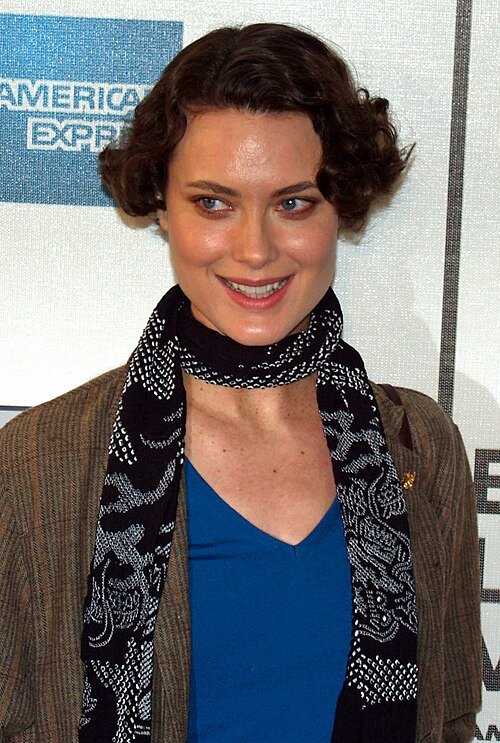
Shalom Harlow
Life & Career
- Nationality
- Canadian
Growing up in Ontario
Shalom Harlow grew up in Oshawa, Ontario, in Canada. Childhood experiences included time close to nature and ballet lessons. She was discovered as a teenager at a Cure concert. A place visited for music became an entry into a profession. Dance contributed to her physical awareness, but cannot alone explain her modeling. Actual shoots and shows taught her to adapt movement to designers’ and photographers’ different requirements.[1][2]
Constructing a character in photographs
Harlow established herself in 1990s Vogue editorials and major campaigns. Work with Steven Meisel and Grace Coddington included humor in placing dramatic clothes within everyday scenes. A 1994 garden photograph with a wheelbarrow is one example; she later explained that Coddington held the dress’s train outside the frame. Apparently spontaneous or eccentric images depended on collaborative construction, combining a model’s presence with techniques hidden from the final picture.[3]
Putting couture into motion
Harlow worked with designers such as John Galliano and Alexander McQueen, whose shows emphasized narrative. In complex couture silhouettes, her attitude completed a scene instead of disappearing beneath scale and decoration. Tim Blanks’s retrospective discusses her movement alongside historical footage. The model acted as a performer influencing how audiences understood clothes, rather than as a neutral carrier of finished garments. Timing in still photographs and moving images was an important professional asset.[2]
The 1999 collection shown in 1998
Harlow performed the finale of McQueen’s spring/summer 1999 No.13 show, held in September 1998. On a rotating platform, she wore a white dress sprayed with black and yellow paint by two robotic arms. Presentation of a finished garment became an event in which it changed. The Metropolitan Museum preserves the dress and testimony. The moment involved not only machinery but a person responding through movement, making it a key reference in discussions of fashion as performance.[4][5]
The different rhythms of television and film
Harlow co-hosted MTV’s House of Style with Amber Valletta and also worked in film. A model with inside experience became a guide introducing fashion to viewers. Acting required dialogue and continuity across scenes, unlike the compressed appearance of a runway. Vogue’s 2023 Life in Looks revisits both fashion and film. These credits can be understood as experiments in using body and expression across media, rather than merely a list of secondary occupations.[3][6]
Returning to the runway in 2018
After an interval away, Harlow appeared in Versace’s spring/summer 2019 show in 2018. Behind-the-scenes footage from the subsequent campaign, showing her dancing before the photographer and crew, circulated widely. This was new work with contemporary clothes and collaborators rather than a reenactment of a famous past scene. It challenged assumptions that physical expressiveness simply disappears over time. A particular return should nevertheless be distinguished from continuous work in every later season.[7][8]
The history left by a model’s movement
Harlow’s career is remembered through movement and response as much as through a face. Editorial staging, designer collaborations, the robotic finale and campaign-set dancing reveal different forms of physical interpretation. Vogue’s 2023 retrospective links such work with her own explanations. Treating a model’s contribution as wholly subordinate to a designer’s idea overlooks the timing and judgement that complete a scene. This account rests on documented work and recollection without predicting future activity.[3][4]