Paul Poiret: Couture, Cutting and Fashion Illustration
Look beyond the lampshade silhouette to straight-cut cloth, restricted movement and the collaborators behind a Paris house.
ÉPOPLI ·
A look at lampshade-shaped clothes again
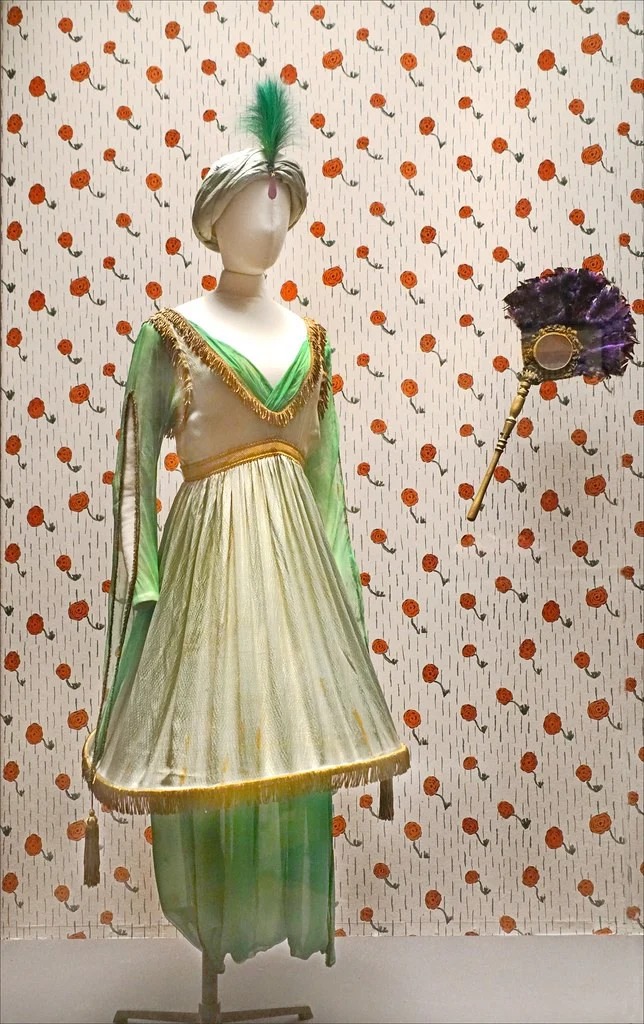
The Sorbet ensemble from 1913 shows a tunic that flares out below the waist and a long, narrow skirt. Beginning Paul Poiret house history with this outfit shows that elaborate decoration and simple structure are not necessarily opposites. The round border creates an outline that is different from the outline of the body, and the fabric that falls below it emphasizes the vertical direction. The nickname lampshade easily conveys the shape, but does not explain the problems of making and wearing.
Even if the waist is less tight, if the width at the bottom is narrow, the stride length is limited. This is why it is difficult to introduce Poiret as the only person who liberated women from corsets. The use of straight cutting and wrapped cloth changed the standards for viewing the body, but not all works offered the same freedom. The Metropolitan Museum of Art also records Erté’s claim to authorship of the ensemble's design. Clothes made under the name of one house also have overlapping contributions and interpretations from multiple workers.
A young man selling sketches and two houses
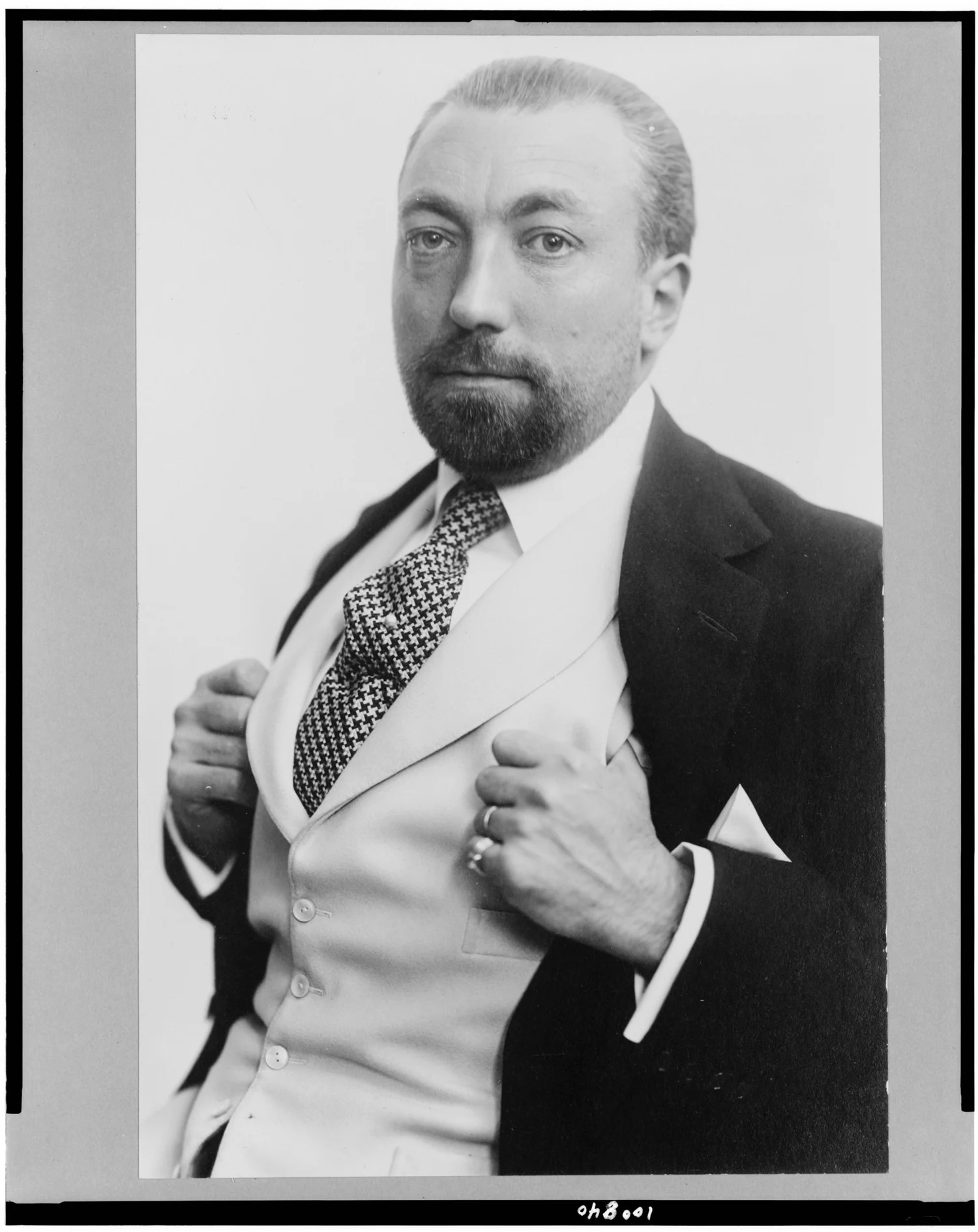
Born in Paris in 1879, he entered the fashion world as a young man selling his sketches. He began working at the House of Jacques Doucet in 1898, and joined Worth in 1901 after completing his military service. In the early days of Paul Poiret house history, there was time to learn about customers and production methods within the custom clothing organization. The cloak he made for actress Réjane at Doucet was an opportunity to experiment with how clothes would look in the theater. Stage lighting and the distance of an audience create different conditions from a fitting in a salon.
After establishing his own house in 1903, he connected this experience to his clothes and business. There is no need to generalize the anecdote from Worth's days as the reaction of all customers. A memoir also has the character of being a record of one's own career. However, the experience of handling both decorative evening clothes and relatively simple daytime clothes is helpful in reading later works. Rather than the sudden appearance of a genius, independence was a turning point in which sketches, deliveries, fittings, and customer service accumulated.

Laying cloth rather than sculpting the body
In Paul Poiret house history, straight cutting describes a construction principle rather than simply a taste for less decoration. Instead of carefully connecting small pieces to fit the body, relatively large pieces of fabric were folded and stretched to establish the volume of the clothes. The dress titled “1811” introduced by the museum brings back the high waist and cylindrical proportions of the early 19th century. Rather than replicating clothes from the past, they were chosen to fit the body and new materials of the time.
The 1912 car cape also shows an approach that does not match clothing one-to-one with the curves of the body. Inside the wide outerwear, you have room to wear other clothes. Considering this layering situation, even simple shapes on a flat surface become complex when worn. The impression varies depending on where the weight is placed on the shoulder and how the fabric moves when the hand is extended. Therefore, you should not assume that all clothes are made with the same pattern just by looking at the front view of the photo. The simple appearance and the difficulty of actual production are separate issues.
The sources behind an exotic stage
The 1911 La Perse coat used fabric designed by Raoul Dufy. In Paul Poiret house history, the patterns on the fabric are not limited to parts that fill the surface of the clothes. When a large pattern crosses a wide cutting surface, the area and rhythm of the fabric are read before the position of the body. In order to understand the process of making a coat, the work of the designer and textile artist must be recorded separately. It is impossible to explain the authorship of all symbols with just one person's signature.
At the time, Orientalism also tied together different regions into the fantasy that European audiences expected. It is inaccurate to immediately equate the names of harem pants or turbans with actual community clothing. The visual language of the Ballets Russes and theatre, collected textiles and Parisian commercial staging worked together. While pointing out the limitations of Orientalism, specific production choices such as color clash and volume placement can be analyzed separately. An explanation that does not erase the cultural source gets closer to the work than the single word “glamour.”

A brand created with clothes and pictures
Paul Poiret house history is also the history of images that extend beyond the closet. Through fashion illustration, Paul Iribe and Georges Lepape placed clothes within imagined scenes of daily life. The flat colors and bold composition allowed us to imagine a certain character without replicating the actual texture of the material. By comparing the proportions in the picture with the proportions of the clothes left in the museum, you can discover what the promotional image emphasized or omitted.
Rosine perfumes and Martine decorative arts, which started in 1911, linked clothes, scents, and interiors under the same name. Although it can be compared to today's lifestyle brands, it cannot be said that the sales scale and customer base at the time were the same as they are today. Parties, theaters and print media were means of reaching different audiences. Denise Poiret was an important collaborator who conveyed the image through clothing and movement. If we look at the difference between the character of fashion illustration and the actual wearer, we can see that the body and labor existed behind the created ideal type.
Conditions changed after the war
The latter half of Paul Poiret house history is not limited to the initial success. After World War I, markets and lifestyles changed and the House experienced financial difficulties. In order to maintain a rich production and workshop operation, it was necessary to balance not only design reputation but also orders, production, and funds. Instead of labeling all work from the 1920s as outdated, it would be more accurate to look at the remaining clothing for traces of change.
The 1922 Irudrée dress owned by the museum uses a combination of metallic materials and silk. The sheen surrounding the body changes depending on the lighting, and the decoration creates both a mass visible from afar and a surface visible up close. These experiments can be read separately from the house's business performance. Management failure does not eliminate the value of every work, nor does its interest erase business problems. The perspective of dividing the history of the clothes and the company prevents the designer's success and downfall from being transformed into a simple personality story.
The two dresses in the photographs
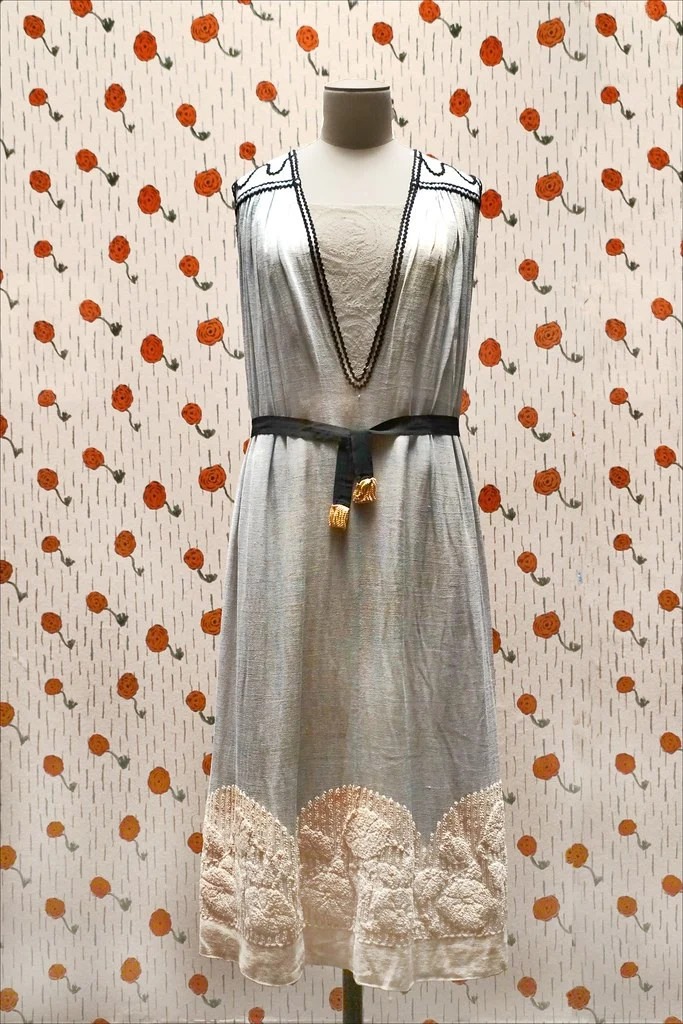
The photographed 1913 Minaret ensemble and 1912 Delphinium dress organize decoration differently. The former opens a space around the hips through its circular edge; the latter directs attention downward through a long body and a broad decorated hem. Beads around the neck and a fastening at the waist occupy different positions within the whole. Comparing the two makes the location and structural effect of ornament more informative than a general description of richness.
What surviving clothes reveal
After his death in 1944, his clothes were revisited through collections and exhibitions. The point of reading Paul Poiret house history today is not to copy the decoration. The purpose is to examine how the choice to create form through the arrangement of fabric instead of a structure that tightens the body, the collaboration between clothing and textile artists, and the way of proposing images of life through printed materials are connected to each other. The use of straight cutting is one clue to reading this connection.
In particular, the relationship between the clothes worn by Denise and the public collection is important for understanding actual wearing. If we expand the proportions tailored to one person to the experiences of all women, the differences disappear. Looking at the narrow skirt and the wide cape side by side reveals that even within the same creator, the way they handled body freedom was different. When the name of the work, year, author of the fabric, and wear record are recorded, these clothes go beyond illustrations of a glamorous era and become concrete data on production and consumption. The business that appeared later under the same name must be viewed separately from the house’s work during his lifetime.
Timeline
- 1879 — Born in Paris
- 1898 — Joined Jacques Doucet
- 1901 — Joined Worth
- 1903 — Founded his own house
- 1911 — Launched Rosine perfumes and Martine decorative arts
- 1913 — Presented the lampshade tunic
- 1944 — Died
Sources
- The Met — Poiret: King of Fashion
- The Met — Paul Poiret (1879–1944)
- Image and object record — Paul Poiret, 1913. Library of Congress photograph.
- Image and object record — Paul Poiret, Minaret ensemble, 1913. Photographed at the Petit Palais in 2023.
- Image and object record — Paul Poiret, Delphinium (Bonheur) dress, 1912. Displayed at the Petit Palais.

Related reading
Elsa Schiaparelli: Surrealism, Knitwear and Couture · Vivienne Westwood: Punk, Corsets and the Mini-Crini · Alexander McQueen: Biography, Tailoring and Runway Shows · Rick Owens: Designer, Draping and Runway Performance · Fashion History · Charles Frederick Worth · Mariano Fortuny · Designers