Emilio Pucci: Color and Pattern in Motion
Textiles and clothes connecting ski slopes, resorts and air travel.
ÉPOPLI ·
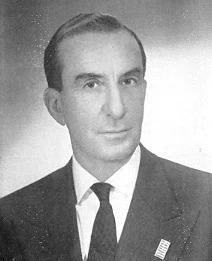
Pattern for a moving body
Emilio Pucci Pucci history connects skiwear, resort clothing and airline uniforms. Print creates a recognizable surface on comparatively simple shapes, changing as the wearer moves. The Met’s 1966 silk evening dress combines sporting ease with evening glamour.
The question is not simply whether formality disappeared, but how materials and clothes could accompany movement between places. The affluent travel image should not be confused with a freedom available to everyone in that period.
A different education
Born in 1914, Pucci studied in Italy and the United States, receiving a Reed College master’s degree in 1937. College records also connect him with ski instruction and its team. Emilio Pucci Pucci history subsequently turns on the 1947 photographs of his ski clothing by Toni Frissell and their editorial reception.
This was a relationship between practical experience, photography and a market, not simply an unexplained discovery. Some official timeline details are inconsistent; the education record and documented clothing events are the basis used here.
Capri meets Florence
A Capri boutique opened in 1950, while production developed in Florence. Pucci participated in Giovanni Battista Giorgini’s 1951 presentation with clothing for sport, beach and evening. Emilio Pucci Pucci history connects local settings to international distribution.
Collections such as Palio in 1957 and Botticelli in 1959 identify cultural reference points without making every line a literal illustration. Print could transform a source into a repeatable pattern suited to different garments. The relaxed retail image still depended on organized production and textile supply.
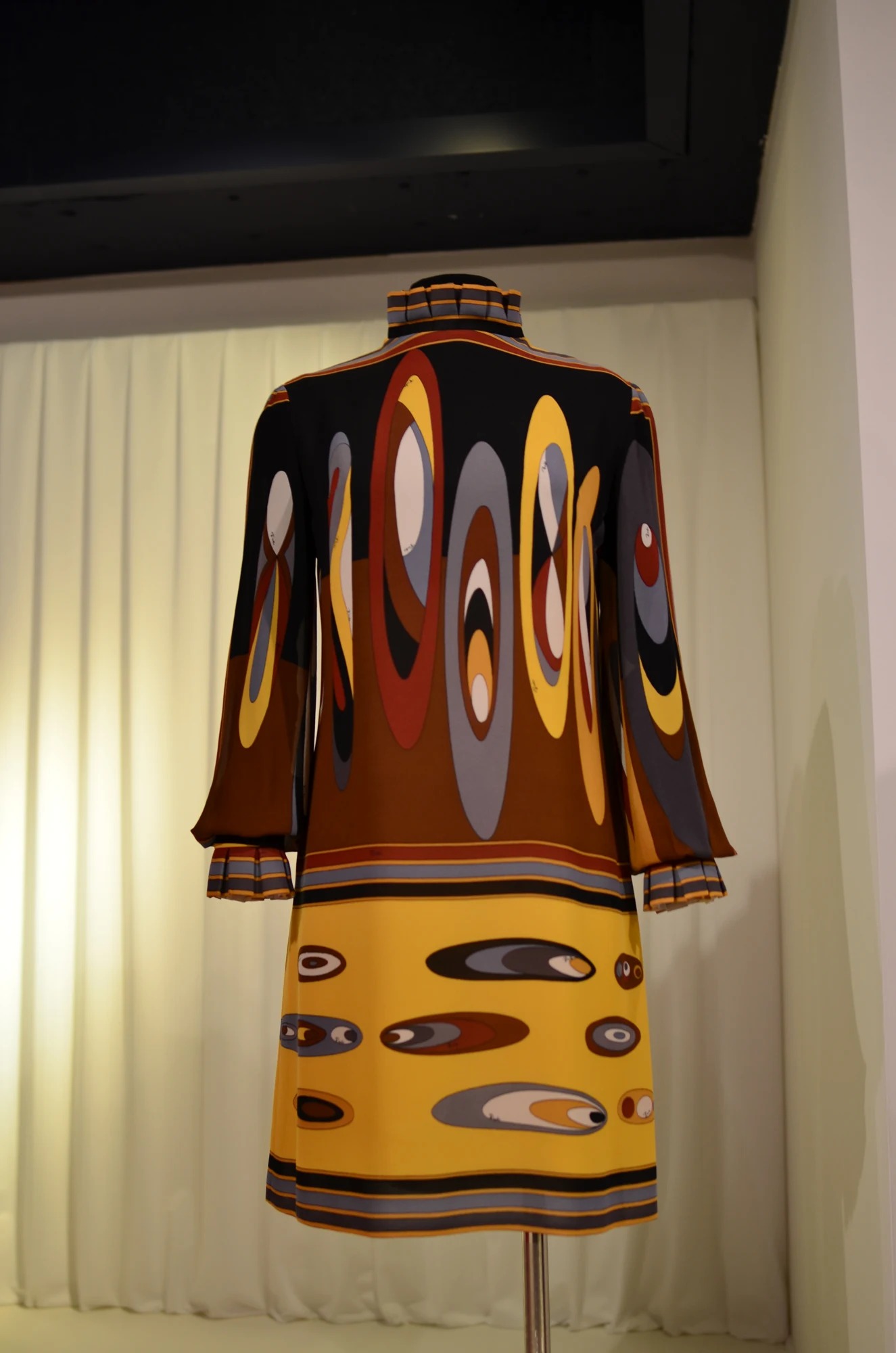

Material research
Work with textile industrialist Guido Ravasi and research into shine, drape and durability place technical collaboration within Emilio Pucci Pucci history. Emilioform emerged around 1960, although sources describe its composition differently; one fixed blend should not be assumed for every use of the name. Print also changes with the textile’s surface and stretch.
Seams, necklines and edges determine where a pattern continues or stops. Fewer cutting lines do not remove complexity: they often ask color and material to perform more of the design work.
The airline becomes a client
Braniff uniforms, designed between 1965 and 1974, introduced another set of requirements. Emilio Pucci Pucci history here concerns employees and corporate identity rather than a private holiday wardrobe. Chicago History Museum places the project within the airline’s rebranding.
Clothes had to serve work while presenting an image to passengers. Layering and changes of outfit made changing circumstances visible. Calling the result futuristic is less informative than examining how service, movement and publicity meet in a uniform.
A dress in the year of the flood
The 1966 Met dress dates to the Florence flood; the museum records the substantial loss of Pucci’s fabric stocks. Emilio Pucci Pucci history includes this vulnerable material infrastructure behind an apparently effortless lifestyle. Research into Emilioform, supplies and workrooms made the finished clothes possible.
Expansion into objects for interiors involved further decisions about scale and repetition. A pattern enlarged beyond the body becomes a different design problem, not merely a logo transferred to a new product.
Originals and the continuing house
Pucci died in 1992 and his daughter Laudomia took over the business. Later ownership and design arrangements form a subsequent chapter. Emilio Pucci Pucci history should distinguish the founder’s garments from later interpretations, even when familiar patterns or the name Emilioform recur.
Skiwear, resort clothing, eveningwear and uniforms addressed different wearers and situations. Their connection lies in the handling of material and movement, not an assumption that every colorful garment communicates the same idea.
Timeline
- 1914 — Born
- 1937 — Master’s degree at Reed
- 1950 — Capri boutique opened
- 1951 — Florence fashion presentation
- 1965–1974 — Braniff uniform designs
- 1992 — Died; Laudomia continued the business
Sources
- The Met — Emilio Pucci evening dress, 1966
- Reed College — Pucci at the Portland Art Museum
- Emilio Pucci Heritage Hub — Timeline
- Chicago History Museum — Emilio Pucci and Braniff