Gianni Versace: Metal, Bodies and the Stage
Metal mesh, visible fastenings and collaborators shaped the Versace image.
ÉPOPLI ·
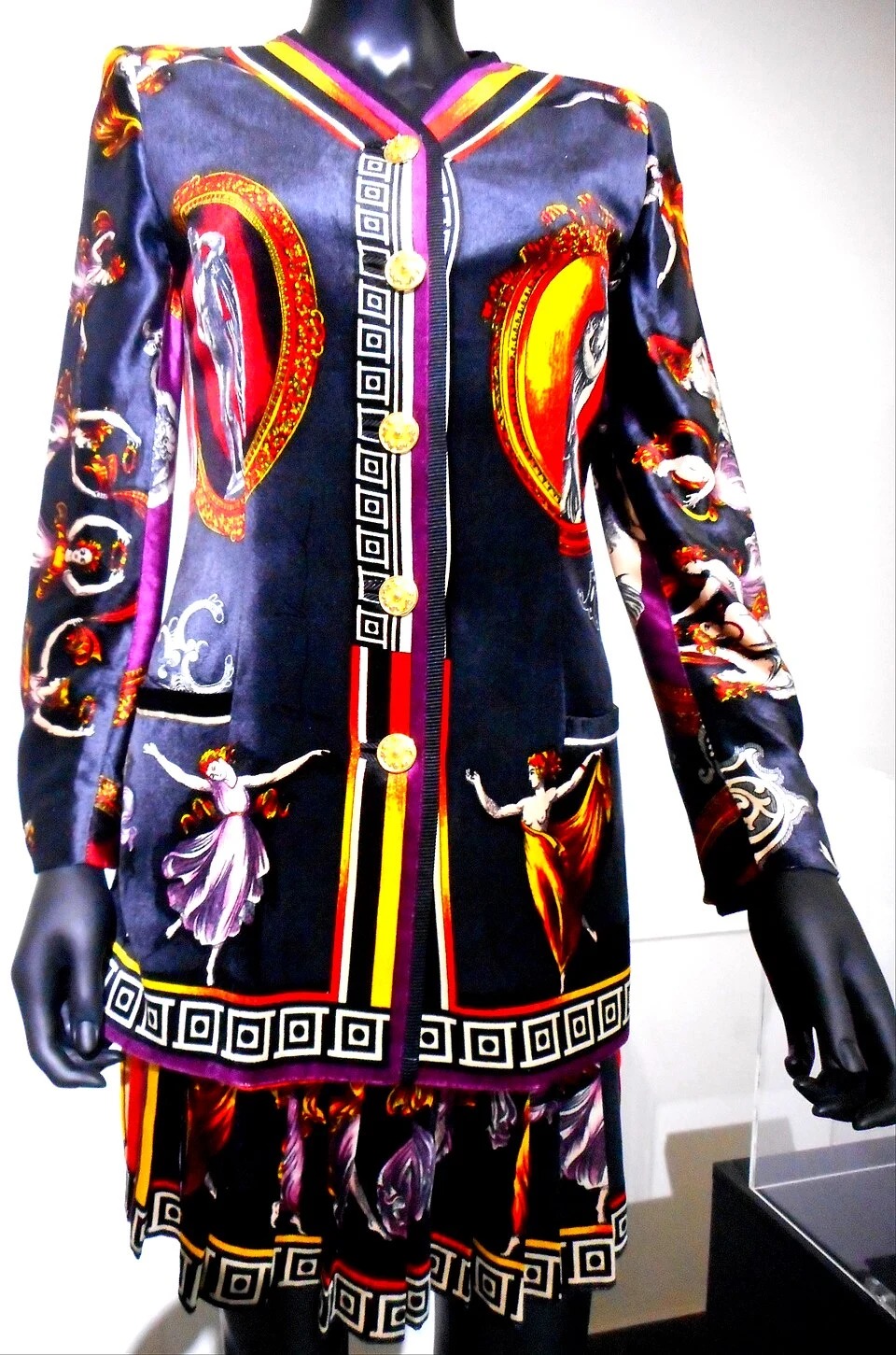
When a fastener becomes the focus
Gianni Versace Versace history can begin with the spring–summer 1994 safety-pin dress. A long, body-following evening form meets an enlarged fastening associated with punk. Berlin’s museum example is another design from the collection, not the exact garment worn by Elizabeth Hurley.
The safety-pin dress is more than exposed skin: devices that close the garment also direct attention to its openings. Metal, dark cloth and the body create a visual relationship. Luxury and street references are not kept apart.
The transformation lies in moving an existing sign into another material, level of workmanship and social setting.
From a family workroom to Milan
Born in Reggio Calabria on 2 December 1946, he learned through his mother’s dressmaking business. Freelance work in Milan for companies including Callaghan and Byblos preceded his own 1978 collection. Gianni Versace Versace history should not imagine an international empire present from the start.
His siblings Santo and Donatella contributed to business, creativity and image in different ways. Published accounts of formal education are inconsistent, so a specific degree is not asserted here. Nor should every later motif be explained through childhood geography.
Region and family provide context; the objects themselves must establish how a reference was actually used.
Making metal flow in 1982
The Met’s 1982 evening dress demonstrates the flexibility of metal mesh. Linked elements gather and fall, but cannot be joined by conventional stitching. Gianni Versace Versace history thus includes a technical problem beneath spectacle.
Material connections influence the choice of pattern. This metal mesh recalls classical drapery while reflecting light differently from cloth. Drapery describes material folding under gravity and around the body.
Relatively simple pieces can produce complex folds when worn. Seen closely, the surface is a system of small connections; from a distance, it appears continuous and luminous. Innovation here joins an older clothing form to another material behaviour.
Models and photographers as collaborators
Gianni Versace Versace history cannot relegate models and photographers to a footnote. Naomi Campbell, Cindy Crawford, Linda Evangelista and Christy Turlington, alongside photographers such as Richard Avedon, helped establish its public imagery. He did not single-handedly invent supermodels.
Rather, individual fame and personality were deliberately connected to the house’s expression. Walking, posture and a photographer’s selected instant change how a garment is remembered. Music and performance extended that process beyond the salon.
None of this makes construction irrelevant. A photograph selects a particular view of clothes on a body. Production, performance and circulation form a sequence rather than competing explanations.
Stability beneath apparent risk
Museum documentation of the safety-pin dress records fabric, lining and fastening details. Gianni Versace Versace history gains different evidence from this record than from a premiere photograph. A garment that seems ready to open still requires reliable support and finishing.
Visual instability can depend on physical stability. Following the pins reveals how attention moves across the wearer. Ornament is also a language of joining.
Once punk references enter expensive evening wear, their social meaning changes; who wears the clothes and where matters. This design and the earlier metallic dresses use different construction, but both reconsider hard-looking materials through body and light.
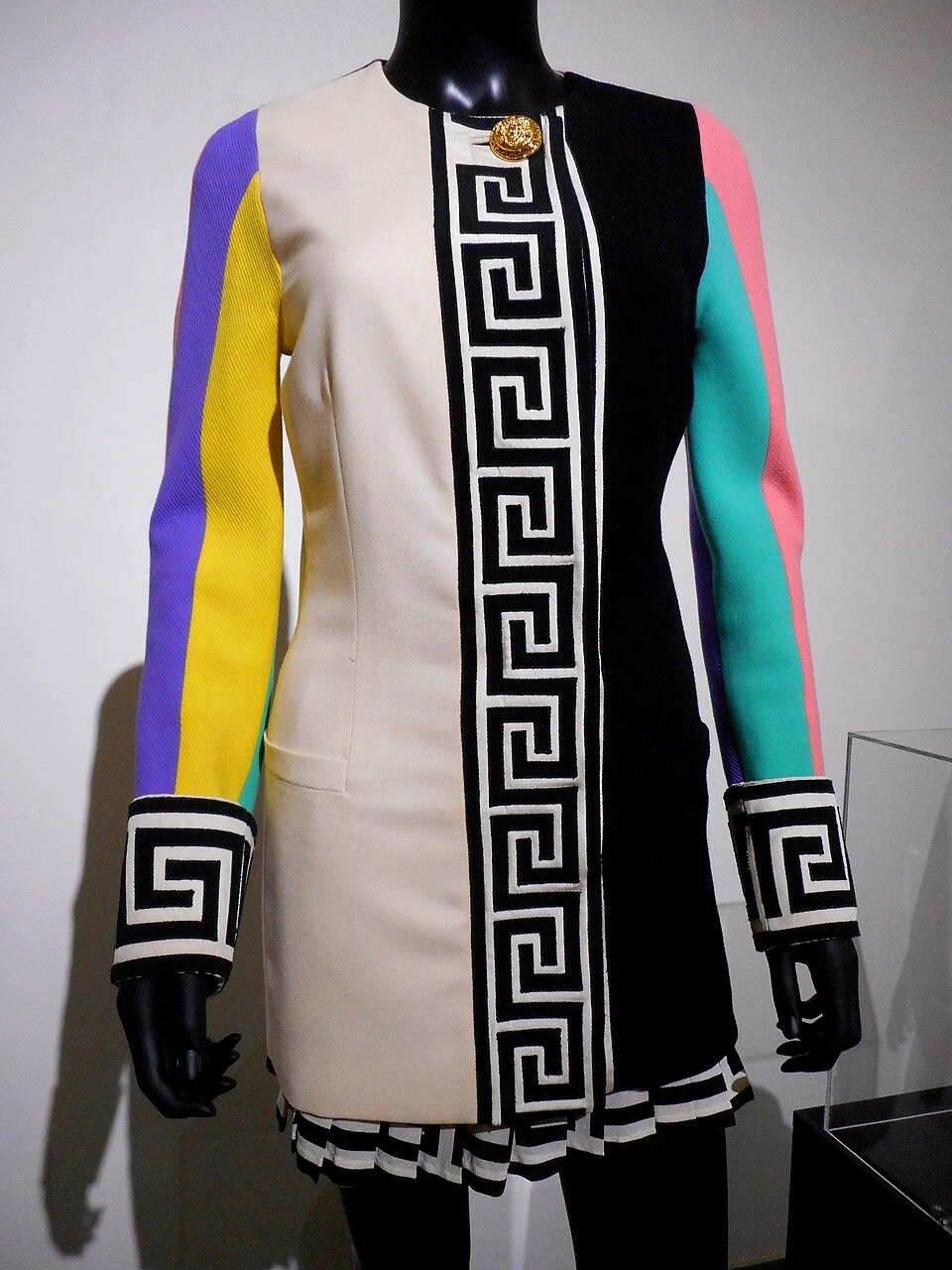

A last collection, an object under examination
A bejewelled leather dress from autumn–winter 1997 couture represents his late work. The V&A investigated the design worn by Naomi Campbell in his final show, examining interior evidence and its relationship to the runway garment. Gianni Versace Versace history is recorded through such material clues as well as images.
Leather and jewels reflect light differently, while a fitted shape contrasts with apparently hard ornament. An identical design and an identical physical object are not automatically the same claim. He was murdered in Miami on 15 July 1997.
That event should not turn his whole career into a prelude to tragedy, or replace analysis of the last collection’s actual clothes.
The founder and the continuing house
Donatella continued the design work after his death. Subsequent ownership and creative changes belong to the brand’s later history; Prada Group completed its acquisition in December 2025. Gianni Versace Versace history must distinguish these events from his own output.
Reusing an old motif does not create a new work by the founder. Comparing the 1982 metallic dress, the 1994 fastenings and the 1997 leather design reveals different technical questions beneath a broad reputation for extravagance. His work with supermodels similarly belongs to both image-making and the models’ individual careers.
Its influence includes organising fashion, photography and performance into a shared cultural scene.
Timeline
- 1946 — Born in Reggio Calabria
- 1978 — First eponymous collection
- 1982 — Metal-mesh evening wear
- 1994 — Safety-pin dress collection
- 1997 — Final couture show and death
Sources
- Berlin Kunstgewerbemuseum — Evening Gown with Safety Pins
- Biography — Gianni Versace
- British Vogue — Gianni Versace biography
- Treccani — Gianni Versace
- The Met — Evening dress, 1982
- Lombardia Beni Culturali — Oroton dress, 1987
- V&A — Unboxing a Versace couture dress
- Prada Group — History and acquisition of Versace