ÉPOPLI / Style guides
Streetwear style — Culture and proportion in daily outfits
Culture, proportion and everyday movement
← Style guides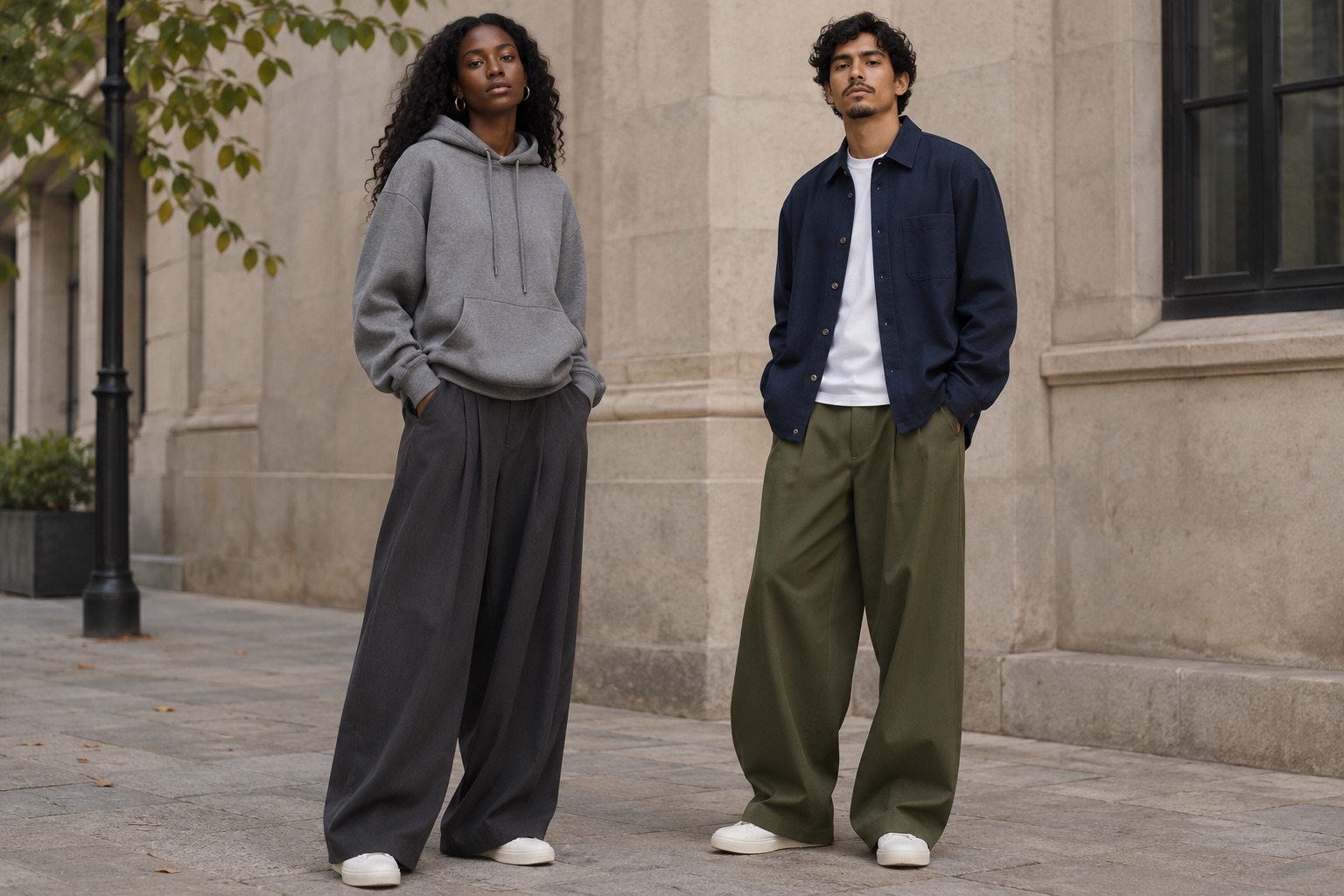
AI-generated outfit illustration; fictional models, not an archival photograph.
More than a large logo
Streetwear style is easier to understand through the way clothes are combined than through a shopping list of expensive releases. A roomy top, a practical outer layer and relaxed trousers can create a strong outline without a visible logo. What matters is the relationship between shoulders, sleeves, hem and footwear. The outfit should also make sense for the person wearing it: how they move, what they carry and where they spend the day. Price and scarcity do not settle those questions.
A hoodie can be the soft centre of an outfit, but it is not a complete definition of the style. Compare one worn under a short jacket with another worn alone: the same garment creates different volumes. Begin with clothes that fit comfortably at the neck and wrists, then decide how much extra width you want through the body. Oversized should describe an intentional silhouette rather than sleeves that prevent you from using your hands.
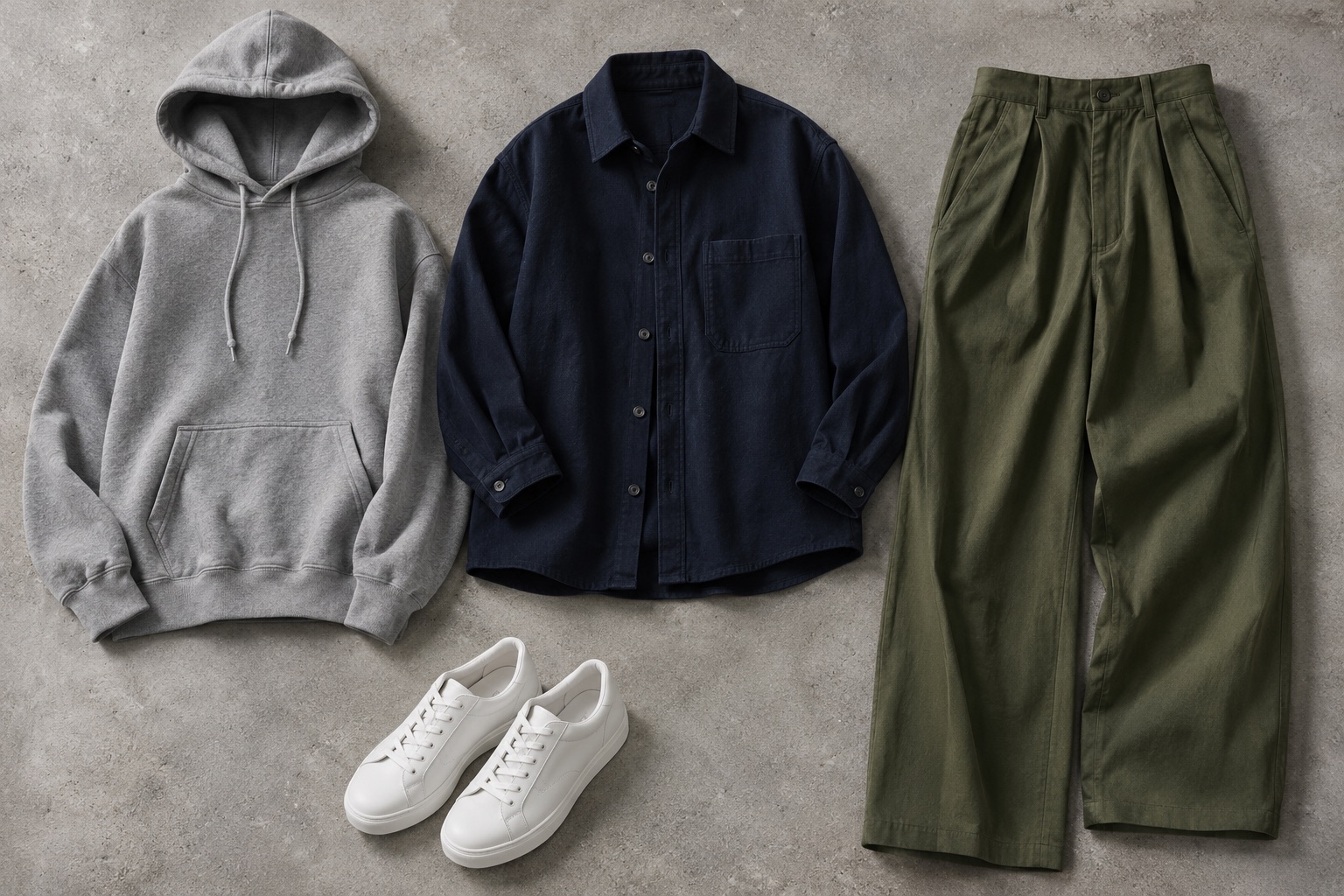
AI-generated outfit illustration; fictional models, not an archival photograph.
Read one important cultural connection
Streetwear style has an important connection to hip hop, although that connection does not explain every form of streetwear. The Museum at FIT’s Fresh, Fly, and Fabulous exhibition describes how Black and Brown working-class youth developed inventive ways of dressing through remixing, customization and personal expression. It also explains how artists and fans helped popularize combinations of loose proportions, sportswear and luxury references. Recognizing those makers and communities gives more context than treating the look as a recent luxury-brand invention.
The exhibition also challenges the idea that hip hop dress can be reduced to one baggy outfit. Different periods, places and people produced different looks. This guide uses that history as one point of reference, then offers contemporary outfit analysis rather than a complete cultural timeline. An illustration of a casual outfit cannot stand in for a historical photograph. When studying a specific designer, musician or scene, follow the original work and its documented context.
Volume is a design decision
Streetwear style often makes volume visible, but wider is not automatically better. Wide trousers change the lower half of the outline; a cropped jacket can reveal their waist and prevent the outfit from becoming one uninterrupted block. A longer top creates a different balance, especially when its fabric is soft. Look from the side as well as the front. Fabric collecting behind the knee or around the ankle can change the result more than a small difference in the size label.
Choose one dominant volume first. If both top and bottom are roomy, use a clear neckline, a visible cuff or a controlled hem to create a stopping point for the eye. This is an option, not a rule about body types. Try the combination while sitting, reaching and carrying a bag. A garment can look spacious while still pulling at a seam, so movement is a better test than judging fit from a single still image.
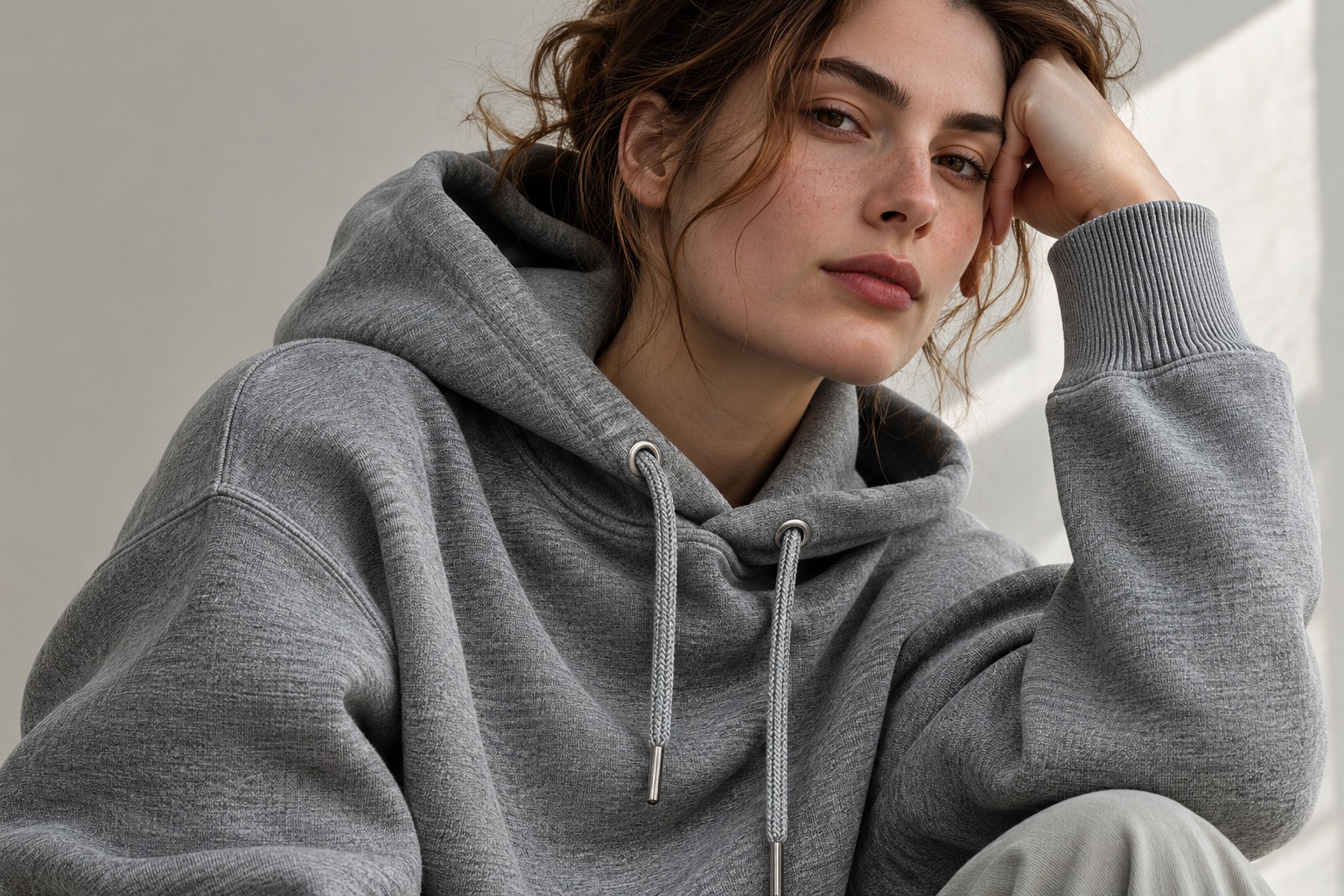
AI-generated outfit illustration; fictional models, not an archival photograph.
Choose pieces that work together
Streetwear style can start with a plain T-shirt, a hoodie, an overshirt and wide trousers that already work with your daily shoes. An overshirt is a shirt-like outer layer, usually chosen with enough room to wear over another top. Check how the layers sit at the collar and underarm rather than assuming all relaxed pieces fit together. A simple palette lets differences in fabric weight show, while one stronger colour can become the focal point.
Sneakers influence the outline through their sole, toe shape and height. A substantial shoe may support a wide hem visually, while a slimmer one can make the same trousers feel lighter. Neither is obligatory. Try the actual pair before deciding on alterations. Socks, closures and the way a hem rests on the shoe also affect comfort. A good basic wardrobe is a set of compatible pieces, not a collection of individually fashionable items that never work together.
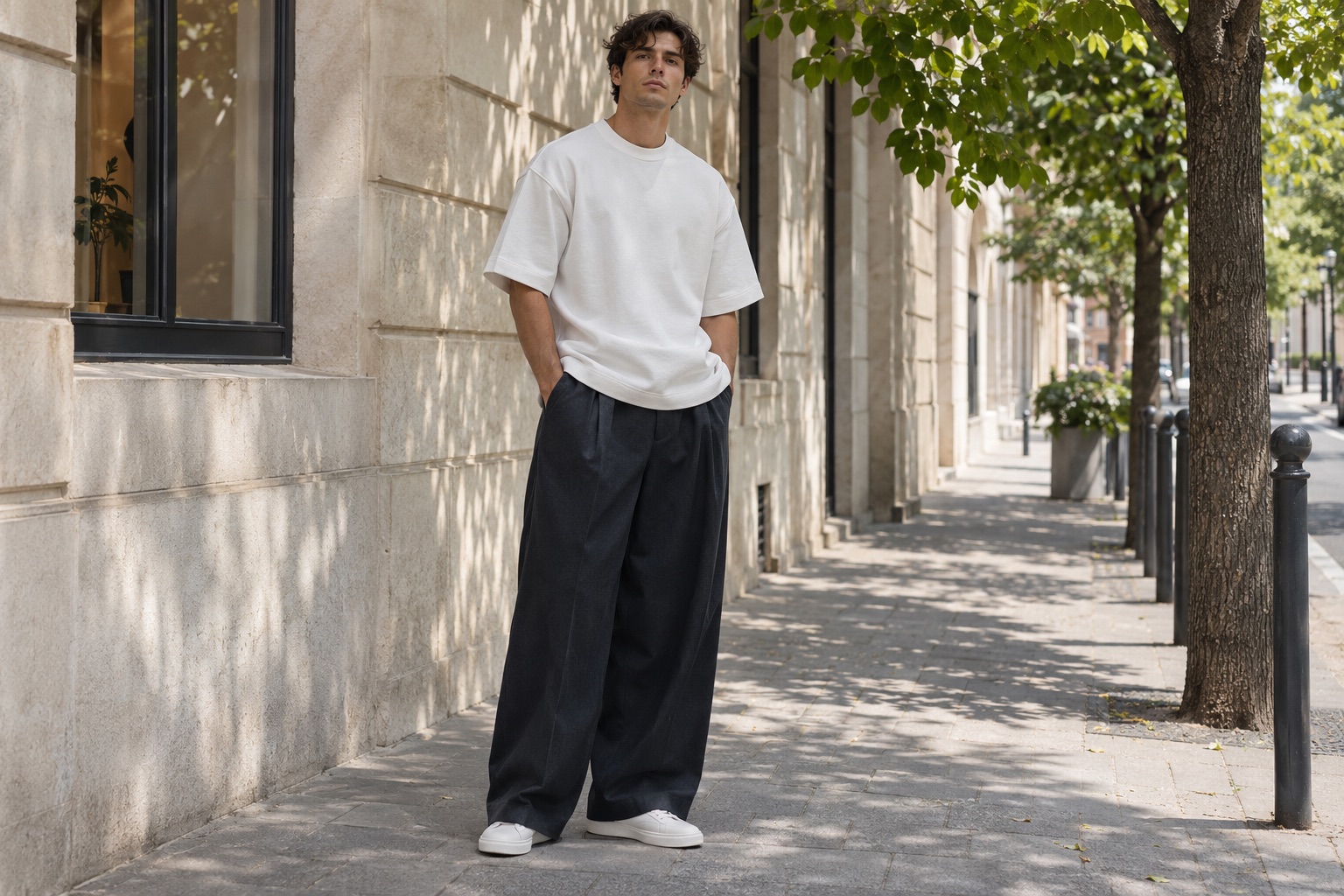
AI-generated outfit illustration; fictional models, not an archival photograph.
Three everyday outfit structures
Streetwear style can be built around three practical structures. In warm weather, use a substantial T-shirt with relaxed trousers and a light bag. On a cooler day, add an open overshirt that leaves the inner layer visible. For more wind, replace it with a suitable jacket and check that the layers do not bunch at the neck. These changes preserve the underlying proportion while adjusting coverage, so the outfit does not need to be reinvented for every temperature.
Sneakers can remain the same across these combinations if they suit the walking conditions. Keep an eye on the trouser break, the fold created where the hem meets the shoe. Too much fabric may drag; no break produces a cleaner line. There is no universally correct amount. Consider the garment’s intended shape, your movement and the surface underfoot. A subtle adjustment to length often changes the outfit more effectively than replacing the whole wardrobe.
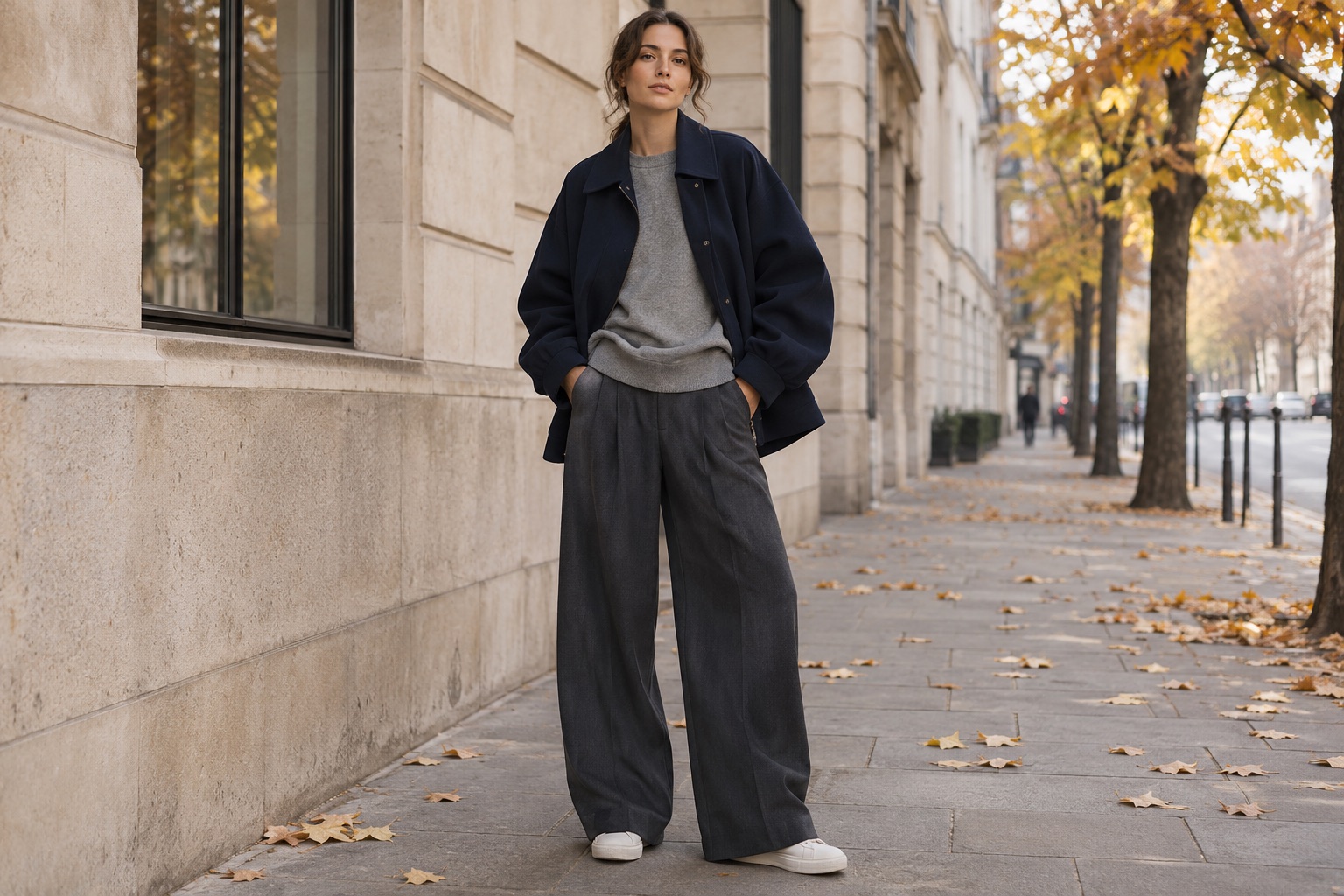
AI-generated outfit illustration; fictional models, not an archival photograph.
Weather, movement and maintenance
Streetwear style works best when visual weight and actual warmth are considered separately. A thick-looking cotton layer may not provide the protection of a weather-appropriate outer garment. Check the forecast and the care label rather than judging performance by appearance. If you commute with a backpack, inspect how straps press the shoulders and whether pockets remain accessible. Clothes chosen for an active day should leave enough room to bend and reach without constantly being readjusted.
Maintenance is part of keeping the silhouette intentional. Follow the washing instructions, avoid unnecessary heat and reshape garments when the label permits. Store heavy knit pieces in a way that does not stretch the shoulders. Clean footwear according to its material, since suede, coated surfaces and mesh do not respond identically. Wear and fading can become part of a garment’s character, but a loose seam or damaged sole deserves attention before it affects comfort and use.
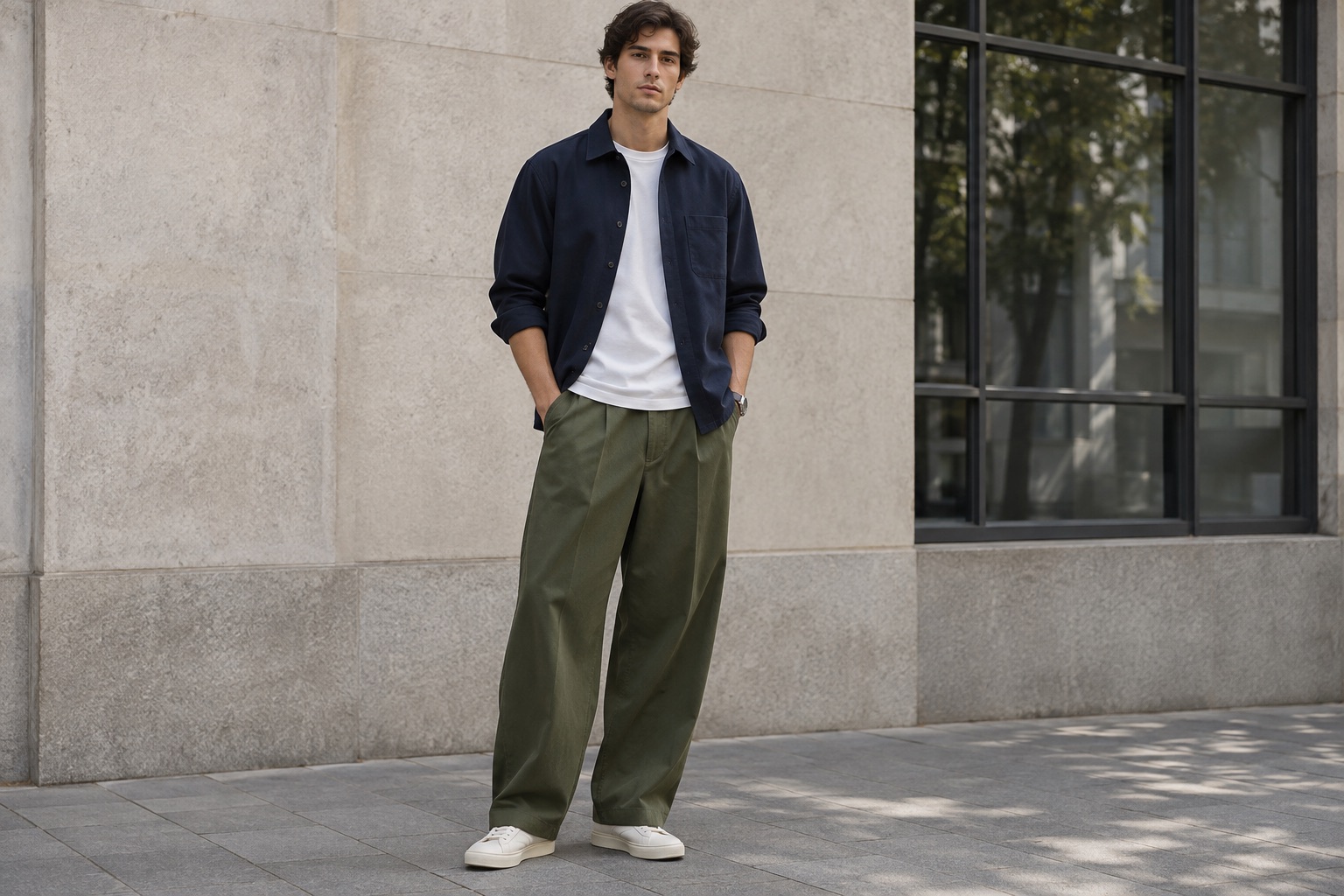
AI-generated outfit illustration; fictional models, not an archival photograph.
Distinguish the label from the clothes
Streetwear style should not be confused with every outfit photographed outdoors. Street style is a broader description of clothing observed in public; sportswear describes another set of garments and uses. These categories overlap, but the terms do not tell you everything about a particular outfit. Describe the actual construction, proportion and references before deciding on a label. This makes it easier to learn from a look without copying someone else’s identity or assuming a purchase creates cultural belonging.
The generated images on this page demonstrate contemporary combinations; they are not records of a historical scene, named designer collection or celebrity outfit. Compare their lengths, fabric contrasts and colour placement with garments you own. Keep the useful relationship and change the details to suit your routine. A clear outfit can be made from familiar pieces, and repeated wear is often the most reliable way to discover which proportions you actually enjoy.
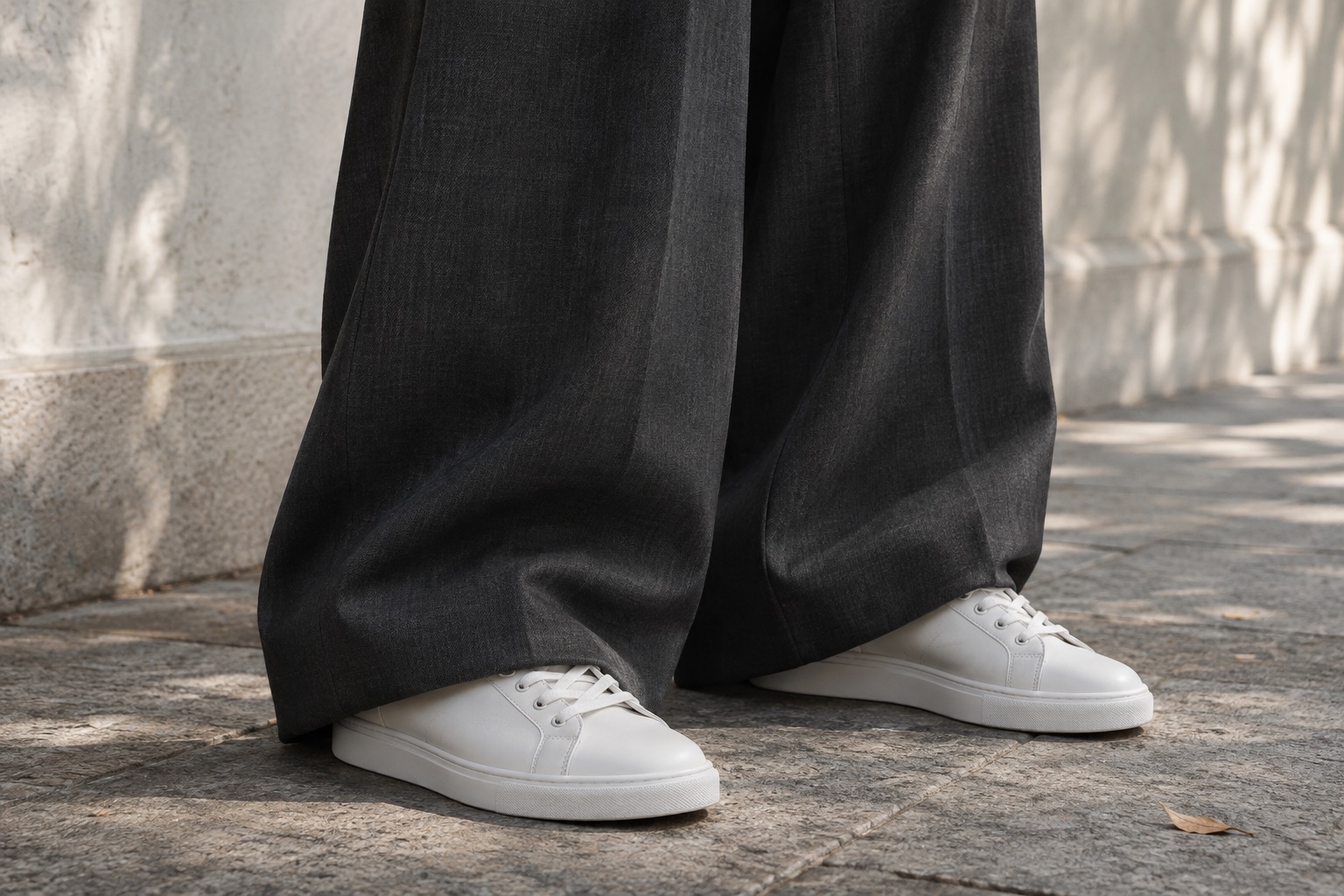
AI-generated outfit illustration; fictional models, not an archival photograph.