ÉPOPLI / Style guides
Preppy style — Campus classics and everyday outfits
Campus classics, worn your own way
← Style guides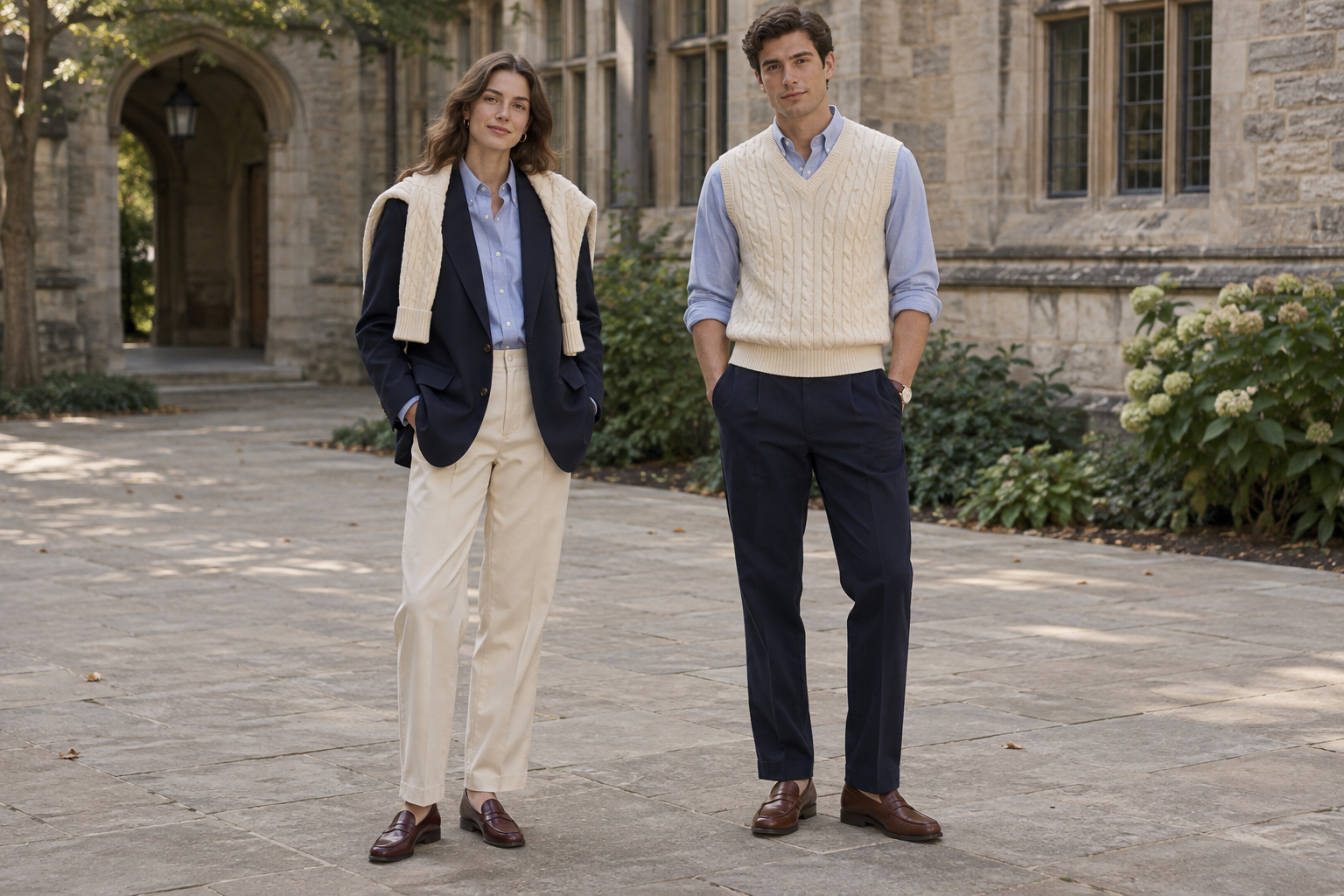
AI-generated outfit illustration; fictional models, not an archival photograph.
A wardrobe built on combinations
Preppy style brings tailored clothing into conversation with the easy pieces of a sports wardrobe. A tailored jacket looks less ceremonial beside cotton trousers; a button-down shirt becomes softer beneath a knitted vest. The useful idea is this balance, rather than a complete school uniform. You can start with clothes you already own and change one element at a time. A navy jacket over a pale shirt is a clear starting point, but a polo shirt with relaxed trousers can express the same relationship. A crest, designer label or particular price is not required. Look for a combination that feels composed while allowing you to move comfortably.
To decide where to begin, lay out two outfits using the same trousers. In one, add a structured jacket; in the other, use only a knit. Comparing them makes the effect of formality easier to see. Keep the activity in mind: a commute, a long walk and a seated dinner place different demands on shoes, fabric and layers.
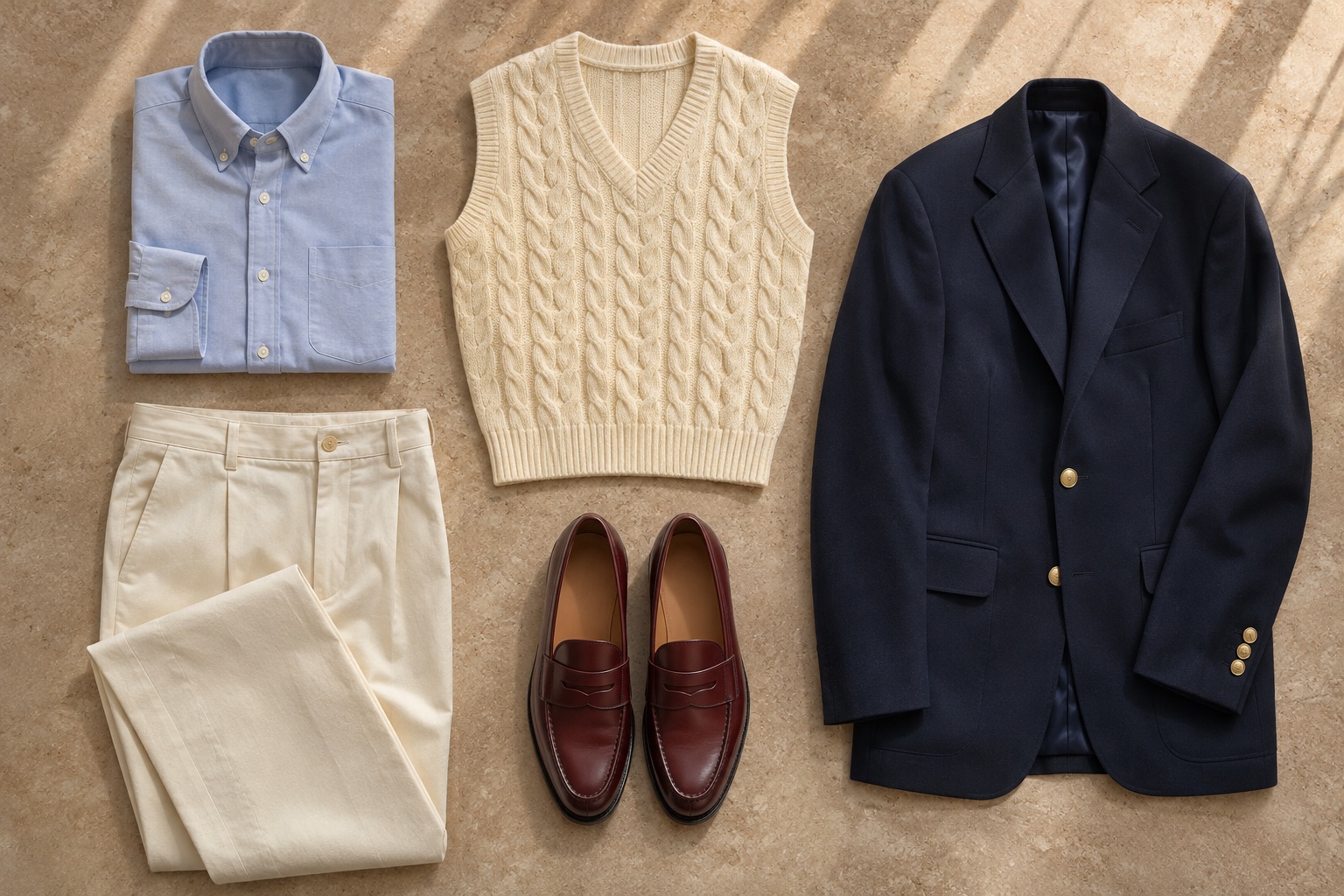
AI-generated outfit illustration; fictional models, not an archival photograph.
From Ivy campuses to a wider public
Preppy style overlaps with the Ivy League look explored by the Museum at FIT. That exhibition traces clothing associated with American universities, including tweed jackets, Oxford button-down shirts, khakis and madras shorts, and its later movement beyond campus. British clothing traditions were adapted by American retailers and students; the look also found wearers outside the universities. This is a historical context, not a claim that every contemporary outfit follows one fixed original. The institutions were socially exclusive, but wearing these clothes today does not establish a person’s education, wealth or background. Treat the archive as a record of changing combinations, not a membership test.
Historical inspiration is most helpful when it leads you back to an object. Look at the collar, pocket placement or material in a museum record before drawing conclusions from a modern mood board. A caption with a date and collection is stronger evidence than an unattributed social-media image. The contemporary illustrations here demonstrate combinations only; they do not document how a particular student actually dressed.
Read the collar, knit and shoulder
Preppy style becomes easier to recognise when you examine details. The small buttons securing an Oxford shirt’s collar let its points sit neatly beneath knitwear. A cable knit introduces a raised, rope-like surface beside the flatter weave of cotton trousers. A blazer gives the shoulders definition, while loafers leave the ankle area visually lighter than a heavy boot. None of these details works alone as proof of a style. Their proportions and relationship matter more. When layering, check that the shirt collar is comfortable and the jacket sleeves are not tight over a sweater. Texture can provide enough interest without adding several patterns.
Pattern scale also changes the result. Small stripes under a broad cable knit create a different rhythm from a large check beside a plain sweater. Place the garments together in daylight before wearing them. If both patterns demand equal attention, try separating them with one plain layer. You can create contrast through texture instead of increasing the number of colours.
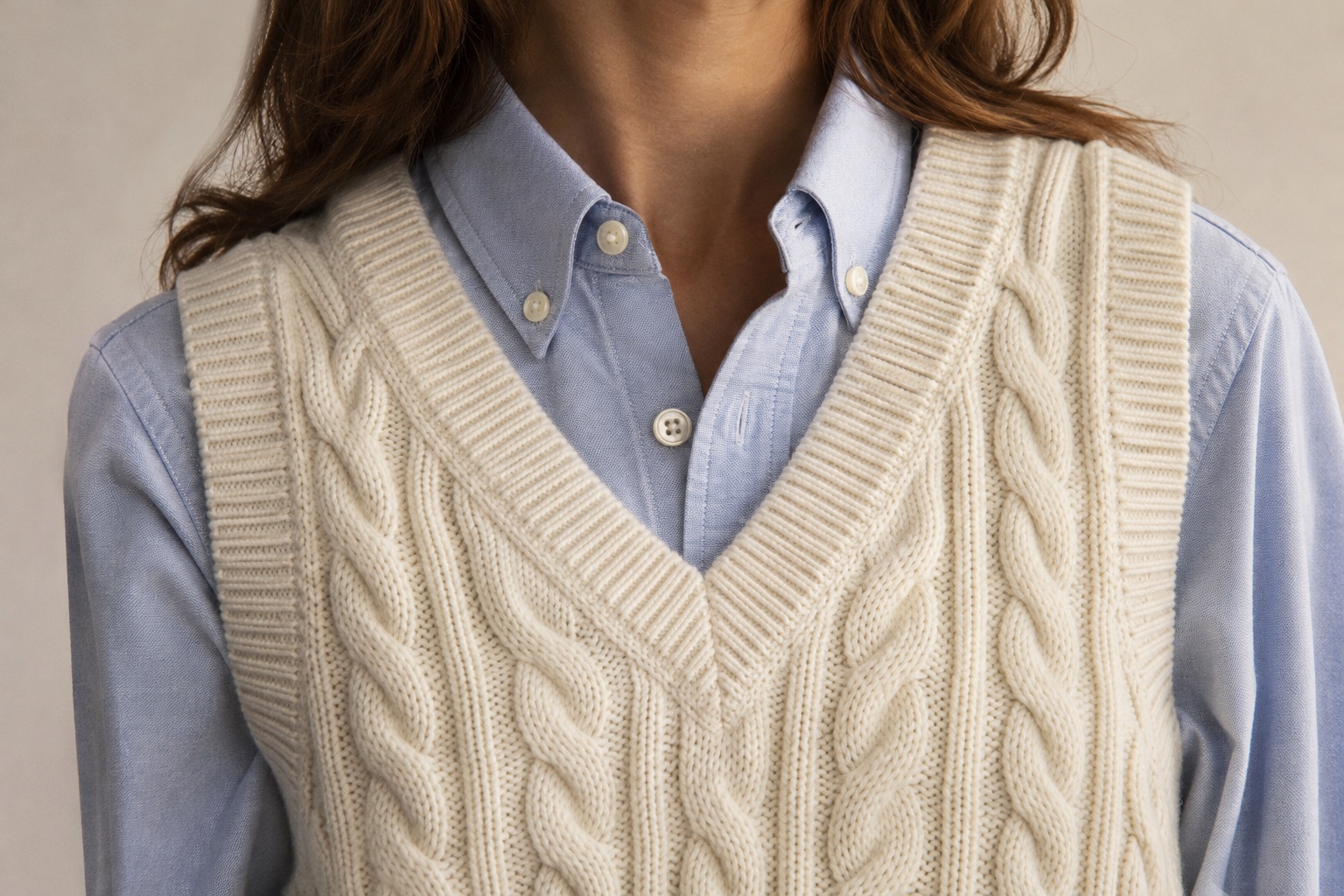
AI-generated outfit illustration; fictional models, not an archival photograph.
Start with five useful pieces
Preppy style does not require a large shopping list. An Oxford shirt, a simple knit, a relaxed blazer, straight cotton trousers and loafers provide several combinations. Before buying, test the fit of each item separately: sit in the trousers, bend your arms in the jacket and walk in the shoes. Cream, navy and pale blue are an approachable palette, with burgundy or green as an optional accent. These colours are suggestions, not historical rules. If you prefer skirts, try a straight or pleated shape with the same shirt and knit. A plain sneaker can replace the loafers when your day involves more walking.
Build the set around what is already useful in your wardrobe. If you rarely wear jackets, begin with a shirt and knit rather than buying an outer layer solely for the theme. Check whether the same trousers work with at least two tops. Repeating an item across several outfits is a practical way to understand which shapes you actually enjoy wearing.
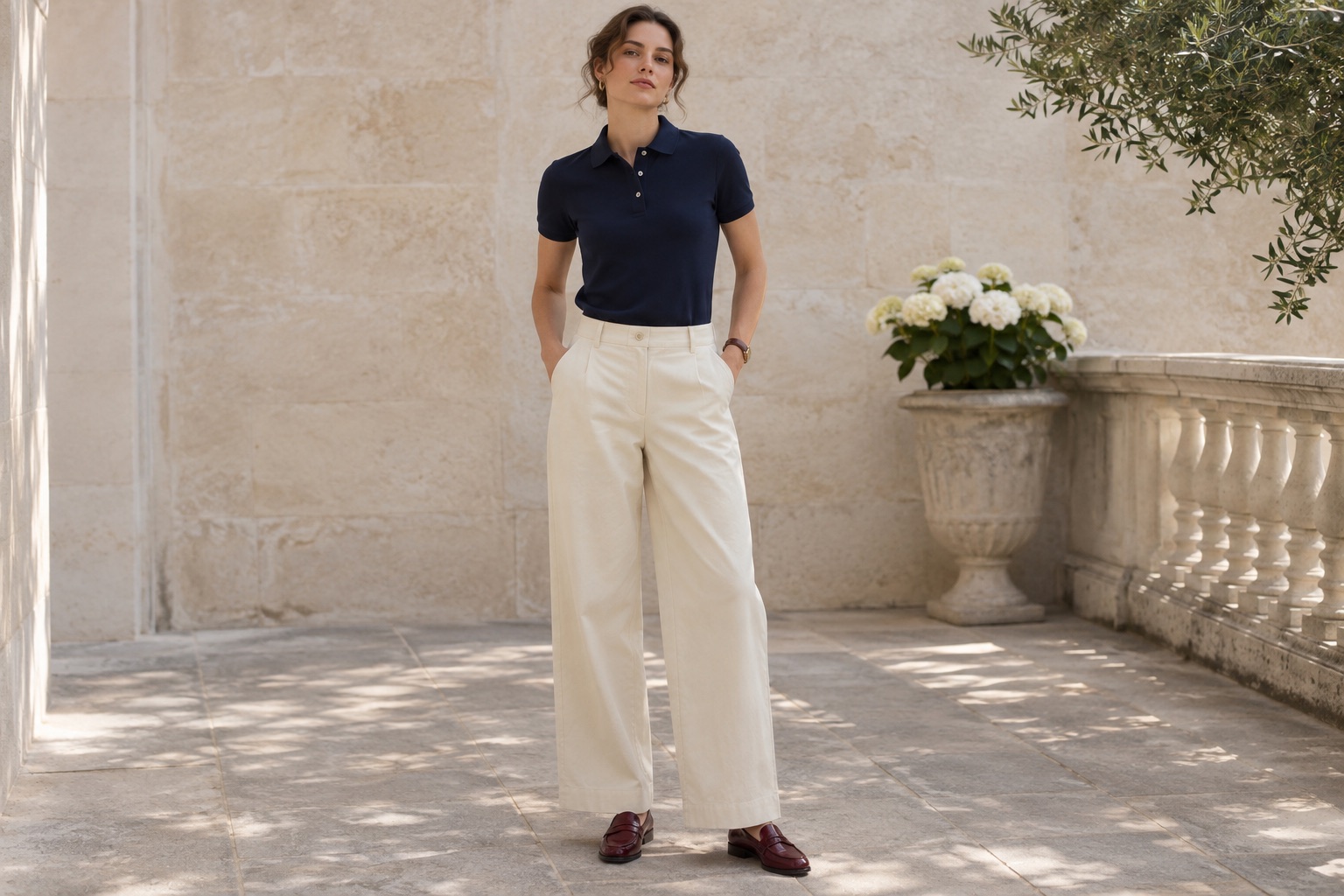
AI-generated outfit illustration; fictional models, not an archival photograph.
Three ways to wear it
Preppy style can shift between occasions without becoming a costume. For an ordinary working day, combine an Oxford shirt with straight trousers and a blazer, leaving the neckline simple. For a weekend, wear the shirt under a knitted vest and choose comfortable flat shoes. For warmer weather, exchange the knit for a polo and use lighter cotton trousers. Keep one structured element and let the rest relax. If a striped tie is the focal point, quieten the surrounding patterns. If a colourful knit is the focus, a plain shirt usually makes the layers easier to read. These are contemporary outfit suggestions rather than reconstructions of a particular decade.
A pleated skirt offers another option without requiring a school-uniform effect. Pair it with an unadorned knit and comfortable shoes, then decide whether a jacket is necessary. Tights, socks and the amount of ankle visible change the transition between hem and shoe. Evaluate the entire outline rather than treating one skirt length as the correct answer for everyone.
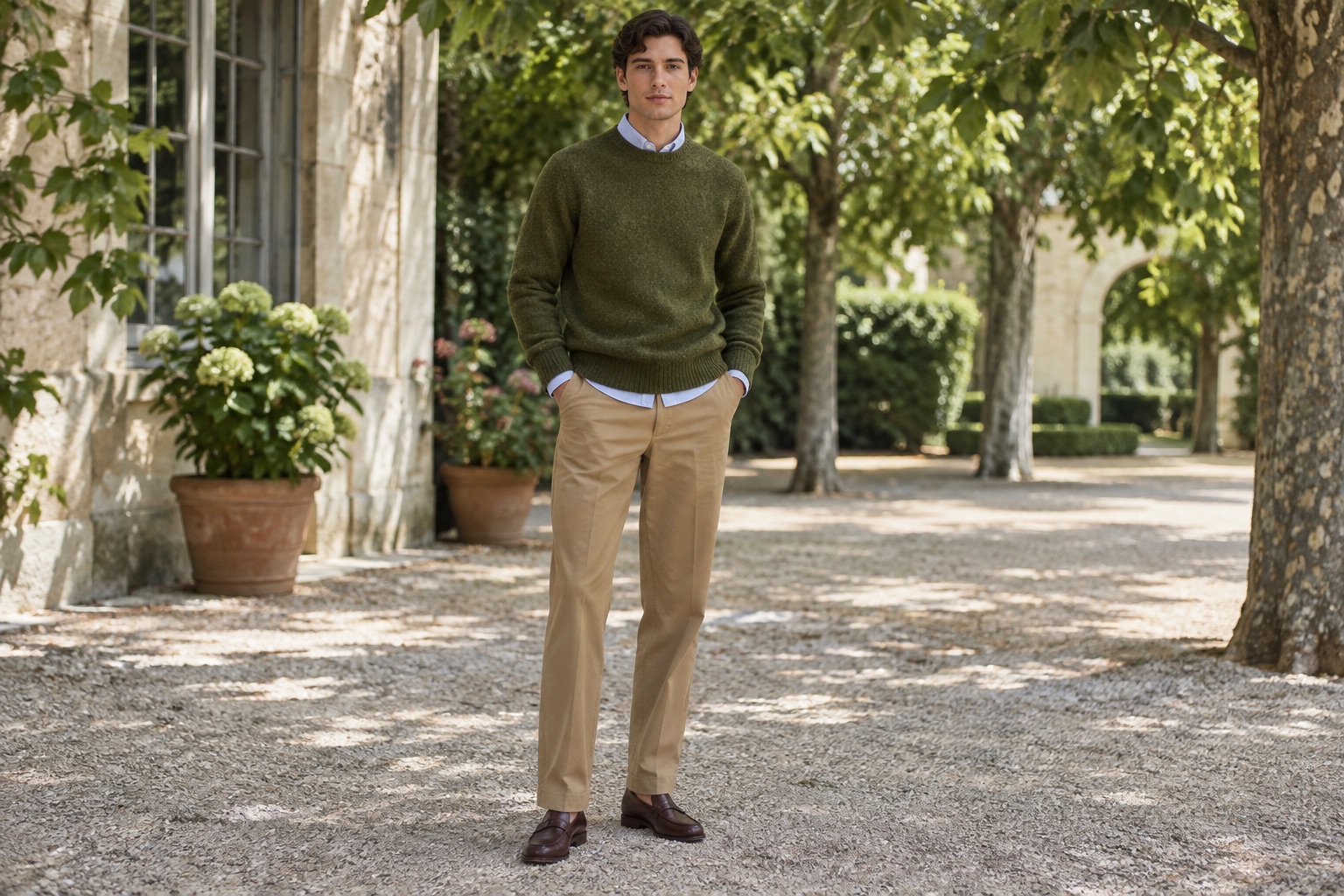
AI-generated outfit illustration; fictional models, not an archival photograph.
Adjust for weather and proportion
Preppy style also benefits from practical adjustment. In a warm climate, a lightweight jacket and breathable shirt can do more work than several heavy layers. In cold weather, a roomy coat should fit over the blazer without compressing its shoulders. A longer jacket can sit well over straight trousers, while a shorter knit can make a higher waist visible; neither proportion is compulsory. Try the complete outfit with the shoes you will actually wear before deciding on trouser length. The aim is to avoid bunching and discomfort. Repeating one colour in two places can connect an outfit more quietly than adding matching accessories everywhere.
For storage, let a jacket rest on a suitable hanger and follow the knitwear care label to avoid stretching. Air garments when appropriate and clean them according to their fibre and construction. A tidy appearance depends on ordinary maintenance as much as styling. If the collar or cuff no longer sits comfortably, adjusting the layer underneath may solve the problem without replacing the whole outfit.
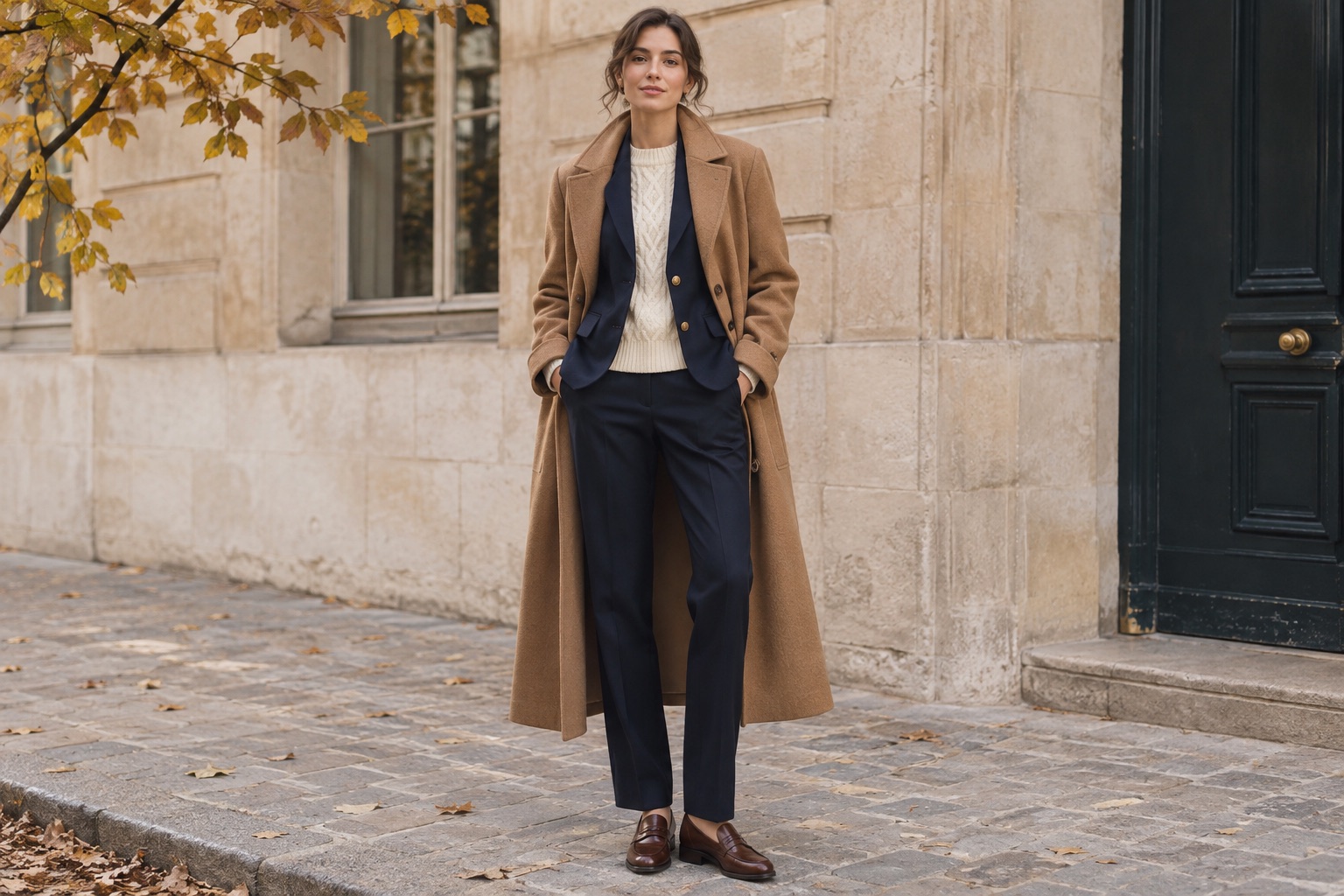
AI-generated outfit illustration; fictional models, not an archival photograph.
Preppy, Ivy and old money
Preppy style, Ivy style and the online label old money are related terms but not exact synonyms. Ivy refers more specifically to a historical clothing vocabulary associated with American universities; preppy is often used more broadly for polished, sporty combinations. Old money describes an imagined social image and should not be treated as evidence about a wearer. Can this look work without a blazer? Yes: a neat shirt, knit and comfortable trousers can carry it. Must every item be traditional? No: replacing one piece with modern proportions can make the outfit personal. The most useful question is whether the layers work together in your own daily life.
You can also test a look by removing its most recognisable accessory. If it still feels balanced without a tie or a shoulder-draped sweater, the basic proportions are doing useful work. There is no need to demonstrate every association in a single outfit. Keeping some space between an influence and its literal reproduction often makes clothes easier to wear repeatedly.
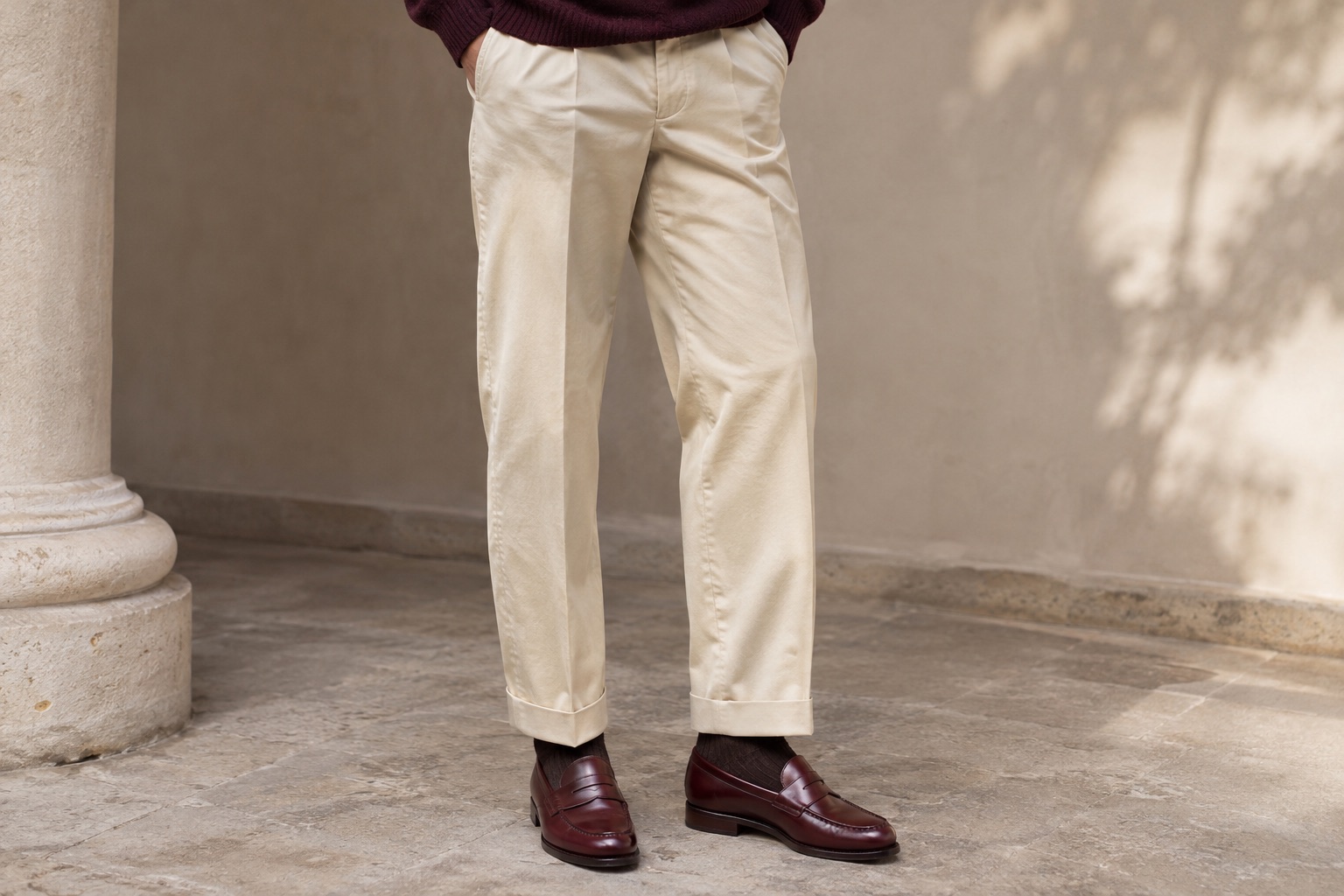
AI-generated outfit illustration; fictional models, not an archival photograph.