ÉPOPLI / Style guides
Minimalist style — Shape, fabric and everyday outfits
Less decoration, more attention
← Style guides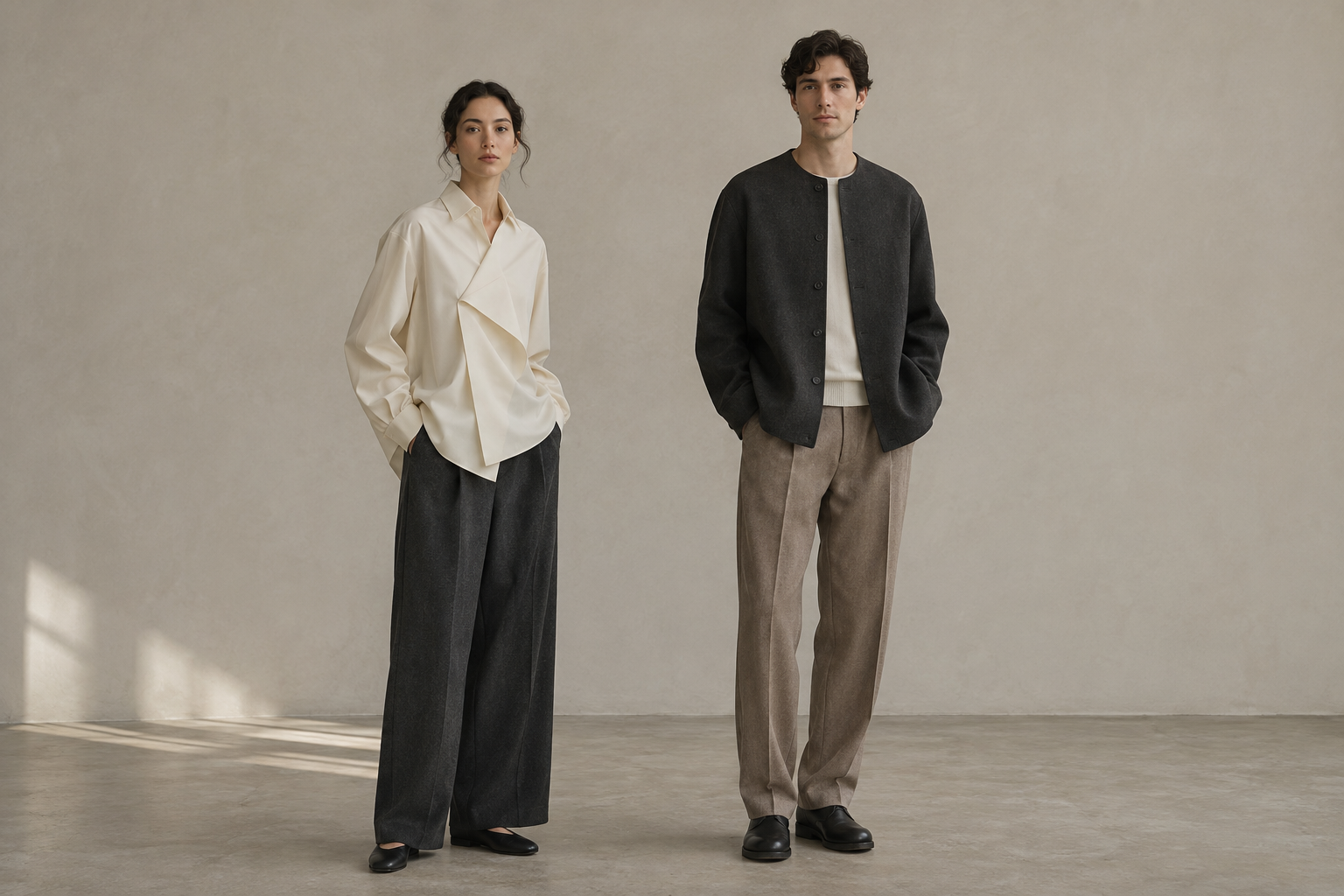
AI-generated outfit illustration; fictional models, not an archival photograph.
Make the structure visible
Minimalist style reduces competing details so that proportion, fabric and construction become easier to see. It can be a white shirt and dark trousers, but it can also involve colour, an unusual sleeve or an asymmetric hem. The question is which element leads the outfit and which elements support it. A narrow palette is one useful method, not a compulsory uniform. When the surface is quiet, the length of a jacket or the fall of a trouser leg has more visual weight. Begin by removing one unnecessary layer or accessory, then observe whether the remaining clothes look more connected. Reduction should create clarity rather than leave the wearer uncomfortable.
One useful exercise is to photograph the same clothes with two different shoe shapes. The change can reveal how much the hem and footwear control the silhouette, even when the palette stays constant. This is not a test of the body. It is a way to see the relationship between garments and choose the version that feels most comfortable in motion.
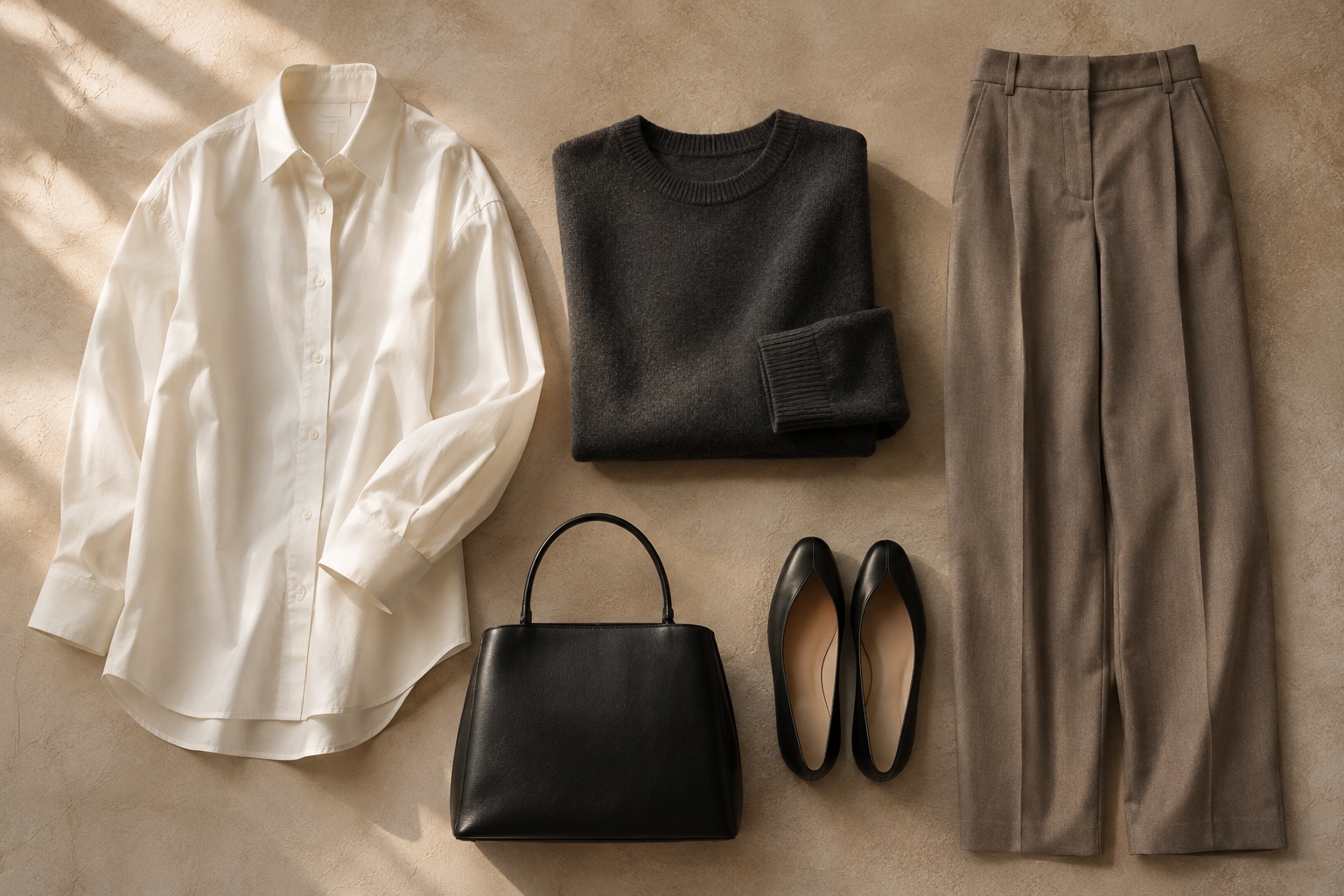
AI-generated outfit illustration; fictional models, not an archival photograph.
Restraint has more than one history
Minimalist style was not invented in a single season. The Museum at FIT’s Minimalism / Maximalism exhibition examines a longer relationship between restraint and excess in fashion. Its examples include designers associated with pared-back clothing in the 1990s, such as Calvin Klein, Helmut Lang and Martin Margiela. These designers did not all use the same methods or produce interchangeable clothes. The museum’s wider perspective is useful because a clean surface can belong to different periods and intentions. This guide uses minimalism as a way of reading an outfit, rather than claiming that every plain garment belongs to an art movement or a particular designer’s work.
When comparing designers, separate an overall impression from the details of a specific garment. A plain dress may use complex internal construction; an apparently simple jacket may rely on carefully placed seams. Reading a museum description helps prevent the assumption that fewer visible details mean less design work. The word minimal describes an effect, but does not explain every process that produced it.
Silhouette before colour
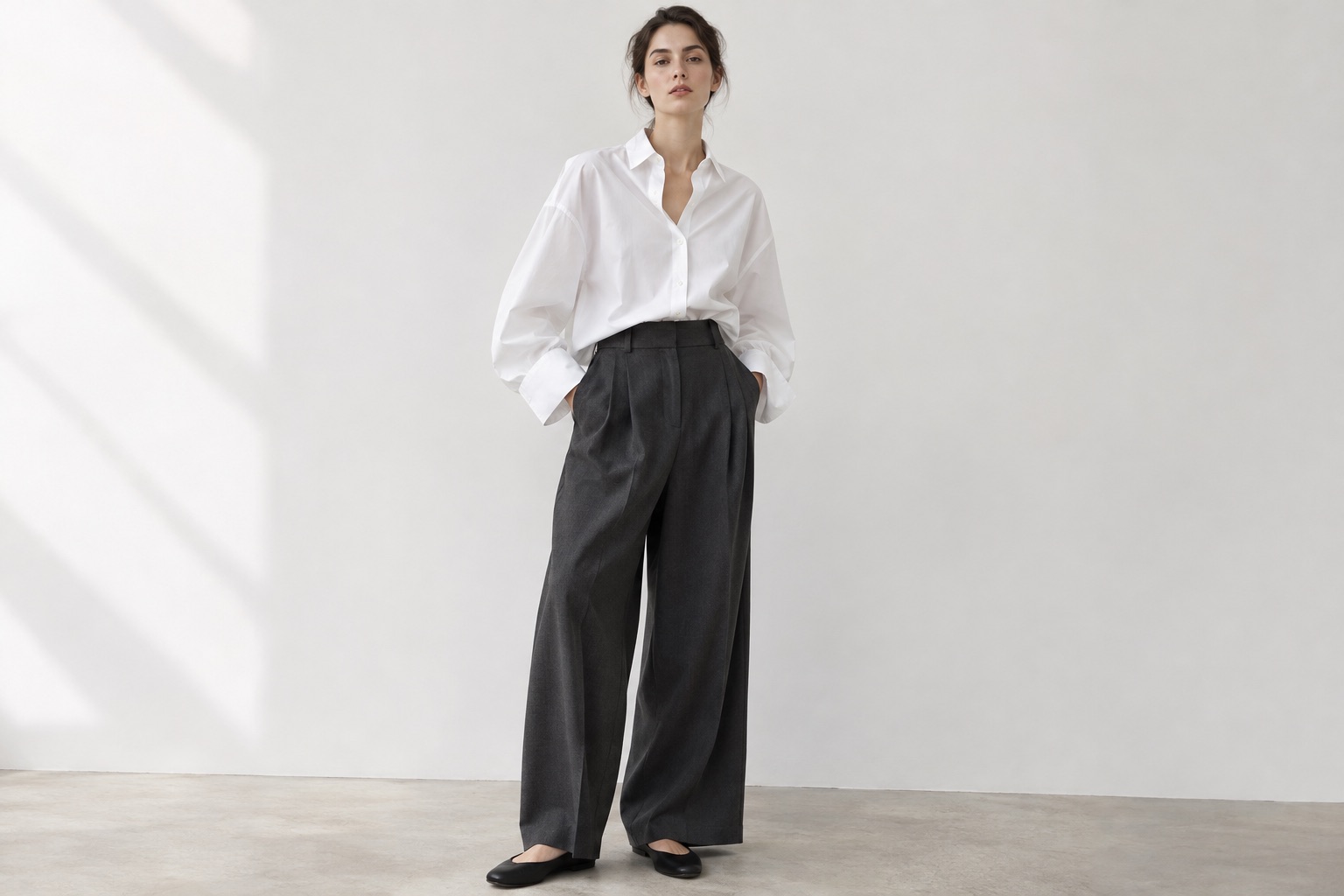
Minimalist style begins with the silhouette: the outline the whole outfit makes. A wide trouser leg changes the balance of a close-fitting top; a broad shirt can be paired with a straighter lower half to make its volume legible. Neither body-hugging nor oversized clothing is automatically more minimal. Look at where the shoulder seam falls, where the waist is placed and how the hem meets the shoe. A clean outline does not mean eliminating all folds. Natural folds show how fabric moves with the body. Choose one dominant volume and check it while standing, sitting and walking, rather than judging the outfit only in a mirror pose.
Take a front and side view when checking volume. A shirt that looks narrow from the front may have considerable depth at the back. Tucking it in can change both the waistline and the way the fabric hangs. Rather than following a universal rule about tucking, test whether the extra material stays comfortable when you sit and whether it interrupts the intended outline.
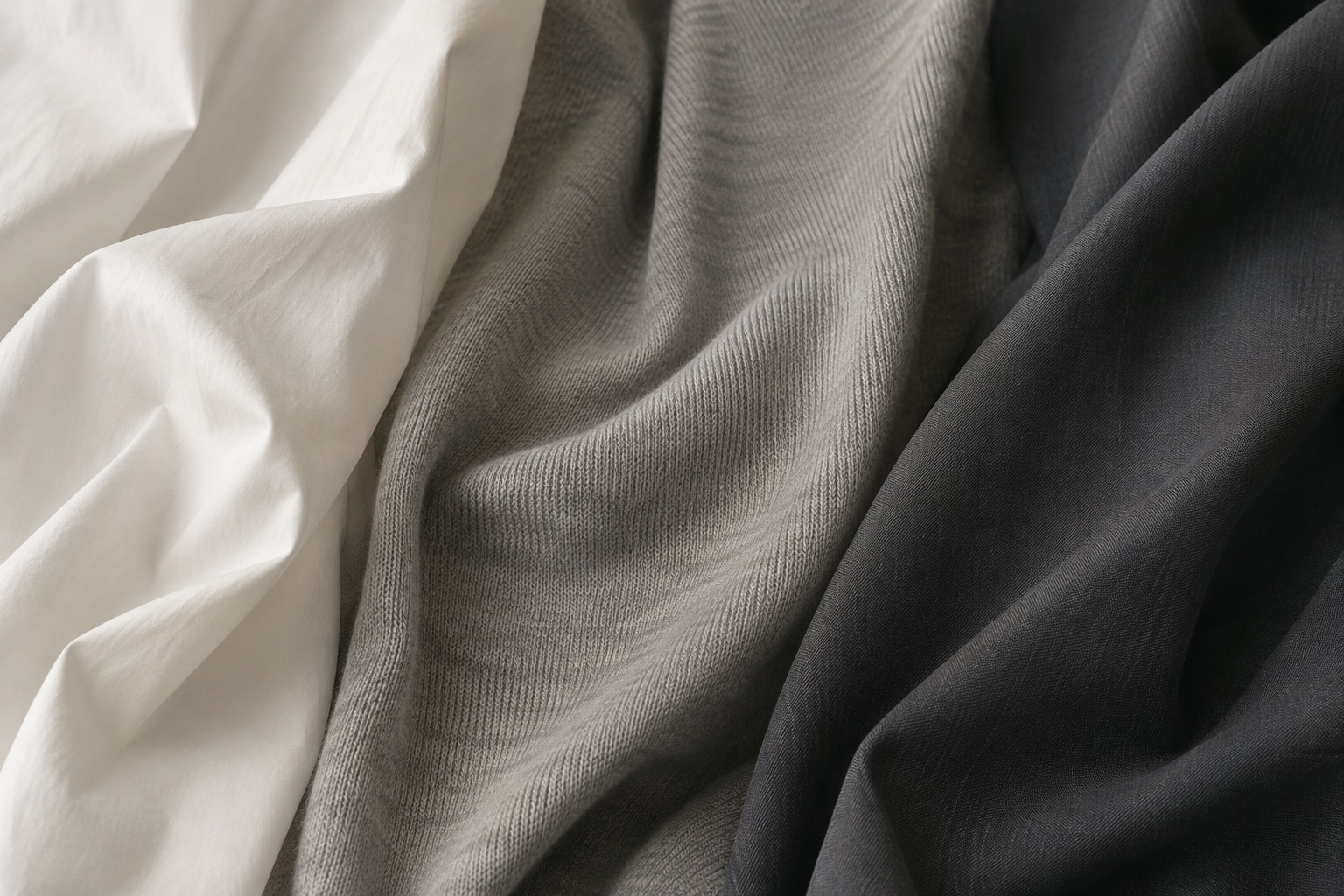
AI-generated outfit illustration; fictional models, not an archival photograph.
A small set of adaptable pieces
Minimalist style can be built from an uncomplicated shirt, a fine knit, a pair of well-fitting trousers, a jacket and shoes you can walk in. Their value lies in how they combine, not in a claim that everyone needs the same capsule wardrobe. Compare the whites and greys in daylight: two similar shades may create a gentle distinction or look unintentionally mismatched. A single saturated colour can work just as well as neutrals when the shapes remain clear. Keep fastenings and accessories in proportion to the clothes. A large bag or heavy belt may become the focal point, which is a choice to make deliberately rather than a mistake in itself.
Write down the situations the clothes must serve before deciding what to buy. A washable top may be more useful than a delicate piece if it will be worn several times a week. Check whether the new item works with your existing shoes and outerwear. A coherent wardrobe can grow slowly; it does not need to be replaced all at once to achieve a particular visual direction.
AI-generated outfit illustration; fictional models, not an archival photograph.
Three outfits, different volumes
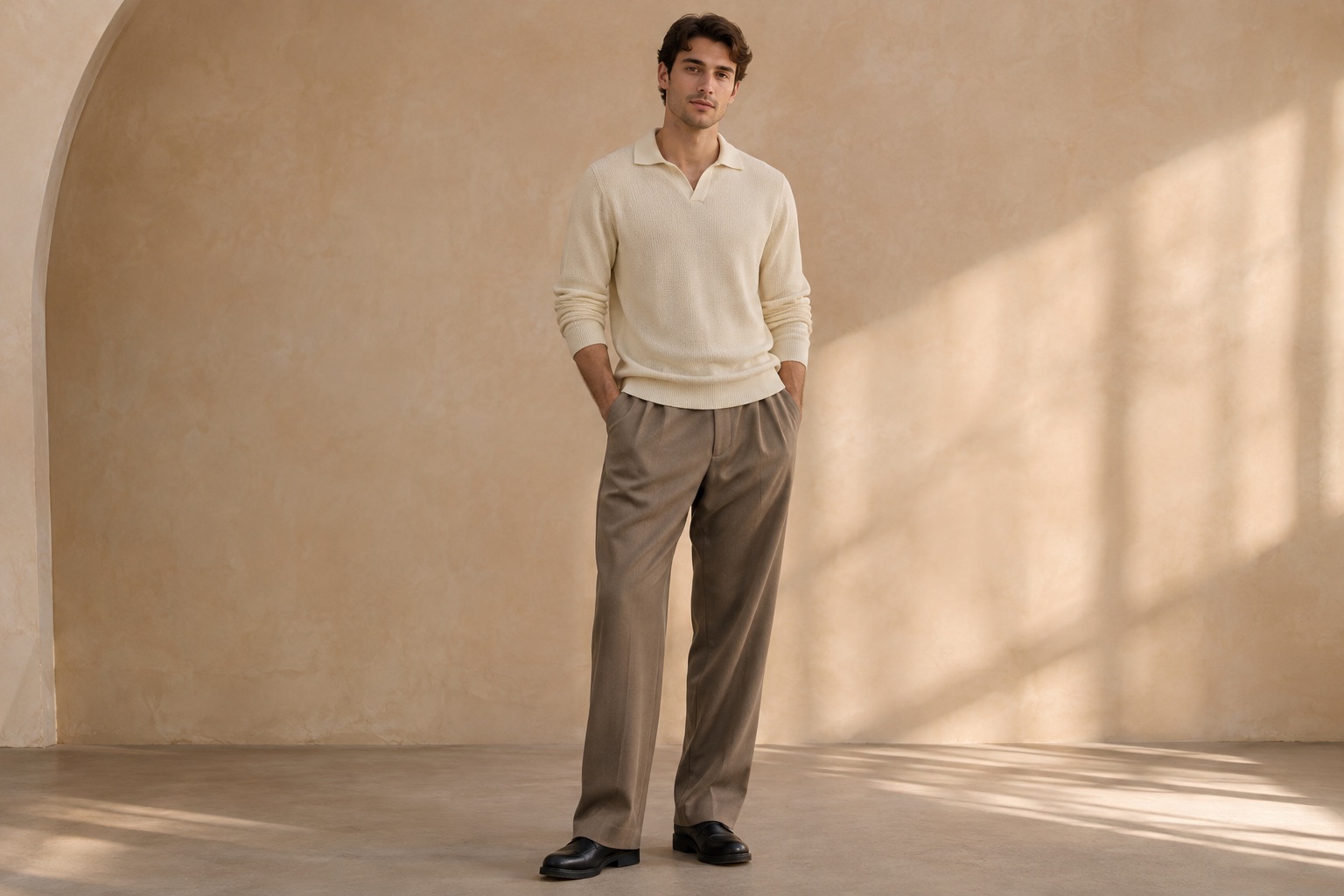
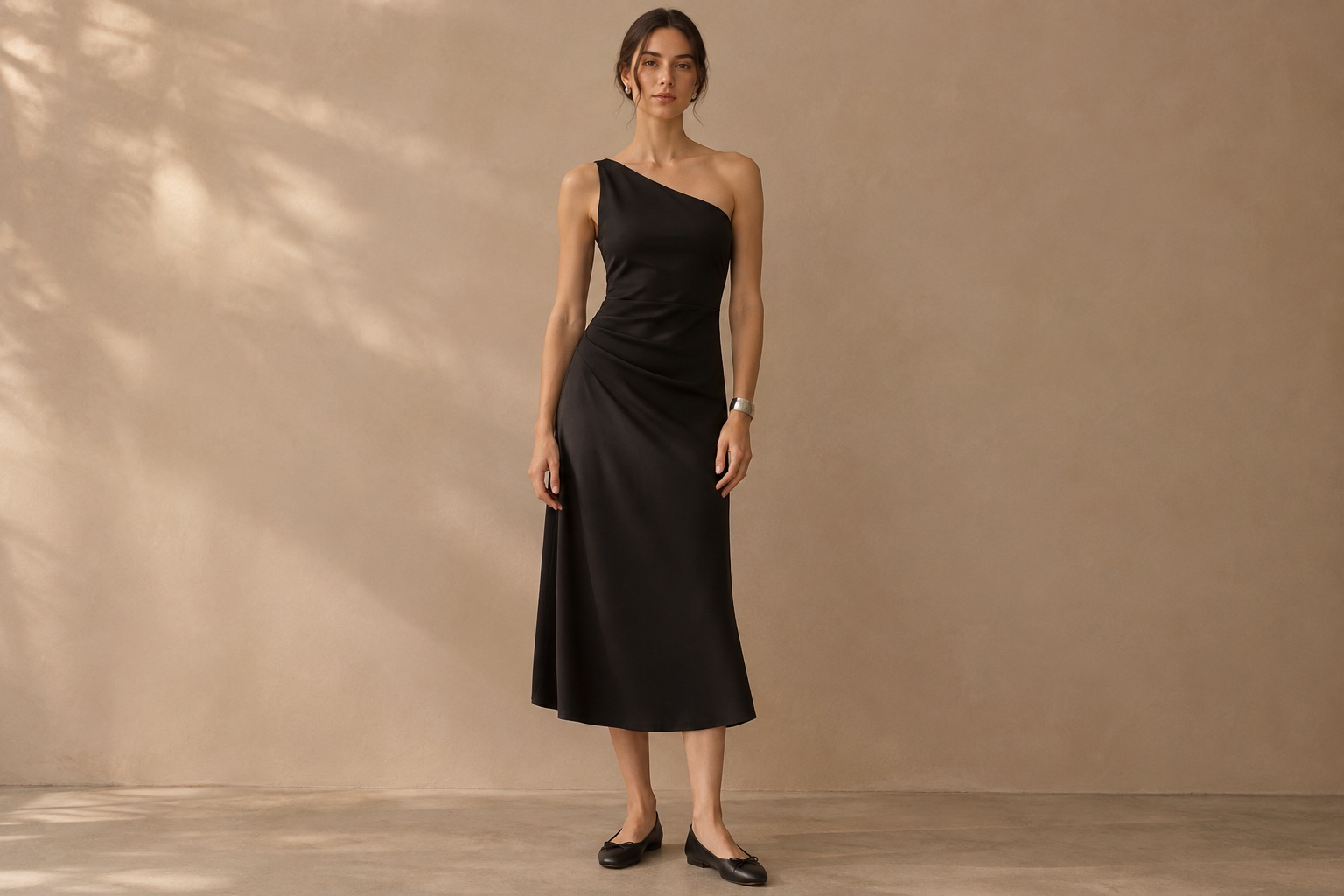
Minimalist style offers several outfit formulas without requiring identical pieces. For a working day, try a straight shirt with wide trousers and simple flat shoes. For a relaxed day, use a fine knit with a longer skirt or straight jeans, allowing the material to provide interest. For an evening, a dress with a clear neckline and a single piece of jewellery can give the eye one point of focus. These examples are starting points, not rules about gender or occasion. If an outfit feels empty, adjust the texture or length before adding more decoration. A rolled cuff or a different shoe shape may change the balance more effectively than another accessory.
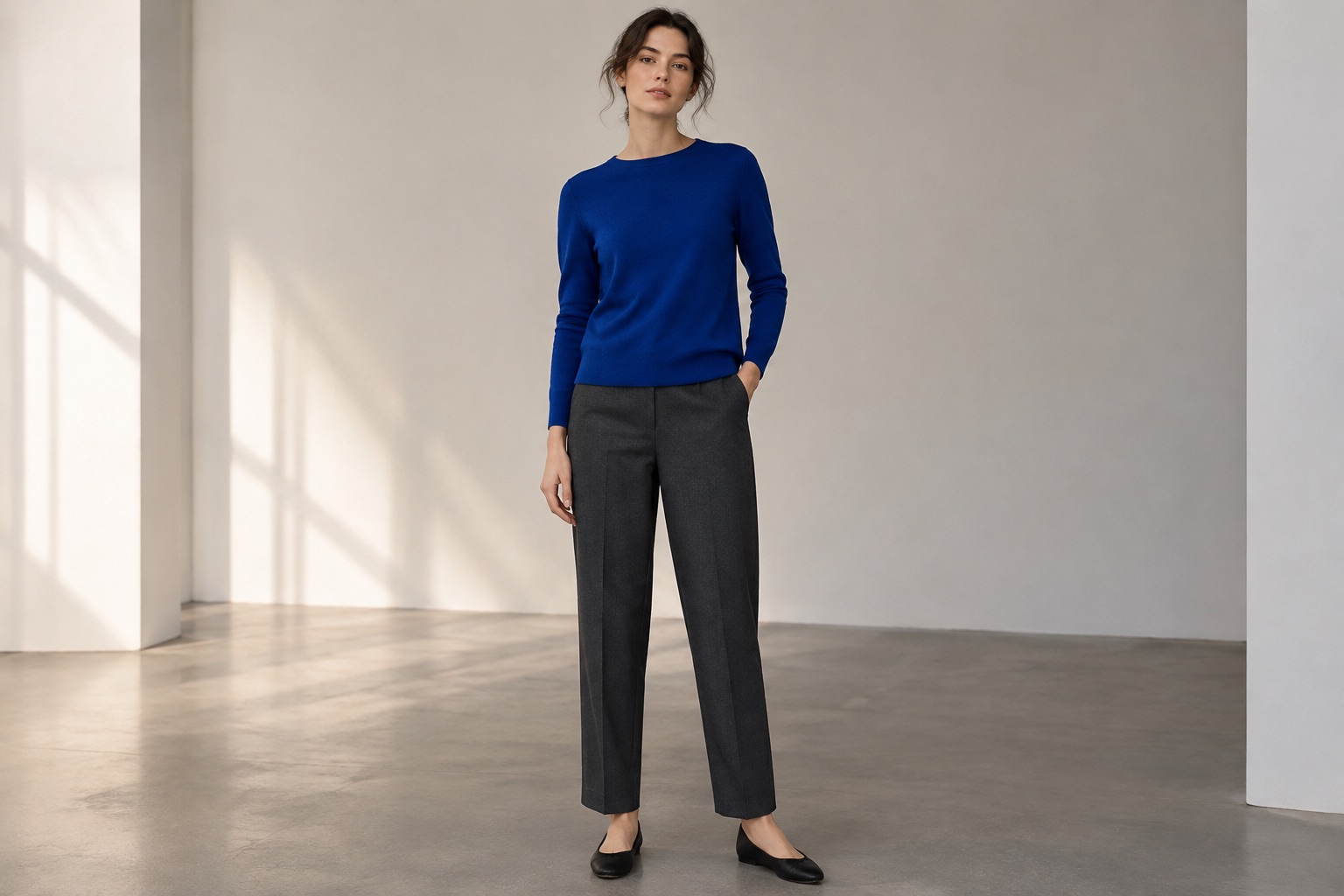
A single bright item can be treated as the centre of the composition. In the blue-top example, neutral trousers leave the colour clearly visible while the simple shapes prevent several competing focal points. For a quieter effect, use neighbouring shades and let surface texture supply the variation. Neither method is intrinsically more refined; the better choice depends on the effect you want.
AI-generated outfit illustration; fictional models, not an archival photograph.
Fabric, care and everyday movement
Minimalist style makes fabric choices especially visible. A crisp cotton shirt holds a shape differently from a soft jersey top; a fluid trouser moves differently from a stiff one. Examine opacity, seam finish and comfort instead of assuming that a high price guarantees quality. Care also affects the result: follow the garment’s care label, check whether it needs ironing and decide if that routine suits you. Light clothing can reveal underlayers, so test it in natural light. Minimal clothing is not automatically sustainable; buying less, wearing an item repeatedly and maintaining it are separate decisions that depend on actual behaviour, production and material choices.
Try viewing the fabric under both daylight and indoor light. A smooth surface may reflect more strongly than expected, while a dense weave may look flatter. Check the care label before using heat or steam, especially on unfamiliar fibres. Proper storage and small repairs can keep the outline clear without demanding that every garment look permanently new or perfectly rigid.
AI-generated outfit illustration; fictional models, not an archival photograph.
Minimalism is not a price category
Minimalist style is not the same as quiet luxury, which is often used to describe discreet signals of expensive clothing. A minimal outfit can be inexpensive, second-hand or made from pieces collected over time. Is black compulsory? No: colour and simplicity can coexist. Are logos forbidden? A logo can become a focal point, but the overall composition still matters. Does minimalism mean owning very few clothes? Not necessarily; a visual style and a wardrobe-size decision are different things. The useful test is whether you can explain why each element is present. If the clothes serve your activities and the shapes feel coherent, restraint has done its work.
If the result feels severe, introduce softness through a rounded shoe, a flexible knit or a warmer neutral rather than immediately adding decoration. If it feels shapeless, change the relative lengths of the layers. These small adjustments keep the focus on the composition. The goal is a wardrobe you can use, not a photograph in which every visible object has been removed.
AI-generated outfit illustration; fictional models, not an archival photograph.