ÉPOPLI / Style guides
Workwear style — Practical details and everyday outfits
Useful details, everyday clothes
← Style guides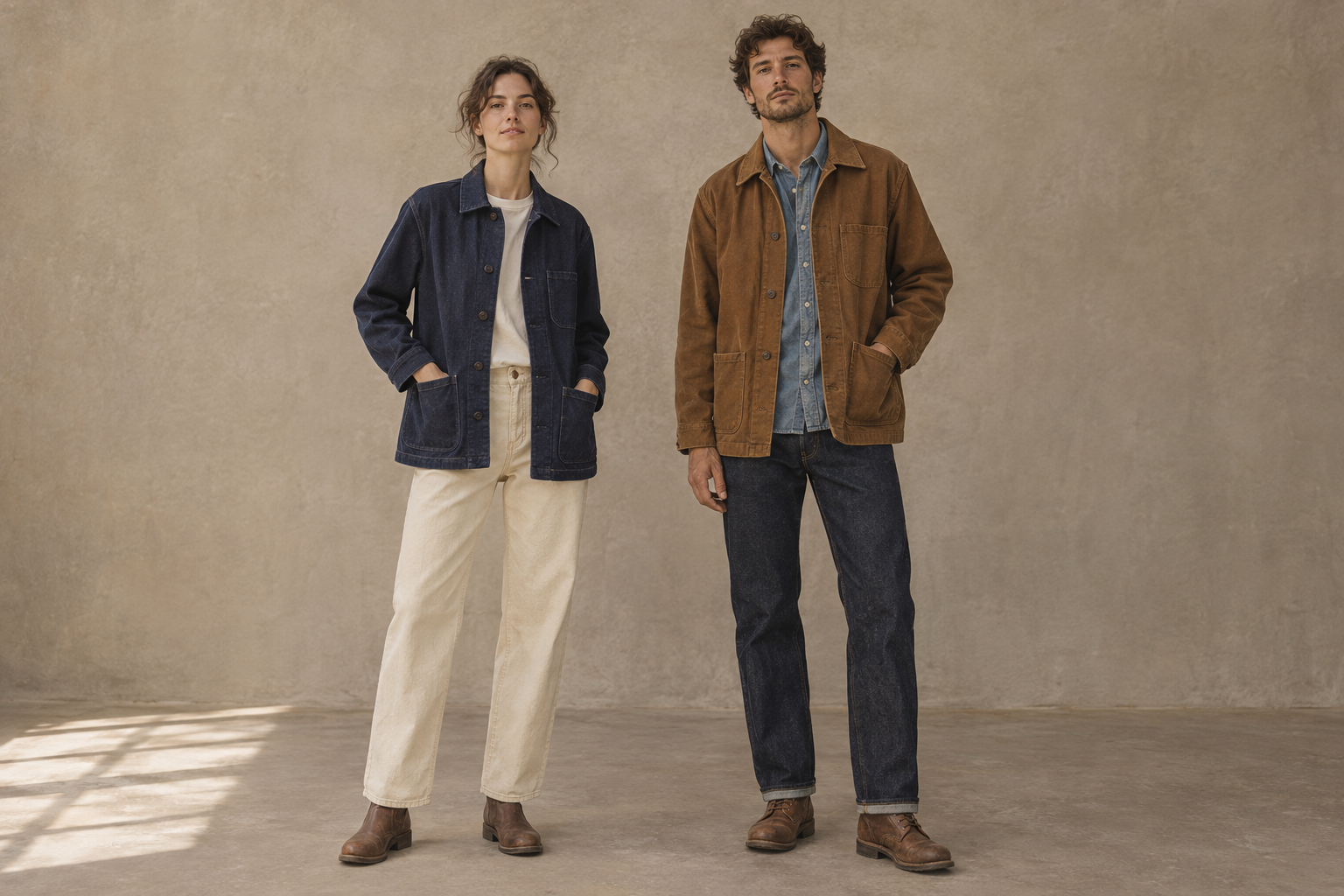
AI-generated outfit illustration; fictional models, not an archival photograph.
Function becomes a visual language
Workwear style adapts the visible features of working clothes to everyday dress. Patch pockets, substantial cotton, roomy sleeves and straightforward fastenings can give an outfit a practical character. A chore jacket over a plain shirt is an easy entry point because it works as an outer layer without the formality of tailoring. The important distinction is between clothing that looks work-inspired and equipment designed for an actual job. A fashion jacket is not automatically protective clothing. In an ordinary wardrobe, select these features for comfort, storage and proportion rather than for an imagined toughness. The clothes should support your day without needing a complete historical worker’s uniform.
A useful starting question is what you need to carry and how often you reach for it. A large pocket is not automatically convenient if its opening is awkward or its contents pull the jacket out of shape. For daily wear, test the pocket with ordinary small items and check that the garment still hangs comfortably. Visual function and actual usefulness should support each other.
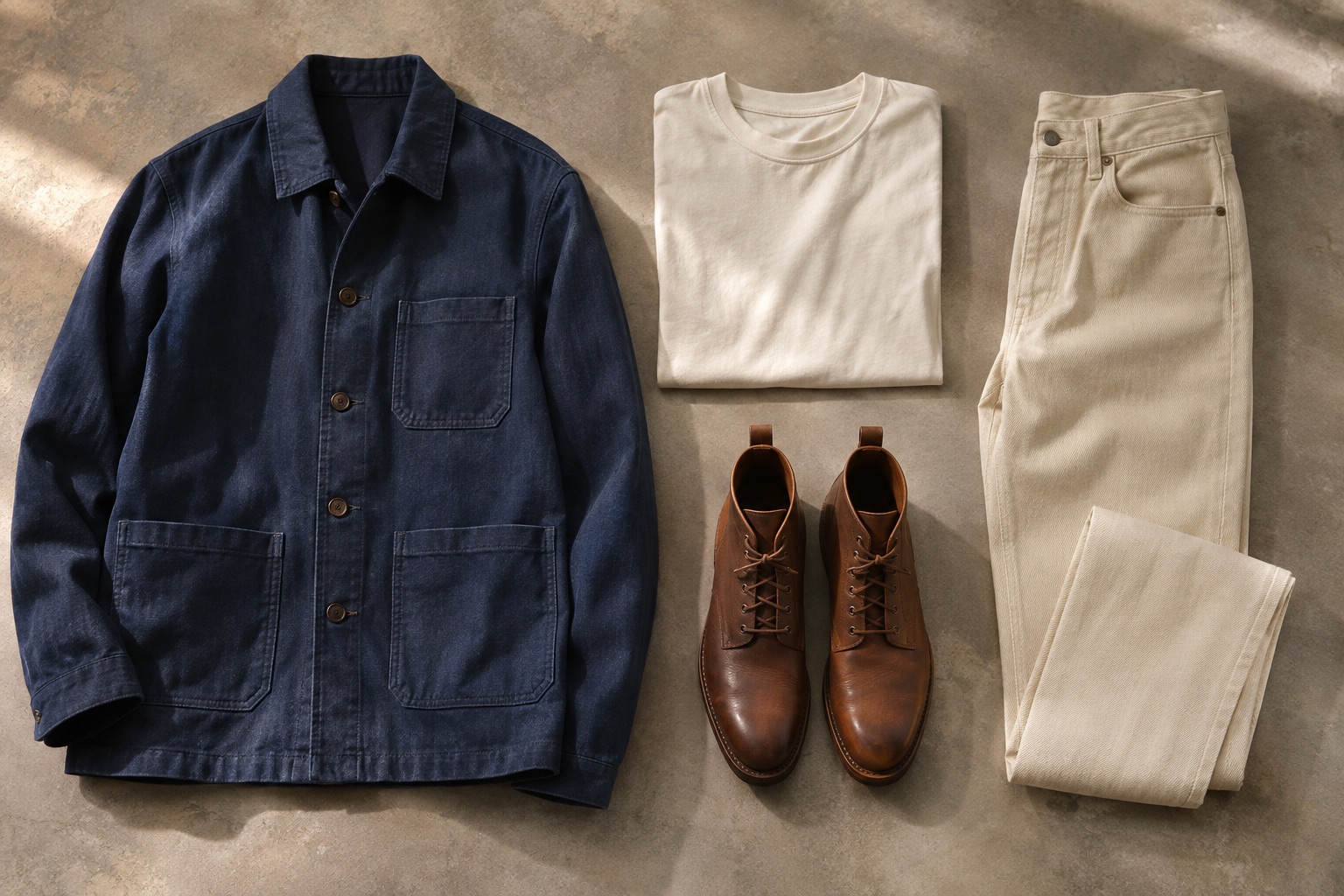
AI-generated outfit illustration; fictional models, not an archival photograph.
Read the history without romanticising it
Workwear style draws on histories that are broader than jeans alone. The ASU FIDM Museum’s study of a denim coat dated around 1855 shows the fabric used in a different garment form before the familiar modern jeans narrative. It describes construction details and considers the wider context of cotton production. The example cautions against treating denim as the invention of a single contemporary fashion moment. It also reminds us that labour history includes inequality and exploitation, not just attractive aged surfaces. The original owner of an unidentified garment should not be invented. Here, the historical object provides context; the outfits shown are newly created illustrations, not archival reconstructions.
Distinguish a dated museum object from later garments that borrow its appearance. A newly made jacket may quote a pocket shape without reproducing the original pattern, fabric or working conditions. Naming those differences keeps an outfit guide from turning into an invented origin story. Museum research can explain an object’s context, while personal styling remains an interpretation rather than historical evidence.
Pockets, seams and materials
Workwear style becomes more specific when you look at construction. A patch pocket is sewn onto the garment’s surface, making its placement visible; its size and position can alter the balance of a jacket. Denim is a twill fabric, with a characteristic diagonal structure, while chambray commonly offers a lighter plain-woven alternative for shirts. Canvas provides another substantial surface, but weight and fibre content vary. These materials are not interchangeable simply because they are blue or brown. Check how the fabric bends at an elbow and whether the pockets remain accessible when you sit. Details should still be useful after the outfit leaves the photograph.
Examine the inside as well as the outside. Seam allowances, stress points and the way a pocket corner is finished can help you understand how the garment was assembled. More visible stitching does not necessarily mean greater strength. For a repair, consider both the fabric around the damage and the intended use instead of judging durability from the rugged appearance alone.
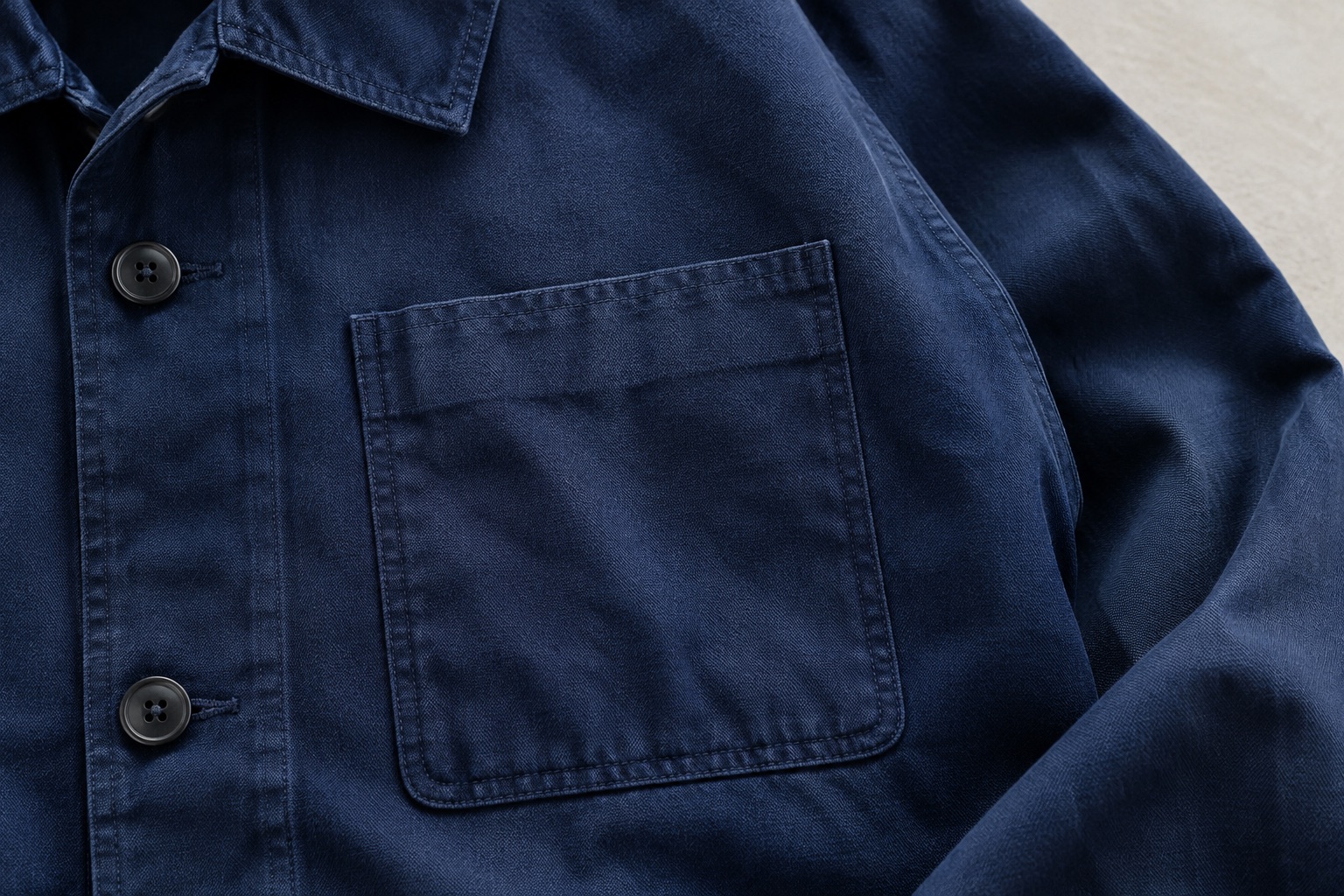
AI-generated outfit illustration; fictional models, not an archival photograph.
Start with a jacket and useful trousers
Workwear style can begin with a chore jacket, straight trousers, a plain T-shirt or chambray shirt, and comfortable shoes. A jacket with enough room for a light layer will often be more adaptable than one that fits tightly across the back. Choose trousers according to your movement and climate rather than the heaviest fabric available. Indigo, ecru, tobacco and olive are easy colours to combine, but they are not a mandatory palette. A clean sneaker can work alongside a boot. Before adding another functional-looking detail, consider whether the outfit already has enough pockets and visual weight. One strong piece can establish the direction.
Before choosing a heavier garment, consider how it will fit under your coat and how often you will wash it. A stiff jacket may need more space at the elbow than a soft shirt. Shoes should be chosen for the ground and distance you expect to cover, not simply because boots appear in an outfit reference. Comfort is part of the selection, not a finishing detail.
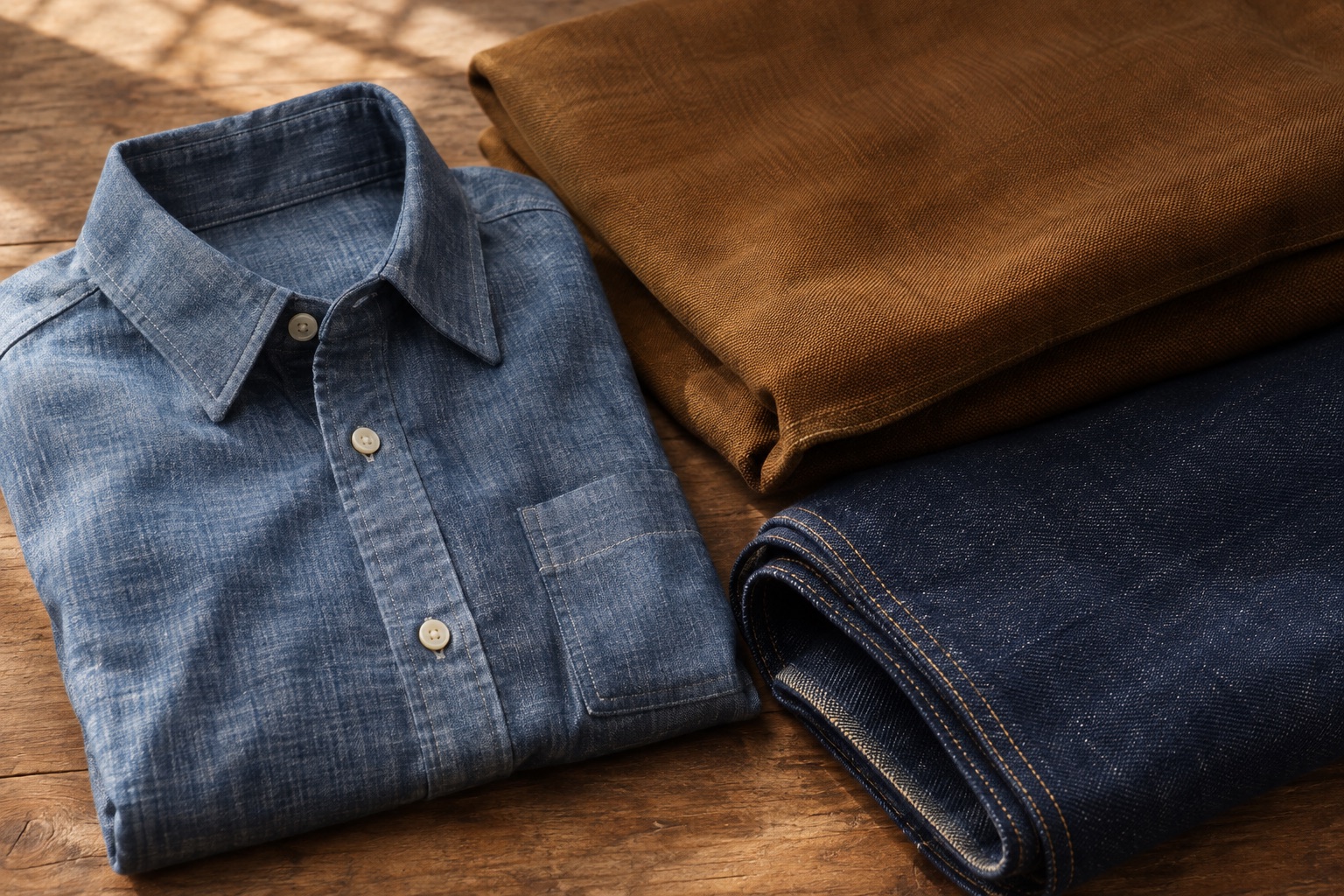
AI-generated outfit illustration; fictional models, not an archival photograph.
Three ways to soften the uniform
Workwear style can be softened in several ways. Wear an indigo chore jacket with pale trousers to make the separate layers readable. Combine a chambray shirt with darker trousers when you want a lighter outfit, leaving the heavy jacket at home. Or place a work-inspired jacket over a fine knit and straight tailored trousers to introduce contrast. These are present-day combinations, not claims about historical uniforms. When wearing denim above and below the waist, compare the washes in daylight; either a clear contrast or an intentional close match can work. The aim is to choose the relationship rather than rely on every blue fabric automatically matching.
An off-white lower half can make a dark jacket look lighter without removing its characteristic pockets. Conversely, keeping the trousers dark while changing to a lighter shirt reduces the visual weight around the upper body. Try one change at a time so you can see its effect. Combining every rugged detail at once can obscure the individual shapes that first made the clothes appealing.
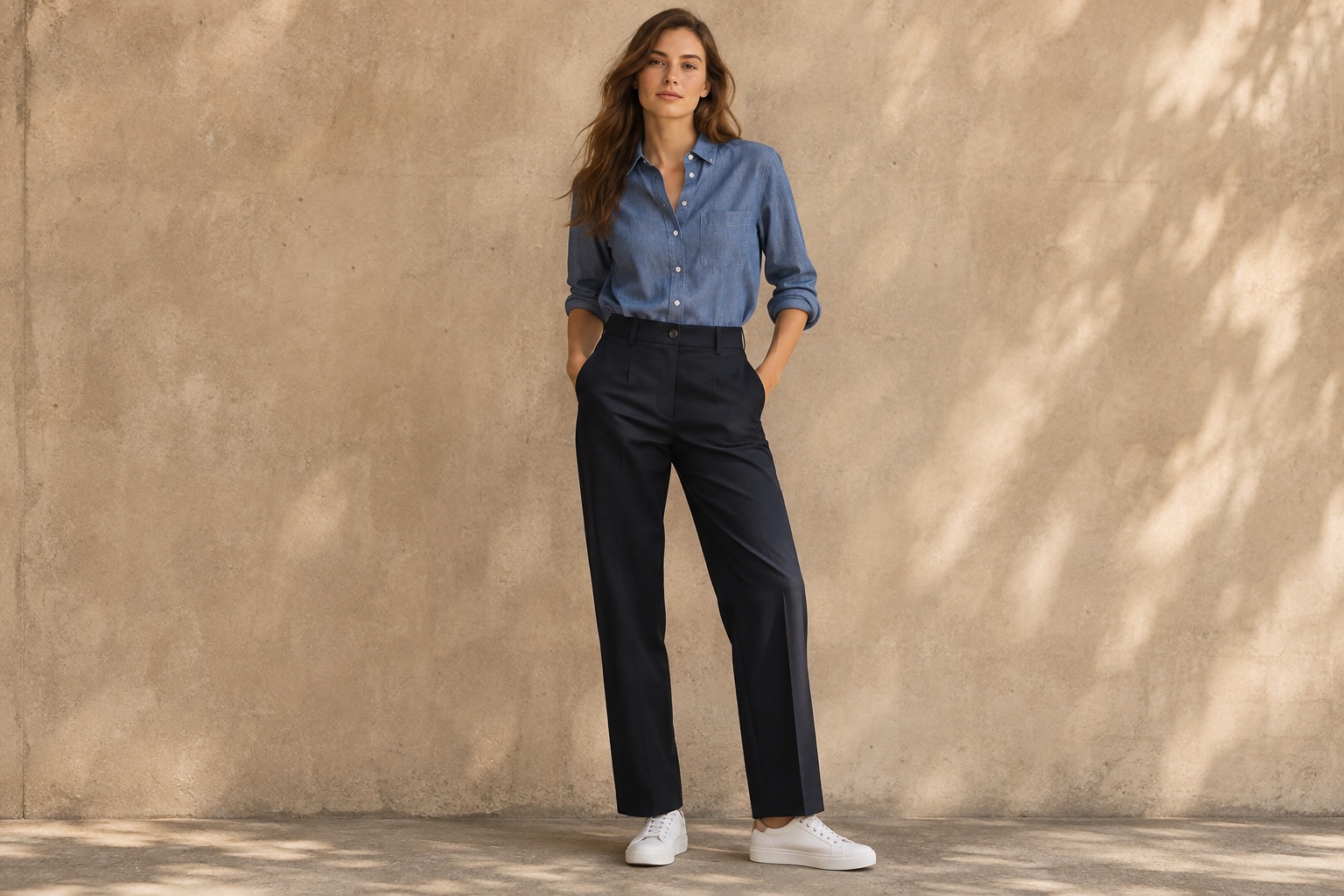
AI-generated outfit illustration; fictional models, not an archival photograph.
Fit for movement, dress for the weather
Workwear style should allow movement without adding unnecessary bulk. Raise your arms in the jacket and sit down in the trousers; stiffness may be part of a fabric’s character, but pain or restricted movement is not a styling benefit. A heavy boot changes the apparent width of a trouser hem, while a lighter shoe can make the same leg look more relaxed. In warm weather, a lighter shirt and trousers may be enough. Follow care instructions, especially for dark dyes that may transfer, and repair worn seams where practical. Natural wear can be part of a garment’s story, but artificially distressed clothing is not evidence of genuine work history.
When trying on trousers, check the knee, seat and waistband in a seated position. A wide leg does not guarantee enough room everywhere. Before rolling the hem, consider whether the fold becomes bulky against the shoe or catches on the ground. For darker fabrics, consult the care instructions and keep possible dye transfer in mind when combining them with pale clothing or upholstery.
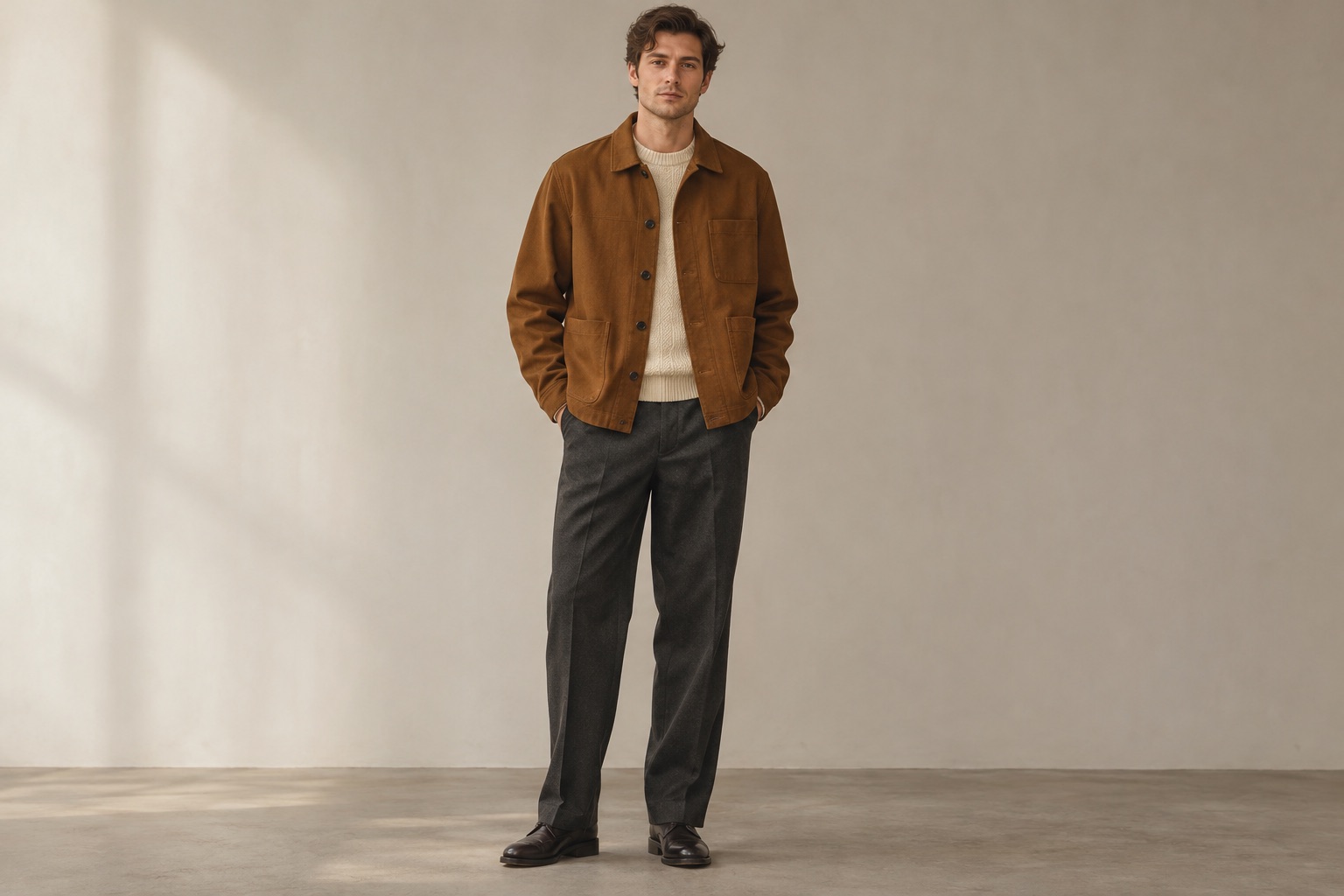
AI-generated outfit illustration; fictional models, not an archival photograph.
Workwear, utility and protective clothing
Workwear style overlaps with utility dressing, which often emphasises storage, adjustable parts and practical construction across a wider range of clothing. It is also distinct from certified protective equipment. Can you wear it without boots? Yes: choose footwear suitable for the day and balance the trouser length around it. Is a full denim outfit necessary? No: one chore jacket or work-inspired trouser can be enough. Does a rugged appearance guarantee durability? No: inspect seams, material and care requirements. Read the clothes as a set of useful design choices, while remembering that the lives and conditions of the people who originally wore working garments cannot be reduced to an aesthetic.
For an actual workplace, follow the requirements of the task and the employer rather than this fashion guide. Reinforced-looking cloth is not proof of protection against heat, chemicals or impact. In everyday dress, however, practical construction can still provide useful inspiration. The distinction allows you to appreciate a garment’s design without making unsupported claims about its safety or the experience of its wearer.
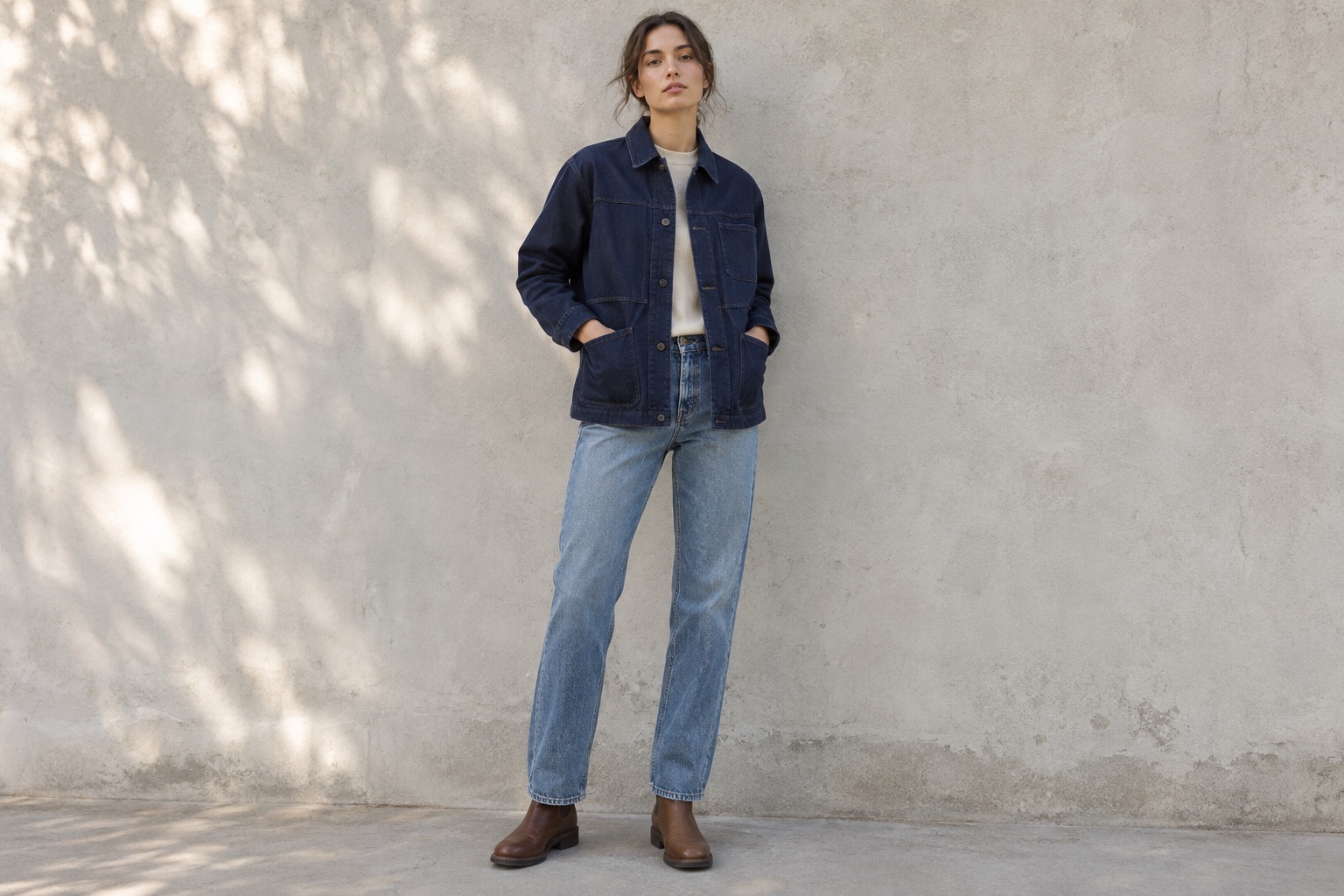
AI-generated outfit illustration; fictional models, not an archival photograph.