ÉPOPLI / Style guides
Bohemian style — Texture and movement in everyday dress
Texture, movement and personal combinations
← Style guides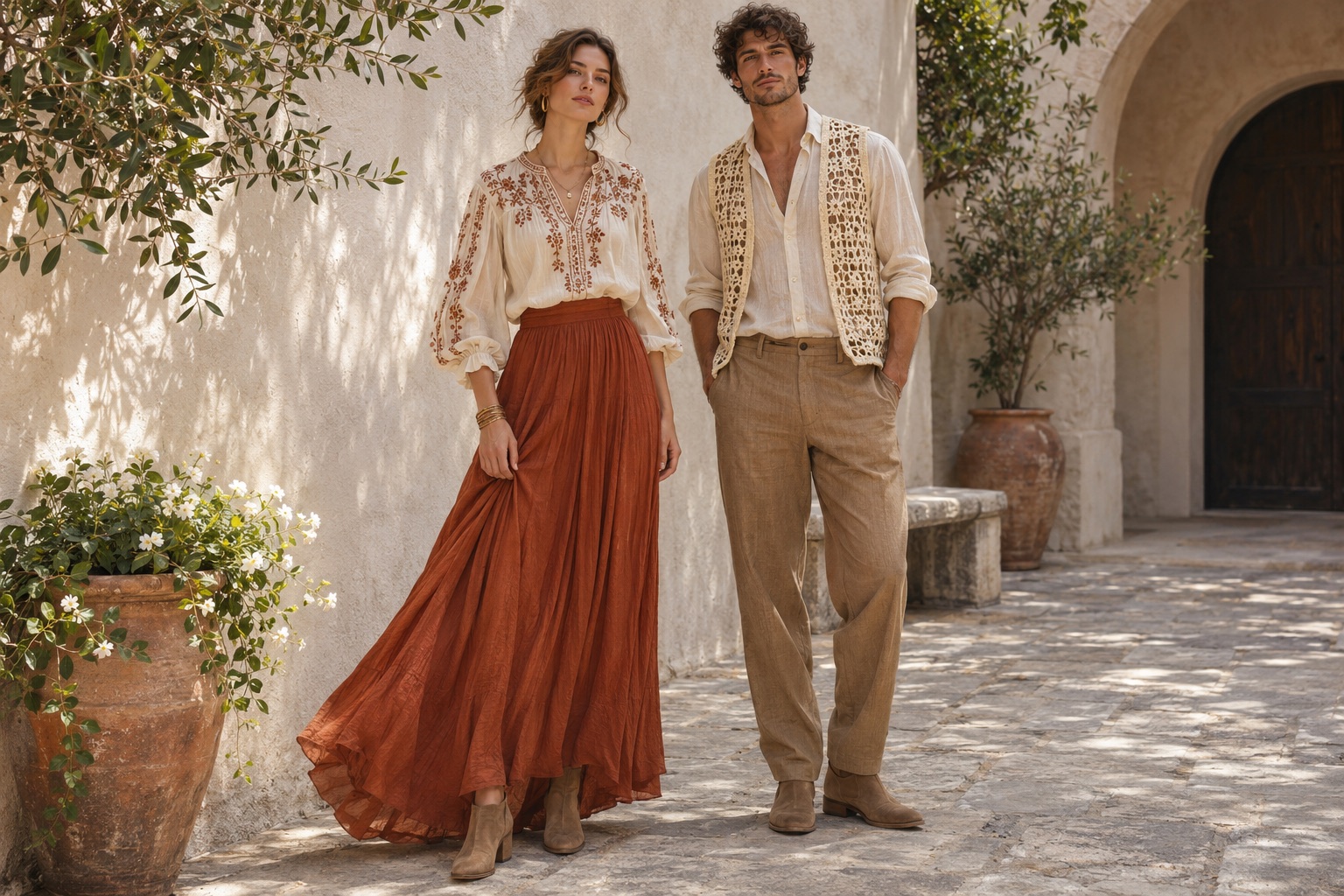
AI-generated outfit illustration; fictional models, not an archival photograph.
Start with movement, not decoration
Bohemian style can begin with a garment moving around the body: a loose blouse, an open knitted vest or a long skirt that does not hold a rigid outline. The useful question is not how many decorative details to add, but how each piece hangs. A firm jacket can give a soft outfit an edge, while a plain top can make a patterned lower half easier to read. Think of the look as a relationship between texture, movement and personal selection, rather than a complete costume that must be purchased together.
Layering means wearing several visible layers, but they need not all be heavy. An open outer piece reveals the line underneath; a closed one creates a new surface. Start with two layers and check the outfit while sitting and walking. If a sleeve pulls or a hem catches, adjust the garment before adding accessories. A useful outfit should still work when the outer piece comes off, so make the base combination intentional too.
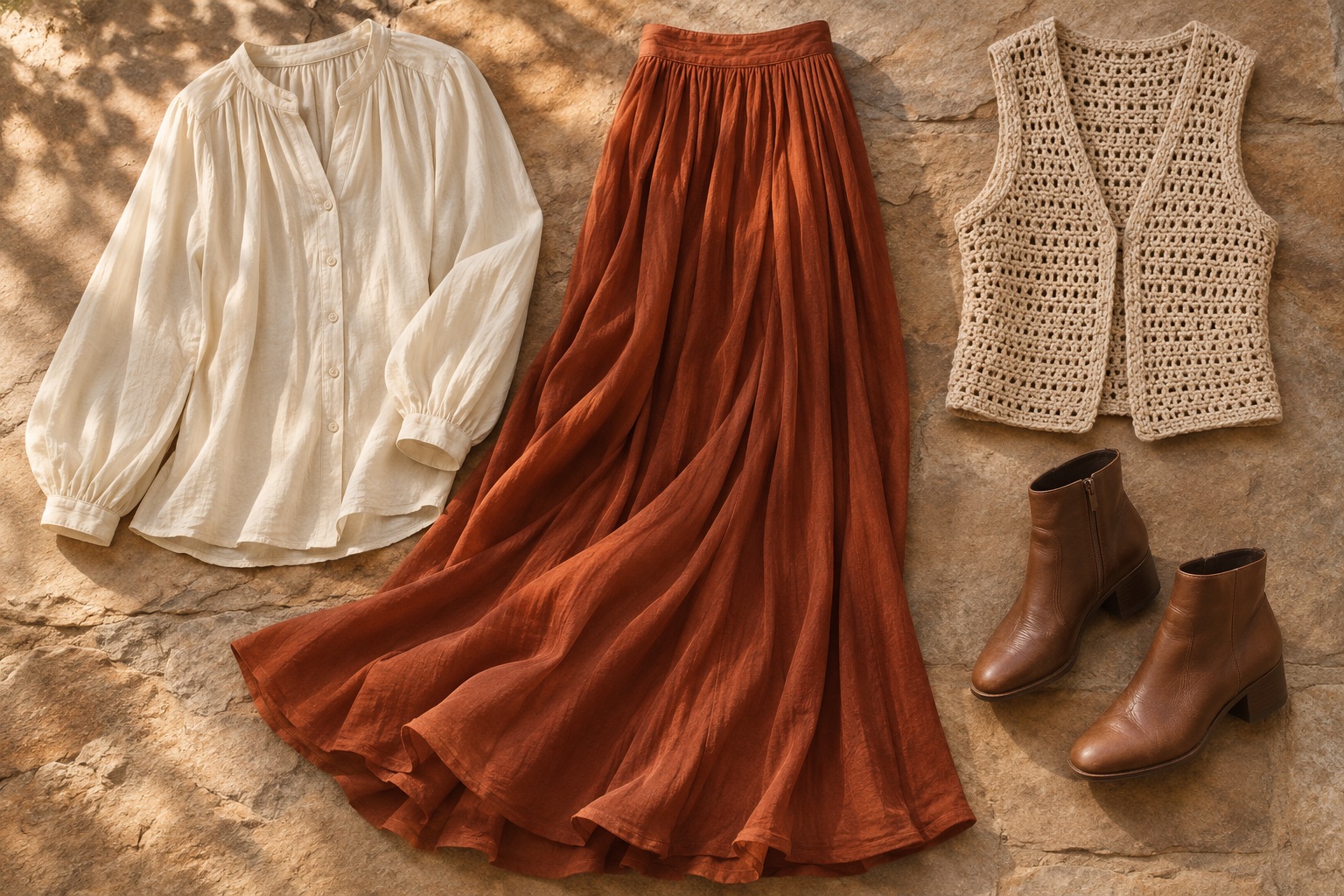
AI-generated outfit illustration; fictional models, not an archival photograph.
A historical connection, not a single origin
Bohemian style is not identical to the hippie clothing of the late twentieth century, although the two are often linked in contemporary fashion language. The MFA Boston exhibition Hippie Chic describes young people mixing vintage clothes, varied cultural references and decorative techniques, with ideas moving from street dress into designer collections. Its examples include patchwork, fringe and vivid fabrics. This provides one documented connection for understanding the modern look, rather than proof that a single designer or festival invented it.
The historical reference and the outfit advice on this page serve different purposes. The museum source documents a particular fashion movement; the combinations here are contemporary editorial suggestions. A garment associated with a particular region or maker deserves a specific description when that information is known. Calling every decorative textile exotic erases those differences. Check a label or a maker’s account before assigning a technique, origin or cultural meaning to a piece.
Read the fabric before the pattern
Bohemian style becomes more convincing when the fabric can be understood at close range. Embroidery adds a stitched surface; an open knit produces actual gaps; a printed motif remains relatively flat. These differences affect weight and transparency as well as appearance. Hold a piece against the light, inspect its reverse and see whether the seams can support its weight. A visually delicate blouse can require a simple underlayer, while a heavier skirt may need a lighter top to keep the whole outfit comfortable.
Embroidery is not automatically handmade, and irregularity alone does not prove age or craftsmanship. Describe what is visible before making a claim about production. For everyday dressing, choose one textured focal point and let nearby surfaces stay quieter. Cotton, wool and synthetic blends can all behave differently depending on their construction; the fibre name alone is not a complete guide. Read the care instructions and feel the fabric rather than treating natural fibres as a guarantee of suitability.
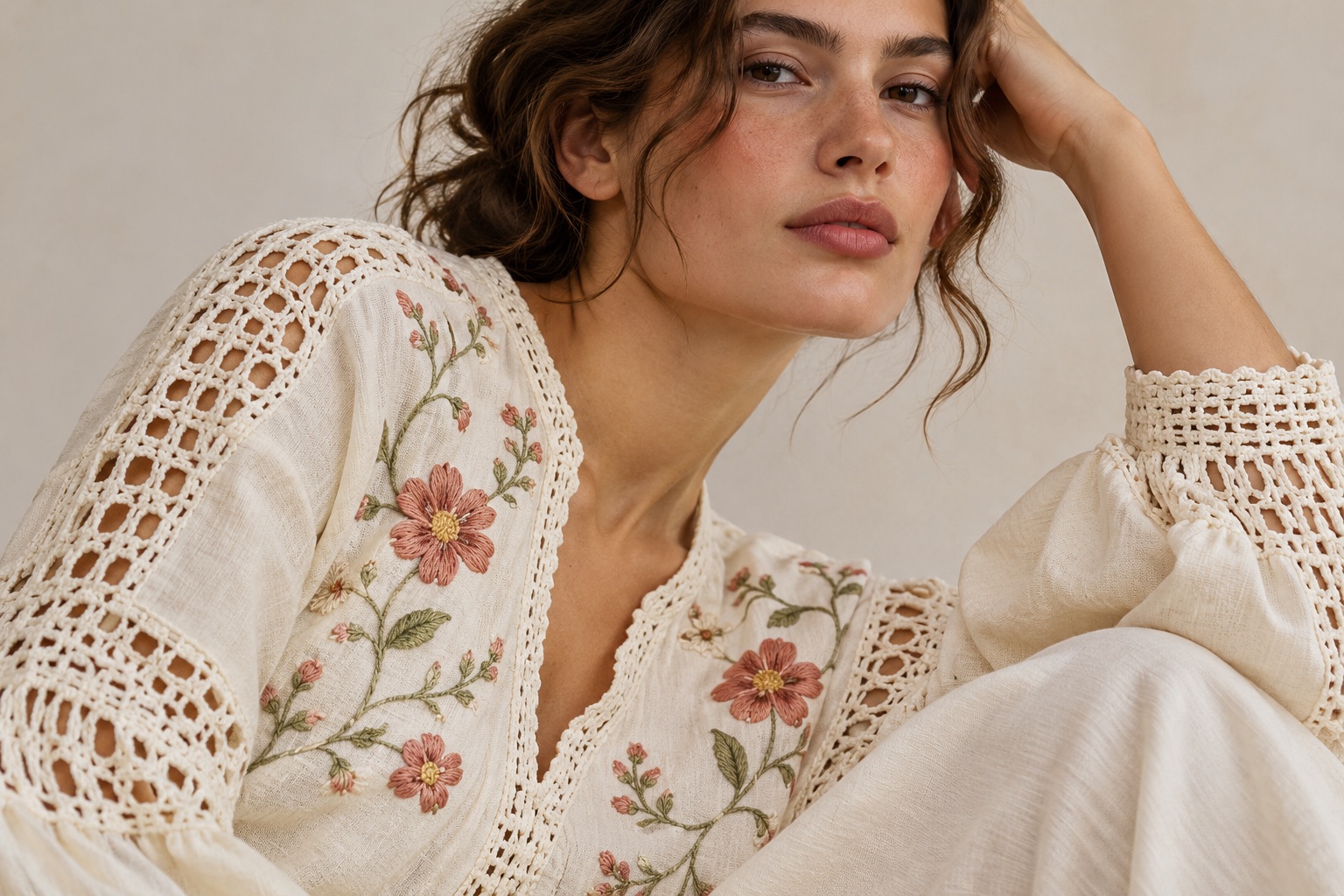
AI-generated outfit illustration; fictional models, not an archival photograph.
Build a small, flexible wardrobe
Bohemian style does not require a large wardrobe. A loose cream shirt, a maxi skirt, straight trousers and an open vest can form a useful starting group. Choose colours that already work with your shoes and bag. A rust or brown piece brings warmth; cream provides a lighter interval; dark blue can anchor the combination. None of these colours is compulsory. The point is to create repeated connections so that one expressive garment can be worn in several settings.
A maxi skirt is simply a long skirt, not a promise of a particular mood. Its cut matters: a narrow version moves differently from a gathered one. Try it with the footwear you expect to use, and make sure the hem clears the ground. An open vest should leave enough space at the armhole for the shirt beneath. Before buying another accessory, test whether a belt, a changed sleeve length or a different shoe already solves the balance.
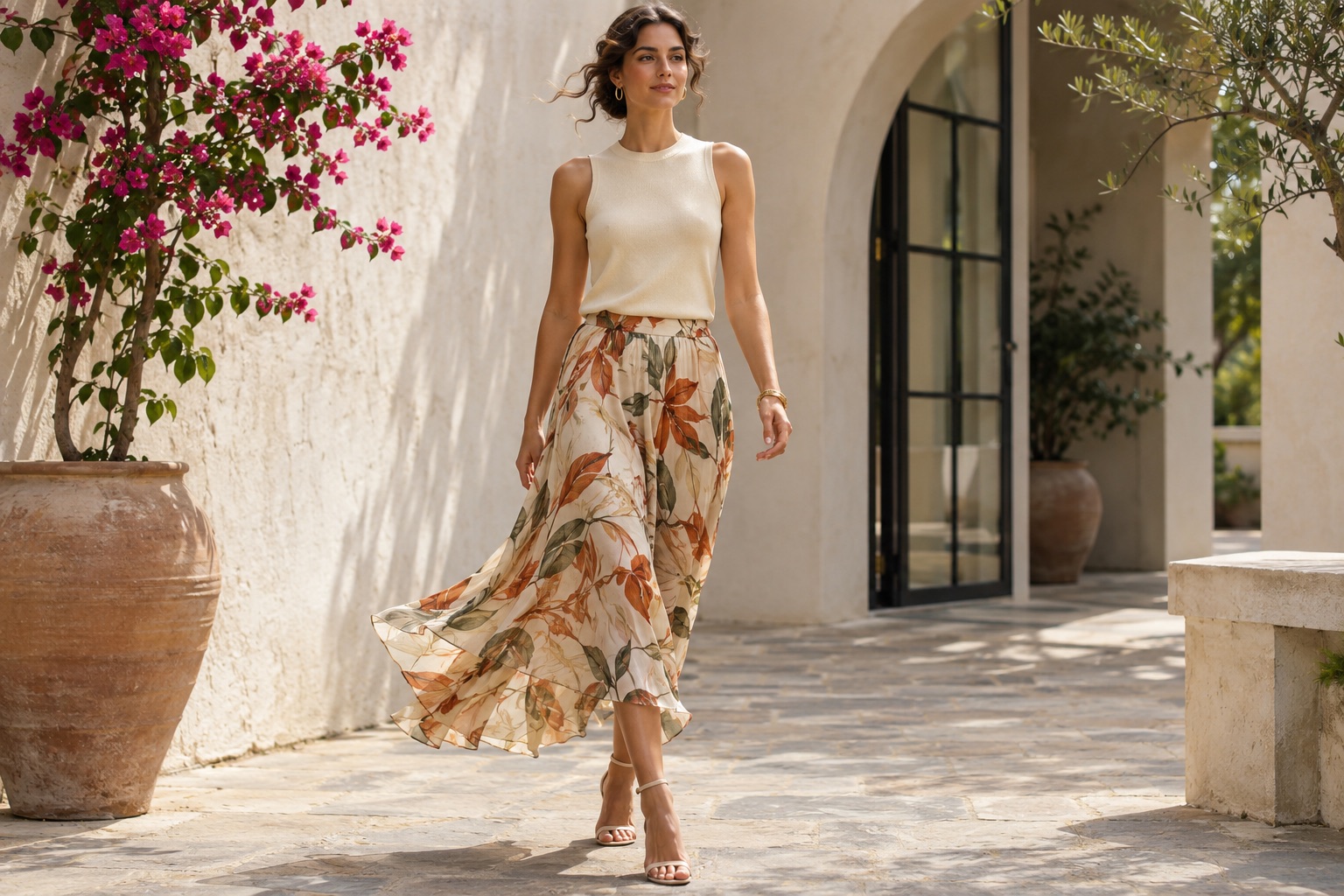
AI-generated outfit illustration; fictional models, not an archival photograph.
Three ways to wear it today
Bohemian style can be adapted to three ordinary situations without changing its entire wardrobe. For a warm day, pair a plain sleeveless top with a flowing skirt and secure flat shoes. For a city afternoon, put a textured vest over a simple shirt and straight trousers. For a cooler evening, add a short jacket over the same base. These are examples, not dress rules: the common thread is one expressive surface supported by pieces that allow movement and suit the setting.
Layering works best when the hems have a deliberate relationship. If two pieces finish at almost the same point and bunch together, shorten or lengthen one visible line. A necklace can echo a neckline, but several competing accessories may hide the garment’s texture. Carry the bag you actually need during the fitting: a large shoulder bag changes the outline and can catch open stitches. Practical testing often produces a clearer outfit than adding one more decorative item.
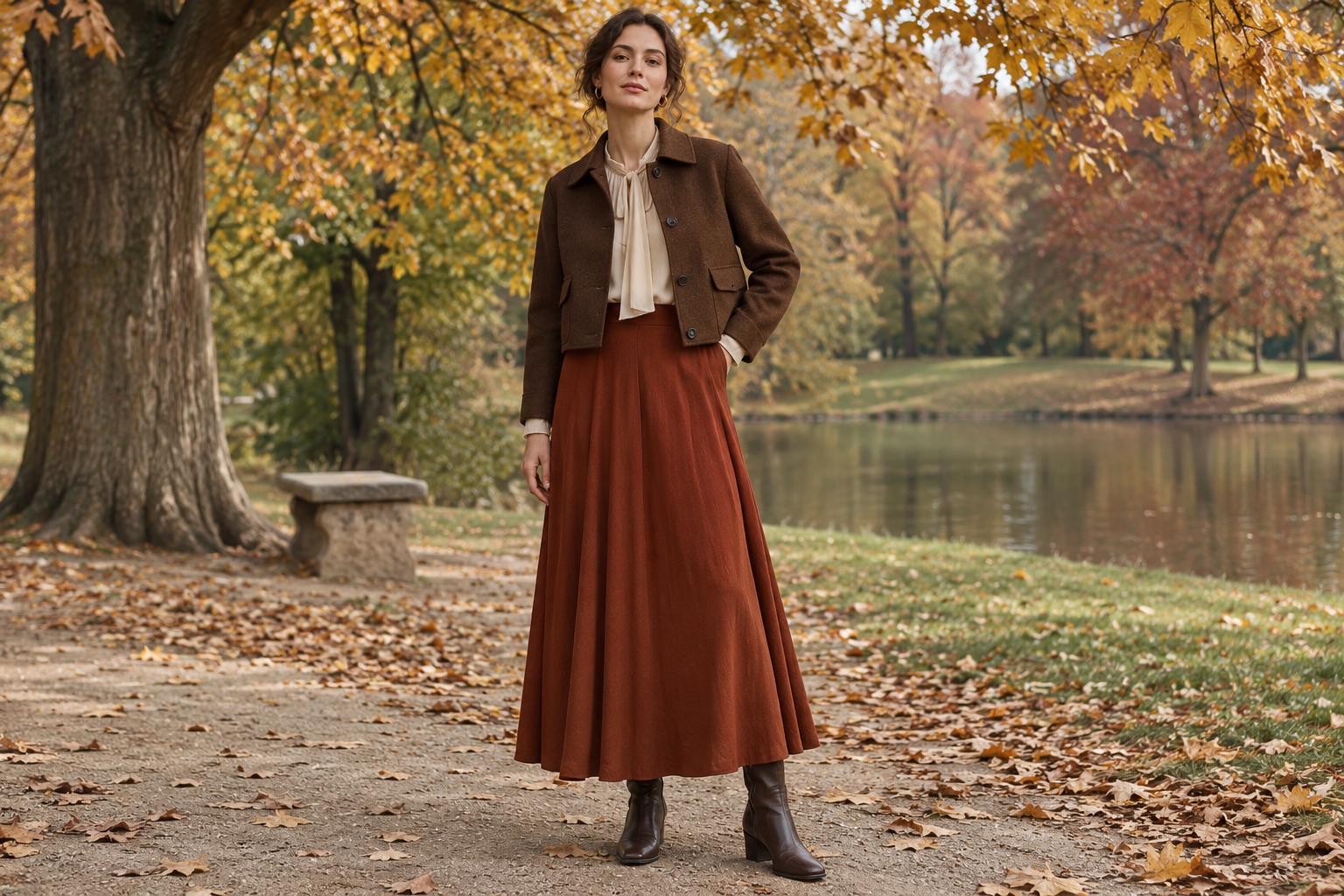
AI-generated outfit illustration; fictional models, not an archival photograph.
Adjust length, weather and care
Bohemian style needs the same attention to weather as any other way of dressing. Airy layers can feel pleasant in warm conditions, but long loose hems need attention on stairs, bicycles and wet pavements. In cold weather, put a smooth insulating layer underneath a textured outer piece so that the two do not catch. Match the weight of the footwear to the surface you will walk on rather than choosing it solely for a photograph.
Care for decorative pieces according to their labels. Close fastenings before storage, support heavy knits and separate sharp jewellery from open stitches. Do not assume every fringe or trim can be washed in the same way as the base fabric. When a garment needs specialist attention, weigh that routine against how often you expect to wear it. A simpler piece that can be maintained well may become more personal over time than a dramatic one that stays in a cupboard.
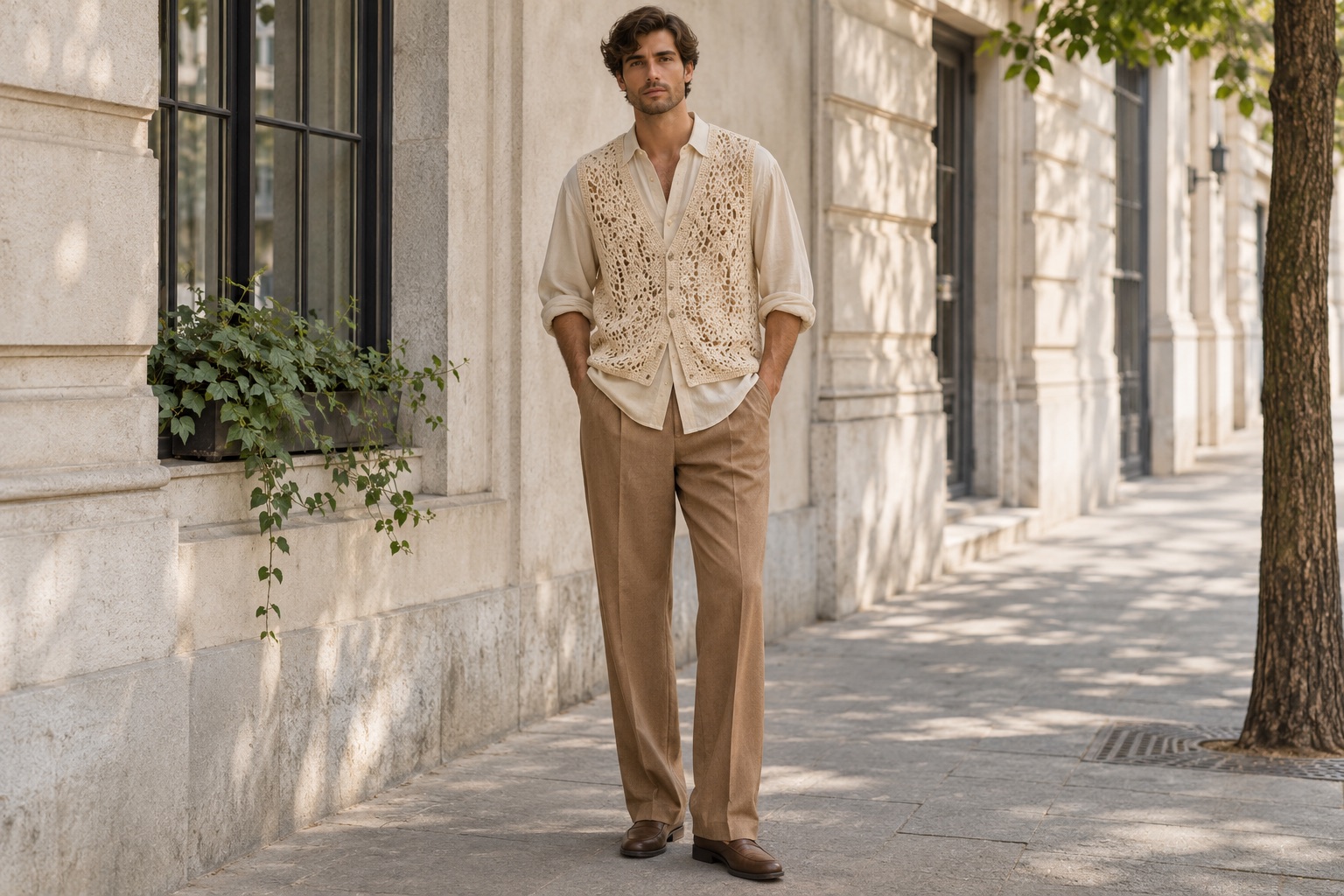
AI-generated outfit illustration; fictional models, not an archival photograph.
Keep the references, make it personal
Bohemian style is most useful as a way to combine clothes, not as an identity assigned to the wearer. It may overlap with romantic, vintage or festival dressing, but a long skirt alone does not make those categories interchangeable. Ask what the outfit is doing: showing a textile, creating a soft outline or combining old and new pieces. Naming that decision is more informative than collecting trend labels. You can retain one detail and leave the rest behind.
The images in this guide are generated outfit illustrations, not photographs of museum objects, historical people or a particular brand’s collection. Use them to compare proportions and colour relationships, then test those relationships with real garments. The strongest result need not reproduce the image. A small change in sleeve volume, fabric weight or shoe shape can make the same idea work for a different body, climate and daily routine.
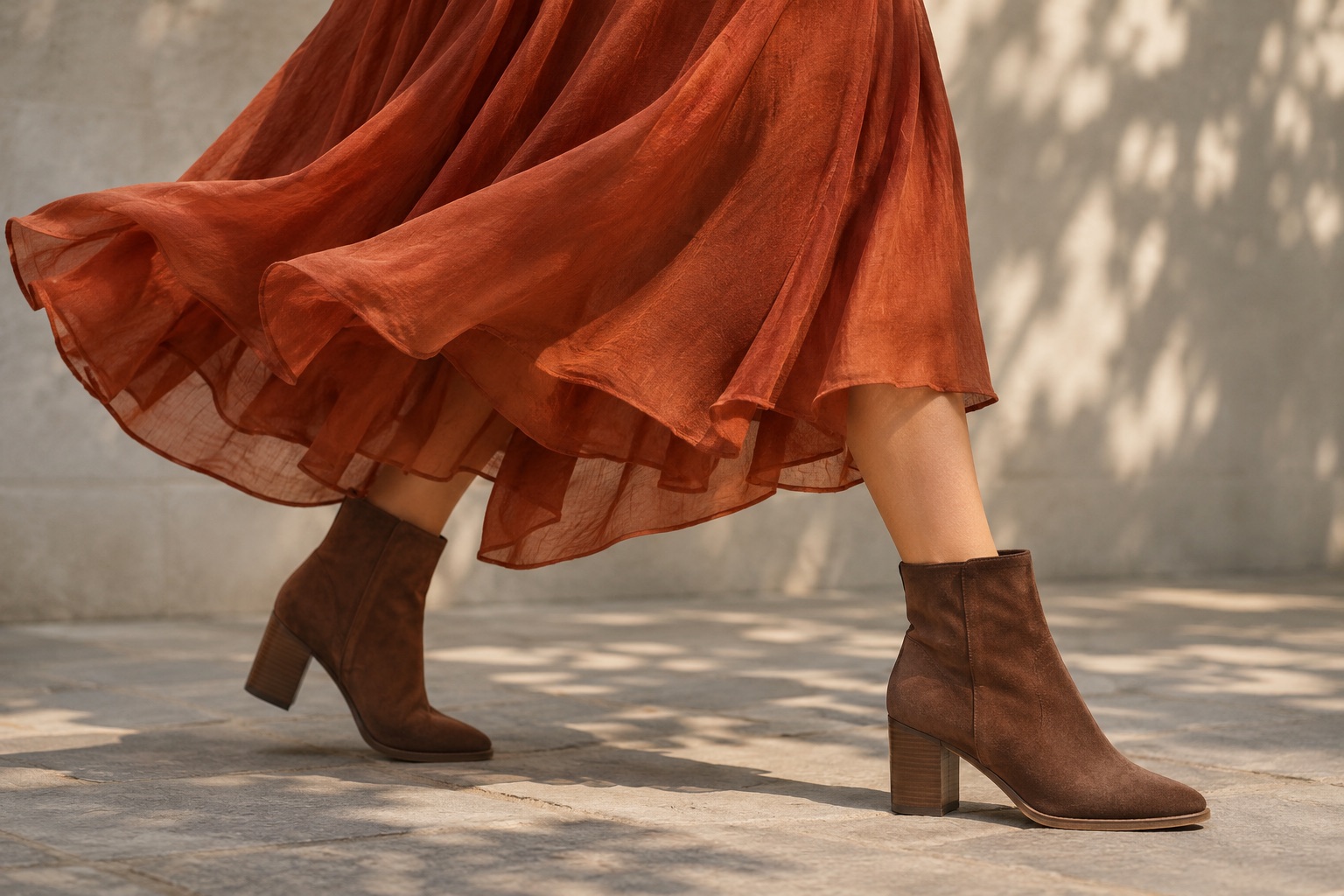
AI-generated outfit illustration; fictional models, not an archival photograph.