Christian Dior: The New Look and the 1947 Bar Suit
Read the New Look through the Bar suit, then follow the changing lines of a ten-year couture career.
ÉPOPLI ·
1947: a new proportion begins at the waist
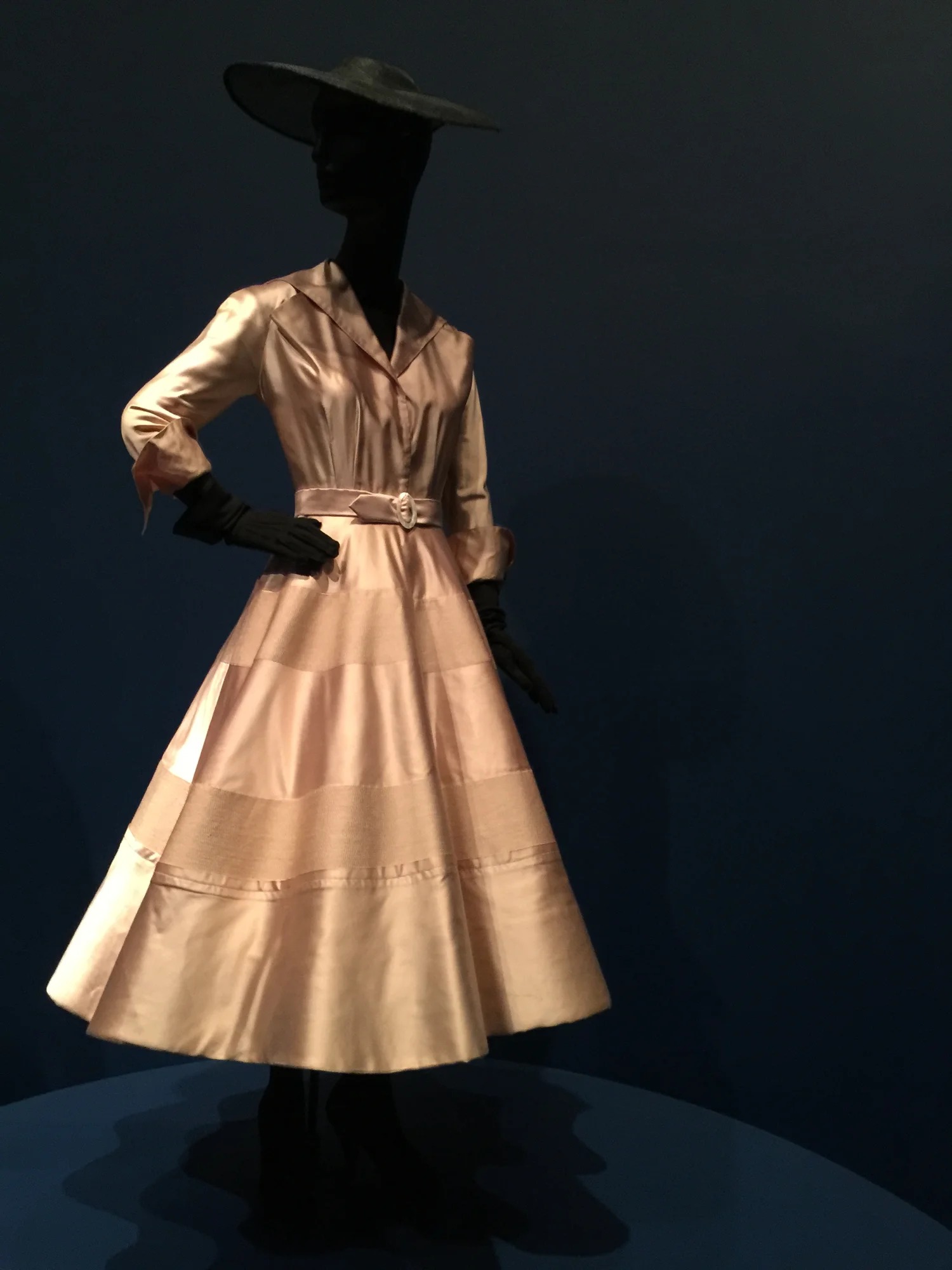
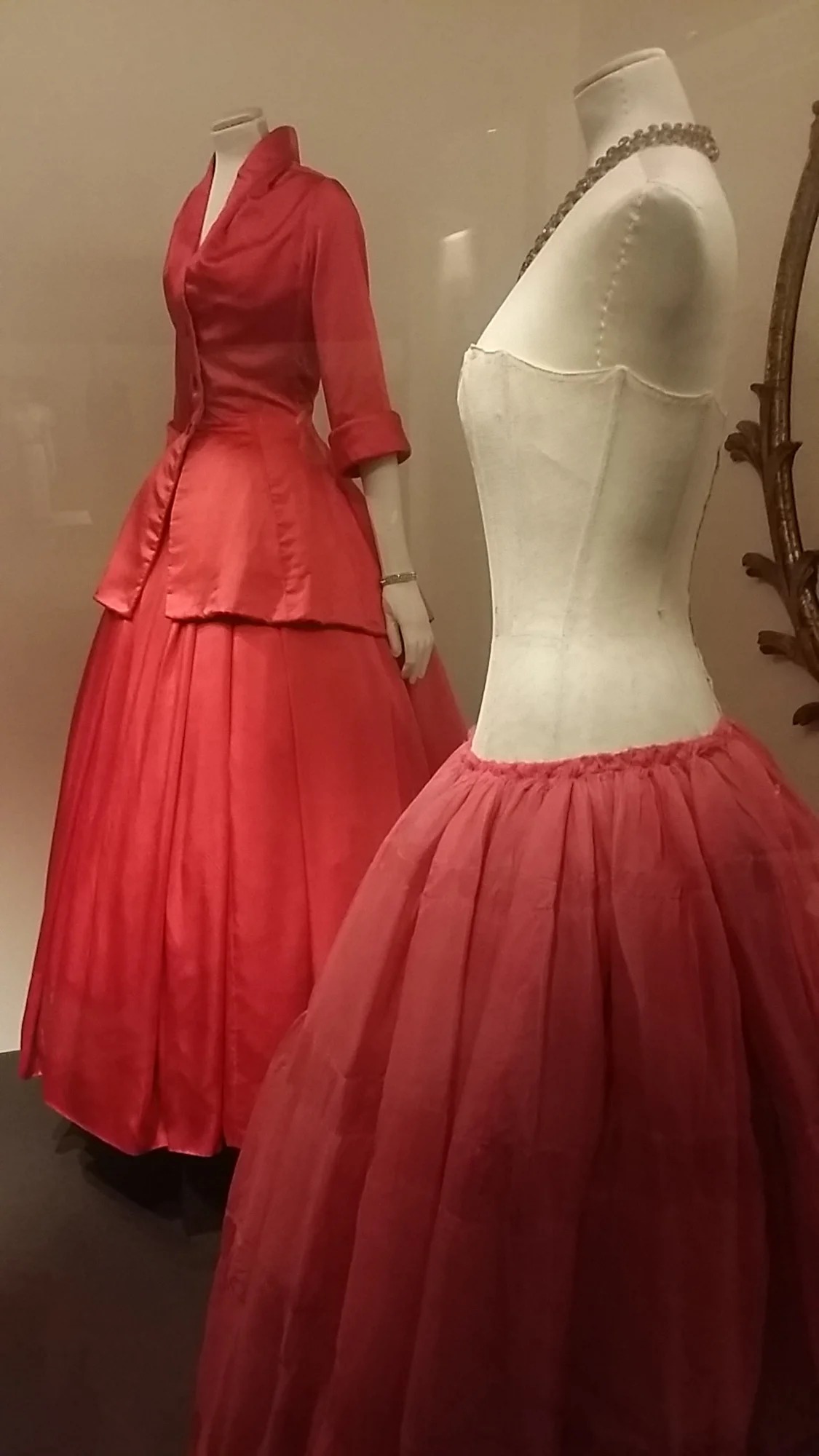
The Bar suit of Spring/Summer 1947 makes Christian Dior and the history of Dior tangible through a single silhouette. Its light jacket narrows at the waist and expands over the hips above a dark, full skirt. The eye gathers at the middle before travelling towards the hem. Calling this simply feminine clothing misses the construction that redraws bodily proportions. New Look became the name associated with this shift. The relationship between shoulder, bust, waist and hip matters more than a general claim that fashion became new after the war. The V&A’s examination of the Bar suit invites attention to its making as well as its outline. A smooth curve does not emerge merely by wrapping fabric around a body: decisions about restriction and space come first.
From Granville to galleries and couture ateliers
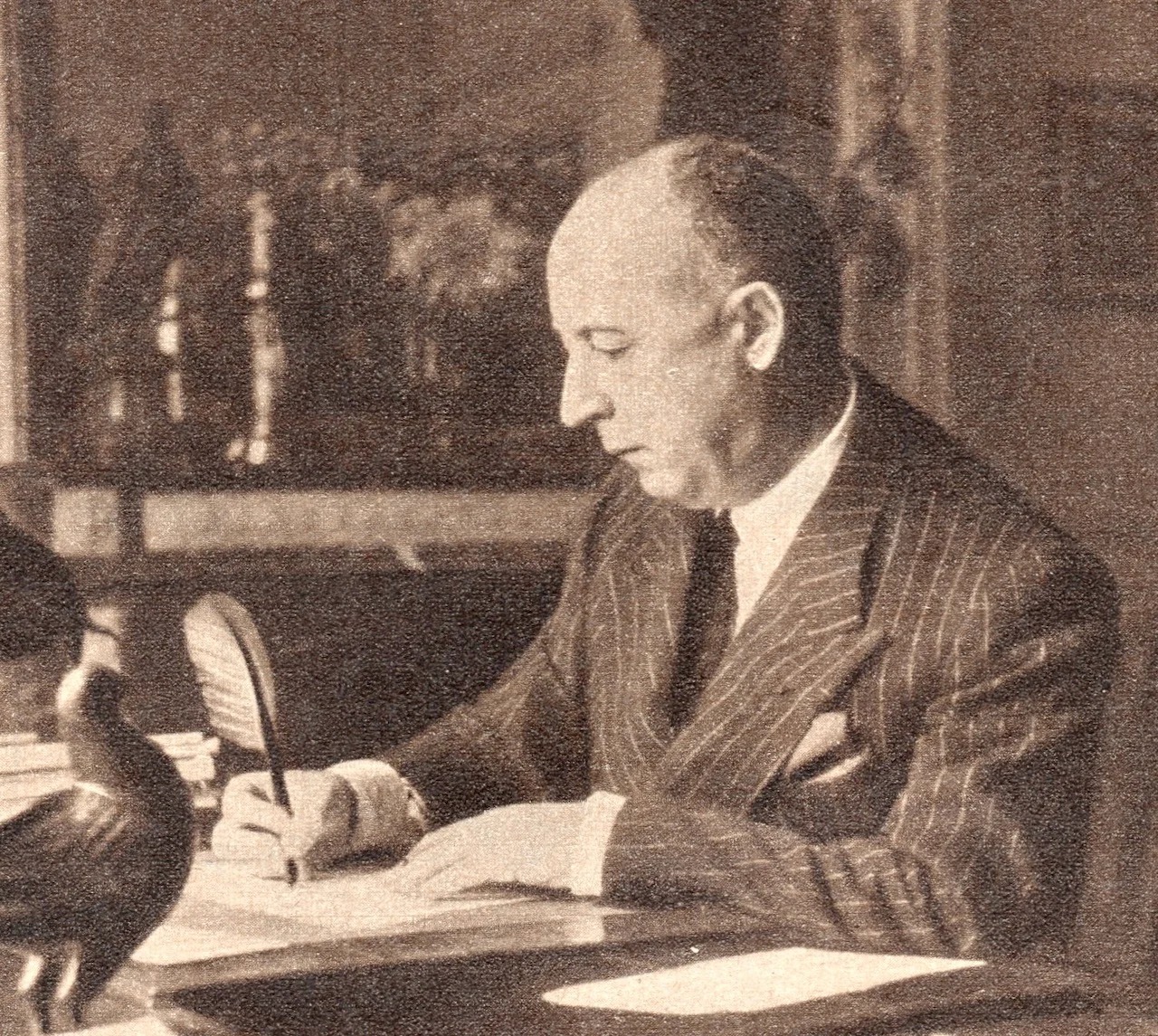
Christian Dior and the history of Dior did not begin with a fashion-school diploma. Born in Granville, Normandy, on 21 January 1905, he later moved to Paris with his family. His parents envisaged a diplomatic career, and he entered Sciences Po in 1923. He subsequently pursued art, opening a gallery with Jacques Bonjean in 1928. This experience should not be treated as the sole explanation for particular dresses, but it establishes a professional involvement with visual culture before clothing. By the mid-1930s he was selling fashion drawings; in 1938 he joined Robert Piguet. After wartime interruption he worked for Lucien Lelong. Established houses provided experience of design and customers before independence. Translating a drawing into clothing involves measurements, materials and the time available in a workroom. Gallery work and atelier training were different stages, each part of the conditions from which his own house emerged.

The workrooms behind a single name
The house was established at 30 avenue Montaigne in December 1946 with support from textile businessman Marcel Boussac. Its official history records three ateliers and 85 employees at the outset. The first collection appeared on 12 February 1947; Harper’s Bazaar editor Carmel Snow’s response helped give the New Look its name. Design, finance, production and press communication performed distinct roles. The term haute couture means high-end clothing made to fit an individual client. A sketch can set a direction, but cutters, sewing specialists, fitting models and clients participate in making the garment real. An individual name on a label should not reduce production to an individual act. The debut launched an organisation capable of making and communicating an identifiable shape.

La Cigale: cloth as structure
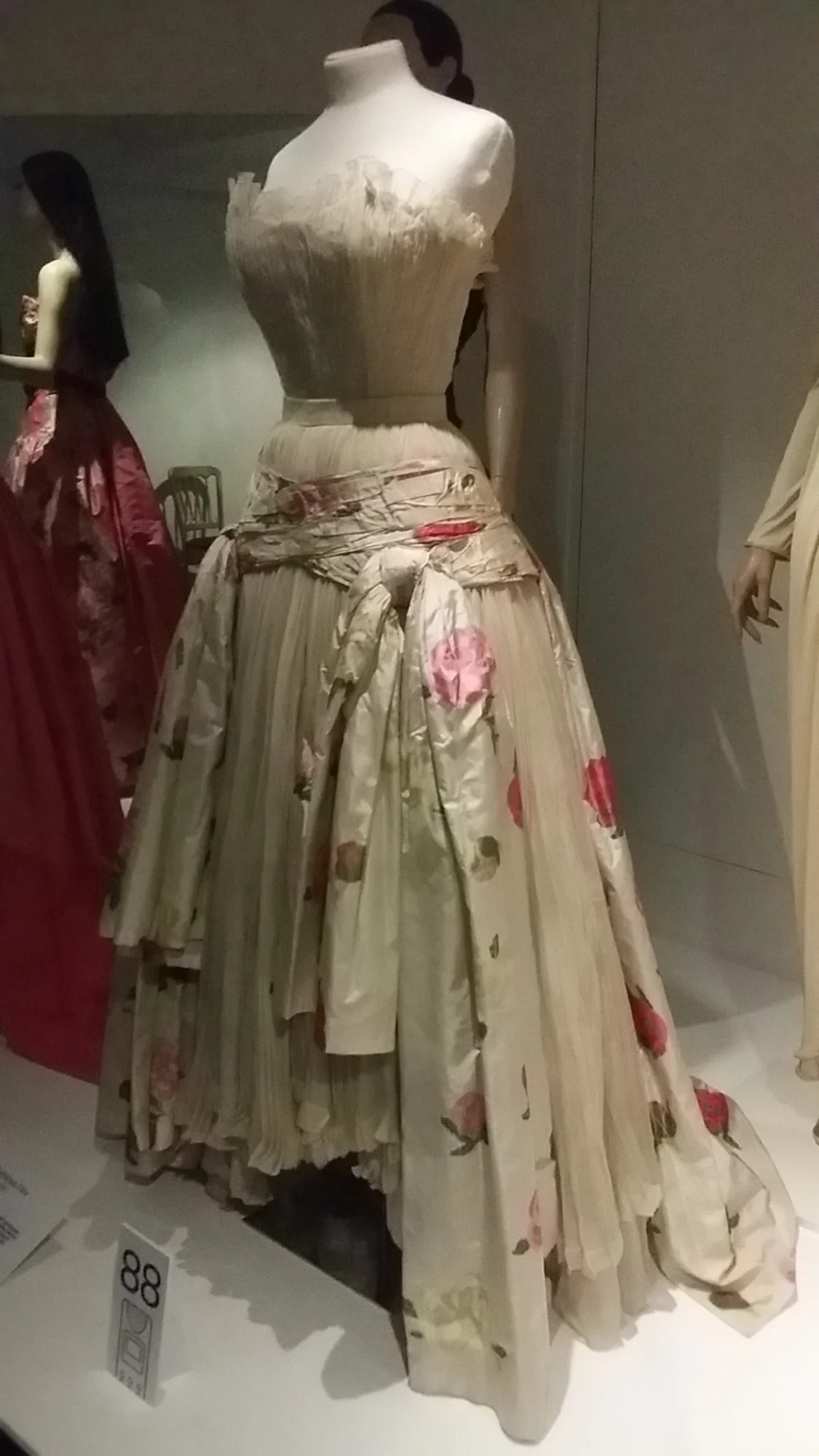
Christian Dior and the history of Dior cannot be reduced to a single glamorous dress because materials perform different tasks. La Cigale, from Fall/Winter 1952–53, uses grey moiré: a cloth with a watered surface effect. The Met records a cotton, rayon and acetate blend. Its firm, substantial fabric forms a close bodice and projecting hips; the skirt creates space beyond the body rather than simply hanging from the waist. A much softer material would not produce the same result. Cloth therefore supports the form instead of merely decorating it. The museum’s discussion links construction with posture. Reading haute couture through this example means considering the space between body and fabric, not just hours of ornament. Comparing it with the Bar suit reveals different ways of placing volume in a dress and a jacket-and-skirt ensemble.

Arsène Lupin: translating the smoking jacket
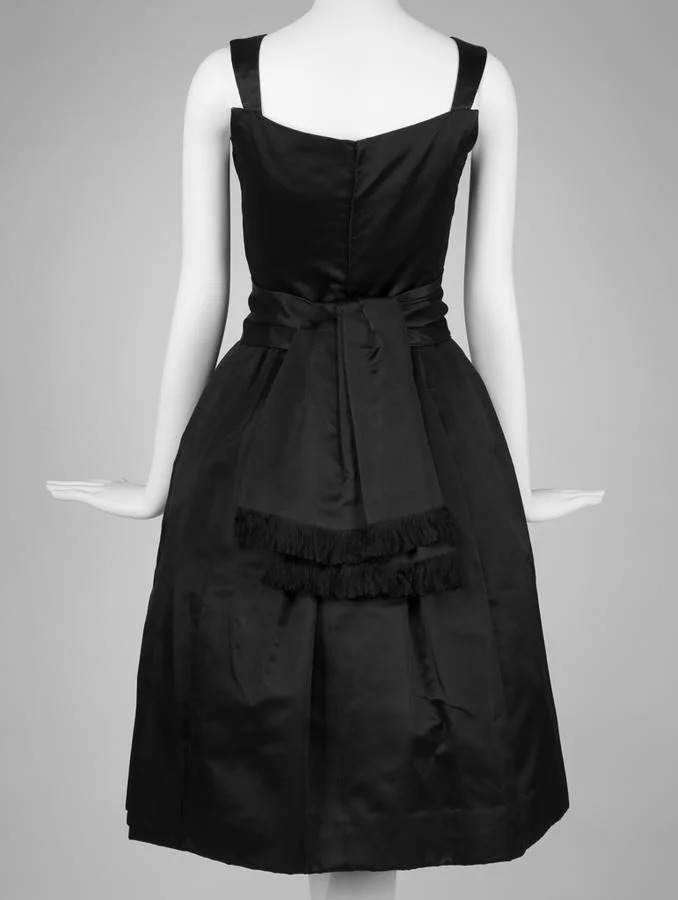
Christian Dior and the history of Dior also include designs beyond full skirts and floral imagery. Arsène Lupin, from Fall/Winter 1954–55, translates the man’s smoking jacket into a woman’s theatre dress. The Met records wool and silk, explaining how black satin ribbon takes the place of lapels. It was originally worn with a long satin overcoat. This is not simply a smaller version of a complete male outfit. Neckline, sheen and the relationship between inner and outer garments move into another clothing system. The ribbon’s placement makes decoration a clue to construction. Such translation complicates the idea of a single unchanging gendered silhouette. The separate black cocktail dress pictured here offers a comparison of satin reflection and ornament against restrained colour. It is not Arsène Lupin, and a shared colour does not make the garments the same design.

The A line of 1955: reconsidering the waist
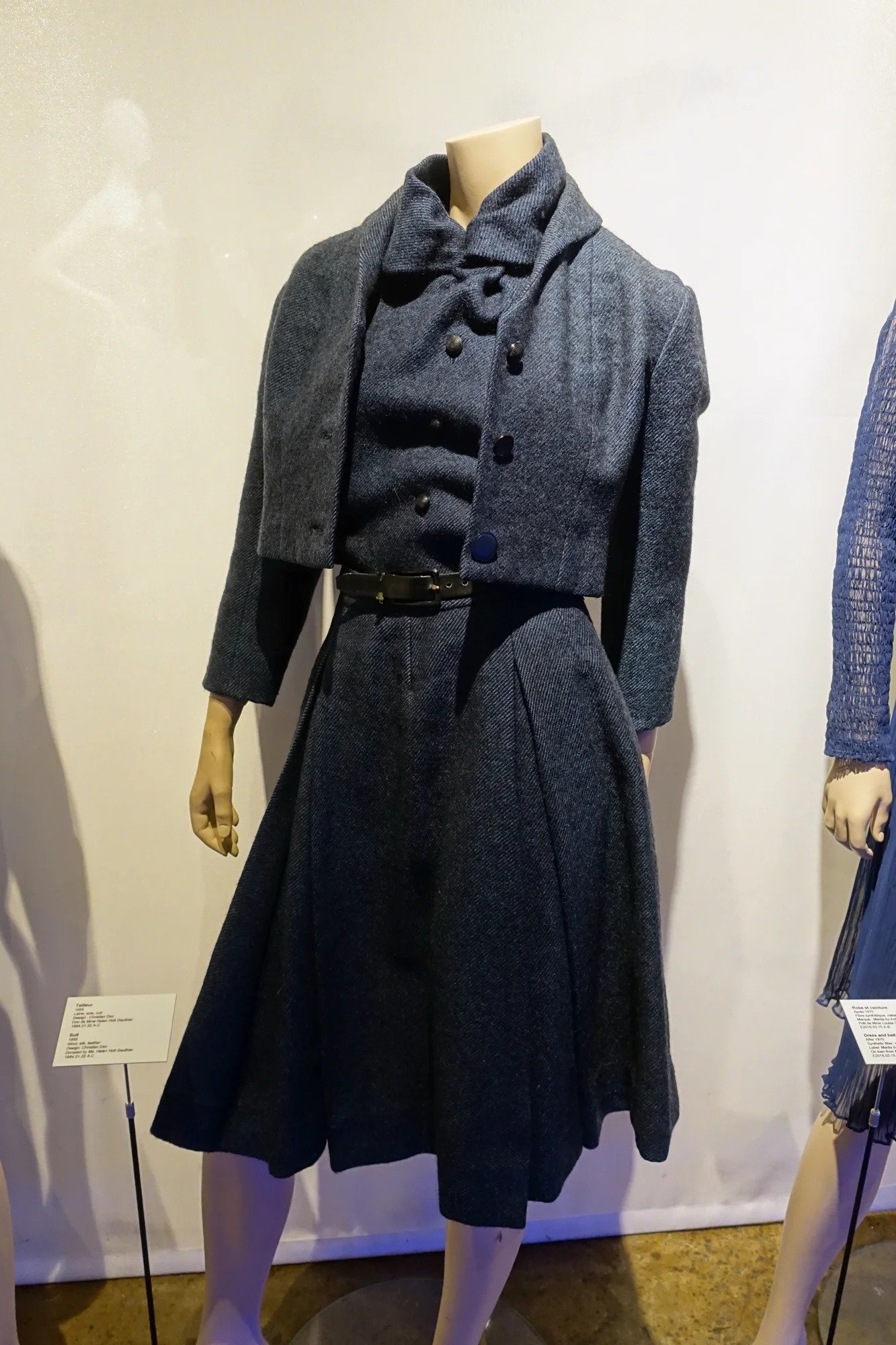
Christian Dior and the history of Dior should not stop at the success of 1947. The Spring/Summer 1955 A line emphasised a widening relationship from top to bottom. The Met’s grey ensemble belonged to Olivia de Havilland’s wedding trousseau and combines wool and silk clothing with a straw hat. The museum identifies menswear references and geometric construction, distinguishing the design from the historical forms of earlier collections. The house did not always require the same sharply defined waist. After the New Look, the organising centre of a silhouette could move. Comparing the line from shoulder to hem is therefore more useful than memorising collection names alone. The Montréal suit dated 1955 pictured in this article is a separate work, included to examine a jacket against a full skirt. A shared year does not establish that it is the Met’s A-line ensemble.

A business beyond the couture salon
Christian Dior and the history of Dior extend into perfume and international business. Miss Dior appeared in 1947, followed by the New York operation in 1948. Licensing developed with Jacques Rouet widened the house’s reach through products including perfume and stockings. Parisian haute couture clients no longer explain the whole business. Custom clothing, goods for overseas markets and perfume involve different production systems and customer relationships. A shared name does not imply a shared manufacturing process. A shoe collaboration with Roger Vivier began in 1953, bringing footwear into the complete outfit. Yves Saint Laurent joined the studio in 1955 and would subsequently lead it. His appearance in this history concerns the transmission of knowledge and responsibility within an organisation, as well as an individual career.

After 1957: separating the founder from the house
Christian Dior and the history of Dior enter a different phase in 1957. Dior died in Montecatini, Italy, on 24 October 1957, after roughly a decade of collections under his own name. Saint Laurent’s 1958 Trapèze collection was a successor’s work, not the founder’s final design. Marc Bohan and the designers who followed also require their own attribution and dates. The survival of a brand does not mean that one individual continues to design. Customers, workrooms, management and archives remain while new decisions are made.
To read these clothes today, distinguish continuity from change. The waist and hips of the 1947 suit, the firm cloth of La Cigale, the menswear reference of Arsène Lupin and the geometry of 1955 pose different questions. Comparing cut, material and intended occasion reveals movement within a short career. Exhibition photographs provide a starting point, followed by identification of work, date and collection. The founder left more than a fixed skirt width: he left a sequence of experiments in proportion.
Timeline
- 1905 — Born in Granville
- 1923 — Enters Sciences Po
- 1928 — Opens gallery with Bonjean
- 1938 — Joins Piguet
- 1946 — House established on avenue Montaigne
- 1947 — First collection; Miss Dior launches
- 1955 — A line; Saint Laurent joins
- 1957 — Dies on 24 October
- 1958 — Saint Laurent presents Trapèze
Sources
- The Met: Christian Dior, 1905–1957
- La Galerie Dior: House history
- Design Museum: Christian Dior
- V&A: Fashion unpicked, the Bar suit
- The Met: Bar, Spring/Summer 1947
- The Met: La Cigale, Fall/Winter 1952–53
- The Met: Arsène Lupin, Fall/Winter 1954–55
- The Met: A-line ensemble, Spring/Summer 1955
- Christian Dior Finance: History
Related reading
Charles Frederick Worth: The House Behind Haute Couture · Coco Chanel: Jersey, the Little Black Dress and Tweed · Yves Saint Laurent: Le Smoking and the Mondrian Dress · Kim Jones: Dior Menswear, Tailoring and Collaboration · 1950s fashion · Designers