Dior history: The Bar suit and a changing house vocabulary
Dior was established in Paris in 1946 and became widely known through its first collection in 1947. Its history includes both the founder’s silhouettes and their subsequent reinterpretation.
ÉPOPLI ·
- Brand
- Dior
- Origins
- Founded in Paris, France
- Focus
- Couture, ready-to-wear and leather goods
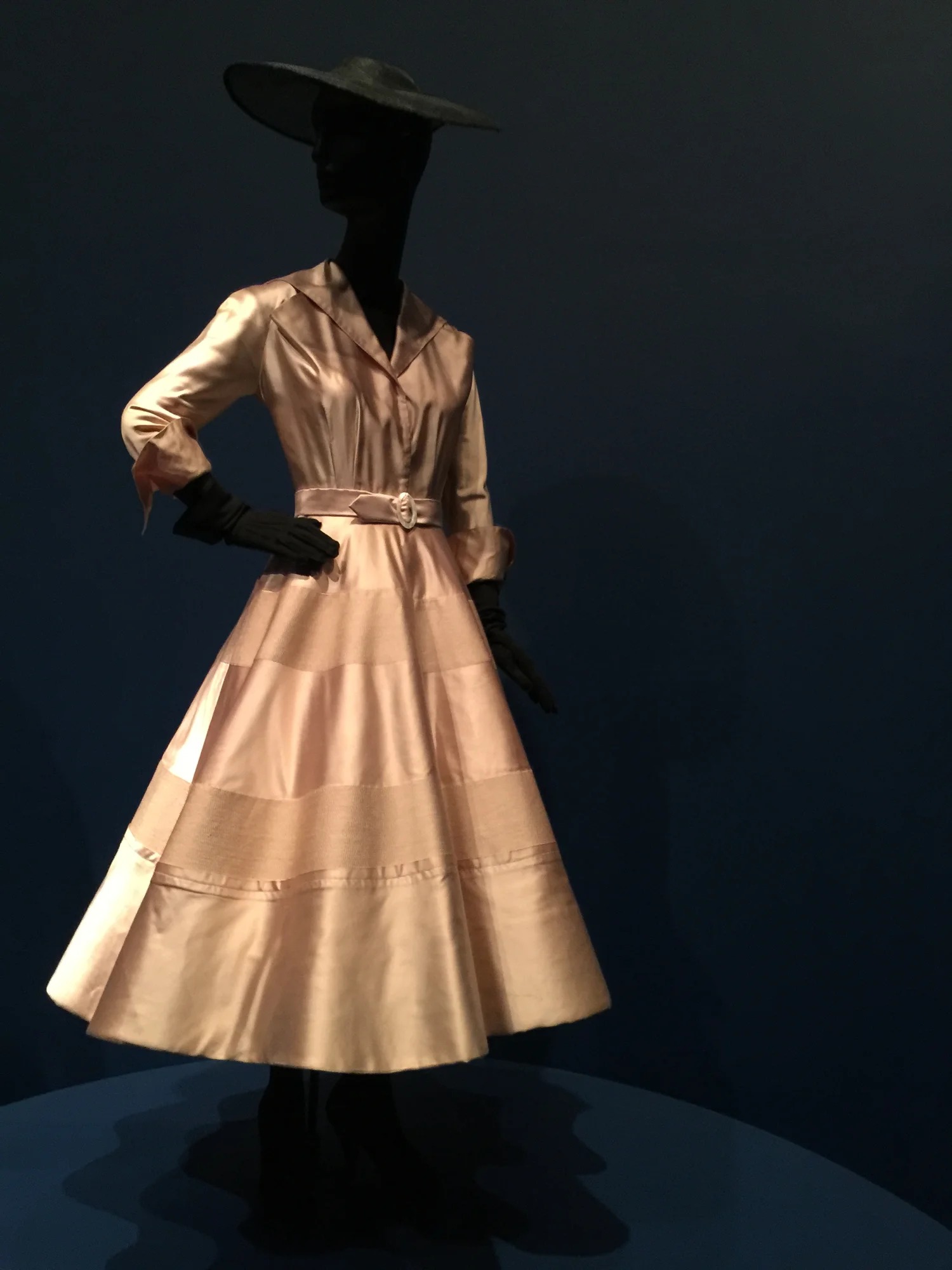
The structure behind a silhouette
Dior history is often represented by the Bar suit, but the contrast between a light jacket and dark skirt is only its surface. The spring/summer 1947 design shapes a narrow waist and rounded hips rather than simply following an unaltered body. Cut, internal support and the volume of the skirt work together. A curve seen instantly in a photograph requires several components to meet accurately in construction. Calling it merely a natural feminine outline obscures both technique and a period ideal of the body. Museum records and structural examinations allow the image to be read as the outcome of specific decisions.
Founding and first collection are different dates
Dior history requires a distinction between 1946 and 1947. Christian Dior and industrialist Marcel Boussac established the house in 1946; the first collection followed in February 1947. Design and business organization were connected from the beginning. The couture workshops made garments for clients, while salons and commercial operations brought those garments into circulation. The official chronology records the premises at 30 Avenue Montaigne and subsequent international expansion. A successful silhouette therefore depended on more than a sketch. Cutting, sewing, fitting and finishing translated an idea into clothing. Recognizing that collaboration does not diminish authorship; it identifies the conditions that made it possible.
The New Look was not an unchanging formula
Dior history becomes too narrow when the New Look is treated as one permanent formula. A full lower silhouette and marked waist made the first collection famous, but subsequent work proposed other lines and volumes. Use the Bar suit as a reference, not a rule governing every object. Waist placement and the widening line from shoulder to hem can alter a design substantially. Individual museum records, including a spring/summer 1955 ensemble, make comparison possible. Collection labels are starting points, not substitutes for looking. Front and side views, and the way a fabric stands or falls, reveal an early history of adjustment rather than endless repetition.
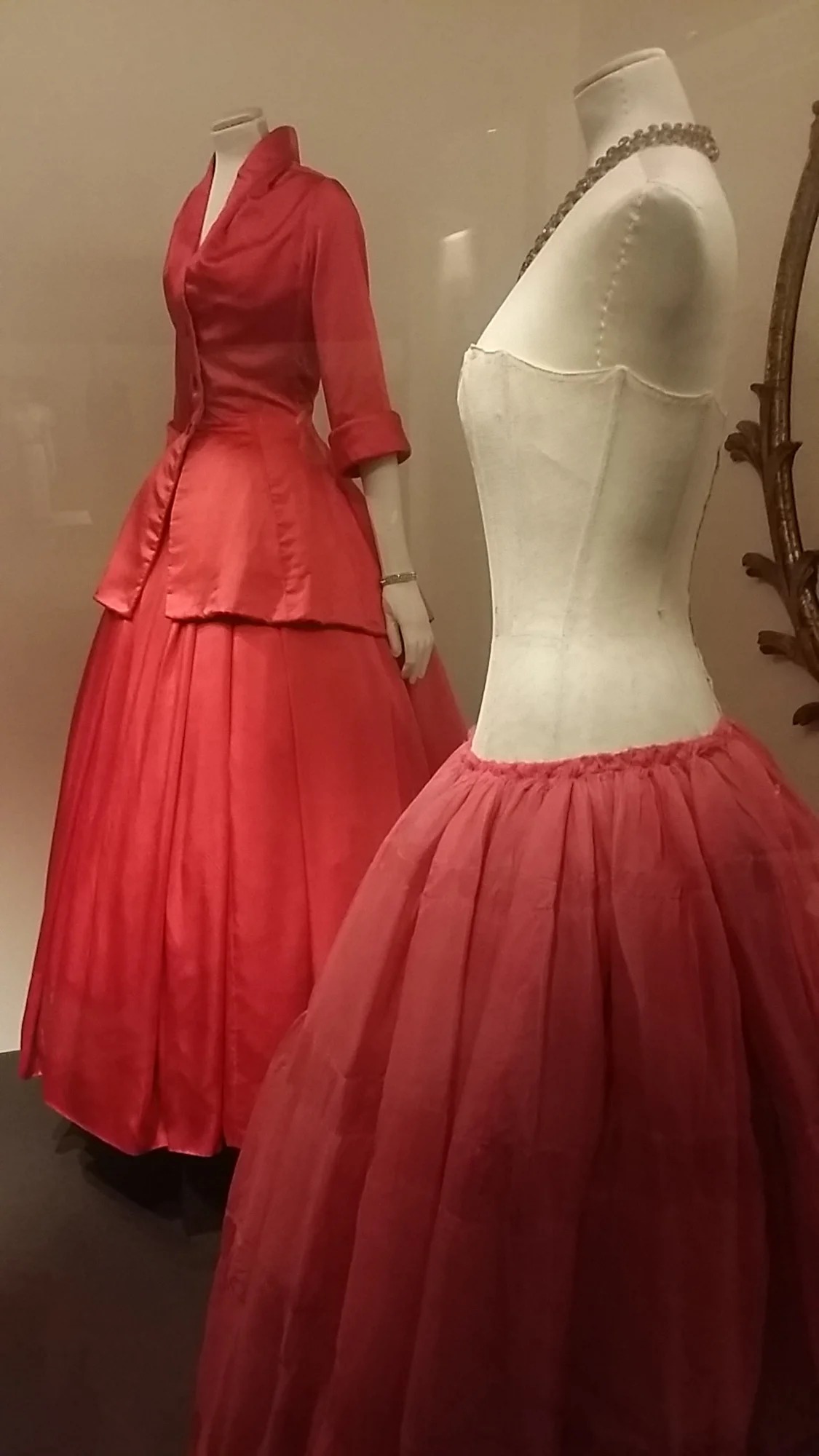

La Cigale: fabric, volume and posture
Dior history offers a more architectural case in La Cigale from autumn/winter 1952–53. The Metropolitan Museum describes a fitted upper body and a skirt expanding at the hips through shaped cutting. A smooth surface does not imply uncomplicated construction. Sheen and volume make posture part of the visual effect. This does not justify inventing the wearer’s emotions; it invites observation of where fabric follows or departs from the body. The recorded fibre blend also challenges the assumption that prestigious clothing must use only one natural material. La Cigale shows how structure can generate intensity without relying on a profusion of surface decoration.
A bag made after the founder
Dior history includes the Lady Dior as a reminder that a house’s later symbols are not necessarily works by its founder. The official chronology records a bag presented to Diana, Princess of Wales, in 1995 and subsequently named in her honour. This is not the same creative moment as the 1947 collection. The Lady Dior has a self-contained body and upper handles: it is carried beside a person rather than wrapped around one. Proportion can connect different product categories, but construction and use remain distinct. Celebrity association explains an aspect of visibility; it does not replace examination of the object’s volume and components.
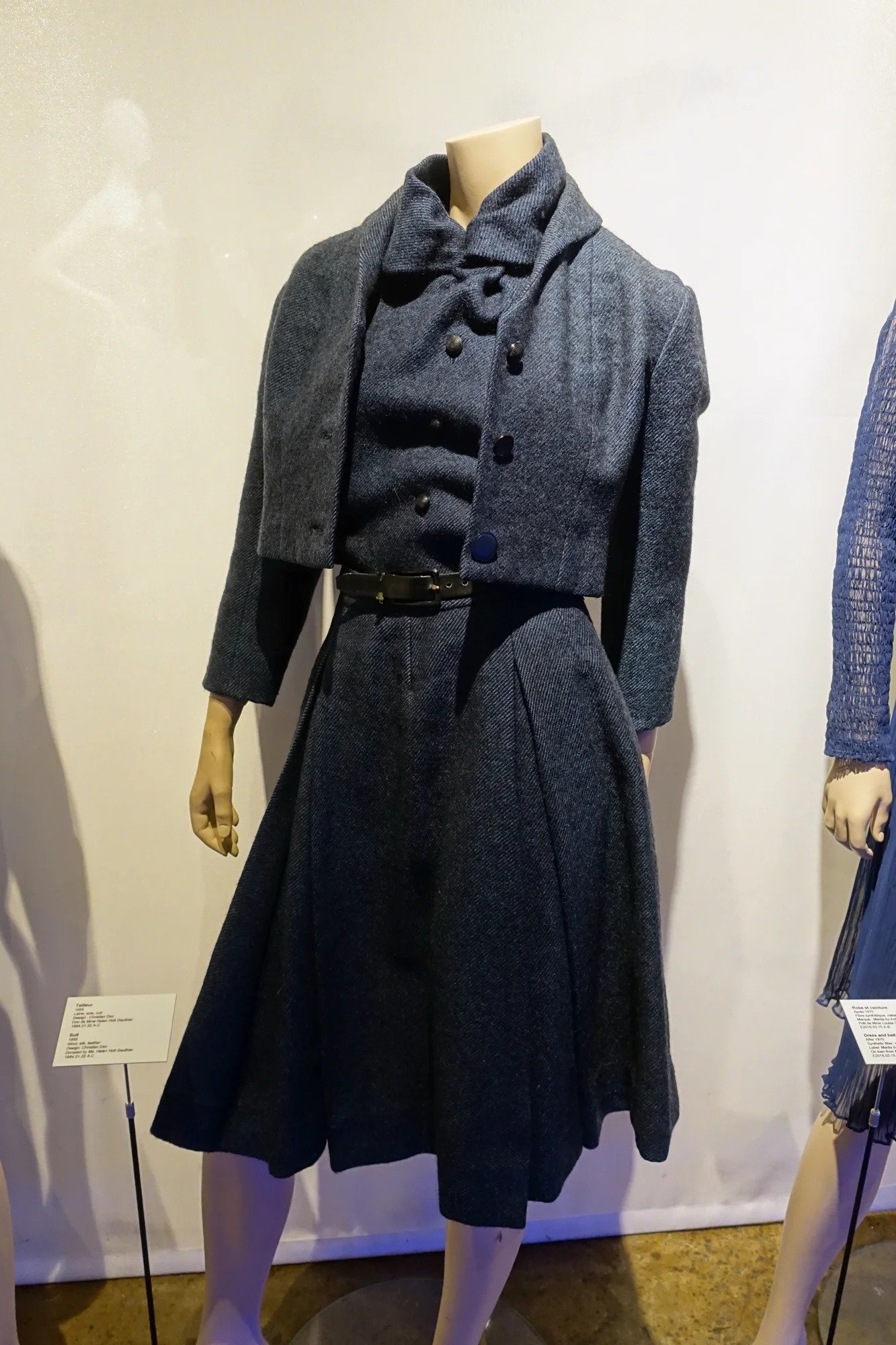

Succession means interpretation
Dior history continued after the founder’s death in 1957. Yves Saint Laurent’s Trapèze, Marc Bohan’s long contribution and subsequent designers belong to distinct periods. The house name should not erase individual authorship. The couture workshops translate new directions into garments while retaining technical knowledge. Moving a waistline or combining a jacket with trousers does not automatically abandon tradition, just as repeating an outline does not prove that every construction principle survives. Examine what changes in each work. Current appointments can change, so this account does not use one incumbent as a permanent definition of the brand; it concentrates on documented examples of interpretation.
Reading several kinds of time
Dior history involves the date of a business, the date of an object and the date when that object is exhibited again. They are not interchangeable. Nor does a revived product name guarantee an unchanged structure. Check museum dates, materials and designer credits before linking them to the official chronology. Corporate accounts emphasize continuity; collection records help establish individual characteristics. Both are useful without adopting their evaluative language wholesale. When comparing works, observe the distances among shoulder, waist, hip and hem. Those differences explain changing images of the body within a single house more clearly than a list of famous names alone.
Timeline
- 1946 — The Paris couture house is established
- 1947 — The first collection is presented
- 1957 — Succession follows the founder’s death
- 1995 — Diana receives the bag later named in her honour
Questions and answers
Was Dior founded in 1946 or 1947?
The house was established in 1946; its first collection was presented in 1947.
Was Lady Dior designed by the founder?
No. The founder died in 1957; the bag’s association with Diana belongs to the 1990s.
How can later designs be compared with the New Look?
Compare waist placement, shoulders, skirt volume and how the material supports each silhouette.