Pierre Cardin: Shaping Clothes and Their Distribution
Rounded volume, moving cloth and industrial materials meet new systems of distribution.
ÉPOPLI ·
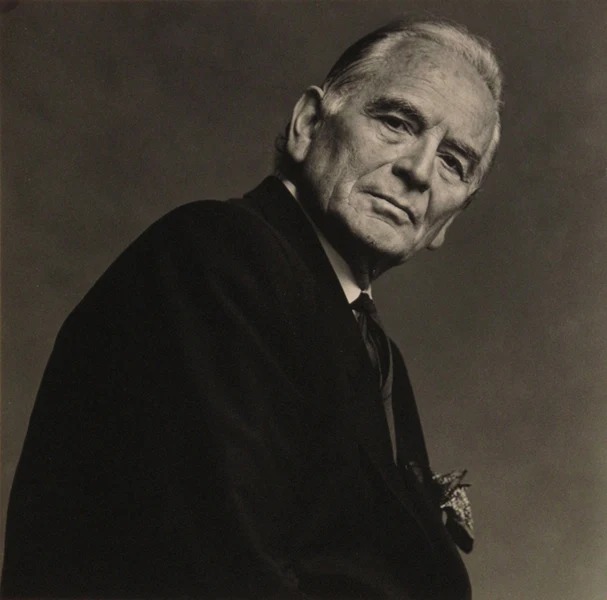
Loops in motion
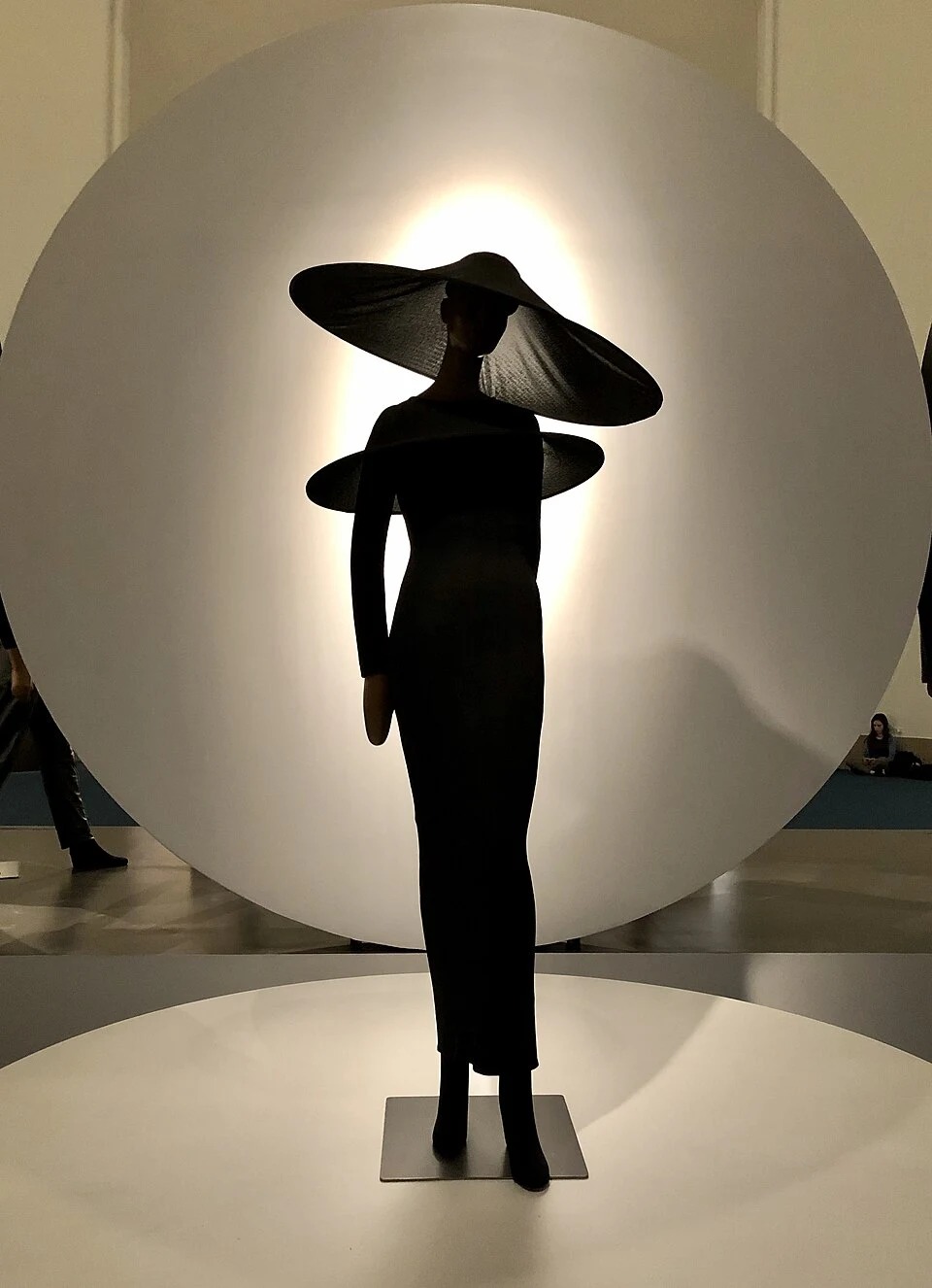
The 1969 carwash dress placed long loops of wool crêpe over the body. Pierre Cardin house history can begin with this moving surface rather than a metallic space-age image. Geometric silhouettes could depend on gaps and suspended cloth as much as rigid outlines.
Each loop moved slightly apart from the wearer, creating changing shadows. The attachment points, length and weight explain an effect that a static front view cannot fully convey.
Training for different kinds of dress
Born in Italy in 1922 and raised in France, he learned tailoring before moving to Paris in 1945. Work with Paquin, Schiaparelli and Dior followed. Pierre Cardin house history rests partly on these conventional making skills.
Film-costume work connected with Jean Cocteau and experience with Dior coats and suits addressed different demands. The independent business began in 1950; the first women’s couture collection followed in 1953. Separating establishment from presentation resolves apparently conflicting dates.
The bubble around the body
The 1954 bubble dress turned the hem inward to create rounded volume. Pierre Cardin house history treats clothing as a structure around the body rather than its exact copy. Geometric silhouettes include curves as well as straight edges.
The relationship between the outer cloth, inward hem and supporting construction creates the form; simply adding fabric would not do the same job. Side views and movement reveal how the dress maintains space away from the wearer.

A different customer and a different future
The 1959 Printemps presentation made ready-to-wear an important business choice. Pierre Cardin house history links design to distribution. Prepared sizes changed how customers obtained clothes without necessarily abandoning skilled construction.
The 1960s Cosmocorps work simplified suits and layered short garments over fitted knits. Brooklyn highlights a 1964 group, while other institutions discuss subsequent seasons. Shared shapes crossed established gender categories.
These were imagined future wardrobes, not garments supplying the technical protection of actual space equipment.
Surfaces shaped through materials
Experiments with the synthetic textile Cardine explored molded relief as an alternative to relying entirely on seams. Pierre Cardin house history considered synthetic materials through their behavior, not just their appearance. Heat-set forms, vinyl accessories and soft knits represent different processes.
Geometric silhouettes should therefore be examined object by object. Light and shadow make a raised surface especially legible, but the underlying question is how material properties can maintain a shape around a moving body.
A name travels beyond clothing
Licensing authorized other businesses to use a name or design under agreed conditions. Pierre Cardin house history became a history of manufacturing relationships as well as clothes. While ready-to-wear changed garment supply, licensing extended the name across furniture and household goods.
A logo does not establish that the founder personally designed every detail. Hiroko Matsumoto, atelier makers and international partners contributed in different ways. Access to a recognizable brand and differences between individual products can both be acknowledged.
Reading the surviving work
Cardin died in 2020. Pierre Cardin house history distinguishes lifetime designs, reissues and later house production. Bubble dresses, moving loops, Cosmocorps and synthetic materials posed different questions about volume and manufacture.
His ready-to-wear and licensing activities changed their routes to customers. Brooklyn’s 2019 retrospective included furniture and lighting alongside clothes. Looking at material, date and maker avoids reducing this varied output to a single space-age logo and reveals how form and production interacted.
Timeline
- 1922 — Born in Italy
- 1950 — Established independent business
- 1953 — First women’s couture collection
- 1954 — Bubble dress
- 1959 — Printemps ready-to-wear presentation
- 2020 — Died
Sources
- ASU FIDM — The Legacy of Pierre Cardin
- Pierre Cardin — House history
- JFK Library — Pierre Cardin
- Brooklyn Museum — Future Fashion
- Visual Anthropology Review — Curator dialogue