André Courrèges: New Proportions for Moving Bodies
Cutting, collaborative design and production behind the white dress and boots.
ÉPOPLI ·
White makes the cut visible
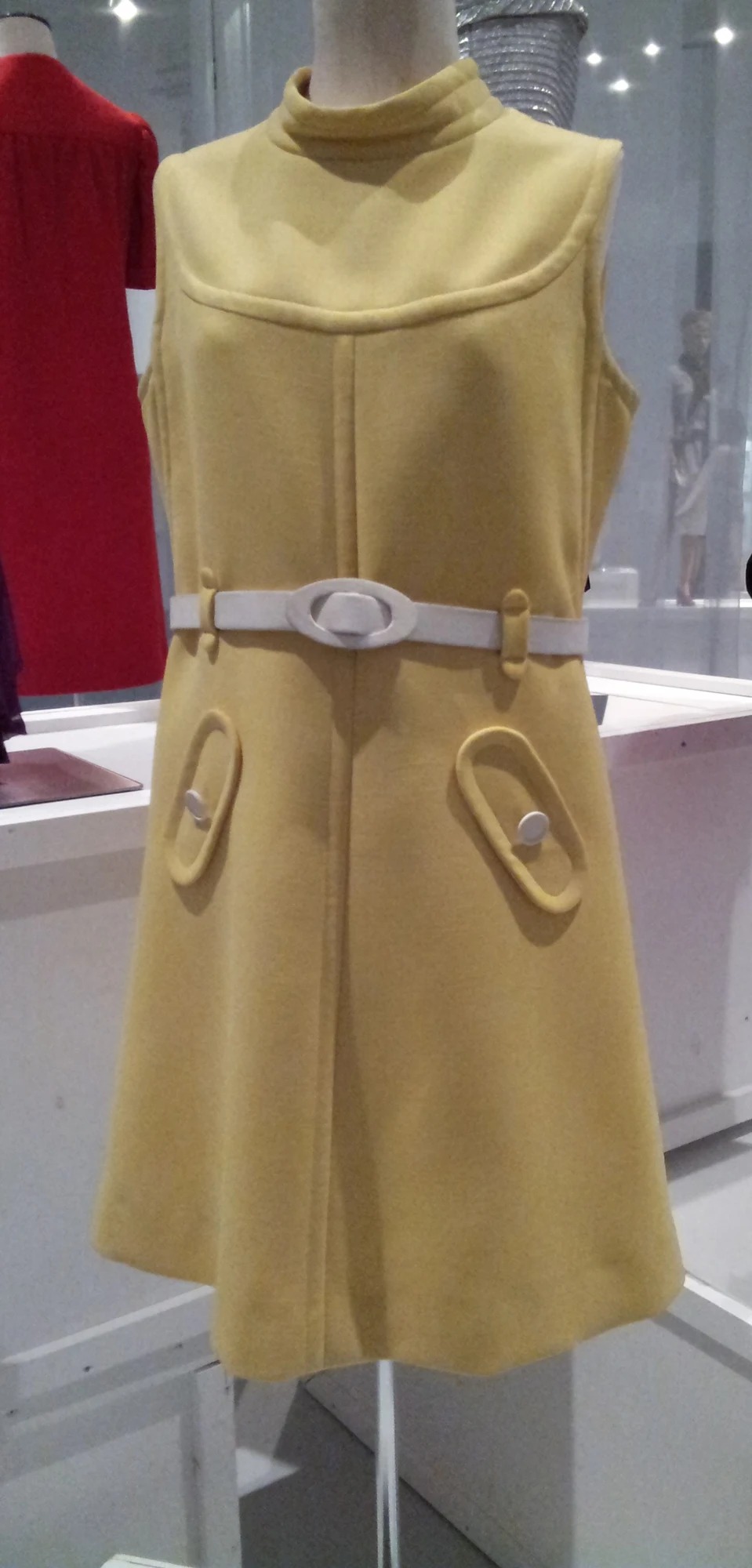
The short dress and low boots of 1965 changed the relationship between clothing, exposed legs and footwear. André Courrèges Courrèges history begins with this complete proportion. White clothing made edges and seams more apparent.
A flaring outline required balanced shoulders and side seams, not merely an uncomplicated pattern. Space around the body and a different walking stance jointly produced the futuristic effect. Garment length and shoe height should therefore be studied together.
Two makers at Balenciaga
Born in Pau in 1923, André entered Balenciaga’s house in 1950 after an education shaped by interests in engineering and architecture. He met Coqueline Barrière there; they established their house in 1961. André Courrèges Courrèges history recognizes her as a trained maker and co-creator.
Their shared couture experience connects later geometry to established skills. Rolled collars and carefully balanced volume reveal continuity. Architectural interests are relevant, but do not prove that every garment originated in a building.
Changing lengths and customers
Early trouser suits and the 1965 dresses addressed different everyday possibilities. André Courrèges Courrèges history places the miniskirt within wider changes involving Mary Quant, other designers and wearers. No single invention claim explains that process.
Structured wool maintained space around the torso while exposing moving legs. Expensive couture customers and people encountering the images in magazines had different access. A new proportion, its distribution and the social conditions of wearing it require related but distinct explanations.

A soft futuristic armor
The Met’s 1965 evening dress uses a cotton foundation and reflective ornament to suggest futuristic mail. André Courrèges Courrèges history demonstrates that new-looking clothing could depend on traditional technique. Small elements moving over fabric behave differently from rigid metal.
White clothing was only part of this varied practice. An imitation could reproduce shine without reproducing suppleness or weight. Looking at the ground fabric and attachment method makes the relation between inherited craft and imagined futures visible.
Accessories and the photographed body
Galliera preserves an ensemble of cape, miniskirt, leotard and visor. André Courrèges Courrèges history treats these pieces as a coordinated environment around the wearer. A projecting visor reframes the face without becoming technical space equipment.
Peter Knapp’s March 1965 ELLE photographs made models appear suspended. Garment, pose and photographic construction jointly created that impression. Credits matter because the distributed image was not the designer’s work alone, even when the clothing supplied its central forms.
From copies to production
Widespread imitation preceded a pause in public presentations and the development of Couture Future in 1967. André Courrèges Courrèges history connects creativity with repeatable production. The Pau facility opened in 1972 formed part of this concern.
Reproducing a miniskirt in different sizes requires dependable materials, patterns and finishing. Coqueline took charge of the house after 1995, while André extended his work in art and design. Later garments should not automatically be assigned to his individual authorship.
Reading the proportions
André died in 2016. André Courrèges Courrèges history distinguishes the founders’ work from later brand interpretation. White clothing, low boots, embellished cotton and the cape ensemble used different means to reconsider bodily proportions.
Following a line from shoulder to hem, or comparing garment and footwear heights, is more informative than a general celebration of youth. Objects and photographs together reveal a design practice concerned with moving bodies, supported by two creators, skilled production and visual collaboration.
Timeline
- 1923 — Born in Pau
- 1950 — Joined Balenciaga
- 1961 — Founded the house with Coqueline
- 1965 — Short dresses and boots
- 1967 — Couture Future
- 1995 — Coqueline took charge
- 2016 — Died
Sources
- André and Coqueline Courrèges — Patrimony
- The Met — Haute Couture, Courrèges works (PDF)
- Royal College of Art — Fear and Fashion (PDF)
- Palais Galliera — Cape, miniskirt, leotard and visor
- The Met — Evening dress, 1965
- Fondation Maeght — Peter Knapp, the era of Courrèges