Paco Rabanne: Building Clothing from Connected Pieces
How plastic, aluminum and chain formed articulated clothing.
ÉPOPLI ·
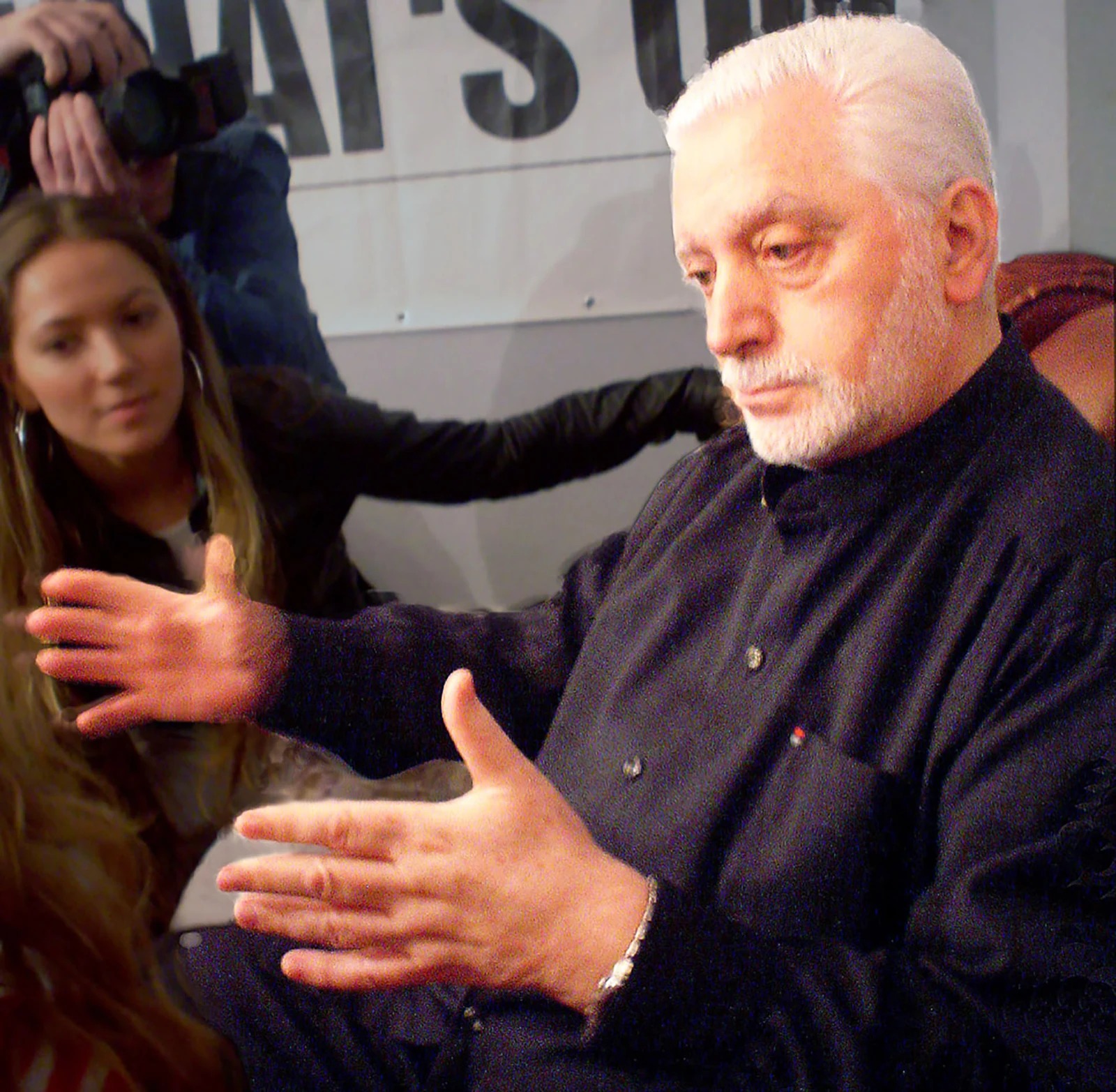
Joining pieces instead of cutting cloth
The twelve experimental dresses presented in Paris in 1966 challenged expectations of sewing. Paco Rabanne Rabanne history begins with their connections. Plastic and metal elements joined by rings moved through changing angles rather than textile stretch.
Models danced in the presentation; Galliera specifically records the participation of models of African origin. Movement demonstrated the mechanism of an outfit whose provocative title called it unwearable. These were articulated surfaces, not simply futuristic decoration.
Architecture and accessories
Born Francisco Rabaneda y Cuervo in the Spanish Basque region in 1934, he moved to France as a child and later studied architecture in Paris. His mother had worked in dressmaking associated with Balenciaga. Paco Rabanne Rabanne history connects these circumstances with his early production of accessories for fashion houses without assuming that family experience explains every design.
Small components were part of his working vocabulary before independence. An architectural education provides context, but clothing also demands attention to skin, weight and bodily movement.
An aluminum surface in 1967
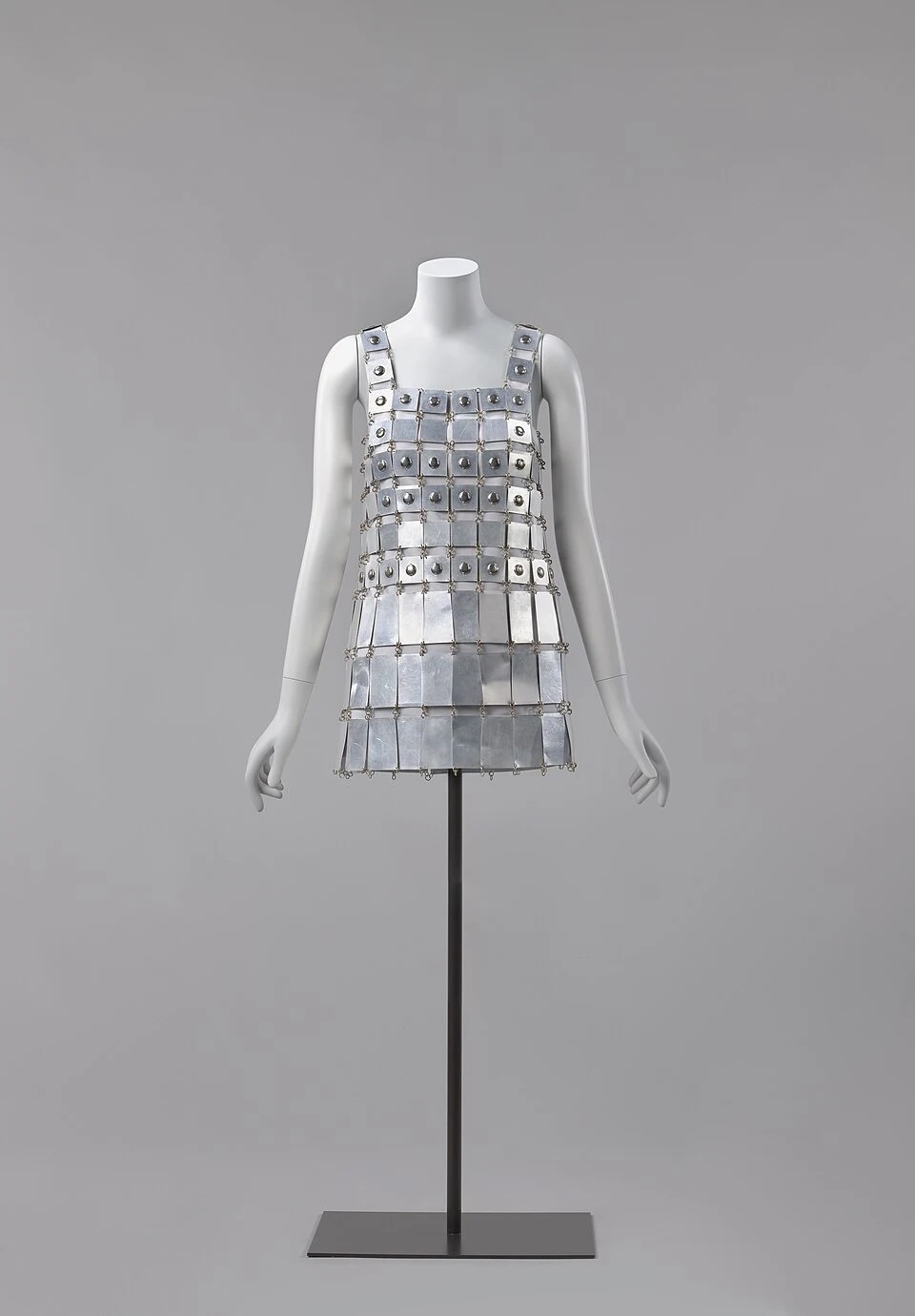
The Rijksmuseum’s sleeveless 1967 dress has a square neckline and aluminum plates, some bearing raised knobs. Paco Rabanne Rabanne history treats this metal dress as an arrangement of repetition and variation. Projecting and flat areas catch light differently.
Connections remain visible where conventional seams might disappear inside a garment. Changing its dimensions involves changing the assembly, rather than simply turning up a textile hem. The object rewards inspection at the scale of individual components as well as the complete silhouette.

The 1969–70 short jumpsuit
Galliera’s autumn–winter 1969–70 jumpsuit joins open circular steel and plastic elements. Paco Rabanne Rabanne history follows the spaces within and between those components. The museum connects its chain straps to the designer’s earlier reuse of a flush-chain form for bags.
An industrial fitting brought into clothing retains associations with its previous function. That displacement matters, but so does the practical articulation around shoulders and hips. Visual surprise and workable connections had to coexist.
Assembly remains skilled work
Rejecting conventional sewing did not remove manual labor. Paco Rabanne Rabanne history includes the fitting, closing and adjustment of repeated parts. Modular assembly depends on tolerances that accumulate across a surface.
A plastic dress and a metal dress can look similarly reflective while behaving differently in weight and friction. Workshop labor and the wearer’s movement both complete the design. Industrially familiar materials acquired another purpose through their scale, placement and connections; novelty did not necessarily mean inventing the material itself.
Experimental clothing and perfume
Calandre launched in 1969 through the collaboration with Puig. Paco Rabanne Rabanne history distinguishes this expanding business from the production of experimental garments. Fragrance reached customers through another manufacturing and retail system.
Puig’s retrospective documents the commercial relationship, while its praise remains a corporate assessment. Management, production and distribution accompanied design. Later products carrying the house name should not automatically be attributed to its founder; dates and creative responsibility must be checked separately.
A legacy of connections
The designer died in 2023. Paco Rabanne Rabanne history leaves a question about how a garment begins. Modular assembly created a surface from units rather than starting with a length of cloth.
Plastic, aluminum and chain produced different relations between gaps, light and movement. A later silver outfit is not evidence of direct inheritance on appearance alone. Museum records establish materials and dates; photographs and presentations help explain wearing.
Together they reveal an experiment in construction, not merely a taste for shine.
Timeline
- 1934 — Born in the Spanish Basque region
- 1966 — Presented twelve experimental dresses
- 1967 — Aluminum dress
- 1969 — Calandre launched
- 1969–70 — Short jumpsuit
- 2023 — Died
Sources
- Palais Galliera — Short jumpsuit, autumn–winter 1969–70
- Rabanne — The story of Paco Rabanne
- Puig — Paco Rabanne, 1934–2023
- Rijksmuseum — Dress, 1967