Kenzo Takada: Pattern, Volume and Everyday Clothing
Reading Kenzo through generous shapes and combinations of different patterns.
ÉPOPLI ·
Space around the body
KCI’s spring–summer 1975 dress combines bamboo, bird and scale motifs with straight cutting. Kenzo Takada Kenzo history begins with proportion rather than color alone. Its upper section continues into sleeves without a shoulder seam, while a high-waisted skirt uses broad rectangular pieces.
Vertical motifs organize the volume. Space around a moving body becomes part of the form. This is a reinterpretation of textile and construction ideas, not a literal reproduction of a traditional garment.
Himeji, Tokyo and Paris
Born in Himeji in 1939, he entered Bunka Fashion College in 1958, studied with Chie Koike and won the Soen Award in 1960. Work for Sanai preceded his European journey. Kenzo Takada Kenzo history distinguishes his late-1964 departure by ship from arrival in France in 1965.
Selling sketches and working at Pisanti were practical stages before independence. Travel mattered in his own recollections, but does not justify assigning every later pattern to a particular port.
Cotton in a Paris boutique
The Galerie Vivienne boutique opened in 1970. Kenzo Takada Kenzo history considers cotton as more than an inexpensive substitute. Light material and generous shapes offered another approach to dressing.
FIDM’s spring–summer 1975 ensemble pairs a loose wrap top and full skirt; contrasting patterns relate through color and volume. Separate pieces invite the wearer to recombine them. Comfort becomes a specific observation when related to fastening and space rather than a general claim about universal accessibility.
Keeping references distinct
The collections drew on varied regional dress. Kenzo Takada Kenzo history avoids reducing this to two homogeneous worlds called East and West. Folklore fashion reinterprets elements of traditional clothing; it does not make the resulting outfit identical to its source.
Japanese workwear and references to Romanian or Russian dress should remain distinguishable. Cotton, knitwear and tweed supported different combinations of pattern scale and layering. Cheerfulness was an effect of these choices rather than a substitute for technical analysis.
A dress assembled from ribbons
The autumn–winter 1982–83 wedding dress brought together collected, flower-embroidered ribbons. Kenzo Takada Kenzo history follows how narrow decorative bands became an extensive garment surface. Differences of color and pattern directed the eye across the assembly.
Sayoko Yamaguchi wore the dress again in the 1999 retrospective show, giving an earlier object another performance context. Folklore fashion alone is too broad a label to explain collection, arrangement and wearing. Construction photographs and runway records illuminate different parts of that process.
Work after leaving the house
The brand was sold to LVMH in 1993; its founder left in 1999. Kenzo Takada Kenzo history keeps ownership and creative responsibility separate. Later commissions included the Japanese team’s official clothing for the 2004 Athens Olympics and costumes for Amon Miyamoto’s 2019 Madame Butterfly.
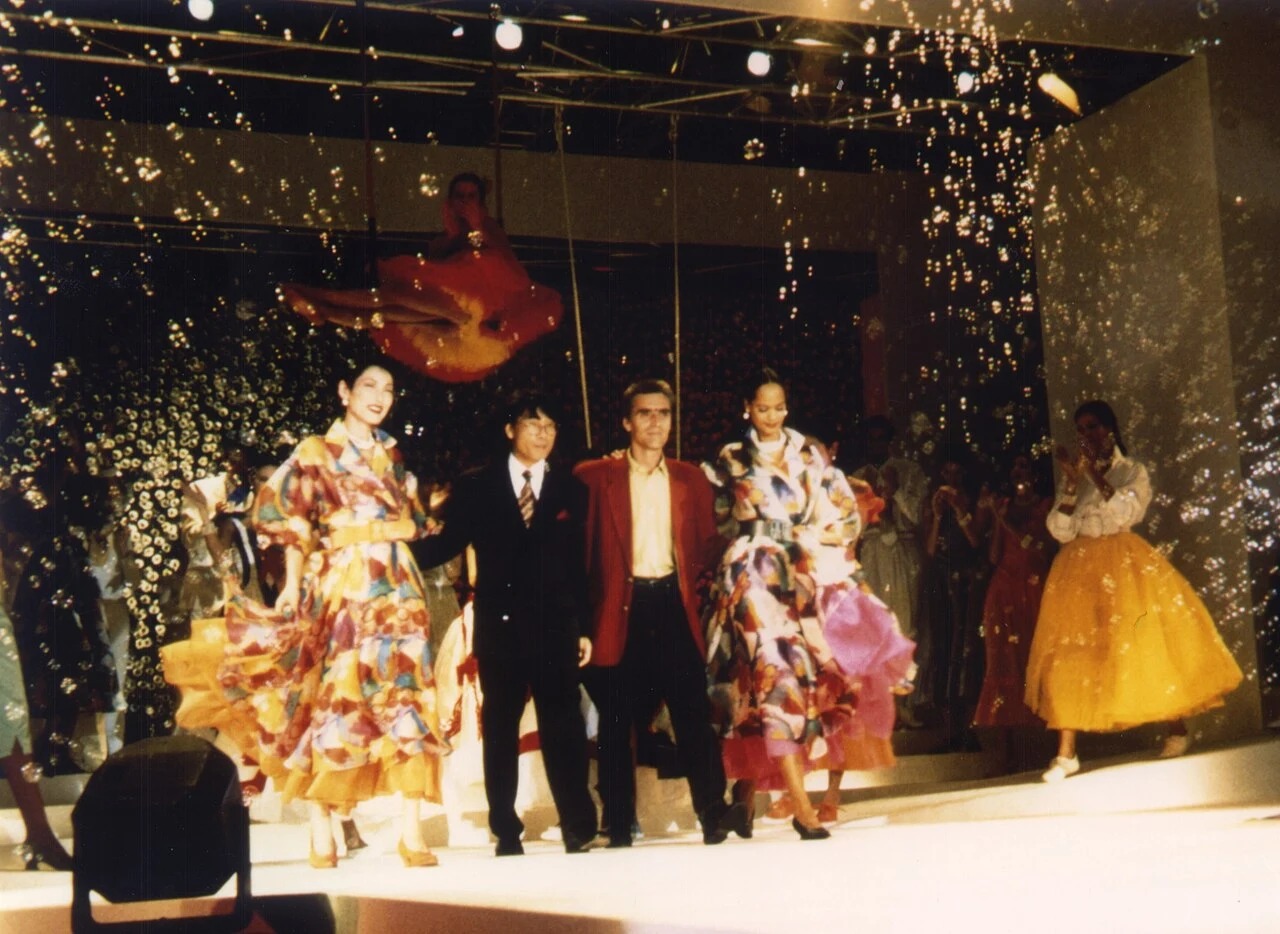
Group clothing and performance involve different needs from a seasonal collection. The 1993 Kenzo Tour photograph also records clothes within a collaborative presentation rather than as isolated objects.

The structure behind exuberance
He died in 2020. Kenzo Takada Kenzo history separates his archive from later house collections. The official house history records Nigo’s artistic direction beginning in 2021.
Cotton ensembles, straight-cut dresses and ribbon construction show different decisions. Folklore fashion requires attention to particular sources and to the makers and performers who shaped the results. Studying the relationship between fabrics and volume is more useful than copying a generalized taste for bright patterns.
Timeline
- 1939 — Born in Himeji
- 1958 — Entered Bunka Fashion College
- 1965 — Arrived in France
- 1970 — Opened Paris boutique
- 1982–83 — Ribbon wedding dress
- 1993 — Brand sold to LVMH
- 1999 — Left the house
- 2020 — Died
Sources
- KCI — Dress, spring–summer 1975
- Tokyo Opera City — Takada Kenzo exhibition highlights
- ASU FIDM Museum — Remembering Kenzo Takada
- Kenzo Heritage — East meets West
- LVMH — Kenzo house history
- Kenzo Tour, 1993 — credited archival photograph
- Tokyo Opera City — Takada Kenzo profile