Jeanne Lanvin: Full Skirts, Color and Craft
From a family wardrobe to a house organized around color and craft.
ÉPOPLI ·
A full skirt in the age of the straight dress
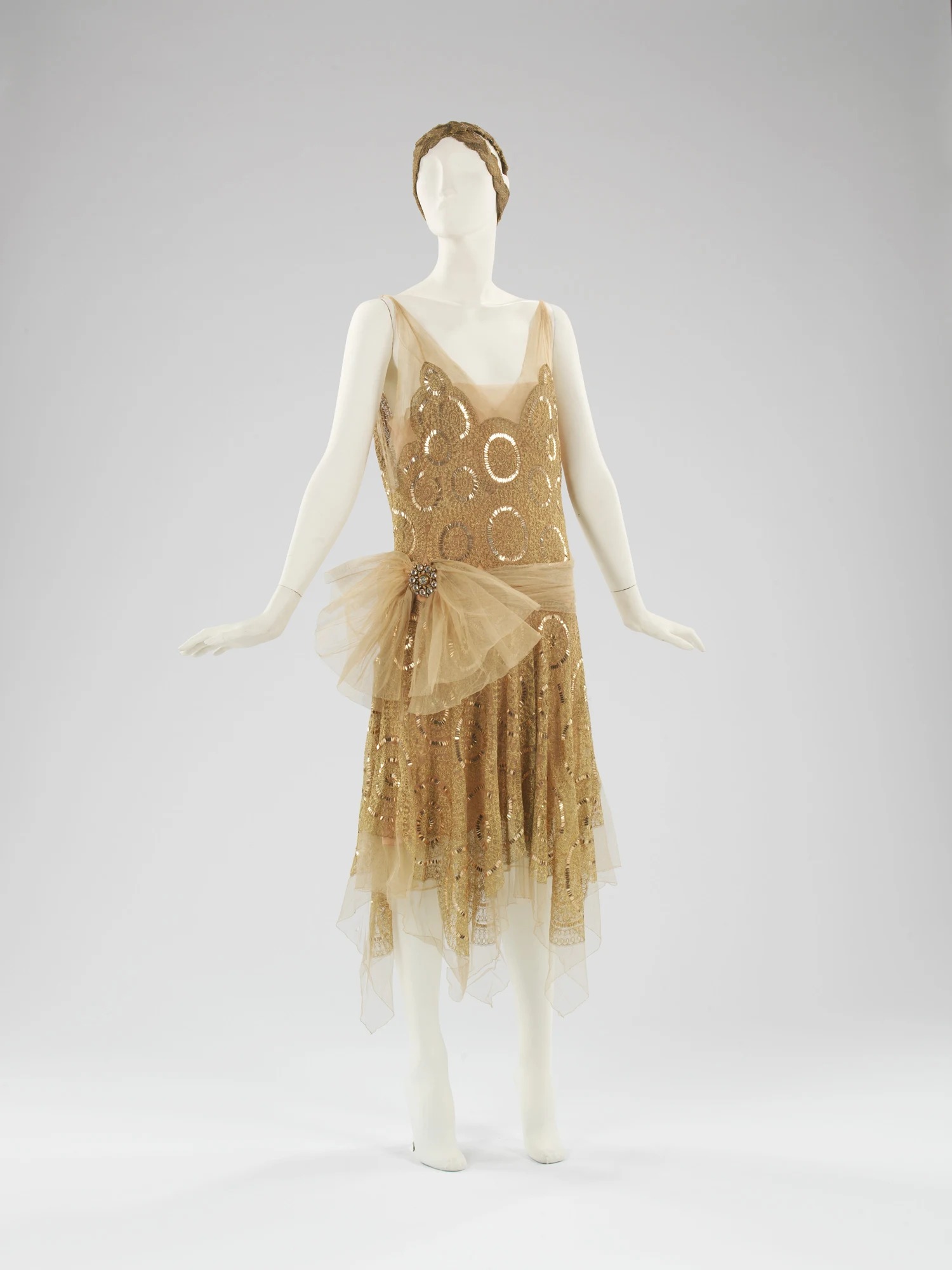
Jeanne Lanvin Lanvin history can begin with Roseraie, a spring/summer 1923 dress whose ribbon roses form an ordered surface. Empty ground matters as much as ornament. Its robe de style silhouette offers a different account of the 1920s from the familiar straight chemise.
The Met connects its floral vocabulary to the Mackintoshes; resemblance should not be mistaken for proof of direct borrowing. Looking between the broad outline and the small applied motifs reveals how decoration can organize, rather than merely cover, clothing.
From millinery to a shared wardrobe
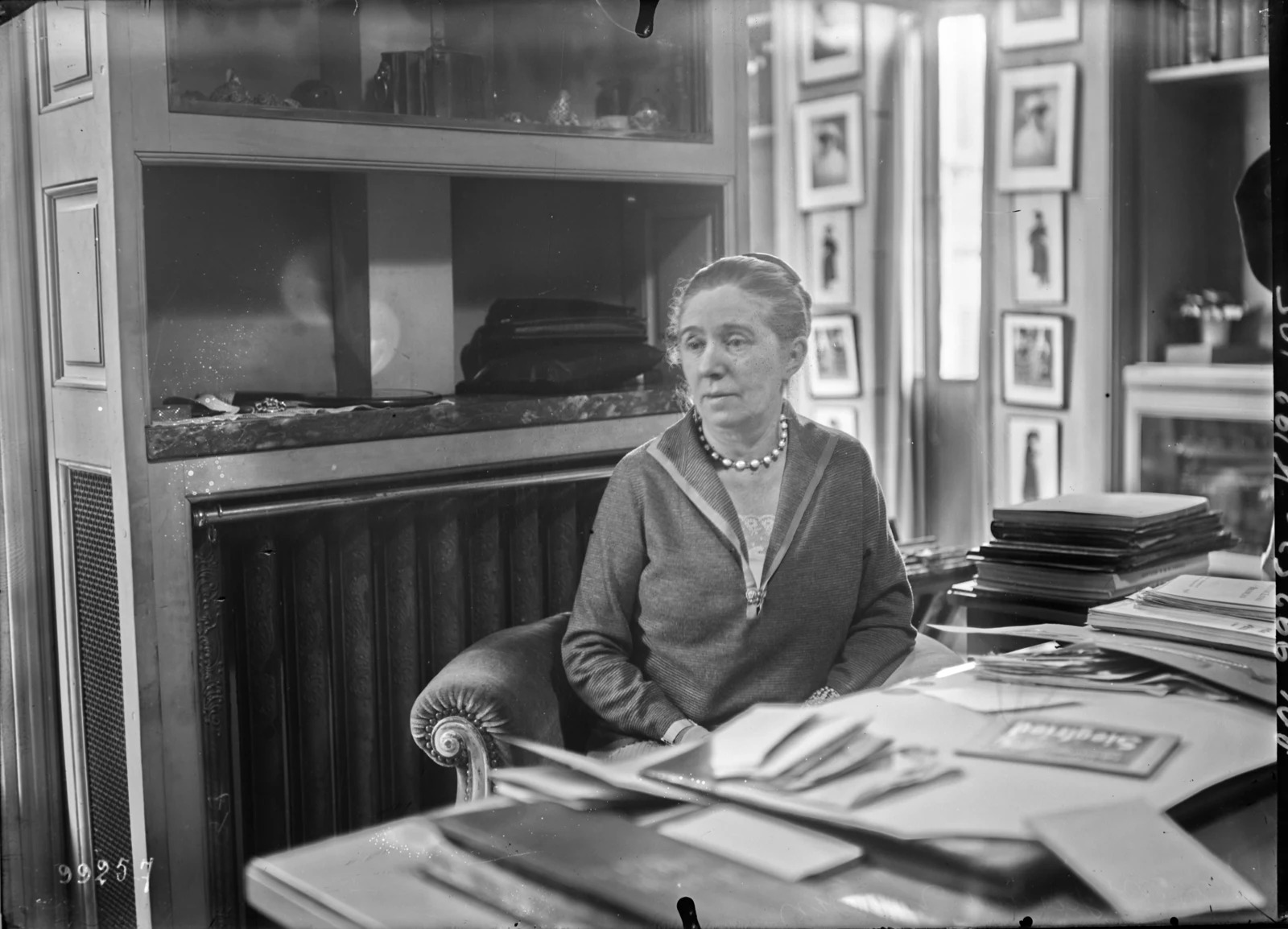
Born in 1867, Lanvin trained in millinery and dressmaking before opening her Paris hat shop in 1889. She moved to the Faubourg Saint-Honoré in 1893. Clothing made for her daughter Marguerite, born in 1897, attracted customers: a children’s department followed in 1908 and womenswear in 1909.
In Jeanne Lanvin Lanvin history, this family connection has a documented commercial significance. Mothers and daughters became customers of the same house, without needing identical garments. Different ages and uses could share a visual language while retaining different proportions.
Roseraie and Cavallini
Two examples sharpen Jeanne Lanvin Lanvin history. Roseraie rewards close examination of repeated ribbon flowers; the 1925 Cavallini design uses a much larger pearl bow motif against dark blue. Both relate to the robe de style, yet one disperses attention and the other concentrates it.
A surviving fashion drawing records intended color and proportion, not every internal support or the weight of a finished garment. Comparing drawings with objects makes the role of embroidery workshops more visible without inventing construction details that the record does not establish.

Alcimène, between stage and salon
The pink silk-crêpe Alcimène ensemble of 1929 links Jeanne Lanvin Lanvin history to theatre. Galliera identifies it as a client’s version of a model worn by Valentine Tessier in Giraudoux’s play. Crystals and silver-colored tubes create light against soft, falling fabric.
It offers a longer visual line than the spread skirt associated with earlier work. Stage costume and customer version share a design relationship but differ in audience and use. This distinction lets us discuss the translation of theatrical effects into intimate material detail without claiming that every example served the same purpose.
An organization of color and craft
Collaboration with decorator Armand-Albert Rateau extended the house into interiors. Dye production helped maintain colors, including the recognizable Lanvin blue. Jeanne Lanvin Lanvin history is consequently also a history of organized making.
Embroidery workshops, cutters, dressmakers and dyers had different responsibilities. The men’s department, opened in 1926, drew on specialist tailors and was managed by her nephew Maurice. A unified house identity did not mean one person possessed or performed every skill.
Its achievement lay partly in coordinating expertise across wardrobes, rooms and other products.
Beyond one signature
The robe de style and Lanvin blue are useful entry points, not a complete inventory. A black chiffon dress from 1909 and the long Alcimène ensemble demonstrate different ways of relating transparency, ornament and line. Jeanne Lanvin Lanvin history also includes Arpège, launched in 1927, which carried the house name beyond made-to-order clothing.
Commercial reach and artistic merit remain different questions. The continuity worth examining is the adjustment of decorative density to material and occasion, rather than the endless repetition of a single silhouette.
The founder and the continuing house
Lanvin died in 1946; later work under her name belongs to subsequent makers and circumstances. Reading Jeanne Lanvin Lanvin history today means preserving that distinction. The embroidery workshops and the recognition of Lanvin blue point to a larger relationship between objects, customers and production.
Surviving museum garments are selective evidence, shaped by collecting and preservation. Nevertheless, Roseraie, Cavallini and Alcimène offer concrete comparisons: look at where ornament directs the eye, how the skirt occupies space, and how a design changes between a drawing, the stage and a client’s wardrobe.
Timeline
- 1867 — Born
- 1889 — Opened a Paris millinery shop
- 1908–1909 — Expanded into children’s and women’s clothing
- 1923 — Roseraie dress
- 1929 — Alcimène ensemble
- 1946 — Died
Sources
- The Met — Roseraie, 1923
- Lanvin — History of the House
- Paris Musées — Jeanne Lanvin, Cavallini record
- Palais Galliera — Jeanne Lanvin exhibition dossier (PDF)