Emanuel Ungaro: The Cutting behind Color
From white ensembles to floral decoration: reading surface and form together.
ÉPOPLI ·
White workmanship before floral color
The Met dates its white playsuit and matching leggings to 1967. Emanuel Ungaro Ungaro history begins with hand-applied braid over a stretchy foundation. Raised white lines cast shadows even without contrasting color.
Short proportions suggested a new fashion audience, while construction retained traditional handwork. The current museum record supplies the date. This early ensemble complicates an account based only on colorful floral clothing.
Learning in workshops
Born in Aix-en-Provence in 1933 to Italian parents, he learned in his family’s tailoring environment. After moving to Paris in 1955, he worked in a small workshop and subsequently at Balenciaga and Courrèges. Emanuel Ungaro Ungaro history follows practical training rather than attributing later color choices to an imagined childhood psychology.
Shoulders, finishing and space around the body were working problems. Establishing a house in 1965 did not remove that technical foundation.
Sonia Knapp and the 1968 coat
A 1968 coat at the Museum at FIT makes collaboration visible. Emanuel Ungaro Ungaro history includes textile designer Sonia Knapp, whose own biography records her role in founding the house. Her fabric’s flowing lines relate to rounded lapels and patch pockets within a firmer A-line outline.
Print placement and careful matching require decisions about cutting. Textile design, garment design and workshop execution should receive distinct recognition instead of being assigned to one person.

Supporting a sculptural sleeve
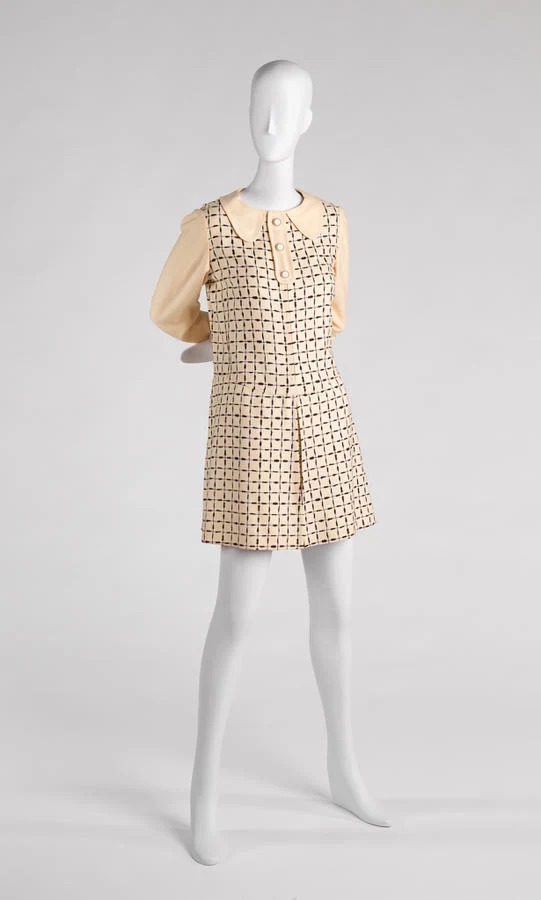
The Met’s couture catalogue describes a blue silk-gazar evening dress of 1988 with a spiraling sleeve ending in an internal rose. Emanuel Ungaro Ungaro history follows how cloth holds volume. Draping means shaping fabric on a body or form; it need not produce only a soft fall.
Gazar’s firmness and secured gathers support a sculptural result. The catalogue connects the work to Balenciaga. That connection can be studied through material and form without treating the later garment as a simple copy.
Color and structure together
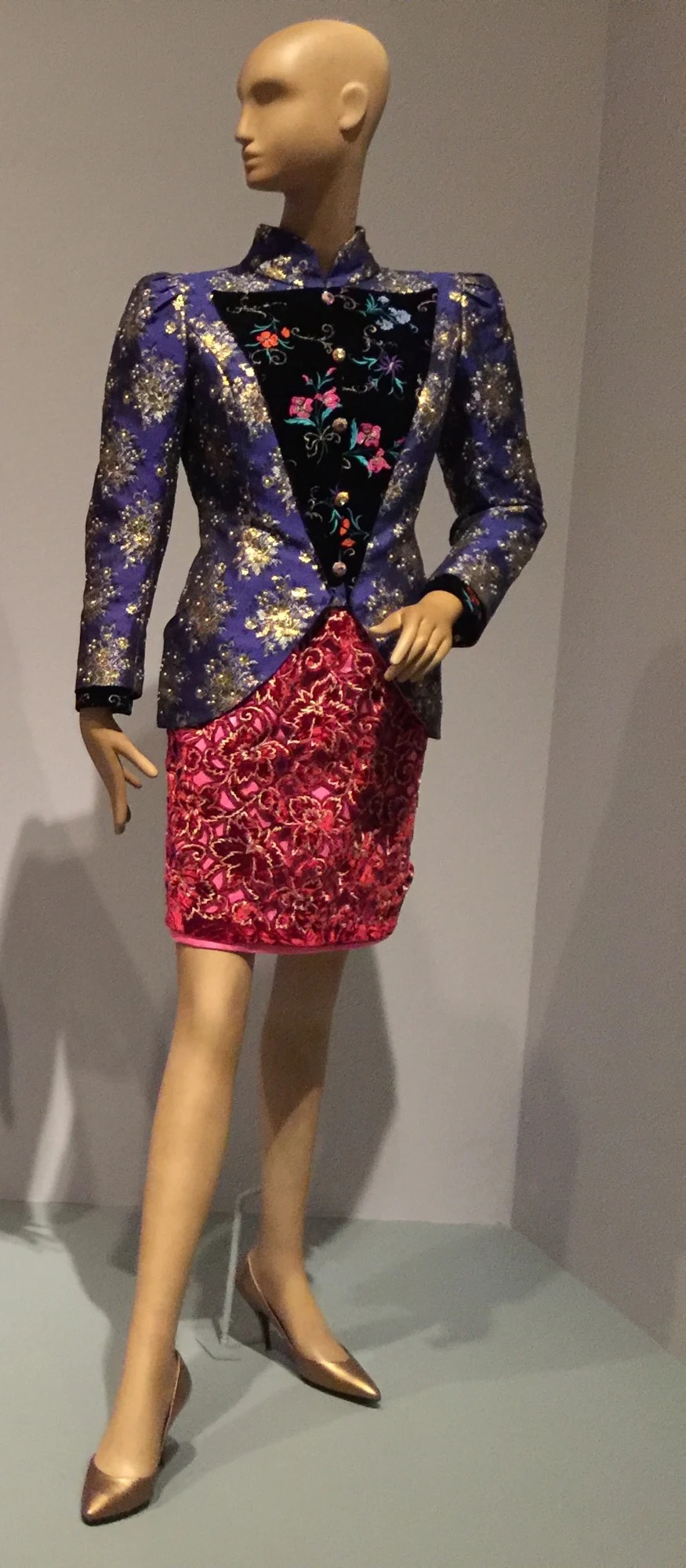
A photograph of the fall 1989 evening suit shows a purple-and-gold jacket, floral decoration and red skirt. Emanuel Ungaro Ungaro history distinguishes embroidery from printed pattern. Print placement concerns one kind of surface; raised decoration adds another.
Draping also varies with fabric weight and sheen. Looking at color boundaries, seams and concentrations of volume makes a description more useful than calling everything flamboyant. Numerous elements mattered through their arrangement, not merely their abundance.

Beyond individual couture orders
The house moved to Avenue Montaigne in 1967. FIT dates the Parallèle ready-made line to that year; Diva fragrance followed in 1983. Emanuel Ungaro Ungaro history distinguishes a private commission from clothing produced in multiple sizes.
Print placement, cost and alterations change under different production conditions. The founder left in 2004. Products that subsequently carried the name cannot automatically be treated as his personal work.
Corporate histories and museum object studies provide different kinds of evidence.
A founder and a continuing organization
He died in 2019. Emanuel Ungaro Ungaro history reads white ensembles, collaborative textiles and sculptural eveningwear as different stages of a practice. Draping was one element alongside precise cutting and other makers’ fabrics.
The FHCM listing checked in October 2026 names Kobi Halperin for womenswear and Philippe Paubert for menswear. These are subsequent responsibilities, not the founder’s new collections. Tracing material, assembly and volume helps distinguish continuity from change and makes collaborative expertise visible.
Timeline
- 1933 — Born in Aix-en-Provence
- 1955 — Moved to Paris
- 1965 — Established the house
- 1967 — Avenue Montaigne and Parallèle
- 1983 — Diva fragrance launched
- 2004 — Left the house
- 2019 — Died
Sources
- The Met — Ensemble, 1967
- Emanuel Ungaro — House history
- Lombardia Beni Culturali — Coat and biographical record
- The Museum at FIT — Emanuel Ungaro and Sonia Knapp
- Sonja Knapp — Artist biography
- The Met — Haute Couture, 1988 evening dress (PDF)
- Wikimedia Commons — Evening suit, fall 1989
- FHCM — Ungaro house listing