McQueen history: When Construction Becomes Theatre
McQueen’s story begins with the London house founded by Lee Alexander McQueen in1992.
ÉPOPLI ·
- Brand
- McQueen
- Origins
- Founded in London, United Kingdom
- Focus
- Luxury fashion
McQueen history: When Construction Becomes Theatre
McQueen history begins with the London house founded by Lee Alexander McQueen in 1992. Exact cutting and theatrical presentation were not opposites: control over how clothing surrounds a body supported the image seen on stage. The house’s tailoring knowledge could be applied to unfamiliar materials and narratives. No.13 for spring–summer 1999, Sarabande for spring–summer 2007 and Plato’s Atlantis for spring–summer 2010 offer three different questions involving machinery, flowers and transformed organisms. Clothes do not merely illustrate those subjects. Their construction and physical weight participate in the story, making a single emblem inadequate as a summary of the brand.
From London cutting rooms to a house
McQueen history is rooted in practical London training. The V&A records apprenticeships at Anderson & Sheppard and Gieves & Hawkes, followed by pattern cutting for theatrical costumiers. Later education and independent work expanded those skills into other expressions. Through tailoring, viewers can examine shoulder angle, waist length and the points where fabric leaves the body. These relations alter an otherwise familiar jacket. Describing their visual effect need not speculate about a wearer’s psychology. The spectacular quality of the house often depends on small structural decisions enlarged into an image rather than decoration added after construction.
The white dress of No.13
McQueen history includes No.13’s closing performance, in which machinery sprayed colour onto a white dress worn by Shalom Harlow. A finished garment appeared and then changed before its audience. The fashion show made transformation visible rather than only presenting successive outfits. The model’s movement and the machines’ paths helped produce the final image. Treating it as a photograph made by one designer would obscure those contributions. White cloth could resemble a blank surface while remaining clothing around a moving body. A still photograph records the result; footage preserves the sequence and its uncertainty.
Living flowers in Sarabande
McQueen history approaches nature differently in the Sarabande flower dress. The Metropolitan Museum identifies silk organza, silk flowers and fresh flowers in the spring–summer 2007 work. A changing organic material shared the surface with a more durable representation. The light-looking foundation also carried physical ornament. A documented statement by the designer connects the flowers to their eventual decay, supporting a reading beyond floral romance. That statement belongs to this work and should not become an invented psychological explanation for every collection. The specific relation between material, time and the body remains the clearest evidence.
The surface of Plato’s Atlantis
McQueen history turned nature into another kind of surface in Plato’s Atlantis. The Met documents a snake-patterned silk-jacquard dress with honeycomb-like embellishment. Sarah Burton’s account describes transformations of species, camouflage and landscape imagery. The result suggests a changing body rather than simply a picture of an animal. Season and presentation date must be distinguished: spring–summer 2010 is a collection designation, not automatically its show year. Compared with the attached flowers of Sarabande, this work relocates biological references into engineered pattern. Different materials create different narrative possibilities even when both refer to living forms.


Sarah Burton and the continuing workroom
McQueen history continued after the founder’s death in 2010 with Sarah Burton’s creative direction. Long collaboration makes continuity of workroom knowledge relevant, but does not make her collections the founder’s own designs. Kering’s 2023 announcement documents the end of that partnership. A fashion show from a successor’s period can be compared through cutting and embellishment without assuming identical intention. A familiar motif may sit on a differently proportioned body or use another material. The continuing house combines accumulated practice with new judgement. Naming the actual author and period recognises both the founder and those who followed.
Reading clothing alongside performance
McQueen history offers three distinct viewing exercises. No.13 reveals the moment a garment changes; Sarabande introduces material time; Plato’s Atlantis unsettles the boundary between image and body. Calling them shocking clothes would explain little about those differences. One can ask what disappears without the garment and what becomes less visible without its stage. An object record and performance footage are complementary evidence. Close examination reveals technique, while movement shows how that technique becomes an experience. This relation between construction and presentation explains why both clothes and performances remain central to the house’s memory.
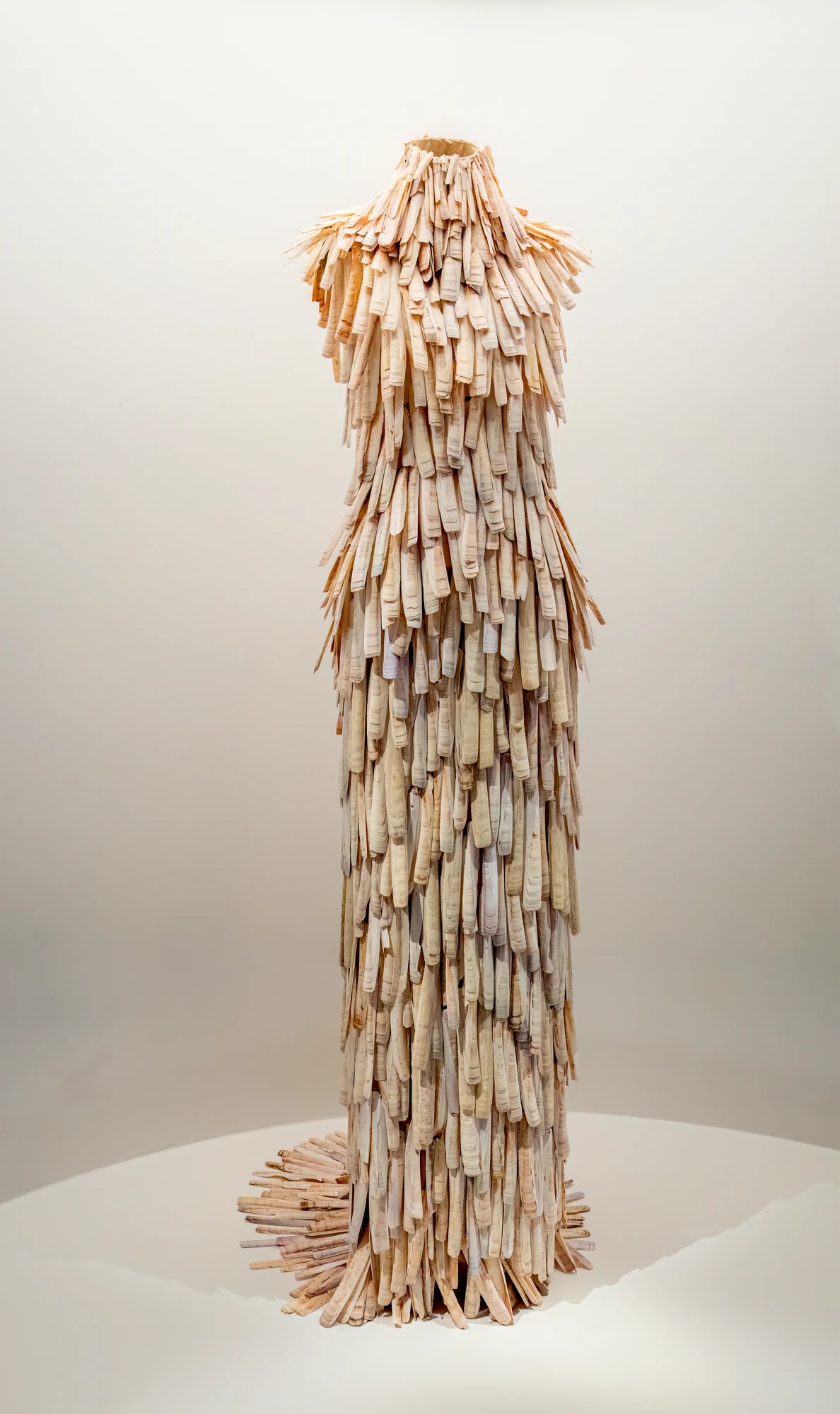
A frontal view of the flower dress allows comparison of ornamental density, while moving footage shows how flowers and cloth respond to the body. Changing the distance and medium of observation reveals decisions that a familiar dramatic image can conceal.
Timeline
- 1992 — London house founded
- 1999 — No.13 season
- 2007 — Sarabande season
- 2010 — Founder dies; Burton becomes creative director
- 2023 — Burton partnership conclusion announced
Questions and answers
When was the house founded?
Lee Alexander McQueen established it in London in1992.
Were real flowers used in Sarabande?
The Met records both silk flowers and fresh flowers.
Should Burton’s work be separately attributed?
Yes. Her creative direction after2010 is distinct from the founder’s own work.