Models · 005
Carmen Dell’Orefice
Life & Career
- Born
- 1931-06-03
- Nationality
- American
Origins
Born in New York on June 3, 1931, she studied ballet and entered modeling as a teenager. Early work was connected to economic necessity as well as an emerging aptitude for the camera.[1][2]
Entry into fashion
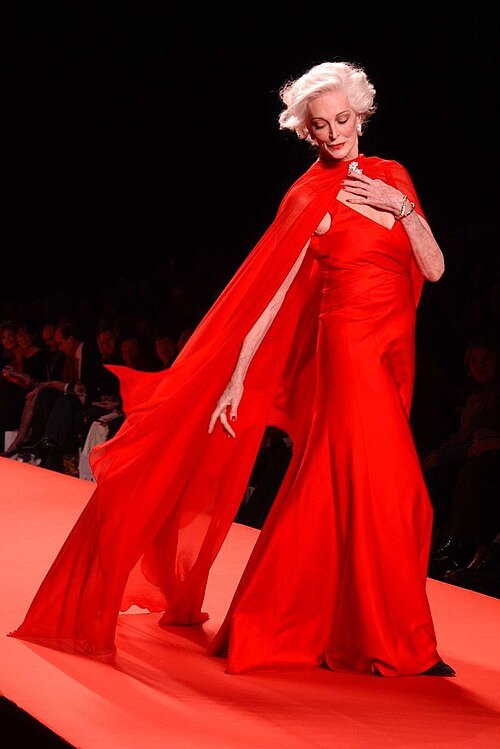
She began Vogue work in 1946 and appeared on its cover at fifteen. Early photographers included Clifford Coffin and Horst; her recollections emphasize modeling as paid, skilled work.[1][3]
Creative partnership
Magazine work broadened into advertising, including Revlon and Chanel No. 5. Experience with leading photographers created a professional vocabulary she could draw on across later decades.[1][2]
Defining work
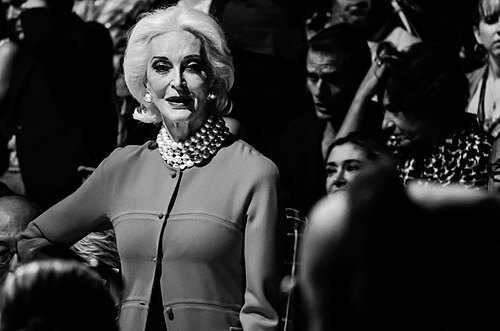
Returning to work in the late 1970s, she faced age-related resistance. A new portfolio with Norman Parkinson helped establish silver hair and maturity as positive elements of her image. Making silver hair central to the new photographs offered a mature face as a visual resource. The return depended on accumulated professional skill as well as a changed appearance.[1]
Changing direction
She appeared in shows for Mugler, Dior and Hermès across later decades. Her longevity included pauses and returns, rather than an uninterrupted appearance in every season. These appearances connected an earlier generation of fashion photography with younger designers. The significant pattern is repeated return across different eras, rather than an uninterrupted booking in every season.[1][2]
Later career
Her 1985 book and 2011 honorary degree and retrospective helped turn a long working career into a historical archive spanning changing photographic and fashion practices.[1][3]
Legacy
Documented later work includes Albert Watson’s 2023 Vogue Czechoslovakia cover and a 2025 book with Fadil Berisha. These dated records are more precise than an unqualified “oldest model” claim.[2][4] Separate advertising, editorial and cover credits make the range of her later work more precise than a longevity label alone. Comparing a long career involves more than checking whether a signature pose endured. Clothing, photographic treatment and the role within a publication can all change. A headline about age may ask a different question from the work itself. Dated credits help reveal expressive range alongside public attention, allowing the person to be understood as a working professional rather than only an exceptional statistic.