Dirk Bikkembergs: Boots, Bodies and Tailoring
From substantial footwear to suits shaped by athletic bodies.
ÉPOPLI ·
Starting a suit at the feet
The laces of a spring/summer 1994 boot pass through its heel, making fastening part of its structure. Dirk Bikkembergs history can be read from the feet upwards. His shoe design brought the solidity of mountain footwear into urban dress. A substantial boot changes the apparent width and length of trousers. Military and workwear references preceded the athletic imagery: functional objects offered attitudes and structures, not simply motifs to copy.
From Antwerp to production
Born in Germany and active in Belgian fashion, he graduated from Antwerp’s Royal Academy in 1982. A Golden Spindle menswear award followed in 1985 and a shoe collection launched his label in 1986. Dirk Bikkembergs history expanded from a particular product category into a complete wardrobe. Gibo collaboration in 1988, a full Paris menswear collection in 1989 and Italian production facilities in 1991 connected ideas with manufacturing. Membership of the Antwerp Six provided an international context without imposing a common aesthetic.
Green trousers and a cream coat
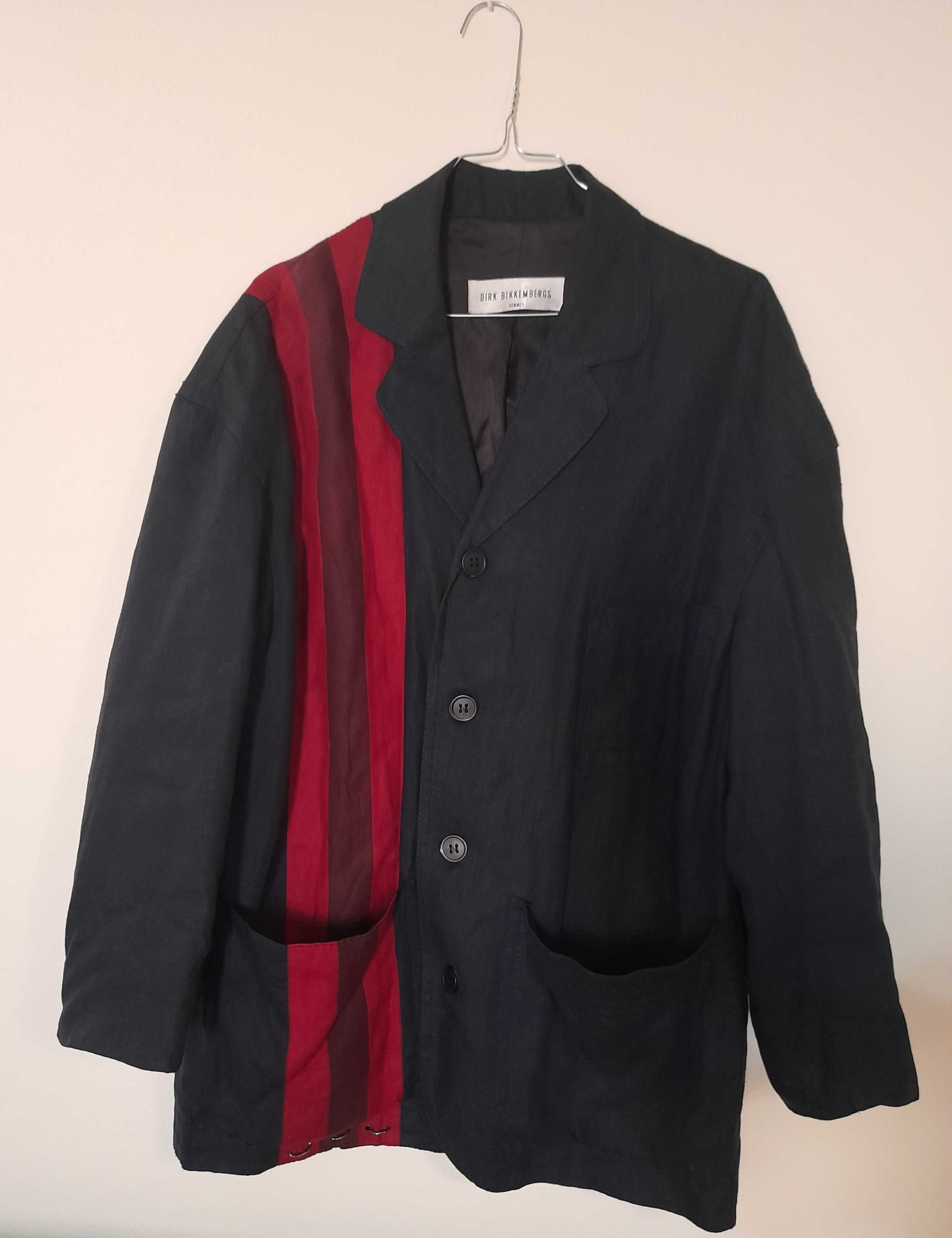
A 1991 ensemble combines green trousers and cable knitwear with a cream coat and black boots. Dirk Bikkembergs history already linked relaxed clothing and structured outerwear before football dominated the imagery. Elastic and a drawstring adjust the trousers; zips close rear pockets. Zigzag stitching makes the coat’s assembled panels visible, while a transparent insert and an interior letter complicate its surface. Metal heels add a hard material beside soft knit. This shoe design contributes to the whole silhouette instead of merely completing it.
Ski equipment and timber
An April 1995 window card identifies red ski boots as inspiration for autumn/winter 1995–96. Dirk Bikkembergs history includes this attention to protective equipment. The 1996 Timber boots at the NGV combine leather, wood, rubber and metal. These materials perform different roles around the foot and under its weight. Their meeting points matter as much as surface decoration. Robustness is therefore a useful starting impression, but examining what encloses and what supports the foot reveals a more precise design logic. Wood and rubber beside leather make the boot legible as an assembly of parts rather than one continuous surface.
Tailoring enters the stadium
The 2001 San Siro show and Inter Milan’s 2003 off-field suits connected fashion directly with football. Dirk Bikkembergs history used Sport Couture to link sporting comfort with refined finishing, a brand vocabulary rather than a Paris haute couture accreditation. A blue spring/summer 2004 suit appears with shorts and football footwear; a related combination returns in 2009. Exposed legs alter tailoring’s conventional image. The stadium also changed the setting in which an audience understood these clothes.
A photographer shapes the body
Photographer Luc Willame co-founded the label and became a longstanding collaborator. Dirk Bikkembergs history survives through such images as well as garments. A shoe-bearing model in the 1987 lookbook differs from footballers photographed in South Africa’s Karoo desert in 2008. Moving athletes beyond a playing field emphasises posture and collective arrangement. Sport Couture therefore involved a visual setting as well as a cut. Willame later helped preserve photographs, film, invitations and working documents, connecting public imagery with preparation.
The founder and the continuing house
The founder withdrew from routine fashion activity in the early 2010s. The current house identifies Lee Wood, appointed in 2016, as creative director. Dirk Bikkembergs history distinguishes that continuing business from the founder’s own designs. Sport Couture remains a heritage rather than evidence of his authorship of every new product. In 2024 he and Willame transferred an eighty-box paper archive to MoMu. Student work, mood boards and collection documents now enable closer study of choices behind completed clothes. His contribution joins solidity with comfort through concrete decisions about laces, waistbands and exposed legs.
Timeline
- 1982 — Graduated from Antwerp academy
- 1985 — Golden Spindle award
- 1986 — Shoe collection and label launch
- 1989 — Full menswear collection in Paris
- 2001 — San Siro show
- 2003 — Inter Milan off-field suits
- 2024 — Paper archive transferred to MoMu
Sources
- MoMu — Dirk Bikkembergs
- MoMu Archive — Designer and Luc Willame
- MoMu — Archive online
- MoMu collection via Modemuze — 1991 ensemble
- NGV — Timber boots, 1996
- MoMu Archive — Ski boot window card, 1995
- Bikkembergs — Current house and creative director
- MoMu Archive — Structure