Christian Lacroix: History, Color and the Stage
History, Color and the Stage.
ÉPOPLI ·
A short skirt with a long memory
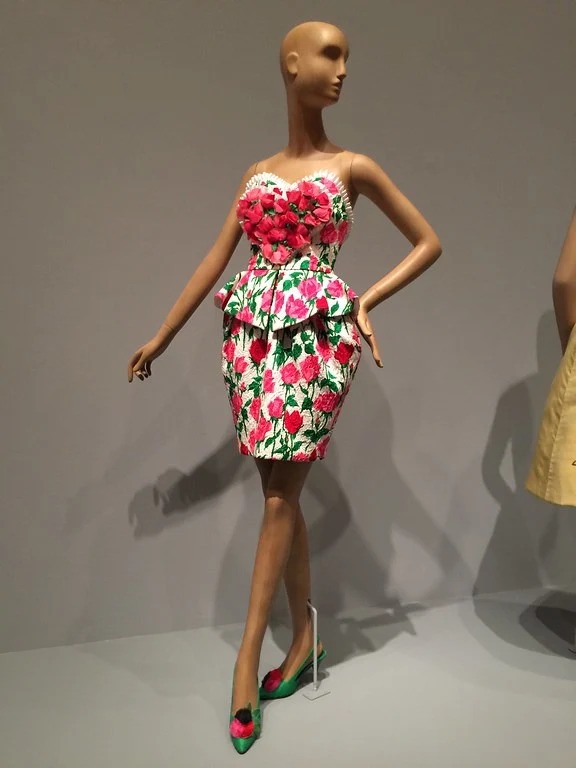
The swelling outline of a pouf skirt provides an entrance into Christian Lacroix house history. Cloth rises and gathers around the hips, making volume itself an ornament. The short length changes the relationship to historical court dress: a remembered shape is compressed and made visibly contemporary. The result does not depend on reproducing an entire eighteenth-century costume.
That distinction is central to his practice. References to regional dress, painting, religious imagery or the theater appear beside each other, but they are edited into a new arrangement. A small fitted bodice can make the skirt seem larger; a bow can interrupt an otherwise symmetrical outline. The eye moves between these competing points of attention. It is useful to ask how the pieces are balanced, rather than treating all visible ornament as an undifferentiated expression of excess.
Arles and the study of images
Born in Arles in 1951, the designer studied art history before entering fashion. Christian Lacroix house history follows a career in which drawing and historical research remained active tools. Early work included Hermès and experience with Guy Paulin, followed by the artistic direction of Jean Patou in the 1980s. His later label emerged from this professional background rather than appearing fully formed with its first show.
The relationship to Arles is documented in his drawings, exhibitions and own accounts of the city. Bullfighting, regional clothing and the visual culture of Provence supplied subjects he revisited. They should be understood as particular references, not evidence that geography automatically determines an artist’s taste. A drawing can combine memories with something seen in a museum or onstage. The archive records that process more accurately than a simple story about an innate regional temperament.

Patou before the house bearing his name
A spring–summer 1987 ensemble in the Metropolitan Museum’s collection is catalogued as Jean Patou designed by Christian Lacroix. Christian Lacroix house history needs this precise credit because familiar images of his early work are sometimes detached from the house for which they were made. The museum’s couture scholarship likewise associates especially inflated versions of the pouf skirt with his Patou period.
The distinction changes the chronology. An established atelier and label provided the setting for experiments that became closely associated with his own identity. A design can therefore belong to a house’s production history and a designer’s personal development at the same time. Looking at the ensemble as several coordinated components also reveals that the effect is assembled: the relationship between bodice, lower half and ornaments matters as much as any one item viewed alone.
A new couture house in 1987
His own couture house opened in 1987 with the support of Bernard Arnault and the involvement of Jean-Jacques Picart. Christian Lacroix house history places this launch within the business of couture, where highly visible collections required substantial investment and specialist labor. The enthusiastic reception of a show did not in itself establish a financially secure enterprise.
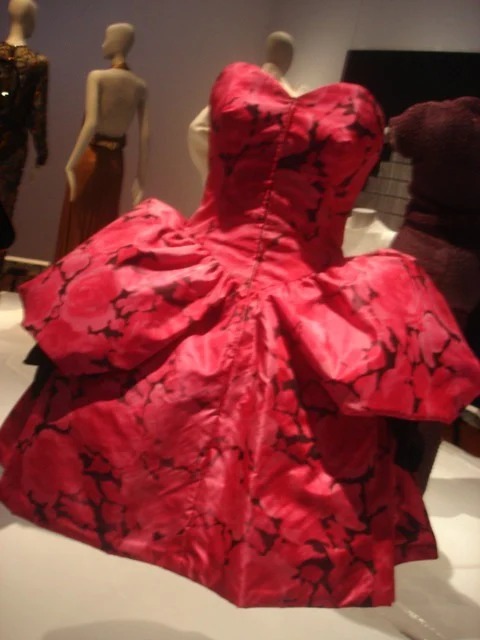
An autumn–winter 1989–90 evening ensemble in the Met offers a later point of comparison. Its record identifies silk, velvet and satin across the components. Even without assuming an unrecorded technique, those materials suggest different responses to light: a glossy area and a darker, more absorbent surface do not read alike. Such decorative contrast gives depth to a richly layered outfit. Embroidery, ribbons and other applied details also depended on workshops capable of converting a drawing into a wearable construction.

Theater gives decoration a task
The 1989 production of Carmen at the Arènes de Nîmes is one documented example of his work for performance. Christian Lacroix house history considers stage costume as a separate discipline with its own constraints. A character must be recognized at a distance, and clothes have to work with singing, acting, lighting and the physical requirements of the production.
The INHA inventory of his drawings held by the Centre national du costume de scène includes work for theater, opera and ballet between 1986 and 2009. This record demonstrates a sustained practice rather than an occasional celebrity collaboration. A dramatic sleeve may establish a silhouette from far away, while a small detail may matter only in a close view. The designer and costume workshop must decide which effects will survive the actual conditions of performance. Historical reference is one resource within that practical negotiation.
When a label and its founder separate
The end of his couture activity in 2009 marks a major break in Christian Lacroix house history, but not the end of his work as a designer. Theater, exhibition design and interiors continued to provide other settings for his practice. Products later sold under the brand name should not automatically be described as personal designs by the founder.
The change also exposes the difference between cultural recognition and the economics of a fashion house. A memorable runway image may enter museums while the enterprise that produced it struggles. Conversely, design knowledge can continue in another form after a couture operation closes. The movement into stage costume and scenography allowed drawing, material research and collaboration with makers to remain central. These activities deserve attention in their own right rather than serving only as an epilogue to the better-known fashion shows.
Reading the drawings as well as the dresses
The Musée Réattu’s 2026 exhibition of drawings in Arles provides a recent point in Christian Lacroix house history. Its focus on notebooks, informal supports and recurring subjects makes the act of drawing visible alongside finished fashion. It helps connect the costume designer and scenographer to the couturier without pretending that every project has the same purpose.
To read the work today, compare how a historical shape changes when its length, setting or material changes. Notice how decorative contrast directs attention and how the maker controls a crowded surface. A dress may bring together references from different centuries, but it still needs a particular body, construction and occasion. The specificity of those decisions is what distinguishes the clothes from a collection of quotations. The archive is most informative when sketches, garments and the records of collaborators are considered together.
Timeline
- 1951 — Born in Arles
- 1980s — Artistic direction at Jean Patou
- 1987 — Own couture house opened
- 1989 — Costumes for Carmen at the Arènes de Nîmes
- 2009 — End of couture activity
- 2026 — Drawing exhibition at Musée Réattu, Arles
Sources
- The Met — Patou ensemble by Christian Lacroix, spring–summer 1987
- The Met — Haute Couture exhibition catalogue (PDF)
- INHA — Christian Lacroix biographical record
- Ville d’Arles — Christian Lacroix at Musée Réattu, 2026
- The Met — Evening ensemble, autumn–winter 1989–90
- INHA — Inventory of stage costume designs