
Why the silhouette widens sideways
Women's court clothing in Rococo dress often has skirts spreading broadly to either side. Distinguish panniers, the supporting understructure, from the outer robe à la française to understand that shape accurately. Abundant cloth does not create all the volume by itself. Asking what supports the fabric connects silhouette to construction. Not all eighteenth-century garments had the same width, however. Separate formal court dress from other circumstances of wear when examining the evidence.

Understructure and outer fabric
Panniers extend a garment sideways, creating an outline different from the body itself. To understand the strong waist-to-skirt contrast of Rococo dress, examine this support before its surface decoration. An outfit broad from the front may look quite different in profile. Compare several angles where possible. A modern full skirt can look similar while using a different support system. Distinguishing visible shape from the device that produces it is a useful habit throughout dress history.

Pleats descending from the back
The robe à la française can be examined through its long back pleats and front arrangement. In Rococo dress, those vertical lines play a different role from the horizontal width created by panniers. Concentrating only on the ornate front obscures that contrast. Follow the cloth from the back of the neck and examine how waist and skirt relate. A single gown may give very different impressions from front and rear, which is why one representative photograph is insufficient.
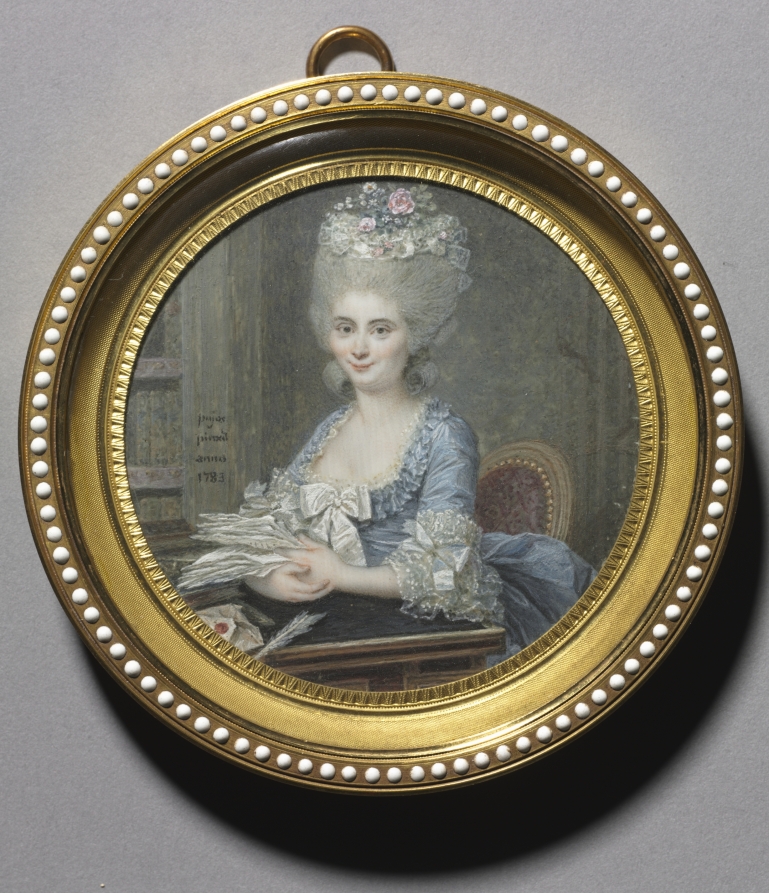
Floral patterns and the placement of ornament
Floral silks and lace frequently attract attention in Rococo dress. On a robe à la française, examine motif size, direction and concentrations of ornament separately. A pattern woven or printed throughout the cloth involves a different process from decoration attached afterward. Consult museum material descriptions when photographs do not make the distinction clear. Repeated patterns and edge treatments reveal choices hidden by the broad label elaborate. Reading color together with structure makes the richness of the surface more specific.

Include menswear in the picture
Although women's panniers are especially familiar, Rococo dress also includes men's combinations of coat, waistcoat and knee-length breeches. Several garments work together to create the whole effect. Consider materials and function together rather than treat ceremonial silk and velvet as equivalent to everyday wool clothing. Comparing men and women only by ornament obscures construction. Record layers, lengths, center lines and side lines to understand how different silhouettes coexist within the same period.

Other currents later in the century
Remembering only the widest and richest court clothing leaves out informal currents in later Rococo dress. The robe à la française is important, but it is not the only gown representing eighteenth-century women. Arrange sources chronologically and compare waist position, width and ornament. Change is gradual, and established forms may coexist with new tastes. Instead of imagining one fashion ending before the next begins, consider different ways of dressing used simultaneously in different circumstances.

Comparing neoclassical proportions
Understanding panniers and the robe à la française in Rococo dress clarifies the contrasting high waist and vertical silhouette of the next period. Compare sideways support with fabric falling along the body before considering materials, ornament and occasions. This keeps visual change distinct from social context. A revolution does not make every garment change immediately. Transitional clothing may combine older details with newer proportions. Identify continuity as well as difference when connecting one period to another.