
Change within a century
Baroque dress changed too much to be explained by gold ornament and lace alone. Structured women's clothing early in the seventeenth century differs from the later mantua, while long coats such as the justaucorps became established in menswear. Divide the century into phases rather than compress it into one courtly image. Check dates first: equally elaborate outfits can differ in cutting, layering and upper-to-lower proportions. Finding those differences is the first step toward understanding the period.

Arranging fabric in women's clothing
The mantua invites us to study cloth draped around the body and arranged toward the back. In Baroque dress, a skirt gathered behind or trailing on the ground concerns fabric placement as well as decoration. The front alone cannot reveal the whole construction. Compare side and rear views when available, following folds and fastening points to see how the garment acquires volume. Do not impose the structure of a later garment merely because its name or silhouette seems similar.

Changing lengths in menswear
Later Baroque dress includes long men's coats that contrast with shorter doublets. Examine the length below the torso, front fastening and inner layers of a justaucorps. It does not share the mantua's construction, but both can be compared as garments that substantially alter the overall outline. Look at shoulders, waist and hem before ornament. Men's and women's clothing did not necessarily change at the same speed or in the same direction; each garment deserves a separate structural reading.

The neck and the central line
Alongside the justaucorps, the cravat is important to reading the upper body. Observe how light cloth at the neck contrasts with the outer garment in portraits of Baroque dress. Even when a large wig or elaborate decoration first catches the eye, following the center line reveals overall proportions. The vertical direction of fastening and neckline creates an effect different from the volume of sleeves and skirts. Recording where each component sits helps distinguish the roles of construction and ornament.
Small choices within elaborate dress
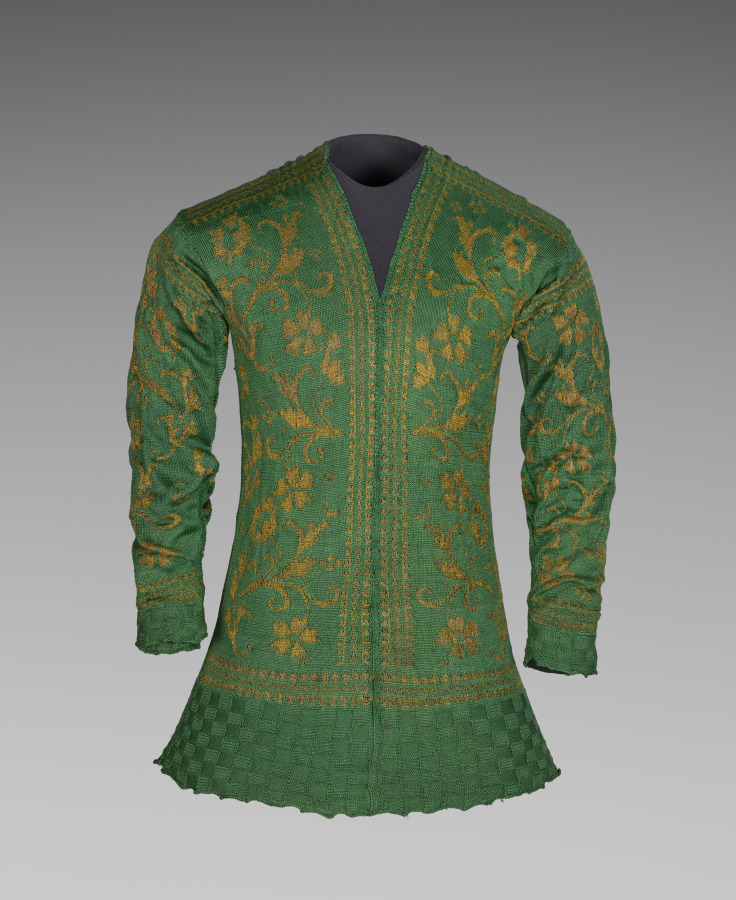
Gathering points in a mantua, lace width and ribbon placement may serve different purposes. Describing Baroque dress simply as heavily decorated erases those distinctions. Ornament can emphasize an edge or direct attention to a particular area. Ask which elements hold fabric in place and which primarily create a visual effect. If a fastening cannot be established from the painting, leave it unresolved. Separating confirmed construction from visual interpretation makes even elaborate material easier to read carefully.

Court influence and the limits of the record
The growing influence of the French court is an important context for Baroque dress, but European everyday clothing did not universally resemble court attire. An official portrait in a justaucorps represents a particular position and occasion. Comparisons with working or informal dress should consider how evidence survived. Rich garments were more likely to be collected and preserved, and can dominate the images available today. A museum collection is not the complete wardrobe of an entire past society.
Toward eighteenth-century clothing
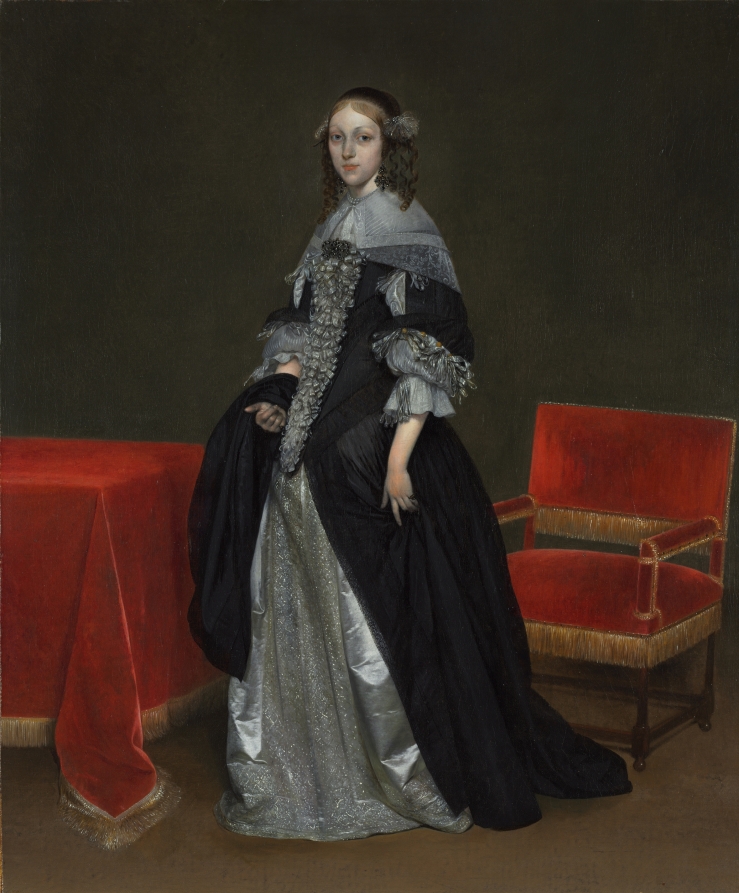
Remember changes in construction as well as ornament in Baroque dress. The arrangement of a mantua and the long coat structure of a justaucorps provide reference points for eighteenth-century gowns and men's ensembles. Compare descending back pleats, sideways skirt width and inner coat layers separately. Some features continue while others change, a more useful distinction than degrees of richness alone. Light fabric at the neck may attract attention against a dark coat without being its main structural element. Read the whole outline before details, keeping visual emphasis distinct from fastening and support.