
Regional differences in dress
Reducing Renaissance dress to one gown shape obscures differences between places such as Italy and Spain. Rich silk, velvet, broad sleeves and firm bodices appeared in different combinations at different times. The development of small neck frills into the ruff was also a gradual process. Establish a portrait's date and region before examining its clothes. Works from the same century do not necessarily show the same fashion. Courts, textile production and political relationships all shaped dress.

Volume and surface created by textiles
Italy's rich textile production is an important context for Renaissance dress. The appearance of velvet shifts with the direction of light, making painted surfaces worth examining. A dark, thick-looking fabric in a portrait is not enough to establish its material, however. Consult museum interpretation or material records for surviving garments. After observing color and pattern, examine the volume of sleeves and torso. This reveals how textile effects combine with garment construction.

Changes around the neck
Sources from the 1520s show high necklines and small frills. These changes in Renaissance dress help explain the later, larger ruff, but its fully developed form did not appear all at once. Notice contrasts between rich outer materials such as velvet and the lighter neckline of a shirt. Ask how much of the neck is covered, whether the frill is attached to the shirt and whether it appears separate. Similar ornaments in different periods should not automatically receive the same name or construction.

Bodice and sleeve in contrast
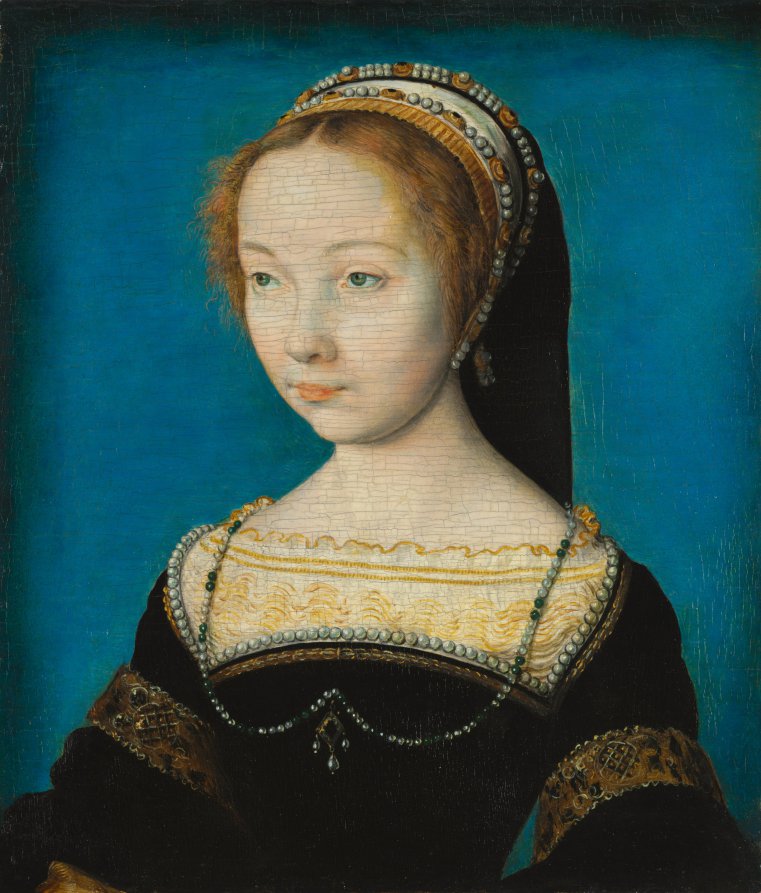
Some sixteenth-century women's Renaissance dress contrasts a firmly shaped bodice with wide sleeves. Concentrating only on the ruff can obscure those overall proportions. Follow the line from shoulder to waist and identify where the sleeve widens. Accounts of Spanish court influence should be read alongside differences in local adoption. Influence does not mean everyone dressed alike. Consider similarities of form separately from textile choices and the wearer's position to see the variations more clearly.

Dark color does not mean simplicity
A textured material such as velvet can produce complex effects even in a dark color. A black or deeply colored outfit in Renaissance dress should not automatically be read as restrained or inexpensive. Consider material quality, workmanship, jewelry and contrasts with the shirt. Bright colors do not have a monopoly on richness. Record color, material value and wearing context separately. Small surface differences may explain a garment's character better than the most immediately striking hue.

How portraits present clothing
Portraits widely used to study Renaissance dress were made to express identity and position. An emphasized ruff, jewelry or voluminous sleeve is not a candid record of every moment of daily life. The painter's decisions and the patron's intentions may shape the image. This does not make painting useless as evidence. Observe relationships of form and color, while seeking additional support before asserting a precise construction technique. Separate facts established in the catalogue from interpretations prompted by looking.
Three comparisons with the Baroque
Compare the firmness of the torso, the volume of sleeves and neck ornament when moving from Renaissance dress to the next period. Remembering velvet surfaces and ruff construction makes seventeenth-century lace, ribbons and changing necklines easier to notice. Clothing does not change all at once at a century boundary. Compare multiple works instead of treating one outfit as the correct period type. With broad sleeves, distinguish fullness at the shoulder from width below the elbow. Objects held by a sitter or the position of an arm may hide the garment, so leave unseen details unresolved. Careful analysis of shape supports a clearer reading of regional differences.