Prada history: Nylon, leather and unexpected combinations
Prada began in Milan in 1913. Its leather-goods foundations developed alongside nylon, clothing and cultural projects that questioned familiar assumptions about luxury.
ÉPOPLI ·
- Brand
- Prada
- Origins
- Founded in Milan, Italy
- Focus
- Leather goods, ready-to-wear and accessories
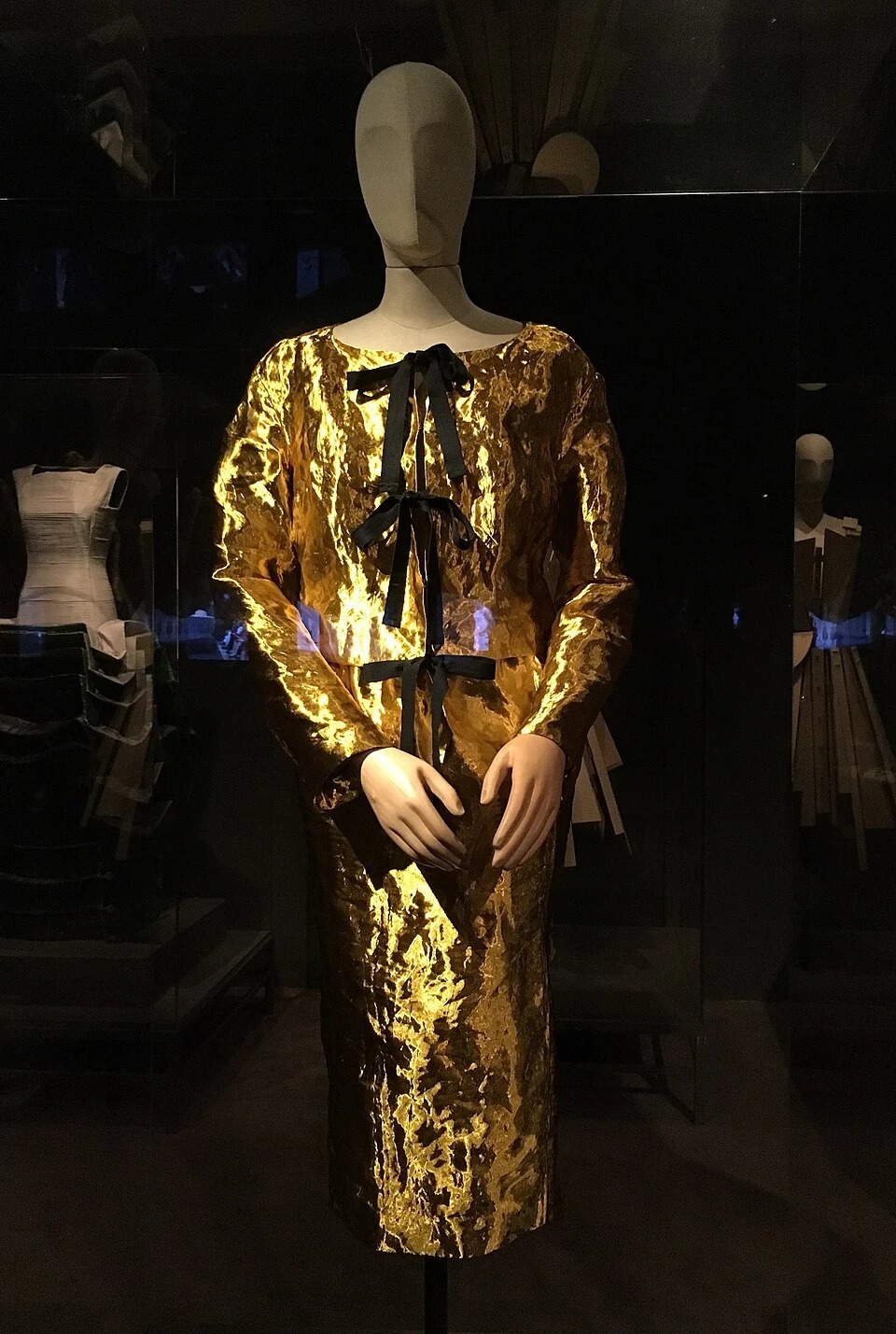
Can an industrial material be luxurious?
Prada history can begin with a question: must an expensive object use a rare material? Nylon fabric suggests industrial production and practical equipment, yet its meaning changes with form, fittings and styling. A flexible surface responds to contents rather than maintaining a leather-like edge. Precision can reside in seam alignment, pocket placement and load-bearing straps, not only in material cost. This does not claim that Prada invented the textile. It examines how an existing substance was placed in a different context. Shine, weight and texture reveal decisions within an apparently simple bag. The productive question is how utility and visual refinement coexist, rather than which label wins.
A shop and a changing organization
Prada history starts commercially with the store opened in Milan’s Galleria Vittorio Emanuele II in 1913. The official chronology follows the founding business into the collaboration between Miuccia Prada and Patrizio Bertelli. Today’s garments should not all be explained as expressions of the founder’s intentions. A later generation selected different materials and images on an existing commercial foundation. The same chronology records Miu Miu’s establishment in 1993, but that development deserves treatment as a separate brand rather than merely another Prada product range. Corporate history and collection history intersect without being identical. Keeping their scales distinct clarifies how organization and design each contributed to change.
Appearance and feedstock are different questions
Prada history includes the Re-Nylon project launched in 2019. The company describes collaboration with Aquafil on regenerated nylon yarn, beginning with bags and expanding into other categories. Nylon fabric may look familiar while its feedstock and processing differ. A regenerated yarn does not by itself describe the environmental impact of an entire finished object. The account here therefore stays within the disclosed material and process rather than adopting a broad superiority claim. From a design perspective, a practical surface acquires a different production story. Changes of appearance and changes of source need not occur together, so dates and material descriptions belong in the same record.
A more structured outline
Prada history provides a contrast in the Galleria bag, introduced in 2007. Its name refers to the historic Milan store, not a claim that the product existed at the founding. Upper handles and a defined body organize compartments within a controlled outline. The characteristic crosshatched surface of Saffiano leather offers another visual register from flexible textile. A restrained exterior can conceal numerous joined parts. The Galleria bag should also be compared across sizes: handle-to-body proportions and placement against the wearer may change, so a smaller version is not experienced simply as a mathematically reduced larger one. Material and dimensions make those distinctions legible.
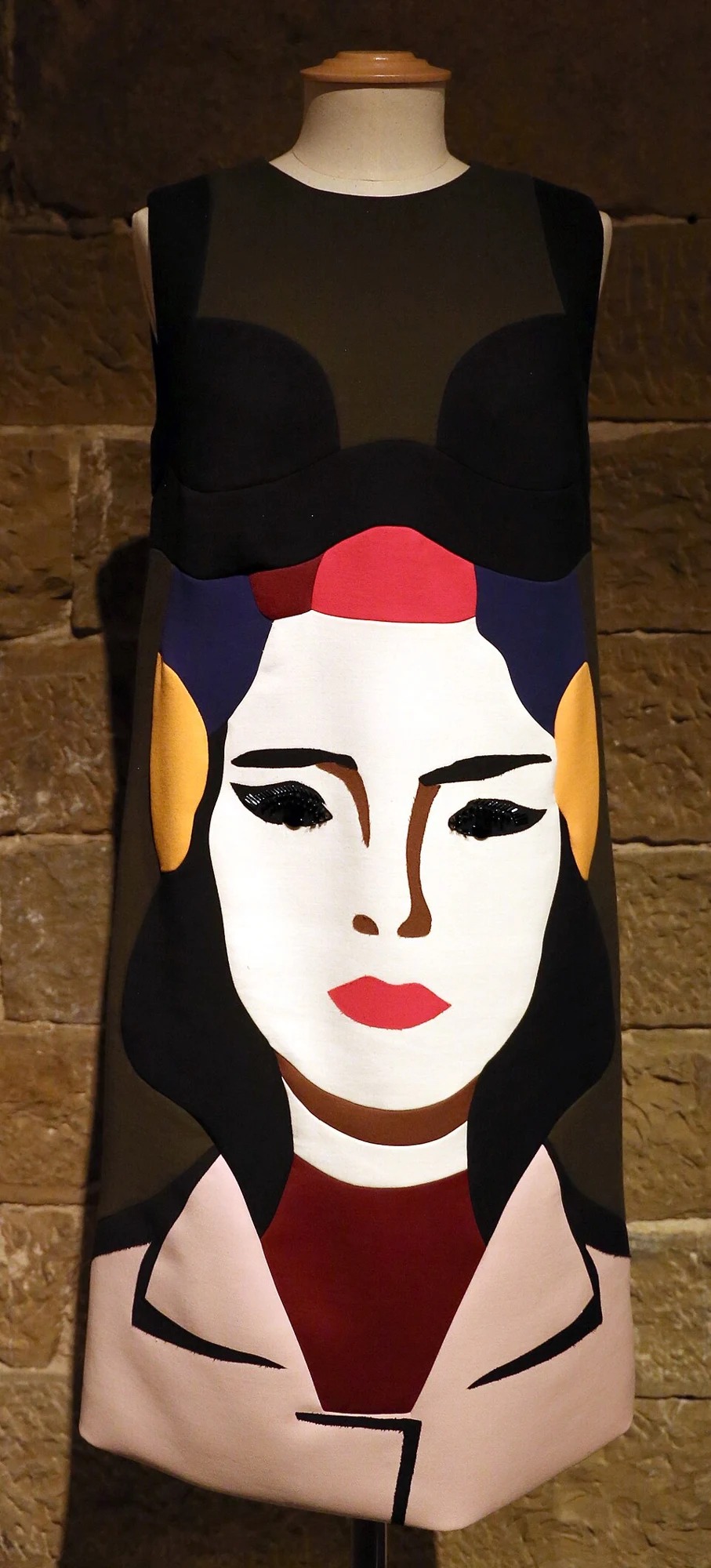

Images moving across clothing
Prada history is not confined to bags. The official spring/summer 2014 womenswear archive offers faces, colour fields and embellishment occupying clothing. An image on a garment does not operate exactly like an image on a wall: movement, seams and placement divide it. After the regular texture of Saffiano leather, these enlarged figures provide a different encounter between surface and form. They also challenge an account of the brand as consistently plain or undecorated. Unexpected coexistence becomes the subject. Alternating between the whole outfit and its details reveals which element attracts attention first and which appears only on closer inspection.
Creative direction and material expertise
Prada history brings individual decisions into contact with organizational change. The official chronology records Raf Simons joining Miuccia Prada in creative co-direction in 2020. This identifies a collaboration rather than transferring one person’s authorship to another. Products also involve expertise in yarn, cloth, leather and metal. Processing regenerated feedstock and constructing a handle are different tasks whose results may coexist in a collection. Corporate descriptions help trace these relationships without supplying the final critical judgment. Ask which process applies to which material and what it permits in the finished form. Naming designers and production structures together explains how an unexpected proposal becomes a reproducible object.
A vocabulary of deliberate differences
Prada history leaves a productive mismatch among a soft textile bag, a structured top-handle bag and a dress bearing enlarged faces. Their differences are clues rather than obstacles. Each connects a familiar material or format with another use or image. An industrial surface enters refined dressing; a conventional bag shape changes through proportion; a drawing is divided by movement. The archive should not apply one adjective to every object. It should record changing relationships between substance and form. Ask what has been unexpectedly combined. Restraint and decoration, utility and visual tension need not be mutually exclusive: their negotiation is precisely what makes comparison valuable.
Timeline
- 1913 — The first Milan store opens
- 2007 — The Galleria bag is introduced
- 2019 — The Re-Nylon project begins
- 2020 — A new stage of creative co-direction begins
Questions and answers
When did Prada begin?
The first store opened in Milan’s Galleria Vittorio Emanuele II in1913.
Is Re-Nylon identical to earlier nylon products?
Similar appearance does not establish identical feedstock or processing. The project began in2019.
Is Miu Miu the same brand?
No. It shares a group context but should be treated as a separate brand.