Missoni: Clothing Made of Colour
Missoni’s story can be read through the difference between putting colour on clothing and making clothing through colour.
ÉPOPLI ·
- Brand
- Missoni
- Origins
- Italian knitting and colour experimentation
- Focus
- Luxury fashion
Missoni: Clothing Made of Colour
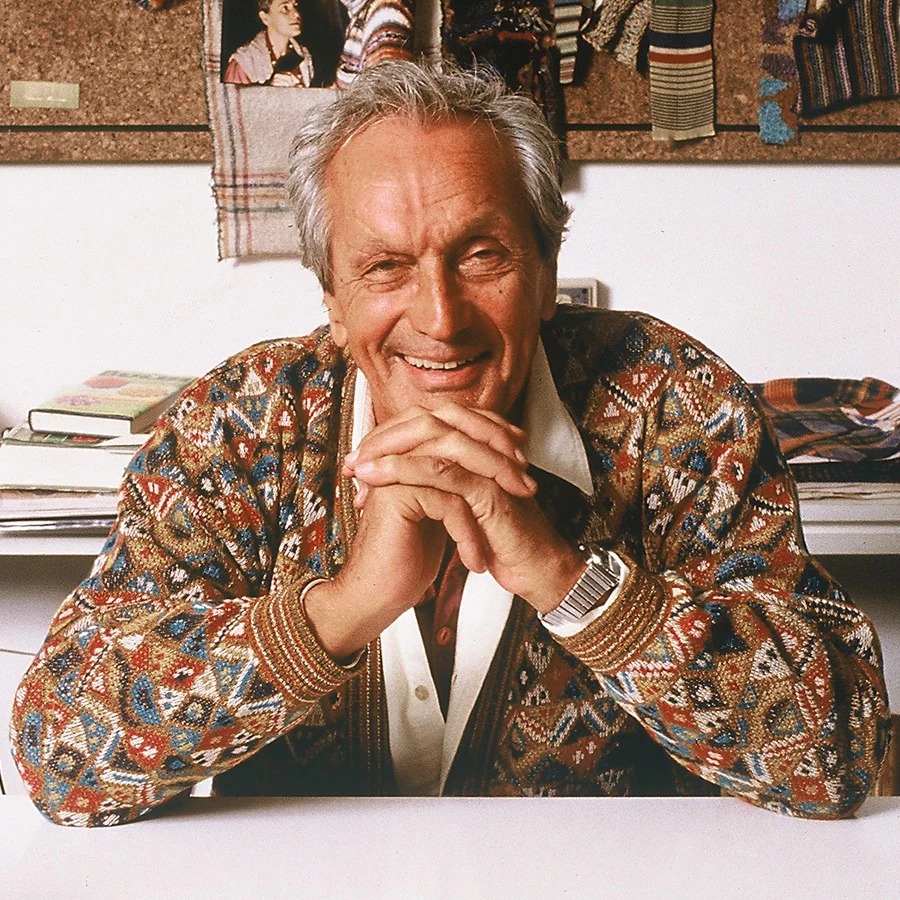
Missoni history can be read through the difference between putting colour on clothing and making clothing through colour. Founded in 1953, Ottavio and Rosita Missoni’s house treated knitwear as a method before it became an identifying look. Connected loops respond to movement, while the arrangement of yarns produces a visual field within that structure. Recognising a familiar lightning-like motif is therefore only a beginning. The angle of a line, the interval between colours and the spaces admitting light matter too. A single pattern name cannot explain the differing weights and forms of the garments made under this label.
The 1967 samples and machinery
The European Fashion Heritage Association presents a long dress and colour samples from autumn/winter 1967. These records make a technical point within Missoni history: the graphic was produced through yarn and machinery rather than simply printed as a picture. The founders redirected raschel machinery associated with patterned shawls towards new effects. Knitting joins loops of yarn to form cloth. Early technical experiments and a specific collection’s presentation are not necessarily the same date; this account uses the documented 1967 objects. Comparing sample and garment reveals how repeated angles become a surface extended along the body, changing from a compact study into clothing.
Two directions in a long dress
On the 1967 long dress, repeated lines divide the figure horizontally while their accumulation draws the eye downwards. This coexistence of directions helps explain Missoni history as a study of colour. One line travels across; many create a tall field. Changing the intervals of light and dark alters the apparent density without requiring a different outline. A zigzag distributes rhythm throughout the garment rather than concentrating it in one attached ornament. Movement changes where those lines fold. Close viewing reveals connections between yarns, while distance restores the colour bands. The relationship between these two scales matters more than a simple inventory of shades.
Three pieces in 1971
A spring/summer 1971 ensemble at Palais Galliera brings Missoni history into the realm of combinations. The record lists a machine-knitted rayon polo, sleeveless top and pleated skirt. Unlike one long dress, these are separable components. Collar and buttons organise the upper body, while pleats introduce movement below. Even within knitwear, a defined neckline and a mobile hem perform different jobs. Decorative surfaces need not belong only to a special occasion. The rayon identification also matters: assuming that every example is wool would erase differences of season and touch. Reading construction alongside the component garments allows a more specific understanding of how an ensemble could inhabit a wardrobe.
Reflective yarn after dark
The Metropolitan Museum’s autumn/winter 1978–79 evening dress combines silk, Lurex and synthetic fibre. Lurex names a yarn with a metallic effect. Within Missoni history, this object shows how a yielding textile can also command attention after dark. Light can be introduced through the yarn itself rather than applied decoration. Diffuse daylight and concentrated evening illumination produce different effects on the same material. Look at the distribution of reflective points as well as colour. Metallic yarn need not make every part equally bright: contrast with surrounding fibres creates depth. The material links the flexibility associated with everyday dressing to the visual demands of evening wear.

Design and production together
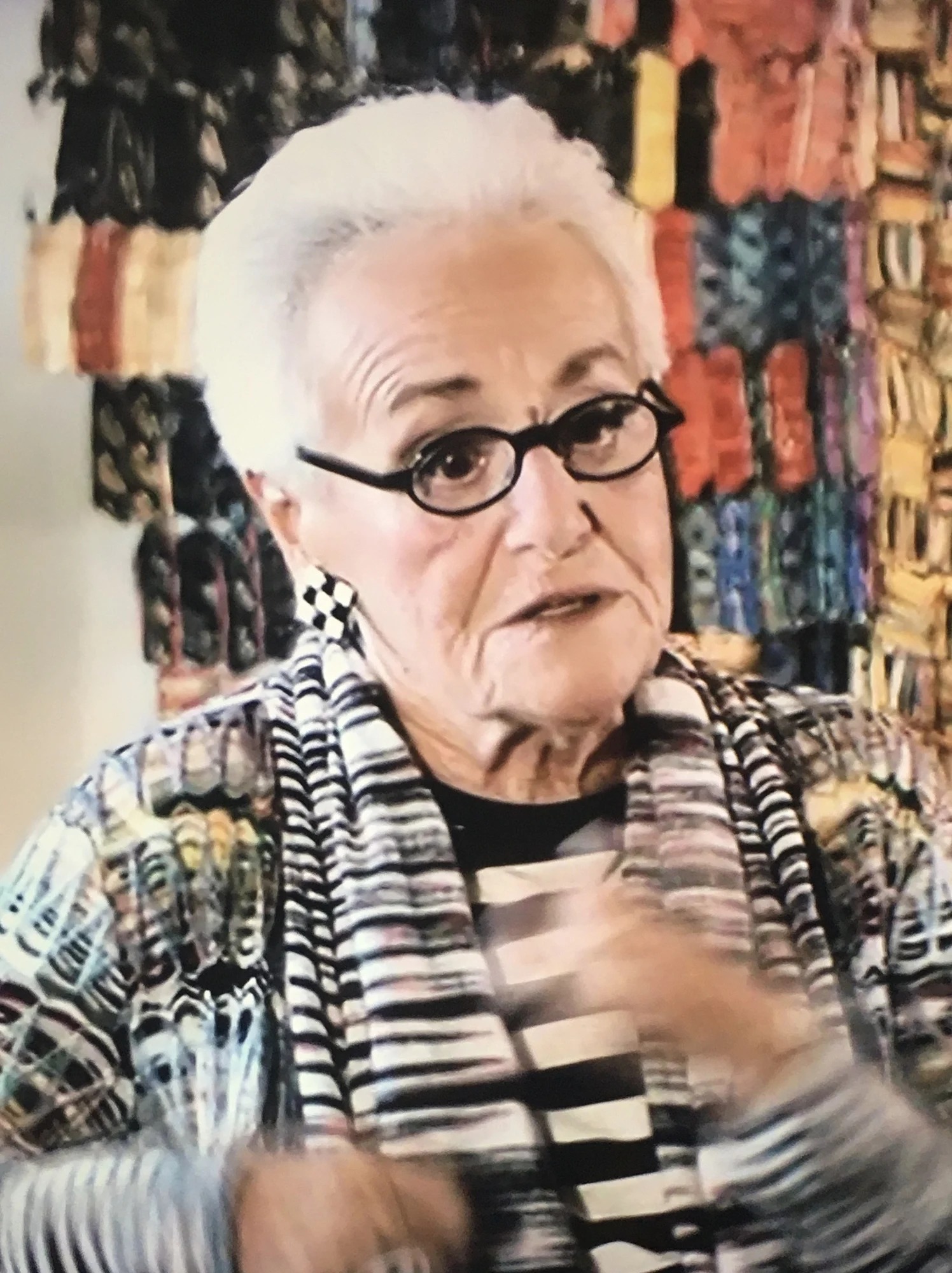
A husband-and-wife story alone cannot account for production across Missoni history. The museum’s commentary points to textile producers, knitters and weavers working with the designers. Translating a colour chart into clothing requires decisions about machines and fibres. The same hue can behave differently in yarns with different sheen; changing the width of a repeat moves the places where it meets an edge. Design and manufacture therefore adjust one another. Collaboration does not diminish a distinctive result but explains how it becomes reproducible. Surviving samples and garments preserve evidence of choices, including technical contributions whose individual makers may not all be named in a catalogue.
Reading three different objects
Reading Missoni history through the 1967 dress, the 1971 ensemble and the 1978–79 evening garment produces three distinct questions. The first concerns lines and bodily length, the second separable pieces, and the third reflected light. One label does not make their effects identical. Move between enlarged surface details and the complete outline, using museum material descriptions and seasonal dates alongside photographs. A display holds clothing still, but pleats and loops suggest how it might respond to movement. Colour here is not a fixed graphic: it is a relationship between yarn, light and body. That relationship reveals the productive complexity behind an immediately recognisable visual signature.
Timeline
- 1953 — Missoni founded
- 1967 — Autumn/winter dress and colour samples
- 1971 — Rayon three-piece ensemble
- 1978–79 — Evening dress incorporating metallic yarn
Questions and answers
When did Missoni begin?
Ottavio and Rosita Missoni founded the house in 1953.
Is every garment wool?
No. The 1971 Galliera ensemble is rayon; the Met’s 1978–79 dress combines silk, Lurex and synthetic fibre.
Is the motif the whole story?
Yarn, knitted structure, garment length and combinations are equally important.