Prada Galleria history: material and form
Prada Galleria history explores its 2007 debut, Milanese name and structured form, then follows the films that turned a familiar leather bag into a character.
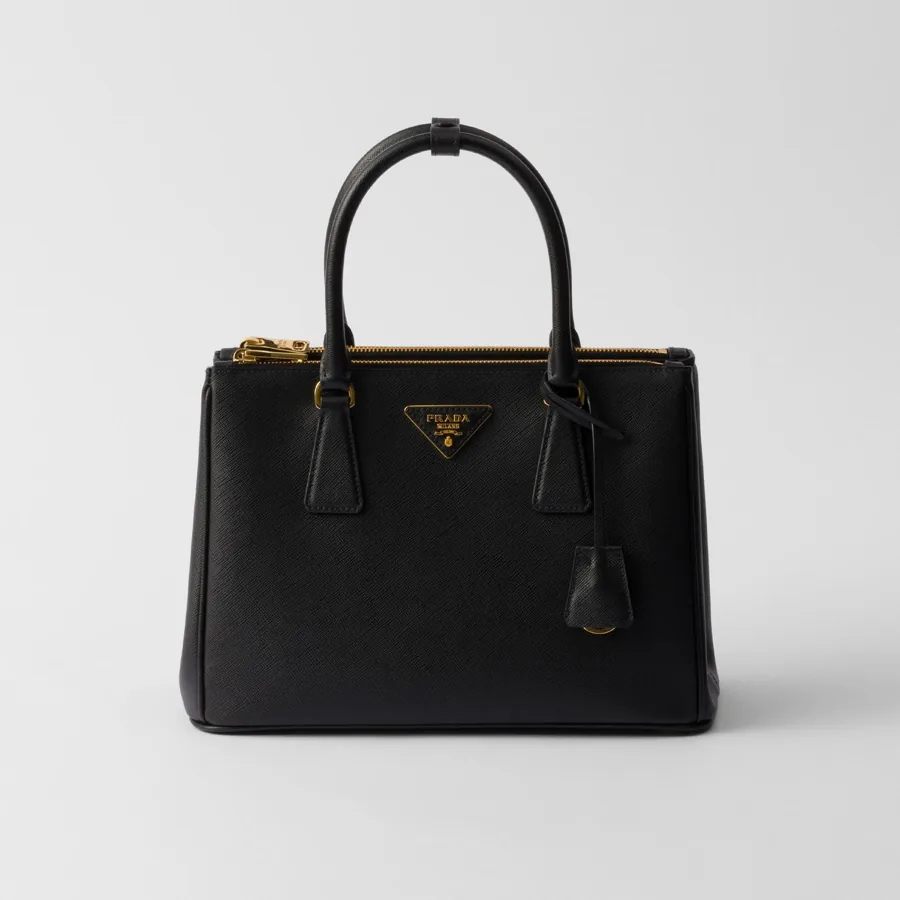
A bag younger than its name
Prada Galleria history begins in 2007, the date given in the house’s 2017 press material. Its name refers to the Galleria Vittorio Emanuele II in Milan, where Prada’s first shop opened in 1913. The store and bag therefore have different chronologies. A historical place gives a later leather bag a connection to the house without making that object a surviving design from the company’s foundation.
A composed outline and paired handles
The Galleria’s top handles and composed body establish a clear relationship between grip and container. Looking beyond the triangular emblem reveals the importance of width, height and the space between those handles. Calling the silhouette structured describes what it looks like; it does not establish that every size or material has identical rigidity or weight. The exact example remains important to any account of its design.
The top handles connect the bag to the body as well as completing its outline. A leather bag hanging beneath the hand has proportions that a detached studio photograph can obscure. Side depth and interior arrangement are likewise not recoverable from a frontal thumbnail alone. The useful historical question is how a recognizable family accommodates variations, rather than whether every object with the name is materially the same.
The postman’s story in 2017
Autumn de Wilde’s The Postman Dreams 2 placed the Galleria inside a set of stories in 2017, following an earlier 2015 project. Elijah Wood played the postman. Instead of appearing solely as a catalogue object, the bag became something around which scenes could unfold. This cinematic image is evidence of how Prada presented the design, not a documentary account of its original invention or of its users’ lives.
Different directors, different readings
In 2023, Alex Da Corte and Scarlett Johansson worked with saturated colour and changing identity in The Glass Age. Jonathan Glazer’s 2024 campaign instead explored performance, repeated words and a movement from studio to street. The recurring object allowed quite different visual languages to meet. Prada Galleria history can consequently include the history of representation without confusing a new film with the launch of a new bag.
Yorgos Lanthimos contributed Ritual Identities in 2025. Recording the separate directors and dates preserves those differences instead of collapsing them into a single timeless advertisement. A cinematic image can suggest a character or mood, but it is not proof of a product’s technical qualities. Camera distance, gesture and setting are useful subjects for analysis precisely because they alter the reading of an otherwise familiar object.
Recording form and representation together
The Galleria brings together a name rooted in Milan and an image repeatedly remade through film. Keeping its 2007 origin separate from later campaigns preserves a useful chronology. The object does not contain every episode of Prada’s past simply because it carries a historic name. Its interest lies in the meeting between a relatively stable formal vocabulary and successive ways of making that vocabulary visible.
Timeline
- 2007
- The Galleria was introduced.
- 2017
- Autumn de Wilde’s The Postman Dreams 2 was released.
- 2024
- Jonathan Glazer directed the Galleria campaign.