Models · 010
Veruschka
Life & Career
- Born
- 1939-05-14
- Nationality
- German
Origins
Born Vera Lehndorff in Königsberg in 1939, she experienced wartime persecution after her father’s involvement in the 1944 plot against Hitler. Later art training offered a different field of expression.[1][2]
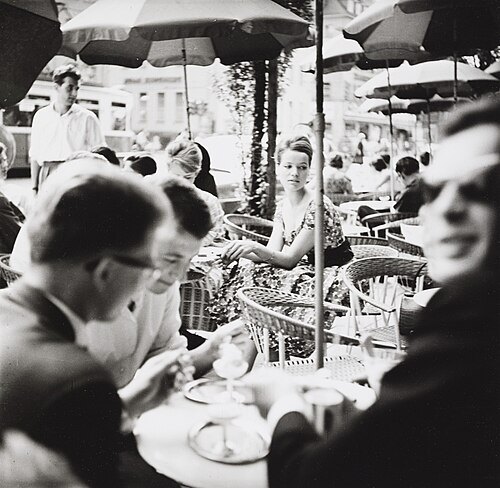
Entry into fashion
After studying painting and design in Hamburg, she began modeling in Italy and moved toward New York work. Her adopted name accompanied a deliberately constructed professional persona.[1][2]
Creative partnership
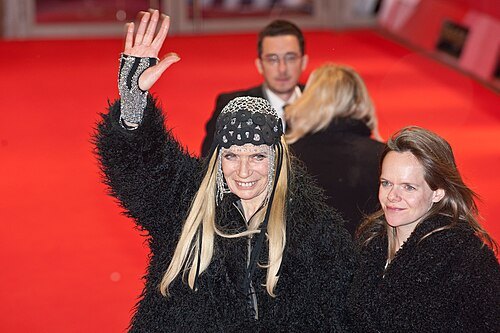
International fashion work with Avedon and Rubartelli explored dramatic bodily lines and transformation. The question of how a body could appear differently connected modeling with later art.[1][3]
Defining work
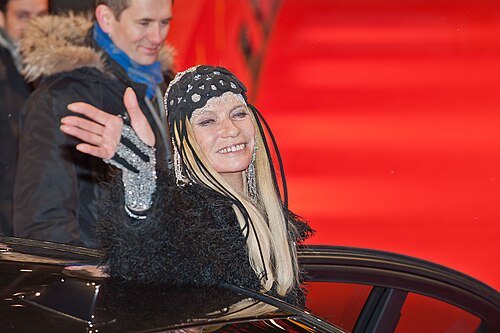
Her appearance in Blow-Up (1966) dramatized the fashion shoot. During Rubartelli’s 1968 filming she experimented with body painting, a practice later developed independently.[1][2]
Changing direction
With Holger Trülzsch, whom she met in 1969, she combined paint, photography and performance. Camouflage could erase the body into its surroundings and question fixed identities. The collaboration was especially concentrated in the 1970s and 1980s before later exhibitions and books revisited it. Painting another surface onto skin could turn a person into something resembling an object.[1][2]
Later career
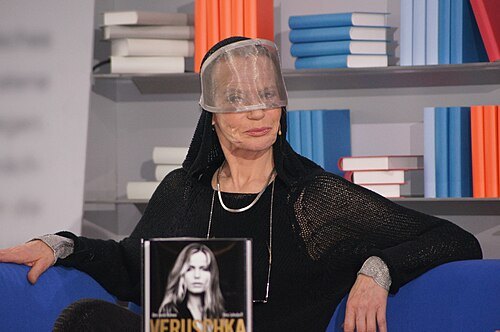
Her art should not be reduced to a model’s hobby. Painted transformations were temporal performances preserved through photography, making her both subject and maker.[1][3]
Legacy
The Seen and the Unseen (2024) revisited the collaborative archive and its treatment of gender and the body. It documents artistic reassessment, not an assumed new modeling schedule. Comparing reproductions with exhibition histories also reveals the collaboration behind the final photographs. Her lasting creative autonomy lay in taking apart and reconstructing the face that fashion had made famous.[1][2] Both her professional name and birth name are relevant to tracing the artistic archive.