Models · 039
Nadja Auermann
Life & Career
- Born
- 1971-03-19
- Nationality
- German
Growing up in a divided city
Nadja Auermann was born in West Berlin in 1971. Discovered while working in a café in 1989, she expanded into Paris modeling. Her beginning connected everyday service work in Berlin with international fashion. The transition involved different languages and working practices, with a period of learning behind the short discovery story. Before the later designation of German supermodel, it was a young person’s move into an unfamiliar profession.[1][2]
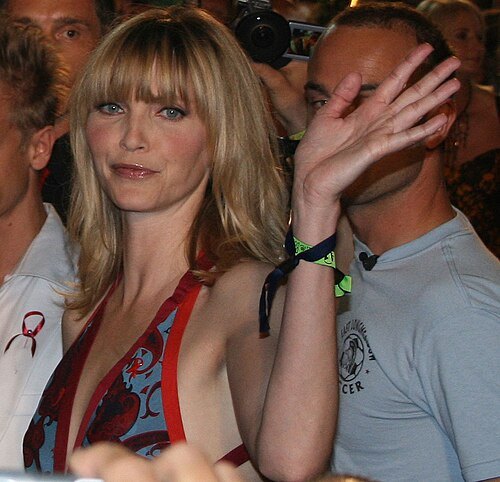
A photographic breakthrough in 1991
Important attention came through photographic work including Ellen von Unwerth’s 1991 British Vogue editorial. Agency development and international publication connected with wider runway and advertising work. The images did more than record height or long legs: expression, light and clothes constructed a character. Reducing the breakthrough to measurements overlooks the power of images made jointly by photographer and model. Her career continued between distinctive physical features and new interpretations of them.[1][3]
A transformation through hair
Auermann became widely associated with a short platinum-blonde hairstyle. Its cool, futuristic atmosphere established a distinct position among 1990s supermodel images. Moving from long to short hair changed how the same face could be read. Platinum blonde provided a recognizable signature, but professional work still required adapting expression and posture to clothes. The transformation demonstrates the importance of image-making decisions rather than appearance as an entirely fixed attribute.[4]
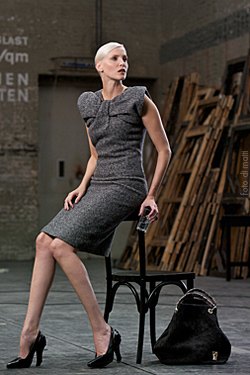
A face across multiple publications
Auermann appeared on both Vogue and Harper’s Bazaar covers in September 1994, demonstrating strong demand across competing publications. Runway work for Chanel, Dior and other designers accompanied advertising and editorial photography. Rather than reducing this to a peak in popularity, the record shows different publications and brands requiring different scenes. One face changed through multiple collaborators’ interpretations, becoming part of the period’s photographic history.[2][5]
Selective work and a return
Auermann later adjusted her working pace while continuing selected fashion assignments. A 2019 Balenciaga runway appearance was reported as a concrete return linking past and present. It demonstrated how an experienced model could contribute to another designer’s clothes. A career alternating pauses and new assignments does not fit a simple narrative of uninterrupted success or retirement. A documented show confirms that appearance, not a commitment to every subsequent season.[6]
Self-reflection on a 2025 cover
Auermann appeared on German Vogue’s May 2025 cover photographed by Scott Trindle, discussing age, appearance and pressures for constant self-improvement. A Life in Looks video that year revisited clothes and work with Karl Lagerfeld and Peter Lindbergh. The person inside historical photographs had also become a witness explaining them. Rather than ranking her past and present appearance, these accounts place different periods’ experiences and choices alongside one another.[7][8]
A new campaign and continuing expertise
In 2026 Vogue Italia introduced Auermann in connection with a new Ports 1961 campaign. Rediscovery of old covers and production of current images exist together. Her career connects movement from Germany to Paris, transformation through styling, international editorial demand and selective later work. Experience interpreting clothes across periods offers a fuller account than frequently repeated physical descriptions. The campaign interview is the latest concrete evidence used here, without additions about unverified later contracts.[9]