Yiqing Yin History: Pleats and the Space Around a Body
Pleats, gauze and scent change how material meets a body.
ÉPOPLI ·
A pleat becomes structure
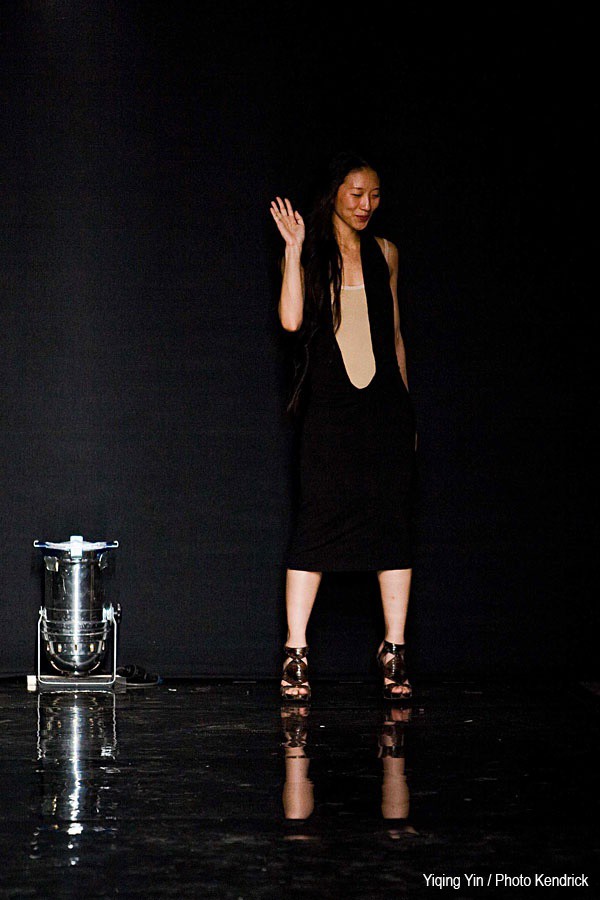
Yiqing Yin history begins by treating a pleat as structure rather than added ornament. Orchidée, from autumn–winter 2012 Spring of Nüwa, combines dimensional stitching and inserted pleated panels. These micro-pleats gather and release cloth, producing space around the figure as well as lines across it. Tiny repeated gestures become a larger silhouette. The question is how something fragile can appear protective without imitating a rigid suit of armour.
Moving childhood and Paris study
Yiqing Yin history begins in Beijing in 1985. She left China at four, lived in France and Australia, and returned to France. She has described familiar clothing as a point of bodily and emotional reference during those moves. She graduated from ENSAD Paris in 2009; Betta Moon belonged to her graduation work Exil(s). Early collections followed in 2010 and a Paris couture show in 2011, when she received ANDAM’s First Collections prize. Draping, shaping cloth directly around a body, helped establish her vocabulary.
Precise thread, unexpected form
Yiqing Yin history developed through chiffon, organza, gazar and silk combined with cotton and linen. In a 2012 interview she described her technique as a reinterpretation of smocking, gathering cloth with thread and securing it with stitches. These micro-pleats can create density or release fullness. Making therefore includes observing an emerging form rather than only executing a pre-drawn outline. Precision and unexpected results coexist: a controlled thread path allows the gathered cloth to produce an unfamiliar volume.

Gauze and lace
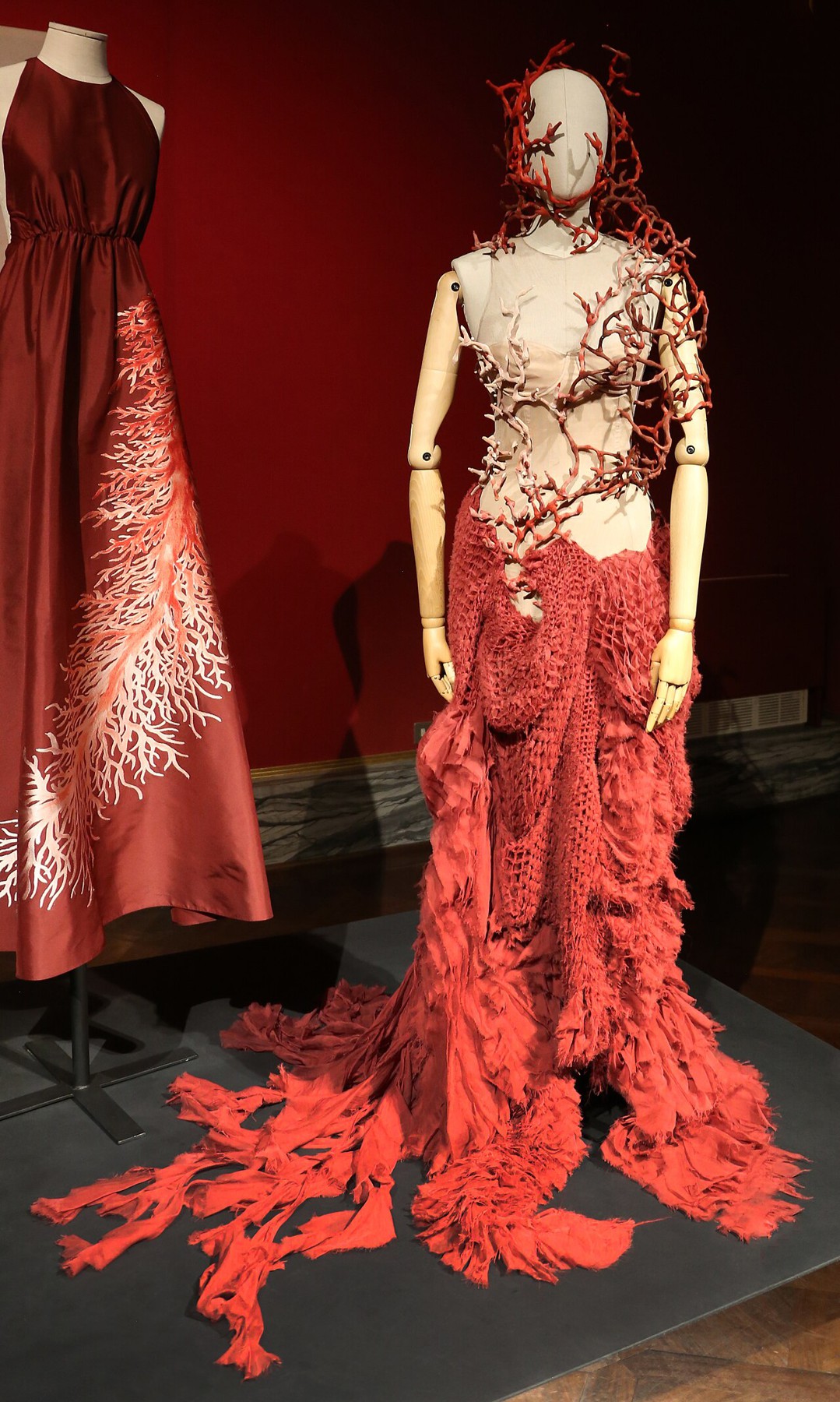
Yiqing Yin history also includes Écume, described by the Calais interview as a soft sculptural garment using padded cotton, hospital gauze, beads and knotted stitches on silk organza. This deconstructed lace provides another route away from an intact decorative pattern. Écume builds a surface through added materials, whereas Orchidée redirects fabric through gathering. This deconstructed lace lets an existing network become material for a new form. The difference concerns how volume is made, not merely whether both garments look light.
Work in two houses
Yiqing Yin history includes creative direction at Leonard in 2014–2015 and Poiret in 2018. For Poiret’s spring–summer 2019 collection, she collaborated with painter Bernard Frize, translating his lines into prints. Cloth changes a painted line through folds and motion. These are her works within a later house, distinct from founder Paul Poiret’s historical designs. Her own house received haute couture recognition in 2015. Subsequent practice broadened toward individual projects, performance and collaborations rather than only seasonal shows.
Wrists and dancing bodies
Yiqing Yin history carried the language of folds onto a wrist through Vacheron Constantin’s The Pleats of Time concept watch. Its embroidered strap incorporates fragrance developed with perfumer Dominique Ropion. This sensory collaboration brings together movement, a patterned surface and a scent’s diffusion. Her 2016 costumes for Giorgio Mancini’s Tristan et Yseult, worn by Dorothée Gilbert and Mathieu Ganio, similarly worked with moving bodies. A dance costume and a photographed silhouette give fabric different conditions to meet.
Practice through an exhibition
Yiqing Yin history was reviewed in D’air et de songes at Calais from June 2025 to 4 January 2026. Curator Sylvie Marot placed approximately seventy dresses from 2009–2025 beside drawings, photographs, sound and scent. This sensory collaboration also reveals contributions from figures including photographer Laurence Laborie and Bruno Aveillan. Le Monde described her own label as paused since 2017 while she works through projects. As of October 2026, the exhibition had ended; no unverified current collection is implied. Orchidée, Écume and the scented watch connect as different experiments in how material meets a body.
Timeline
- 1985 — Born in Beijing
- 2009 — Graduated from ENSAD
- 2011 — ANDAM First Collections prize
- 2014–2015 — Creative direction at Leonard
- 2015 — Haute couture recognition
- 2018 — Poiret and Frize collaboration
- 2025–2026 — Calais exhibition
Sources
- Calais museum press pack (PDF)
- Couture Notebook interview 2012
- Calais interview
- Art Basel interview
- Le Journal des Arts profile
- Vacheron Constantin collaboration
- Le Monde Calais report