Thierry Mugler: Clothing, Performance and Transformation
Cutting, materials and collaboration behind mermaids, robots and the Chimère.
ÉPOPLI ·

How does a robot walk?
The articulated robot suit at the 1995 anniversary show made a human body resemble polished machinery. Thierry Mugler Mugler history begins with movement rather than shine alone. Separate elements and joints made the surface workable.
The Brooklyn Museum connects the design to Metropolis and credits technical collaborators including Jean-Pierre Delcros and Jean-Jacques Urcun. Metalworking knowledge entered a fashion presentation. Audience impact and the wearer’s range of movement are related but different questions.
Dance, display and proportion
Born in Strasbourg in 1948, he joined a ballet company as a teenager and studied briefly at a decorative arts school. Paris boutique display and design work preceded independence. Thierry Mugler Mugler history distinguishes the 1973 Café de Paris collection from the eponymous house established in 1974.
Broad shoulders and a narrow waist developed through a sustained interest in proportion. Dance supplies a documented working context without explaining every garment through speculative psychology.
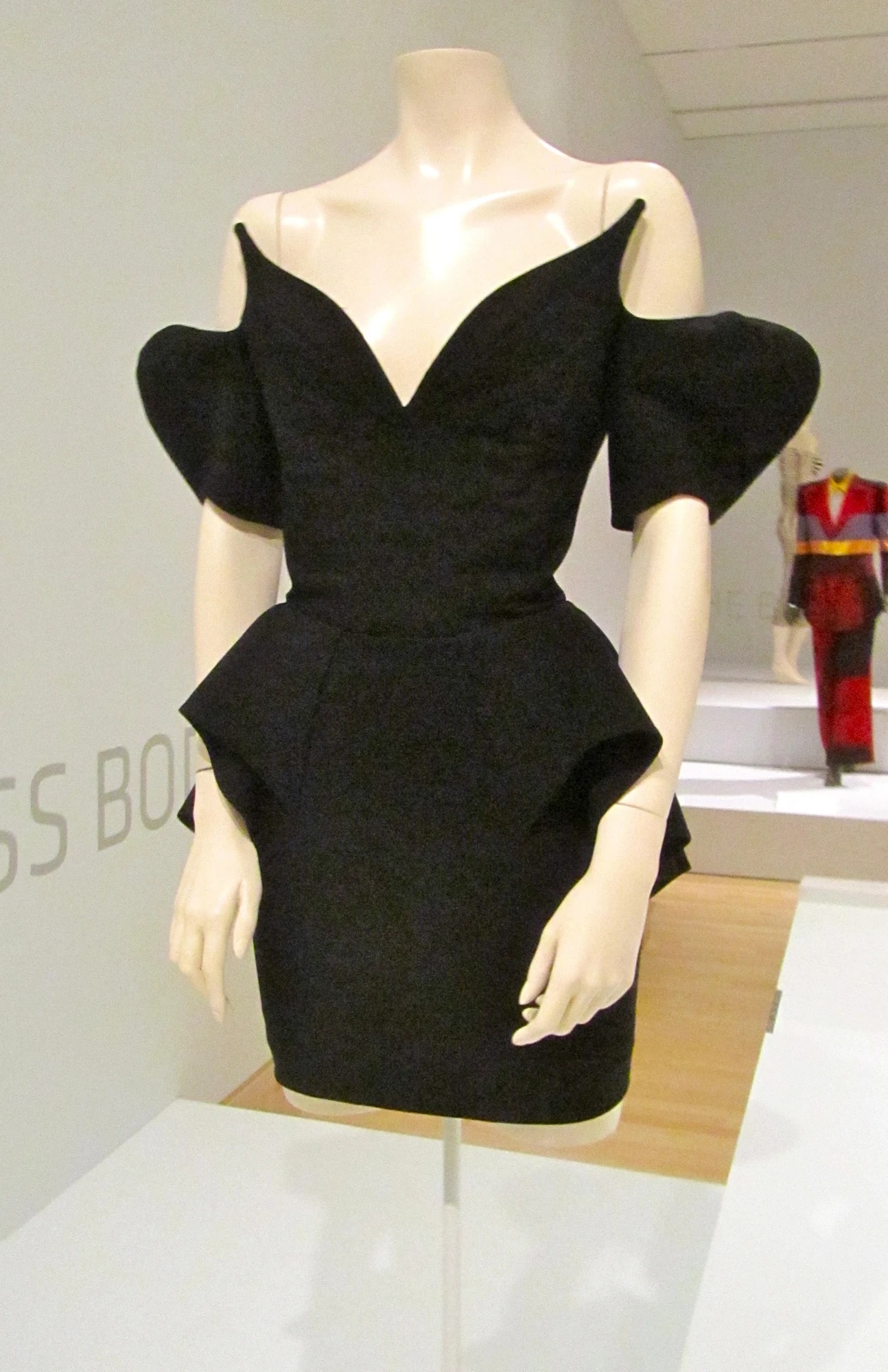

An imagined mermaid
The spring 1989 evening ensemble uses a pointed bodice and layered hip details to suggest a transformed body. Thierry Mugler Mugler history reads the silhouette as structure rather than a creature printed on fabric. The reflective garment and gold museum mannequin contribute different elements to the photograph.
Their colors should not be confused. Separating volume, surface and display makes it easier to understand how familiar imagery became an outfit.
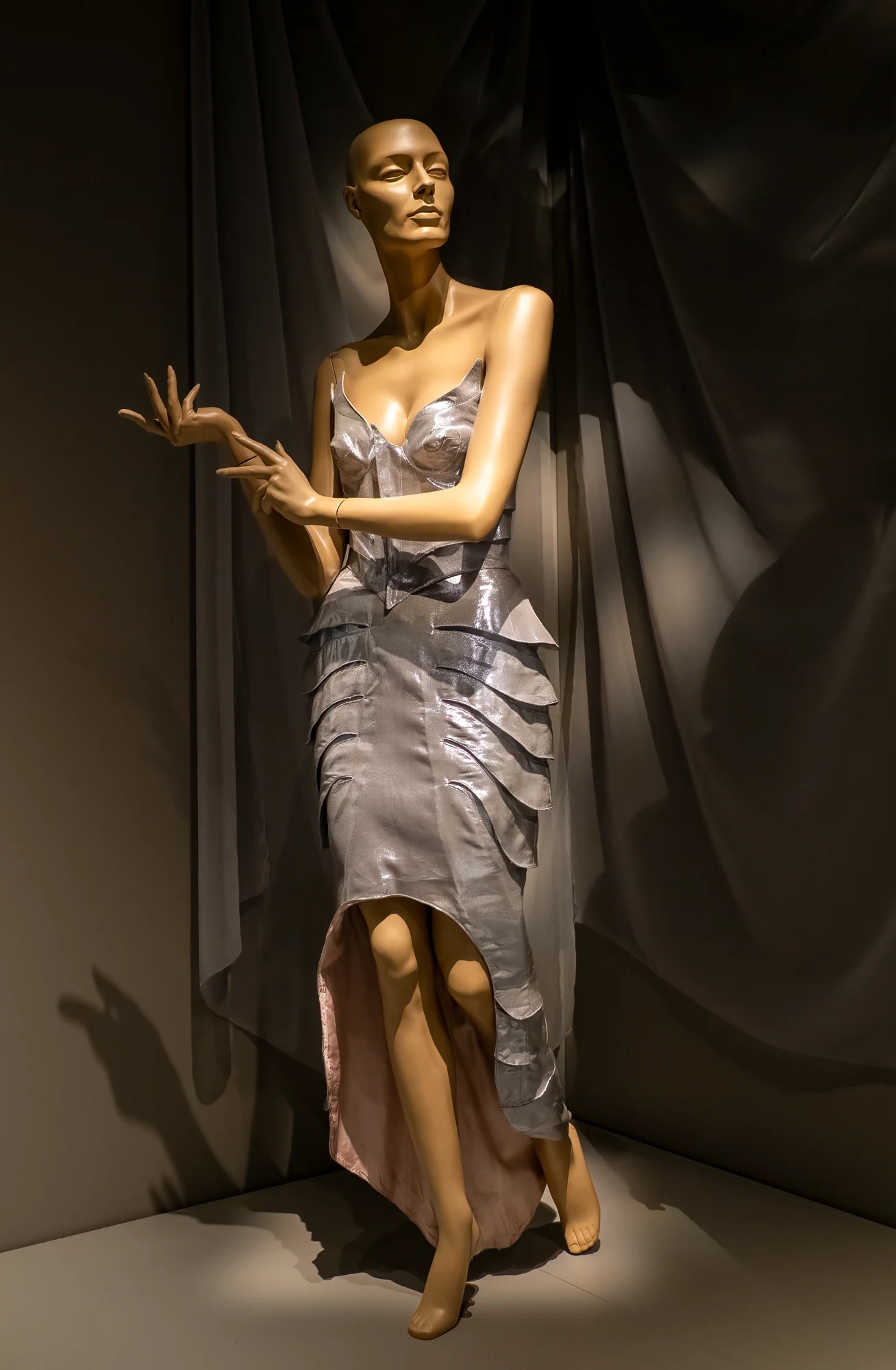

Insects and a chimera
The spring–summer 1997 insect collection and autumn–winter 1997–98 Chimère presentation were distinct. Thierry Mugler Mugler history follows different ways of creating an armored silhouette. Overlapping, scale-like surfaces and an extended outline suggest a hybrid creature.
Surface embellishment and the underlying support require different expertise. The wearer’s posture also contributes. These designs explored a transformed bodily image rather than prescribing one universal form of everyday dress.
Performers and photographers
The 1992 Too Funky video carried this world beyond a runway. Thierry Mugler Mugler history recognizes how expressions, timing and movement create characters. The Munich exhibition credits George Michael and the designer together for direction, and distinguishes photographs by Ellen von Unwerth and Helmut Newton.
Stage costume operates across distance, music and a sequence of entrances; a fashion photograph operates through a selected frame. Neither effect belongs to garment design alone.
Fragrance and a change of medium
Angel launched in 1992. Thierry Mugler Mugler history distinguishes fragrance success from the conditions of the clothing business. Fashion operations were closed in 2003, but the founder continued creating for performance, including Beyoncé’s 2009 tour and Mugler Follies in 2013.
Stage costume required renewed work with movement, lighting and audiences. A commercial closure therefore does not mark the end of his creative activity. The organization and its founder followed related but separate timelines.
Reading the archive after the founder
He died in 2022. Thierry Mugler Mugler history separates subsequent brand collections from his own work. The Couturissime retrospective combined clothes, photographs and performance material.
A strong silhouette changed what a body could appear to be. Mermaid ensembles, the robot suit and chimera designs used different technical solutions. Comparing flexibility, rigid support and lighting is more useful than treating every spectacular outfit as the same formula.
Collaborative making remains central to that history.
Timeline
- 1948 — Born in Strasbourg
- 1973 — Café de Paris collection
- 1974 — Eponymous house established
- 1992 — Angel launched
- 1995 — Robot suit presented
- 1997–98 — Chimère collection
- 2013 — Mugler Follies
- 2022 — Died
Sources
- Brooklyn Museum — Couturissime press release (PDF)
- ASU FIDM Museum — Thierry Mugler
- Mugler — House history
- Museum at FIT exhibition photograph — Spring 1989 ensemble
- Kunsthalle München — Thierry Mugler: Couturissime
- Mugler — Angel and fragrance history
- Polka Galerie — Manfred Thierry Mugler biography