Ronald van der Kemp: Couture from Existing Materials
Couture from Existing Materials
ÉPOPLI ·
Let existing material determine the design
A gold-and-black brocade jacket combines gold leather, ceramic buttons and shredded banknotes in its pockets. Ronald van der Kemp RVDK history asks how existing material can acquire a different purpose. His official description identifies the paper as rejected banknote printing from the Dutch central bank. Tailoring unifies disparate fragments while the pocket becomes a small display. This upcycling practice here concerns placement and transformation rather than simply the age of the material.
From dance to fashion
Born in 1964 and raised in Wijchen, he moved to Amsterdam at seventeen to study ballet before turning toward fashion and graduating from the Rietveld Academy in 1989. Ronald van der Kemp RVDK history includes a Courrèges internship, work for Bill Blass and Barneys in New York, and subsequent roles at Guy Laroche and Celine. His 2026 interview recalls knitting and an interest in Japanese fashion. The distinctive clients encountered at Blass helped shape his attention to clothing that strengthens rather than obscures its wearer.
Why a wardrobe rather than a season
Founded in 2014, the label organised work as numbered wardrobes intended to coexist over time. Ronald van der Kemp RVDK history also includes a retreat from wholesale demands after repeated bestseller requests and discounted stock conflicted with his aims. He turned toward couture and demi-couture, combining intensive handwork with limited production. The term deadstock means unused existing stock; its available quantity becomes a design condition. Small Dutch workshops and craftspeople support a system distinct from endlessly repeatable material orders.
Working around a damaged surface
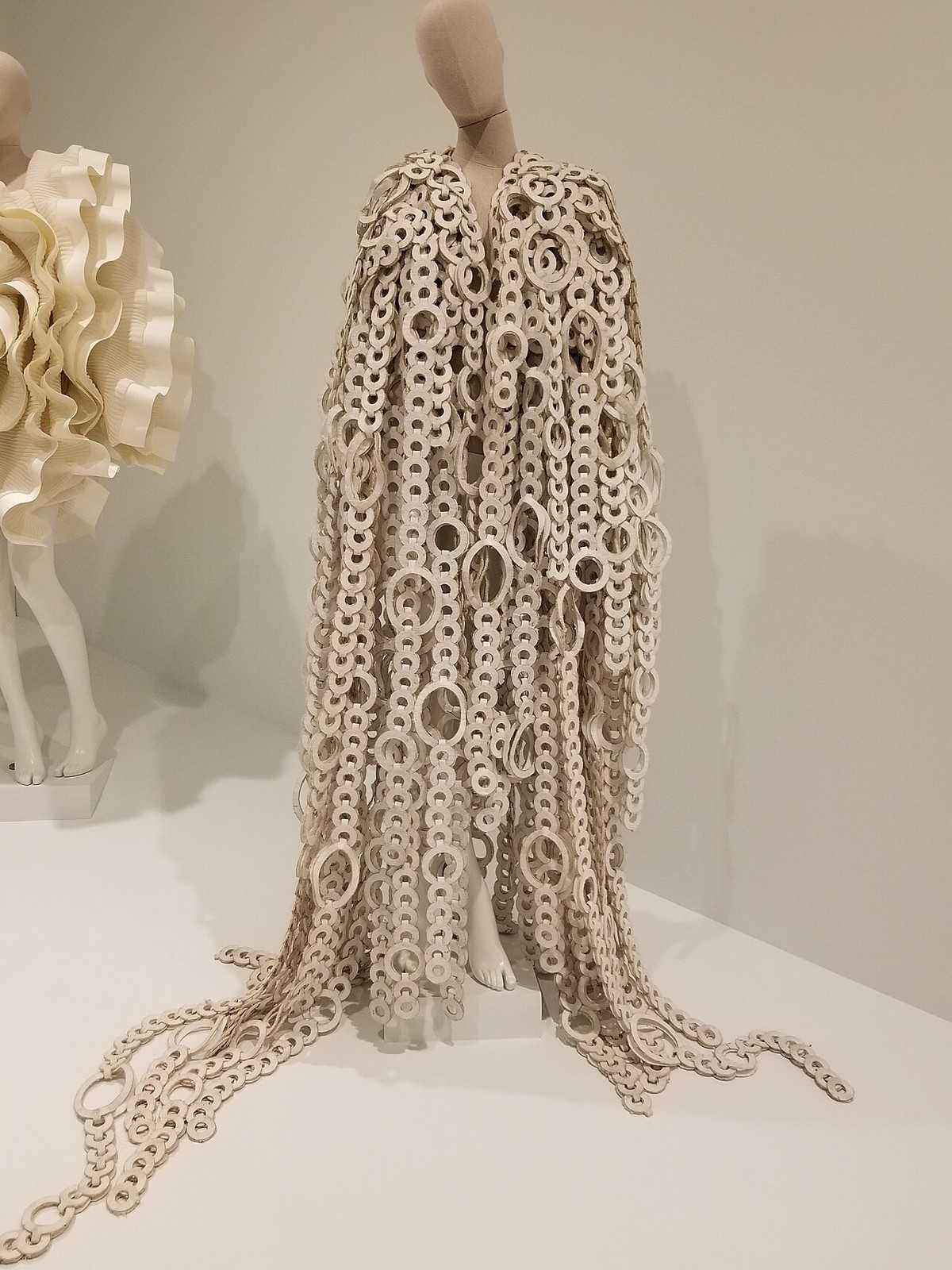
A short black crocodile-leather dress shown during a 2026 studio interview was assembled from rejected pieces, cutting around their holes. Ronald van der Kemp RVDK history makes a material limitation into a pattern-making problem. This upcycling practice need not advertise itself through roughness: some joins are conspicuous, others nearly disappear. A separate coat project associated with Carpet of Life used clothing scraps to produce a fur-like surface. The jacket, dress and coat demonstrate three outcomes—contrast, continuity and volume—from an interest in material already at hand.
Fabric leaves and embroidered birds
For The Call of the Wild in fall 2025, model and jewellery designer Thayna Caiça connected the studio with artisans who made small embroidered birds for an opening look. Ronald van der Kemp RVDK history thus includes collaboration within the making process, not only presentation. Another leaf-like dress used coated pleated fabric rather than an actual leaf. Available deadstock practice and nature-inspired appearance are distinct concerns, but both direct attention to how a material can support shape.
A show that reached the street
Wardrobe 24 in July 2026 used a Paris gallery’s two entrances, briefly bringing models onto the pavement. Ronald van der Kemp RVDK history revisited denim through tearing and embroidery, retaining a familiar garment while exposing elaborate surface work. Here patchwork provided another way to organise disparate pieces. At the same time MAC Museum Art & Cars in Singen exhibited his couture in Birds of Paradise. The Met’s 2021–22 evening dress, recorded as cotton, polyester and silk, offers a further institutional record of his mixed-material practice.
Limited production, extravagant appearance
Ronald van der Kemp RVDK history separates restrained production from restrained appearance. This upcycling practice can support emphatic shoulders and elaborate surfaces as readily as quiet clothes. Available deadstock limits invite new combinations, while patchwork may expose those combinations or give way to a continuous surface. The wardrobe model asks clients to choose lasting individual pieces. Handwork and reaching customers remain practical challenges. His work is most clearly understood through the specific transformation of materials and garments rather than environmental slogans alone.
Timeline
- 1964 — Born
- 1989 — Graduated from Rietveld
- 2014 — Founded RVDK
- 2025 — The Call of the Wild
- 2026 — Wardrobe 24
Sources
- RVDK — Art jacket and banknotes
- Vogue Netherlands — 2026 atelier interview
- Mirror Mirror — Direct interview
- RVDK — Official history
- Vogue — Fall 2025 couture
- Vogue — Fall 2026 couture
- FHCM — Wardrobe 24
- MAC — Birds of Paradise
- Met — Evening dress 2021–22