Ma Ke Wuyong History: Time, Cloth and Human Hands
Earth and used cloth question what makes clothing valuable.
ÉPOPLI ·
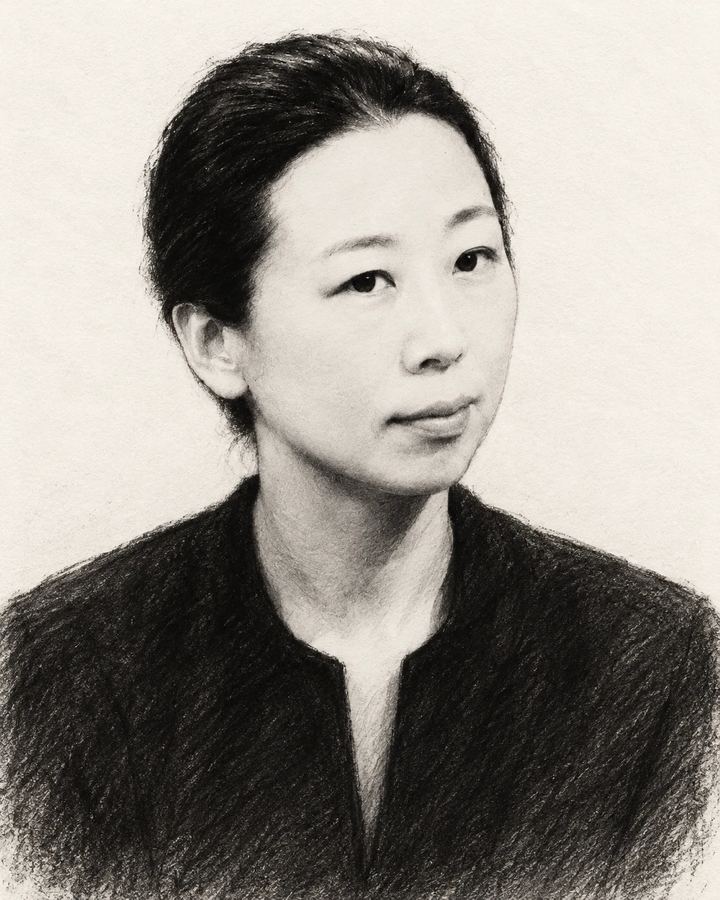
Against the demand for newness
Ma Ke Wuyong history questions the expectation that clothing must look pristine and new. For The Earth in Paris in 2007, models remained on illuminated platforms while visitors moved between them. Handworked, plant-dyed textiles and marks left by burying some garments shifted attention toward time and material experience. This reused textiles were not simply an imitation of poverty: materials with previous functions acquired another structure. The question was how a garment might make its makers and its accumulated time visible.
Changchun, Guangzhou, Zhuhai
Ma Ke Wuyong history begins in Changchun in 1971. After graduating from the Suzhou Institute of Silk Textile Technology in 1992, she moved to Guangzhou; her Qin Warriors work won a design competition gold award in 1994. She co-founded Exception de Mixmind with Mao Jihong in 1996 and led design for a decade before establishing Wuyong in Zhuhai in 2006. The continuing brand and her subsequent practice are related but distinct. In a 2025 interview she described disagreement over the direction of a growing business. Choosing an organisation that allowed time for making became a career turning point.
A sheet dress and tarpaulin coat
Ma Ke Wuyong history becomes tangible in two works described by the V&A. An old sheet marked with paint became a dress, its cracking paint providing a pattern. An old tarpaulin became a coat with considerable volume. This reused textiles generated different outcomes: local surface fractures in one garment and an expansive perimeter in the other. These are not interchangeable applications of an earthy aesthetic. The material’s previous use and the parts retained through cutting and joining matter as much as its colour.
Protection and damaged surfaces
Ma Ke Wuyong history places damage and protection together in Mother Earth. The Barbican describes a weathered, cracked dress beneath an expansive coat, surrounded by ensembles representing a mother, father and child. Linen, cotton and wool appear alongside black plastic elements referring to rural waste. This hand stitching and plant dyeing suggest a material cycle, while synthetic debris interrupts a simple image of nature. The coat and surrounding garments also make a family relationship spatial. A question about a surface expands into one about people and their environment.
Jia Zhangke’s second perspective
Ma Ke Wuyong history was documented by filmmaker Jia Zhangke in Useless. Its Guangzhou, Paris and Fenyang settings bring fashion production and everyday lives into the same film rather than merely promoting a presentation. This hand stitching cannot, by itself, resolve the working conditions of an entire industry. Studio makers are participants in an object’s production, not scenery behind a designer’s intentions. The film provides a second perspective beside the collection: viewers can attend to the conditions of making as well as the finished marks and textures.
From clothes to living spaces
Ma Ke Wuyong history extended into living spaces. She appeared in the V&A’s Fashion in Motion in 2008 and presented in Paris couture that year. Her Beijing Wuyong Living Space opened in 2014; HKDI’s 2015 account discusses furniture as well as clothing. These living spaces connect objects handled every day with garments shown in exhibitions. The name Wuyong, meaning useless, asks whether skills and time dismissed by an efficiency-led judgement might support another kind of use. It also redirects attention toward what people keep and the signs of use they accept.
An older work in the present
Ma Ke Wuyong history remained visible through exhibitions: Mother Earth appeared at HKDI in 2025, and The Earth featured in Dirty Looks at the Barbican from September 2025 to January 2026. By October 2026 that exhibition had ended. Work approaching twenty years old was being read through consumption and waste. Cracked paint, a tarpaulin’s volume and the layers of Mother Earth tell different material stories. Their age does not close the discussion; it allows the same garments to question present habits of production and replacement.
Timeline
- 1971 — Born in Changchun
- 1992 — Graduated in Suzhou
- 1996 — Co-founded Exception
- 2006 — Established Wuyong
- 2007 — The Earth in Paris
- 2008 — V&A and Paris couture presentations
- 2014 — Opened Beijing Living Space
- 2025–2026 — Dirty Looks exhibition
Sources
- The Culturist: Ma Ke interview 2025
- Jiemian interview 2018
- M+ Ma Ke biography and conversation
- V&A Fashion in Motion
- Barbican exhibition labels (PDF)
- HKDI Sign issue 11 (PDF)
- Barbican Dirty Looks