Lee Young-hee: Hanbok in Motion
Hanbok through movement, public dress and the preservation of a collection.
ÉPOPLI ·
When a skirt becomes a dress
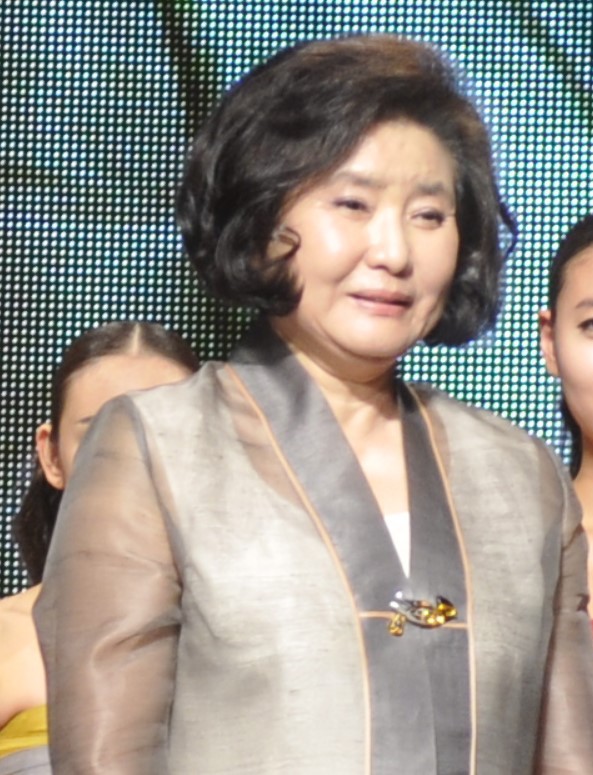
What can a hanbok skirt become when its jacket is removed? Lee’s Clothes of Wind gave the skirt the role of a full-length dress, spreading from the upper chest towards the floor. Lee Young-hee Maison de Lee Young Hee history asks whether inherited structures can accommodate new gestures. The exposed upper body contrasts with abundant fabric, directing attention away from a sharply fitted waist towards movement. Clothes of Wind describes that changing outline. Domestic criticism of the departure from convention became part of a wider debate about whether hanbok should remain fixed. The work changes how a skirt is understood, rather than merely subtracting a jacket.
A shop at forty
Born in Daegu in 1936, she was a homemaker before selling silk bedding with a cousin. She later recalled making clothing from fabric remnants she disliked wasting. Lee Young-hee Maison de Lee Young Hee history began commercially with her Seoul hanbok shop in 1976. She made garments by day and studied drawing at night, following a route outside formal fashion education. Her mother dyed fabric for early clothes. Customers’ weddings and family occasions shaped decisions about collars, ties and skirt volume. A 1980 association show and her first solo presentation in 1981 expanded the work from individual commissions to sequences of garments seen together.
Colour and subtraction
Early bridal clothes used embroidery at the edges and colours associated with dancheong, the multicoloured painted decoration of buildings. Lee Young-hee Maison de Lee Young Hee history treats colour as an organising element: small jacket panels and broad skirts carry very different visual weights. This natural dyeing offers one route into that vocabulary, without implying that every garment used identical dyes. Her 1993 Paris debut and the following spring collection should also be distinguished; her 2008 interview describes this sequence. The latter’s jacketless form foregrounded subtraction. Promoting the recognition of hanbok abroad while altering its familiar outline produced a productive tension in her career.
Clothing a public gathering
The coats for the 2005 APEC summit in Busan posed a different problem: several leaders with different bodies would wear them together in an official photograph. Lee Young-hee Maison de Lee Young Hee history brought traditional clothing into that public setting. A durumagi is a long outer garment, so allowance over a suit and movement through the sleeves matter. Different colours create individuality within a shared outline. The APEC coats contrast with her floating womenswear: the former establish a stable collective image, while the latter emphasises change in movement. Photographs extended the brief moment of wearing into a lasting visual record of the meeting.
White skirts and short tops
For a July 2016 presentation at the Korean Cultural Centre in Paris, the programme described ten white Punggi ingyeon skirts with brightly coloured boleros. A bolero is a short upper garment ending above the waist. Lee Young-hee Maison de Lee Young Hee history returned here to the proportions of a small top and expansive lower garment. White distributes attention downwards while concentrated colour draws it towards the face. Naming Punggi ingyeon also brought a regional textile into the international presentation. The programme discussed joined fabric pieces inspired by jogakbo, alongside dyeing, ink painting and embroidery. This natural dyeing and seams between coloured pieces offer different ways to construct a surface. Abundant ornament was not the only means of achieving visual richness.
From performance to museums
Her international work included performance, collecting and education. She presented at Carnegie Hall in 2000 and in Pyongyang in 2001, then opened a Korean culture museum in Manhattan in 2004. Lee Young-hee Maison de Lee Young Hee history therefore extends beyond runway chronology. Photographer Kim Jung-man’s images communicated the movement of her garments, while museum display allowed close examination of seams and accessories. The two media complement one another. Collecting older dress and making new clothing from inherited structures were connected but distinct activities: historical objects help viewers understand what a contemporary design changes.
Reading the surviving clothes
Her later work included hanbok for the opening ceremony of the 2018 PyeongChang Winter Olympics. She died on May 17 that year and received the Geumgwan Order of Cultural Merit posthumously. Lee Young-hee Maison de Lee Young Hee history subsequently continued through preservation. Daughter Lee Jung-woo’s holdings informed a Kyungwoon Museum retrospective; a donated collection also supported an exhibition and catalogue at the Musée Guimet. These are new presentations of earlier work, not posthumous designs by the founder. Compare bridal colour, the free skirt, the APEC coats and the late white skirts with short coloured tops. Together they show repeated attempts to retain the name and material knowledge of a tradition while allowing new forms of wearing.
Timeline
- 1936 — Born in Daegu.
- 1976 — Opened her Seoul hanbok shop.
- 1993 — Paris debut.
- 2004 — Opened a Korean culture museum in New York.
- 2005 — Designed coats for the Busan APEC summit.
- 2018 — Died May 17; posthumous Geumgwan Order of Cultural Merit.
Sources
- Lee Young-hee interview, 2008
- Yonhap: life and death, 2018
- Korea.net: modern hanbok
- Korean Cultural Centre: July 2016 presentation (PDF)
- Korea Times: posthumous honour
- Kyungwoon Museum: retrospective
- Paris Musées: Guimet exhibition catalogue