Jun Takahashi Undercover history: beauty and unease
Scab, Alice, Grace and a transparent garden: clothing between beauty and unease.
ÉPOPLI ·
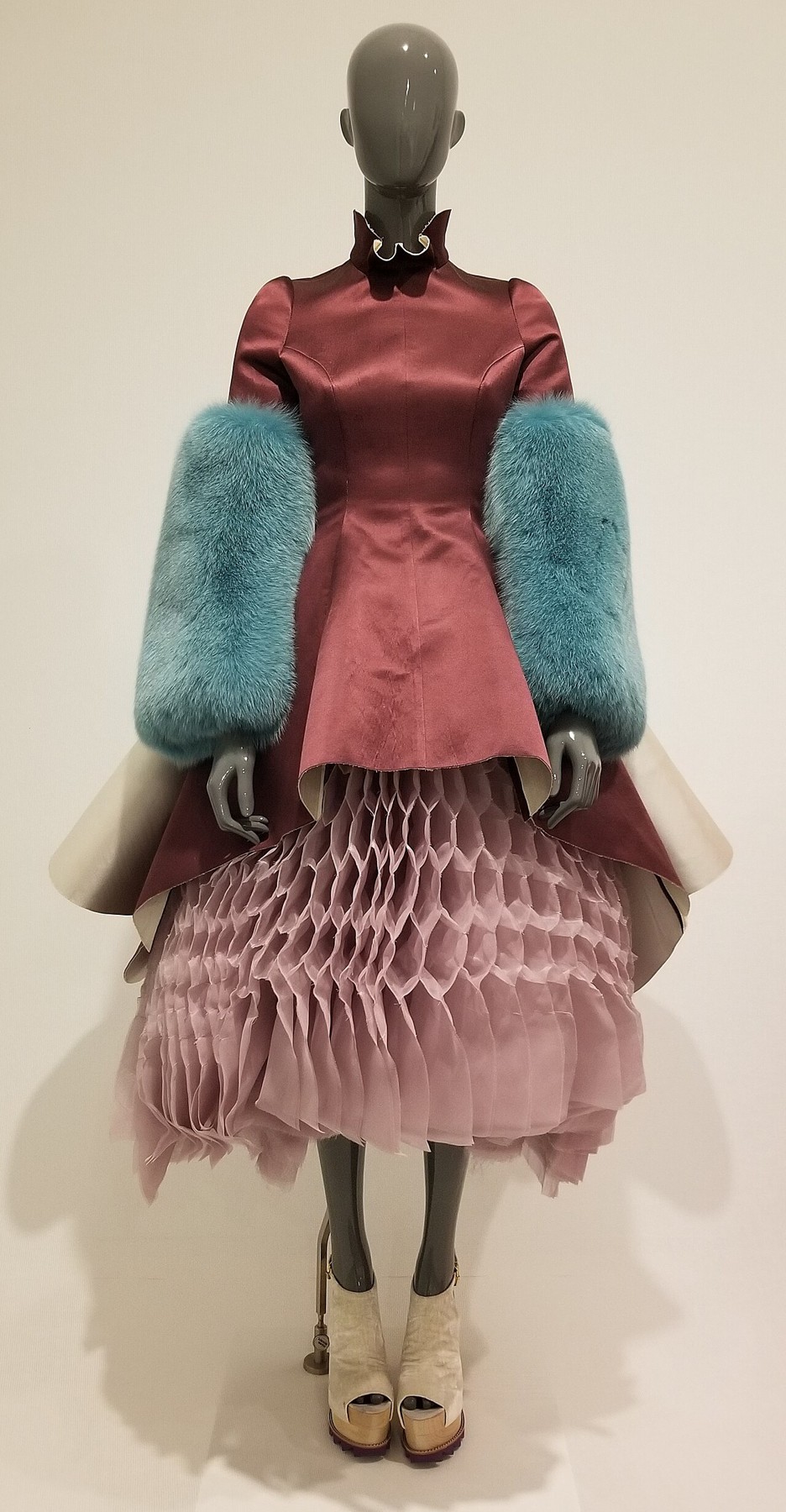
A garden inside a skirt
Jun Takahashi Undercover history can open with the spring/summer 2024 terrarium dress. Rather than printing flowers on fabric, the yellow version presented by the Metropolitan Museum of Art places silk roses, leaves and butterflies inside transparent 3D-printed resin beneath tulle. Space around the body becomes part of the object. A terrarium is transformed into a wearable landscape. Manufactured ornaments appear almost alive behind a translucent boundary. This introduces a recurrent question: how can beauty also feel slightly unsettling? A recognisable dress contains a separate world, extending a label associated with punk beyond a simple sign of rebellion.
From Kiryu to Tokyo
Born in Kiryu, Gunma, in 1969, the designer started Undercover while studying at Bunka Fashion College in 1990. Jun Takahashi Undercover history grew through making and selling clothes rather than promotion within an established house. The Nowhere store, opened with connections to Nigo in 1993, became a meeting point for Tokyo street culture. London visits and contact with Hysteric Glamour’s Nobuhiko Kitamura broadened those exchanges. Music belonged to the social life around the clothes, not merely the soundtrack of later presentations. His Tokyo Fashion Week debut was for autumn/winter 1994–95, and he received the Mainichi Fashion Grand Prix in 2001. A T-shirt and a complex collection garment could carry the same cultural interests through different forms.
Scab and the Paris debut
The spring/summer 2003 Scab collection, presented in Paris in 2002, marked a turning point in Jun Takahashi Undercover history. Small pieces of hand-sewn cloth and loose edges produced surfaces that seemed already worn. He linked the work to repaired crust-punk clothing. This patchwork made apparent damage a deliberate construction. Numerous edges divide light and shadow; the body is articulated through layers rather than a clean outline. Rei Kawakubo and Adrian Joffe helped encourage and introduce the Paris debut. This offered a larger audience for an existing language rather than requiring it to abandon its Tokyo origins. Rough appearance and precise labour coexist in the clothes.
Alice and uneasy decoration
The spring/summer 2005 but beautiful II collection responded to Jan Švankmajer’s Alice. Within Jun Takahashi Undercover history, cinema changes construction as well as imagery. A pale-blue cotton-and-lace dress at the Powerhouse appears torn and reassembled, accompanied by pale-green gloves with eye-like and floral attachments and dark tights with a coloured back seam. The complete outfit makes the body resemble an unfamiliar doll. Soft decoration acquires an uneasy physical character. This cinematic narrative is not simply a plot retold in clothes: it changes how ordinary things are perceived. An ornament resembling an eye or lace suggesting a damaged surface unsettles the boundary between an object and a body.
The worlds of Grace and Underman
The Grace photographs with Katsuhide Morimoto and spring/summer 2011 Underman project extended the label beyond garments. Jun Takahashi Undercover history includes dolls, invented heroes and constructed scenes as connected work. The 2015 Tokyo Opera City retrospective placed approximately one hundred archive garments alongside film, photographs, dolls and paintings. This cinematic narrative found a counterpart in the exhibition’s labyrinthine arrangement. Moving between media, visitors encountered related combinations of beauty and strangeness. A photographer establishes the setting, distance and light through which a garment is experienced. Such collaboration helps explain why the memory of a collection includes characters and situations as well as the outline of a jacket.
Memory at the back of a garment
Jun Takahashi Undercover history continues to place ordinary clothes beside sculptural propositions. The FHCM records the spring/summer 2027 womenswear presentation on 2 October 2026. Faded surfaces, displaced-pocket traces and contrasting fronts and backs addressed wear and memory. Shirts and trenches acquired inverted T-shirts or lace at the back; different layers emerged below menswear-like vests. A garment recognised from the front changed when viewed from behind. Where earlier patchwork exposed small joins, larger clothing units now collided. The terrarium dress similarly asks the viewer to look beyond a single frontal image, although it directs attention inside rather than around the back. Space, movement and time are part of both encounters.
A new organisational chapter
Business change also belongs to the present of Jun Takahashi Undercover history. In September 2026 Human Made announced an agreement to acquire Undercover, with completion planned for February 2027. The announced direction separates creative leadership from additional management support; the future results remain open. A longstanding association thus enters another organisational phase. His contribution is also a refusal to place a street T-shirt and a museum dress in a predetermined hierarchy. Scab’s repaired surfaces, the Alice outfit, Grace photographs and a transparent flower-filled skirt use different media to disturb settled expectations. Identifying a film or song is only the beginning: the more revealing question is how it becomes stitching, material, light and movement.
Timeline
- 1969 — Born in Kiryu, Gunma.
- 1990 — Started Undercover while studying at Bunka.
- 1994 — Tokyo Fashion Week debut.
- 2002 — Paris presentation of spring/summer 2003.
- 2015 — Tokyo Opera City retrospective.
- 2026 — Spring/summer 2027 presentation and acquisition agreement announced.
Sources
- The Met: Sleeping Beauties
- Tokyo Opera City: profile
- System: interviews with Jun Takahashi
- Hypebeast: Jun Takahashi interview
- Powerhouse: outfit, spring/summer 2005
- Tokyo Opera City: Labyrinth of Undercover
- FHCM: spring/summer 2027
- Kendam: spring/summer 2027
- Fashionsnap via Livedoor: share purchase agreement