Johanna Ortiz: From a Moving Shoulder to a Making Community
From a Moving Shoulder to a Making Community
ÉPOPLI ·
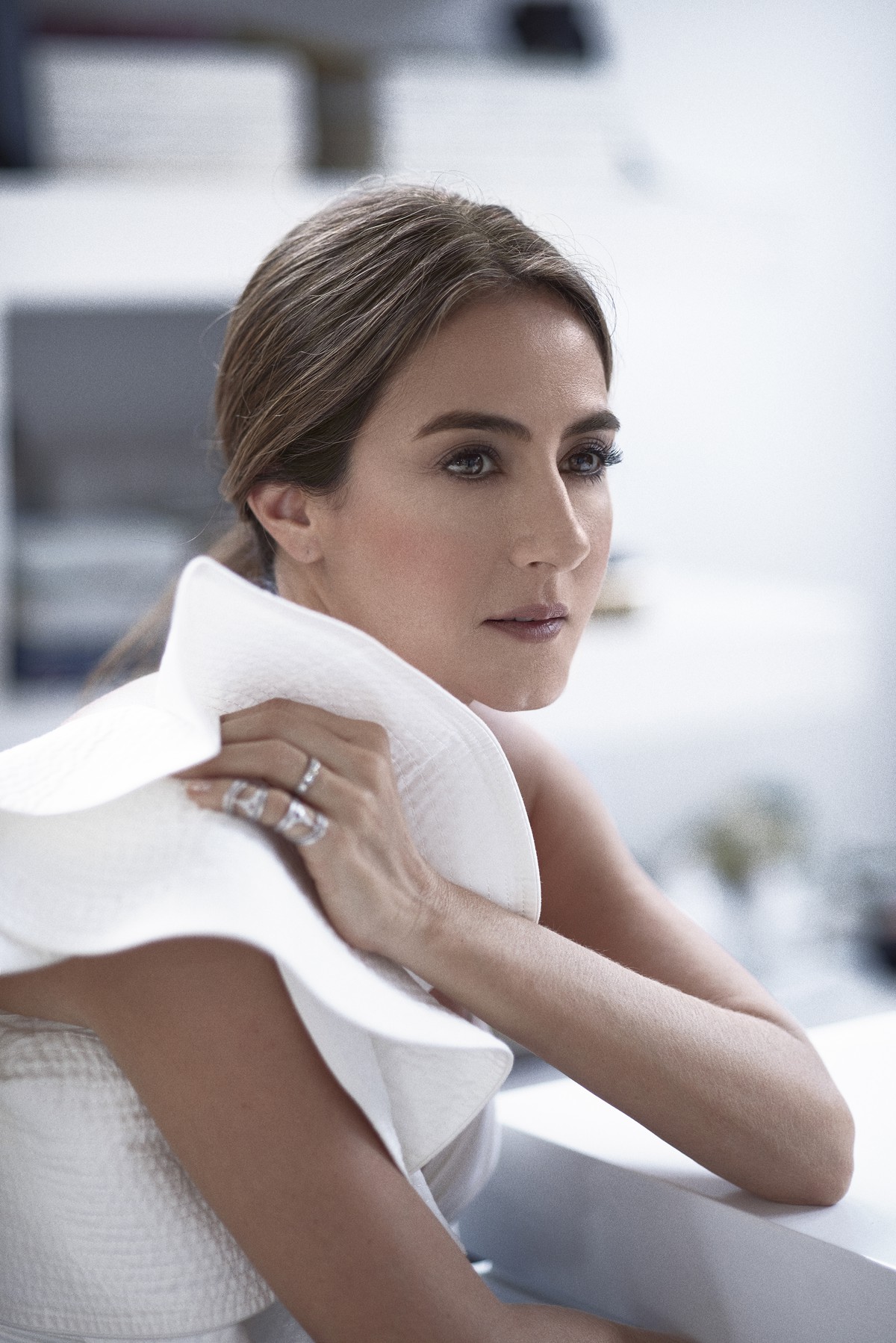
A line of cloth around the shoulder
Johanna Ortiz history comes into focus through the Tulum top. Its exposed shoulder line and ruffles concentrate attention near the face rather than tightly enclosing the body. In a 2015 interview she described preferring a visible neck and shoulders to a short, restrictive dress.
The question is how a particular shape made in Cali entered an international wardrobe. As a separate, the top works with trousers or skirts; its mobile edge creates an evening effect without requiring a complete formal dress. Her stated preference for transformed men’s shirts and wrap skirts offers a related approach to combining pieces.
Returning to Cali
Johanna Ortiz history is rooted in Cali, her birthplace and working base. She studied fashion at the Art Institute of Fort Lauderdale and continued her education in New York and Paris before returning to Colombia. Her 2003 venture began with resort clothing focused on swimwear, later expanding into ready-to-wear, accessories and home products.
Early presentations included Colombiamoda in Medellín and Círculo de la Moda in Bogotá. International study fed into local making and a gradually expanding market, while Cali remained the production center.
When an admired sample becomes an order
Johanna Ortiz history expanded through Moda Operandi and Lauren Santo Domingo. Looking back in 2019, the designer recalled a 2014 launch and Olivia Palermo wearing the Tulum top. Reproducing an admired sample in different sizes made cutting and construction an organizational challenge.
In a 2022 public discussion she described annual production growing from roughly 4,000 to 50,000 pieces and credited her team. The Escuela’s sewing training belongs to this infrastructure: visibility generates interest, while reliable making translates it into garments.
A floral vocabulary across different forms
Johanna Ortiz history reached a broader audience through the 2020 H&M collaboration. Its team visited Cali and studied the archive. Among 19 pieces were a red floral maxi and a magenta broderie-anglaise midi: printed color and pierced embroidery produced distinct surfaces.
A black viscose-crepe column emphasized length, while a black-and-white cotton-poplin wrap skirt directed the eye diagonally through ruffles. Asymmetric swimwear transferred the same vocabulary into another use. The collection linked recognizable volume and pattern across changing materials.
A river translated into dress and bags
Johanna Ortiz history in spring–summer 2026 turned to the Magdalena River. Official notes connected prints to Pedro Ruiz and magical realism, with silk, jacquard, leather and woven palm materials translating landscape into different textures.
The Soul of the Stream tote used cow leather, an open top and a button-loop fastening to make a generous, stable volume. Kankwama-woven mochilas offered another construction. These objects connected the collection’s imagery to distinct forms of skilled making. The bag’s utility complements the clothing’s movement.
Surfaces made with collaborators
Johanna Ortiz history broadened through layered dressing in fall–winter 2026’s Alma. Oversized shearling vests over silk and evening pajama sets contrasted light inner layers with substantial outer pieces. Softened shoulders connected structured jackets to fluid clothing.
The season included textile work with Pepa Pombo, jewelry with Omar Hurtado and leather bags with Moi & Sass. Internal training develops workshop skills, while such partners bring material expertise and different kinds of movement.
What the next season carries forward
Johanna Ortiz history continued with spring–summer 2027, presented in October 2026. The collection considered inherited knowledge through Jericó’s carriel, Wayuu mochilas and Nariño’s iraca baskets, with Guanabana and Mar collaborations. Wrapping and carrying became starting points for thinking about cloth.
From an open shoulder to enveloping fabric, her work organizes ease through color, proportion and moving edges. Maintaining a Cali making base while extending international distribution also makes local technique part of a contemporary wardrobe.
Timeline
- 2003 — Established the label in Cali.
- 2014–2015 — Tulum top and expanding international distribution.
- 2020 — H&M collaboration.
- 2026 — Magdalena, Alma and the following spring–summer collection.
Sources
- Official biography
- W direct interview, 2015
- HOLA direct interview, 2019
- Official house and Escuela
- Vogue México LAFS direct discussion
- H&M official launch announcement
- Official Magdalena collection
- Official Soul of the Stream construction
- Official Alma collection notes
- Official spring summer 2027
- Vogue spring 2027 dated presentation