Hanae Mori: Butterflies, Work and the Stage
From film and airline clothing to the Paris workroom.
ÉPOPLI ·
Making the Outline of a Wing
A butterfly can be both an identifying sign and a way of organising cloth. A spring/summer 1990 dress combines a silk chiffon upper section, a crepe skirt and beaded red butterflies. Hanae Mori history begins here with an inseparable relationship between symbol and making. The motif links surfaces with different transparency and weight. A wing can emphasise the body’s centre or direct attention away from it depending on scale and placement. A butterfly motif printed into cloth behaves differently from one embroidered in beads: the latter adds relief, light and weight. Repetition therefore does not mean an unchanged design. This account follows that distinction across cinema, aircraft cabins, eveningwear and the Paris workroom.
Clients and Cinema
Born in Shimane in 1926 and raised in Tokyo, Mori studied literature before training in Western dressmaking at Dressmaker Gakuin. Her Hiyoshiya studio opened in Shinjuku in 1951. Hanae Mori history began with clients and film production rather than overseas acclaim. Her husband Ken became a business partner; directors and performers brought other requirements to costume work. A red cotton shirt with white flowers made for the 1956 film Crazed Fruit provides a concrete early example, documented in the 2026 exhibition checklist. Clothing on screen operates within action and setting rather than in isolation. Here a recognisable everyday shirt offers a way to consider how pattern and contrast establish presence. That observation does not make its designer the sole author of a character or of the film’s meaning.
Markets and Workrooms
The New York presentation of 1965 and the opening of a Paris maison in 1977 were different kinds of transition. In Hanae Mori history, haute couture means a particular institutional and workshop practice, not simply an adjective for expensive clothing. The official chronology records the avenue Montaigne maison and regular collections after her American activity. Ready-to-wear through VIVID, established in 1963, involved a different means of supplying clothes. Japanese textiles shown in Western garment types require attention to material rather than a metaphor of two cultures mixed in equal parts. Stiff sash fabric and light silk cannot fall identically in a sleeve. Selection therefore already involves an anticipated wearing situation. International expansion was also a coordination of orders, production, sizing and transport.

Colour in the Cabin
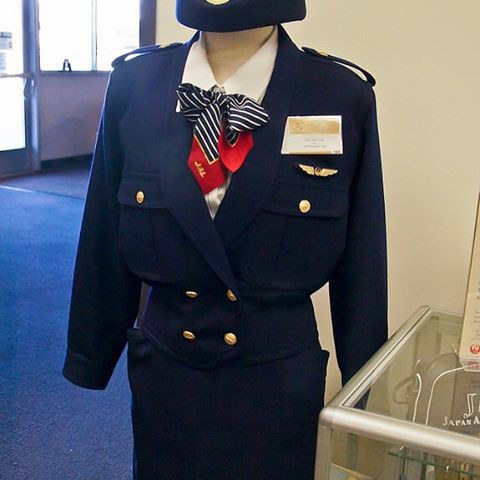
Three Japan Airlines uniform generations reveal another design problem. The 1967 version used sky blue; the 1970 version paired a dark blue mini dress with a red belt; the 1977 version introduced a layered long-sleeve shirt arrangement. Hanae Mori history treats the uniform as substantial work rather than an accessory to eveningwear. A consistent public identity must coexist with a working body. Colour contrasts clarify belonging, while layers assign different tasks to sleeve and bodice. Comparing the versions reveals shifts in dividing lines as well as hem length. The airline records the attention generated by the mini dress, but that does not establish every attendant’s experience. A uniform must be examined both as an image and in relation to the work performed inside it.
Translating a Pattern
Flowers, calligraphy and painting joined the butterfly motif in her visual vocabulary. In Hanae Mori history, these images become materials to rearrange around a body rather than untouched specimens of tradition. Comparing a 1968 silk satin evening dress with a dyed geometric butterfly pattern to the beaded 1990 dress changes the means by which an outline is made. Satin directs reflected light across a printed field; embroidery creates relief and small shadows. The exhibition checklist distinguishes these objects by date and material. Brand recognition does not imply identical construction. Textile designers, dyers and embroiderers help turn an image into a wearable surface. Following a pattern across a seam or into a fold reveals where cutting and surface design have to accommodate each other.
Dress Seen from the Audience
The handwork associated with haute couture also entered performance. The official chronology records costumes for Madama Butterfly at La Scala in 1985 and Nureyev’s Cinderella at the Paris Opera in 1986. A stage in Hanae Mori history is more than a larger display case for dresses. Distance, lighting and movement change what an audience can perceive. Fine layers may merge into one colour from far away; an ornament may describe a different line during a turn. These are analytical questions for looking at stage dress, not claims about undocumented production techniques. A costume designer works alongside direction, choreography and music rather than authoring the whole performance. Where a uniform coordinates several wearers, stage clothing responds to a particular role and scene. The comparison broadens the account beyond decorated luxury gowns.
A Career Reassembled
After the final Paris couture presentation in 2004, cultural and educational activity continued; Mori died in 2022. Hanae Mori history separates her own work from posthumous exhibitions and later brand operations. Tokyo’s National Art Center held its centenary retrospective from 15 April to 6 July 2026, bringing together approximately 400 garments and archival materials. As of 11 October 2026, that exhibition has ended. Such a retrospective encourages comparison across production, circulation and representation. The early film shirt, airline clothing and differently constructed butterfly dresses are not interchangeable illustrations. Nationality alone cannot explain them. Who wore or saw the clothes, and under what conditions, alters their meaning. The productive question is how one familiar sign required new decisions when it encountered another body, technique or setting.
Timeline
- 1926 — Born in Shimane
- 1951 — Opened Hiyoshiya
- 1965 — Presented in New York
- 1977 — Opened Paris maison
- 2004 — Final Paris couture presentation
- 2022 — Died
- 2026 — Tokyo centenary retrospective
Sources
- NACT — 2026 exhibition checklist (PDF)
- The Met — Hanae Mori biography
- Hanae Mori — official chronology
- JAL — uniform history
- NACT — 2026 centenary exhibition