Duro Olowu: Pattern, Proportion and Presence
Pattern, Proportion and Presence
ÉPOPLI ·
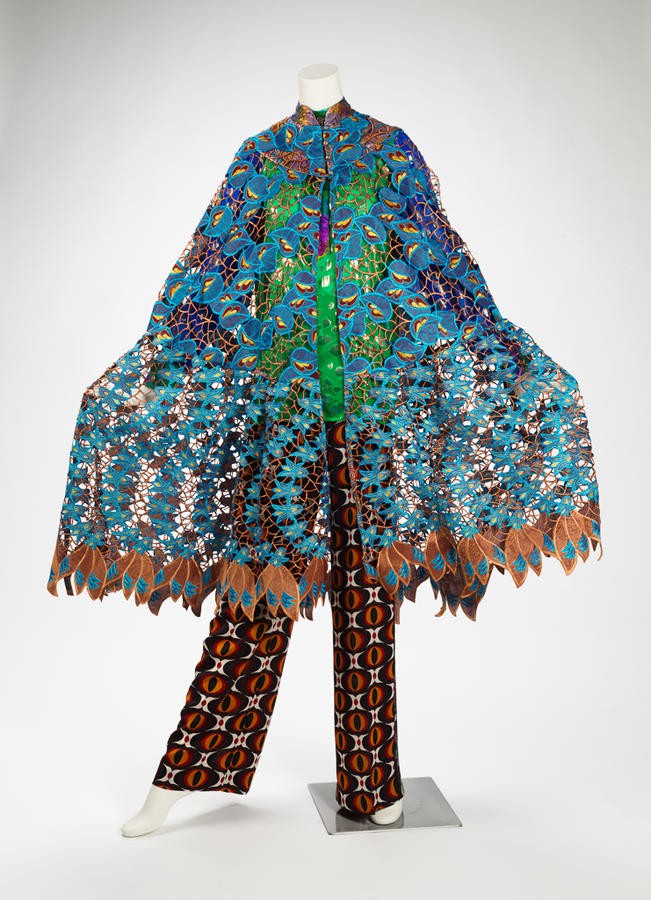
Making unlike patterns belong together
Duro Olowu history begins with the dress that attracted attention in 2005: broad sleeves, a high waist and contrasting printed bands. Its patchwork divides the surface into readable areas while the generous outline accommodates movement.
How can strong patterns coexist without overwhelming the wearer? Clear proportions help organize a complex surface. The placement of a border matters as much as the motif itself, allowing different fabrics to inhabit a recognizable design.
From Lagos through law and illustration
Duro Olowu history concerns a designer born in Lagos in 1965 to a Nigerian father and Jamaican mother, the fourth of six children. Clothing around him encouraged an early interest in fabric and volume. He studied law and worked in Nigeria before moving toward fashion; an early-1990s period in Paris included freelance illustration.
In London he ran Olowu Golding with his then wife, a shoe designer. His self-funded namesake womenswear business followed in 2004. Editor Sally Singer helped bring attention to the early dress, and the British Fashion Awards recognized him as New Designer of the Year in 2005.
Reworking the dress in 2008
Duro Olowu history is more than the repetition of a bestseller. For spring/summer 2008, the familiar dress moved toward a trapeze outline and tiered volume. The widening silhouette and stepped layers changed its rhythm.
Patchwork can organize proportions rather than simply multiply colors. A broad field and a narrow border make each other appear different in scale. Following sleeves, seams and hems reveals how a recognizable vocabulary changes with the cut.
A textured cover dress in 2021
Duro Olowu history includes the dress worn by Achenrin Madit for British Vogue’s April 2021 cover. Layered cotton and silk created a raised woven surface, overprinted with an Emma Amos-inspired design. A square neckline, high bow and box-pleated skirt gave it structure.
Box pleats regulate fullness while allowing the printed surface to fold and open. Edward Enninful’s commission, Steven Meisel’s photography and Madit’s presence brought separate creative roles into the final image. Material construction and editorial composition worked at different scales.
Working with shirtmakers
Duro Olowu history also includes a 2021 menswear collaboration with Speciale founders George Marsh and Bert Hamilton Stubber. Both had trained in Florence. Their films of reference included La Piscine and Waiting for Happiness, and the project developed from an existing customer relationship. The resulting shirts offered a new setting for his fabric choices.
A shirt makes small decisions visible: collar, fastening, cuff and ease. Collaboration brought Olowu’s fabric sensibility into conversation with another tailoring practice, extending his work beyond the familiar womenswear dress.
A curatorial way of looking
Duro Olowu history extends into exhibitions: Making and Unmaking in London in 2016, Seeing Chicago in 2020 and a Cooper Hewitt selection in 2022. The latter placed textiles, ceramics and prints in conversation through pattern and repetition.
His Aperture interview explains an interest in how photographs by artists including Malick Sidibé and Seydou Keïta make clothing a language of presence. Curating objects and combining fabrics are distinct activities, but both establish relationships between specific works rather than treating culture as a single decorative source.
Form and movement in 2026
Duro Olowu history continues in the 2026 collections. A spring black midi combined brocade and hammered silk in strips; another design placed lace over black taffeta in a cape-like jacket. Texture supplied variety even within a dark palette.
The fall 2026 presentation took place at London’s Sadie Coles gallery, whose white setting emphasized moving clothes. Records checked in October 2026 confirm ongoing work at his label. Across the early dress, tiered volume and later textured surfaces, the recurring task is to make different fabrics work together on a living body.
Timeline
- 1965 — Born in Lagos.
- 2004 — Launches namesake label.
- 2005 — British Fashion Awards New Designer of the Year.
- 2021 — Cover dress and Speciale collaboration.
- 2022 — Curates at Cooper Hewitt.
- 2026 — Presents spring and fall collections.
Sources
- Cooper Hewitt: Duro Olowu Selects
- Vogue Italia: Duro Olowu interview and biography
- Essence: Designer Spotlight, early dress and 2008 changes
- British Vogue: April 2021 cover dress
- British Vogue: Speciale collaboration interview
- Aperture: Photography interview, 2024
- Vogue: Spring 2026
- Vogue: Fall 2026