Domenico Dolce: Tailoring the Space Around the Body
From a Sicilian workshop to structured and relaxed garments.
ÉPOPLI ·
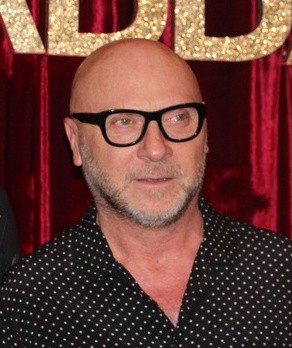
Between pyjamas and a jacket
Spring/summer 2026 womenswear brings loose pyjama shirts together with corsetry. Domenico Dolce Dolce & Gabbana history can begin with that structural contrast: a supported torso, a relaxed shirt and a shaped shoulder occupy different distances from the body. A corset supports and shapes the trunk; here its structure is exposed rather than hidden. Borrowed masculine shoulders narrow at the waist. The issue is not merely renaming menswear as womenswear but balancing garments that hold and release. Dolce’s own emphasis on detail and silhouette helps frame his contribution to a collaborative label. Loose areas make supported ones more visible; movement continually alters their contrast.
Learning beside a tailor
Born in Sicily in 1958, Domenico Dolce Dolce & Gabbana history connects to his father’s workshop in Polizzi Generosa. He recalled learning by watching his father work. Measuring, cutting and fitting made clothing a material practice before an image. He worked for Giorgio Correggiari in Milan before pursuing independence with Stefano Gabbana. Their first womenswear show is dated 1985; the preparatory studio belongs to an earlier stage. Gabbana spoke of colour and ornament, Dolce of black, lace and the silhouette. These stated interests do not assign every seam or motif to one partner: discussion shaped the shared result.
An evening ensemble reaches a wider public
Susan Sarandon’s 1996 Academy Awards ensemble widened the audience for Domenico Dolce Dolce & Gabbana history. The Met records silk and synthetic fibre and her subsequent gift. A film ceremony places clothing before viewers beyond fashion’s buyers and editors. The museum identifies that public visibility as part of the ensemble’s significance alongside design. The wearer’s movement and the event contribute to a garment’s memory. Once collected, the object also becomes available for examining material and construction beyond the original televised occasion.
Making becomes visible
The Grand Palais exhibition in 2025 connected Domenico Dolce Dolce & Gabbana history to workshop production. Curated by Florence Müller, it explored Italian art, architecture, regional craft, opera and cinema in the house’s made-to-measure work. Alta Moda names its women’s couture practice. Cutting, embroidery, attaching dimensional decoration and fitting turn a proposal into a garment. An exhibition slows down the runway encounter, allowing surfaces and labour to be considered together. Its celebratory company narrative remains an interpretation, best examined through the objects and their makers.
A decorated poplin shirt
The official 2026 making account adds a women’s pyjama shirt to Domenico Dolce Dolce & Gabbana history. Crisp poplin, a close plain weave, carries contrasting piping and crystals arranged by hand as flowers over stripes. Piping narrowly finishes an edge. The underlying repetition meets a second layer of light and weight. Unlike a fitted evening ensemble, the garment preserves ease around the body. Simplicity of silhouette does not eliminate construction: openings, sleeves and decorated areas still organize its balance. The familiar sleepwear format becomes a more visually dense public garment.
Openwork for summer
Menswear for spring/summer 2027, presented in 2026, continues Domenico Dolce Dolce & Gabbana history through summer tailoring. The official account describes linen jackets, higher lapel fastenings and altered backs. Cutwork and Sangallo embroidery transfer the vocabulary of household linens into shirts and trousers. Removing areas of cloth and finishing their edges creates patterned openings rather than covering a surface. Light and skin enter those spaces. Compared with satin or crystals, this produces another tactile effect. The silhouette of a jacket and the openness of its cloth must negotiate with one another.
Continuity and public responsibility
Domenico Dolce Dolce & Gabbana history also includes the 2018 advertising controversy. Ads criticized as racist prompted the postponement of the Shanghai show and a video apology from both founders. Cultural representation is part of a global house’s responsibility. In 2026 the company confirmed Gabbana’s departure from governance roles while retaining creative work; that was not an end to the design partnership. Recent collections remain jointly credited. To examine Dolce’s work, the support of corsetry, a jacket’s outline and a loose shirt’s space are more revealing than an emblem alone. They show how a silhouette is held, exposed or allowed to move.
Timeline
- 1958 — Born in Sicily
- 1985 — First womenswear show of the joint label
- 1996 — Susan Sarandon’s Academy Awards ensemble
- 2018 — China advertising controversy and public apology
- 2025 — Grand Palais exhibition
- 2026 — Presented spring/summer 2027 menswear
Sources
- GQ — Direct interview, 2016
- Museo del Traje — Dress, 1994
- The Met — Susan Sarandon evening ensemble, 1996
- Dolce&Gabbana — Spring/summer 2026 women (official China site)
- Dolce&Gabbana — Fatto a Mano, 2026
- Grand Palais — From the Heart to the Hands
- TIME — 2018 apology
- Dolce&Gabbana — Men spring/summer 2027
- Reuters — Gabbana creative role continues, 2026
- Corriere — Founders interview, 2019
- The National — Tailoring interview