Carolina Herrera: A Shirt, a Skirt and an Occasion
A Shirt, a Skirt and an Occasion.
ÉPOPLI ·
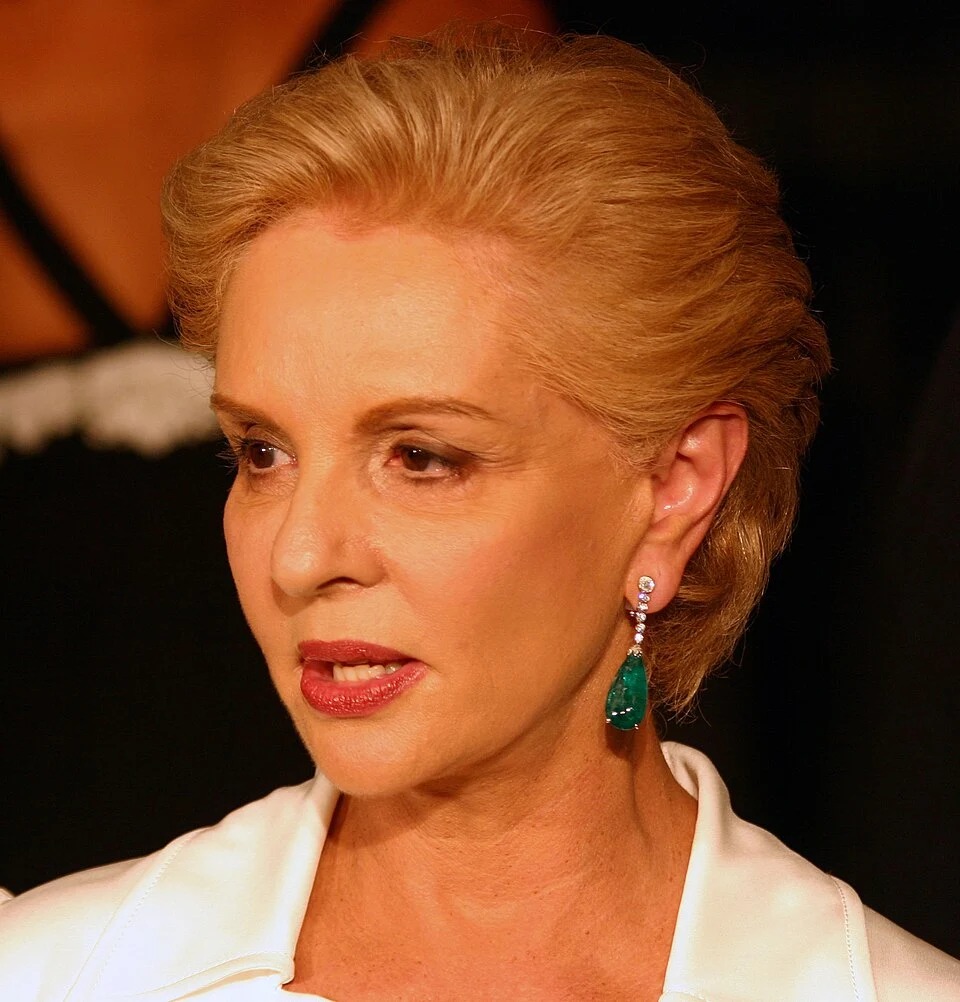
An ordinary shirt beside an extraordinary skirt
A white shirt worn with a long, substantial skirt offers a useful entrance into Carolina Herrera house history. The contrast is straightforward: an item associated with daily dressing supplies a clear upper frame, while the lower half carries volume, color or decoration. The outfit gains formality through the relationship of its pieces rather than requiring every surface to be elaborate.
This is also a question of proportion. A collar directs attention toward the face, a fitted waist controls the transition, and the skirt establishes the scale of the silhouette. Small changes to sleeve length or the amount of fullness alter the balance. The familiar combination is therefore not a single fixed formula. It is a recurring way of organizing an outfit around a wearer and an occasion.
From Caracas to a first collection
Born in Caracas, Venezuela, Herrera entered fashion design after years of experience as a highly visible participant in social and cultural life. Carolina Herrera house history does not confuse that experience with formal training in a couture atelier. Her first New York collection was presented at the Metropolitan Club in 1981, encouraged by Diana Vreeland.
The move from wearing clothes to designing a collection required a new set of relationships with pattern cutters, manufacturers, retailers and customers. Personal taste can establish a direction, but it cannot alone produce a finished range in multiple sizes. The launch therefore belongs to the history of an organization as well as a recognizable public figure. The collection’s setting also identified an audience: these were clothes intended to be seen in professional and social environments where appearance carried specific expectations.

The discipline within polished clothes
Carolina Herrera house history can be read through the control of an outline. A clean shoulder and waist allow an enlarged sleeve or skirt to remain legible rather than overwhelm the figure. A white shirt can provide the relatively quiet area against which a printed or richly colored lower half becomes visible.
The effect depends on fabric behavior. A crisp material holds a fold away from the body; a softer one falls closer and changes with movement. Both may appear restrained in a still photograph, yet they behave differently when the wearer sits or turns. The designer’s recurring vocabulary of shirts, tailored pieces and dresses is most informative when those differences are observed. An elegant image is the result of decisions about material and fit, not a technical explanation in itself.
A wedding dress becomes a separate practice
The dress made for Caroline Kennedy’s wedding in 1986 is a turning point in Carolina Herrera house history. The first bridal collection followed in 1987. A private commission and a collection serve different purposes: the former answers a particular person and event, while the latter proposes options that can be adapted for many clients.
Wedding clothes also require a distinct relationship between image and use. A dress must work for standing, walking, sitting and photographs taken from several angles. Its back may be as important as its front during a ceremony. The fitting process and the work of seamstresses become especially visible in the way a long skirt or train moves. The growth of this category should therefore be understood as an extension of the house’s expertise, rather than simply as the addition of white fabric to eveningwear.
A film costume and a real garment
The wedding dress for Bella in The Twilight Saga: Breaking Dawn – Part 1 brought the house into a cinematic setting. Carolina Herrera house history distinguishes this collaboration from a private bridal order. A film costume participates in a character’s story and has to answer the requirements of the production, camera and performer.
The relationship between a relatively restrained front and a more revealing, detailed back gives the dress different information from different viewpoints. That is an especially useful example of clothing designed for movement and changing angles. A still publicity image can conceal this sequence. Comparing the film garment with the bridal collection shows how related skills can serve different audiences, and why the roles of costume department, designers and makers all matter to the finished screen appearance.
Expansion and a transfer of creative leadership
Fragrance and additional lifestyle categories expanded the business beyond the original runway collection. Carolina Herrera house history keeps those activities distinct: perfume, accessories and eveningwear share a house identity but depend on different specialists and production systems. Herrera’s daughter Carolina Herrera de Báez became involved in the fragrance operation, a contribution that should not be merged with her mother’s clothing design.
In 2018 the founder presented her final collection and Wes Gordon became creative director. The handover is essential when reading recent work. A current garment with the house label is not automatically a personal design by its founder. The brand’s official spring 2026 presentation, staged in Madrid’s Plaza Mayor, explicitly credits Gordon. Its use of the house’s vocabulary represents an interpretation by a successor working with a continuing organization.
What a wedding photograph can show
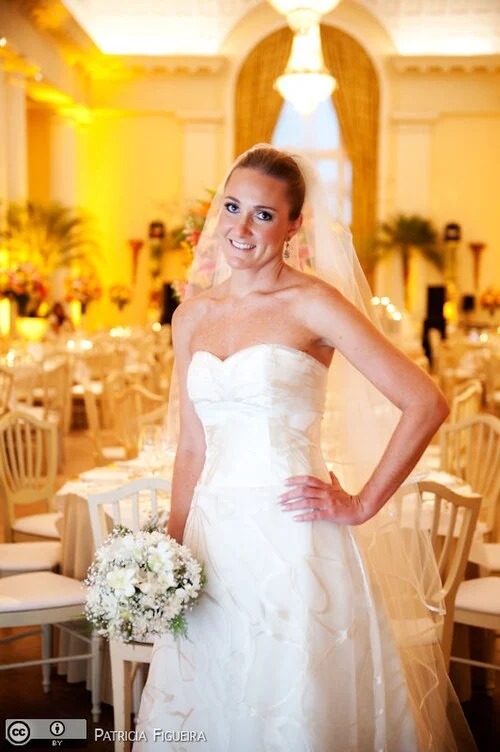
The photographed wedding dress connects a fitted upper body with a widening skirt. The relatively quiet bodice directs attention to changes across the skirt’s surface and its overall length. A photograph of a wearer also shows how posture and interior light affect the outline. It cannot establish the number of underlayers or the internal supports. This image is used as evidence of appearance in use, without inventing a collection date or a story about the commission. Museum views and photographs from life provide different kinds of information.
A recognizable vocabulary, several authors
Carolina Herrera house history is best understood through a small set of recurring relationships: a clear upper frame and a generous skirt, restraint beside decoration, and a garment fitted to a particular occasion. These relationships connect the early collections, the wedding commissions and the later commercial categories without making them identical.
The founder’s contribution remains visible in that vocabulary, while present collections belong to their actual designers and teams. For a reader, the productive question is not whether an outfit looks expensive or formal, but how its proportions and materials create that impression. The archive can then reveal the work behind the polished image: the fitting decisions, the different views of a dress and the collaboration needed to make clothes function in the settings for which they were intended.
Timeline
- 1981 — First collection presented in New York
- 1986 — Caroline Kennedy wedding dress
- 1987 — First bridal collection
- 1988 — First fragrance
- 1996 — Carolina Herrera de Báez joined the fragrance operation
- 2011 — Bella’s wedding dress appeared in Breaking Dawn – Part 1
- 2018 — Creative leadership passed to Wes Gordon
Sources
- Carolina Herrera — Official house chronology
- CFDA — Carolina Herrera biography
- Carolina Herrera — Spring 2026 by Wes Gordon
- Image and object record — Carolina Herrera at Ralph Lauren’s fortieth-anniversary celebration in Central Park, New York.
- Image and object record — A bride wearing a Carolina Herrera wedding dress, photographed in Brazil.
