Anna Molinari: Blumarine’s Everyday Romance
From Carpi’s knitting workshops to flowers and photographs.
ÉPOPLI ·
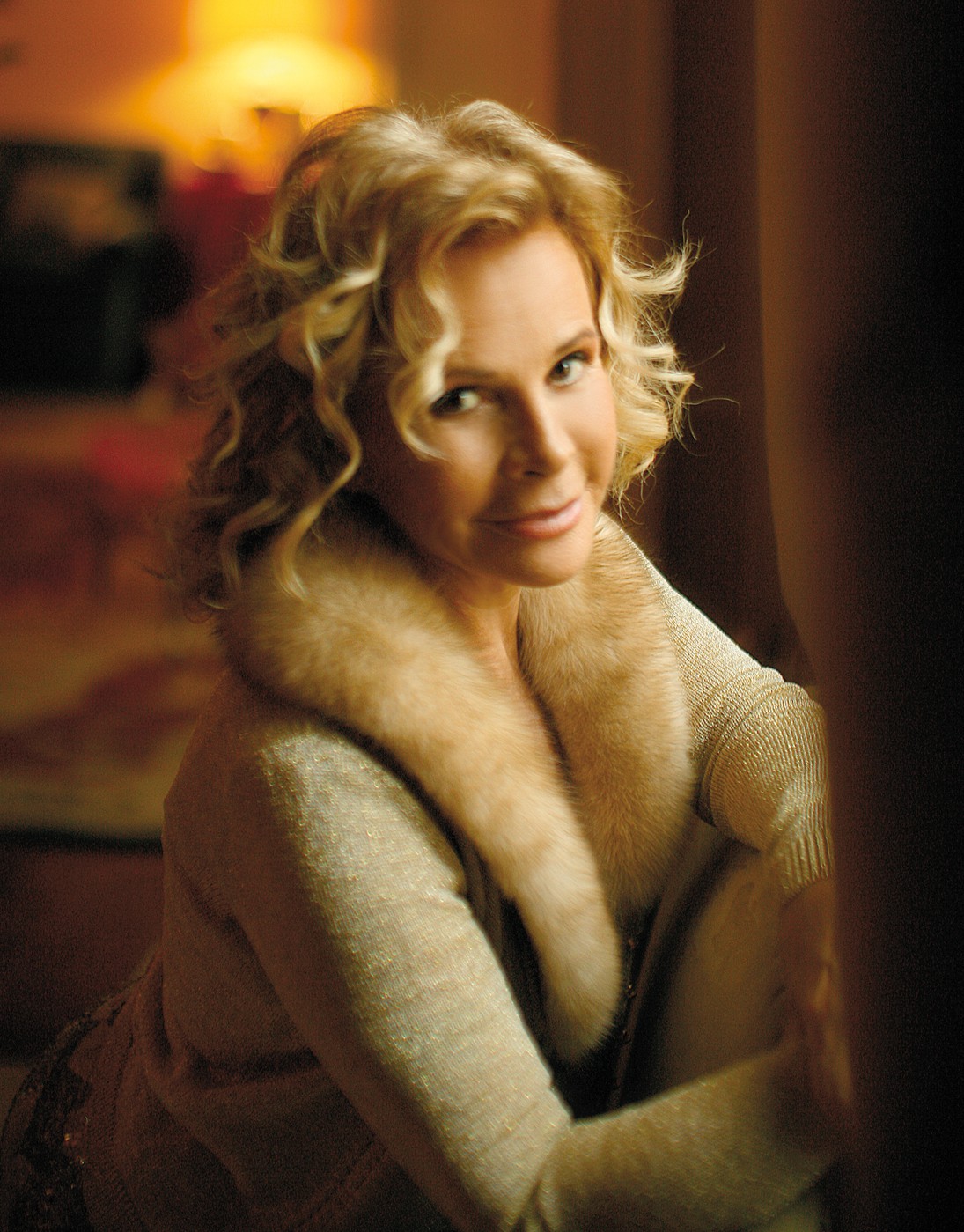
An edge changes a garment
The small Blu-Vi cardigan opens Anna Molinari Blumarine history through an edge. Matching mink around a pastel knitted neckline added a different touch to an everyday buttoned garment. A cardigan is neither an enclosing coat nor a dress reserved for evening: its role changes with layering and fastening. The soft border frames face and neck. How much romantic imagery can an ordinary garment carry? Floral pattern, pale colour and close-flowing cloth provided different answers. Spectacle could begin with a small surface rather than a large silhouette.
A family workshop in Carpi
Anna Molinari Blumarine history begins within Carpi’s knitwear industry. Growing up around the family business, she encountered production before founding a label. In a 2017 interview she described her parents Odette and Guido’s Molly as a subcontract manufacturer. Her own beginning involved husband Gianpaolo Tarabini and a knitting machine. The documented formation is practical, rather than a verified fashion-school qualification. They established Blumarine in 1977, joining a design proposition to repeatable manufacture and sales. Tarabini was the business co-founder; she shaped the clothes. Blufin followed in 1988. Carpi remained a production context as well as a hometown.
Satin meets a photographer
Low-necked satin dresses photographed by Helmut Newton in the 1990s complicate any account of Anna Molinari Blumarine history as softness alone. Satin’s smooth woven face reflects light differently across curves and folds, allowing shine to describe the figure. Compared with the pastel Blu-Vi cardigan, it creates another sensation within the same house. Pose, lighting and distance belong to the photographer’s contribution. The 2017 retrospective book also included Albert Watson and Juergen Teller. Between workshop and advertisement, those collaborators shaped how the garment was encountered. Floral pattern can appear less sweet when a sitter’s stance or gaze changes its setting.
Flowers without literal contours
Autumn/winter 2013–2014 Abstract Flower reworked a familiar subject within Anna Molinari Blumarine history. Ivory and black turned flowers into graphic shapes. Six proposals ranged across fitted dresses, full skirts, a minimal coat, silk-voile blouses and the signature cardigan. Voile is a light, translucent cloth. A pattern spreads across a wide skirt but bends with a closer silhouette. Floral pattern was therefore not simply an unchanging emblem. Restricted colour and softened contours changed its effect. Surface and cut need to be read together; the capsule also moved one image between different kinds of daily clothing.
Adjusting romance to ordinary life
Resort 2017, presented in 2016, brought everyday activity into Anna Molinari Blumarine history. Molinari described a freer, more practical wearer. A lace column dress carried bamboo decoration and volumes became more comfortable. Ornament was adjusted rather than eliminated. Compared with a close satin dress, transparency and the space between body and cloth now provided a different account of the figure. This was an alteration within a recognizable vocabulary. The softness associated with knitwear offers another useful comparison when considering that looser movement.
Material enters the museum
The installation opened at Carpi’s city museum in 2014 moved Anna Molinari Blumarine history beyond advertising. Developed with the designer and museum staff, it connected clothes and accessories with materials and photography. Printing a flower and attaching a dimensional one require different kinds of work even when their subject is shared. The fortieth-anniversary book in 2017, curated by Maria Luisa Frisa with writing by Elena Loewenthal, placed family narrative beside photographers’ images. Molinari also recalled support from her children Rossella and Gianguido following her husband’s death. Production, representation and the family business contributed differently to the clothes’ lives.
Founder and continuing house
Blufin’s ownership changed in 2019, separating the founder’s work from later interpretations within Anna Molinari Blumarine history. David Koma’s appointment was officially announced in 2024, with pre-fall 2025 identified as his first collection. The official spring/summer 2026 account likewise names him. Its butterflies and darker romanticism must not be credited as new designs by Molinari. The sources checked here did not establish a new personal collection from her. Her earlier knitwear, satin dresses, abstract flowers and looser lace remain useful comparisons. Their interest lies in the different structures given to a related sensibility. Succession can be examined through changes in proportion and material, rather than resemblance alone.
Timeline
- 1977 — Founded Blumarine with Gianpaolo Tarabini
- 1988 — Blufin group established
- 2013 — Abstract Flower capsule collection
- 2014 — Carpi museum installation opened
- 2017 — Fortieth anniversary and retrospective book
- 2019 — Blufin ownership changed
- 2024 — Successor David Koma appointed
Sources
- il Resto del Carlino — Molinari interview, 2017
- Corriere Style — Forty years of Blumarine
- Vogue Italia — Abstract Flower, 2013
- Vogue — Resort 2017
- Vogue Italia — Carpi museum installation, 2014
- Blumarine — Company profile
- Exelite — David Koma appointment, 2024 (PDF)
- Blumarine — Spring/summer 2026
- Pambianco — Molinari on her anniversary book