Tom Ford history: Clothing, Scent and Presentation
Tom Ford’s story follows a designer’s name into clothing, eyewear and beauty.
ÉPOPLI ·
- Brand
- Tom Ford
- Origins
- Developed through New York retail and international partnerships
- Focus
- Luxury fashion
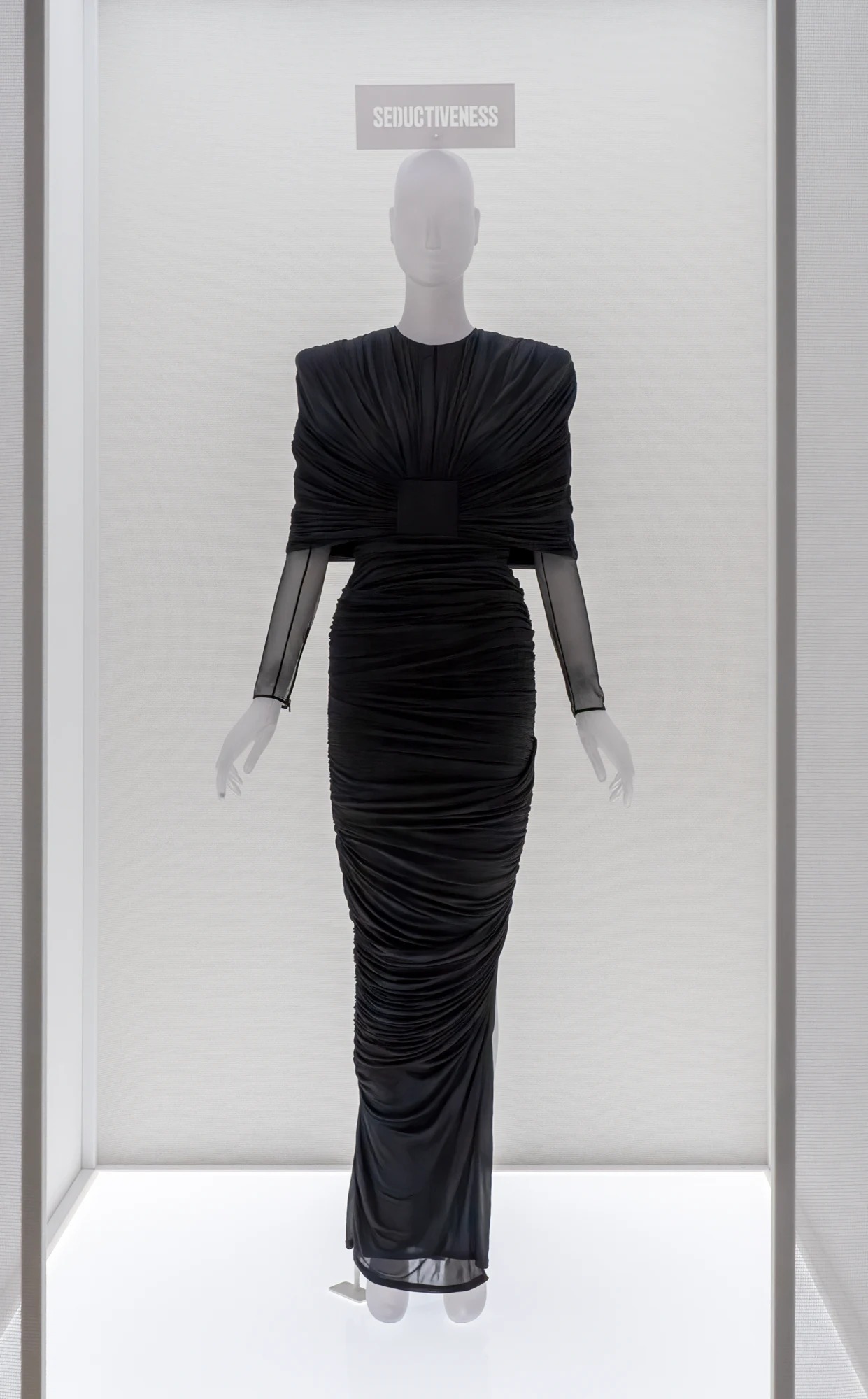
Tom Ford history: Clothing, Scent and Presentation
Tom Ford history follows a designer’s name into clothing, eyewear and beauty. Established in 2005, the brand must be distinguished from its founder’s earlier work for other houses. His Gucci career provides context, but garments made there do not become products of this label. Menswear, Black Orchid and the spring–summer 2011 womenswear presentation offer three different areas of enquiry: a body’s outline, scent and the circulation of clothing through images. The practice of tailoring constructs jackets and trousers through cutting and sewing. Comparing that material work with other product categories reveals connections beyond a shared name on the label.
A name in 2005, menswear in 2007
CFDA records the April 2007 opening on New York’s Madison Avenue alongside the debut of menswear and accessories. Separating that moment from the 2005 foundation makes Tom Ford history a sequence of developments. The name and partnerships preceded the meeting of clothing, store and customer. Retail space also affects perception through light, materials and display distance. A suit’s photographic appearance and its movement on a wearer provide different information. For a house with a strong image, examining both object and presentation is useful. The surrounding world supports a product’s reception, but does not replace its physical construction.
How a suit constructs an outline
Menswear makes Tom Ford history a question of how clothes emphasise a body. The results of tailoring can be read in the line from shoulder to waist and the point where a jacket ends. Lapel width, chest volume and trouser length alter the balance even within dark suits. The lapel is the folded front section connecting face and torso visually. Describing a sharp outline does not establish a wearer’s personality. Instead, one can observe light and shadow, or which areas hold their shape as the body moves. Attraction becomes a consequence of visible decisions rather than an automatic psychological quality assigned to customers.
Comparing a buttoned frontal view with a moving side view reveals how closely the jacket follows the body. Allowance and folding become visible through movement in ways a static pose cannot fully communicate.
Black Orchid as scent and object
Black Orchid introduces another sensory field into Tom Ford history. Its official description mentions black truffle, ylang-ylang and citrus notes. These terms communicate an olfactory construction; they are not interchangeable with a complete ingredient list or a guarantee of identical perception. The dark bottle and metallic detail visually anticipate something that a screen cannot transmit. A fragrance differs from fabric worn on the body, yet naming, packaging and advertising locate it within a house. Because fragrance cannot be shown directly, its container and language carry particular weight. Their role is to establish an expectation, not objectively determine every person’s experience.
Womenswear through a private presentation
The spring–summer 2011 womenswear collection was recorded through a private New York presentation and a subsequently released film. This makes controlled visibility part of Tom Ford history. Vogue India’s contemporary account describes models and well-known participants appearing together. Viewers could read the garments alongside the existing presence of their wearers. Season and actual presentation date should also remain distinct. Runway order and film editing create different experiences: an isolated garment provides one kind of evidence, while people, music and changing viewpoints provide another. How an outfit becomes visible is therefore a substantial part of this example, not merely publicity surrounding it.


Ownership and creative responsibility
In 2023 Estée Lauder Companies acquired the brand and its intellectual property. Tom Ford history consequently requires a distinction between ownership and creative responsibility. Official announcements describe long-term fashion and eyewear licences with Zegna Group and Marcolin. A licence permits specified rights to be used through a contractual relationship; one brand name does not imply that one company operates every category identically. Haider Ackermann’s appointment as creative director was announced in 2024. It should not be confused with continuing personal authorship by the founder. Commercial structure and creative judgement are separate layers in the continuing house.
Separating the object from its staging
Tom Ford history connects a suit, a bottle and a womenswear film through the organisation of perception. The suit forms surfaces around the body; the container anticipates a sensory experience; the film determines sequence and distance. They perform different tasks, combining a physical function with staging. A powerful advertisement alone cannot explain the whole. Looking first at shoulder, lapel and closure, then at lighting and pose, separates an object from its presentation. The same exercise can be applied to packaging before reading its sensory language. That distinction provides a practical way to understand the house beyond the familiarity of its name.
Timeline
- 2005 — Brand established
- 2007 — New York store and menswear debut
- 2011 — Spring–summer womenswear season
- 2023 — Estée Lauder Companies acquisition
- 2024 — Haider Ackermann appointed
Questions and answers
When did the brand begin?
It began in 2005; menswear and the New York store followed in 2007.
Are the founder’s Gucci clothes part of this label?
No. Authorship does not erase the distinction between the houses that produced the garments.
When did ownership change?
Estée Lauder Companies completed its acquisition in 2023.