Giorgio Armani history: Rethinking the jacket
Giorgio Armani began in Milan in 1975, developing relaxed ready-to-wear tailoring and later a distinct couture practice.
ÉPOPLI ·
- Brand
- Giorgio Armani
- Origins
- Milan, Italy
- Focus
- Ready-to-wear and couture
Making a jacket less rigid
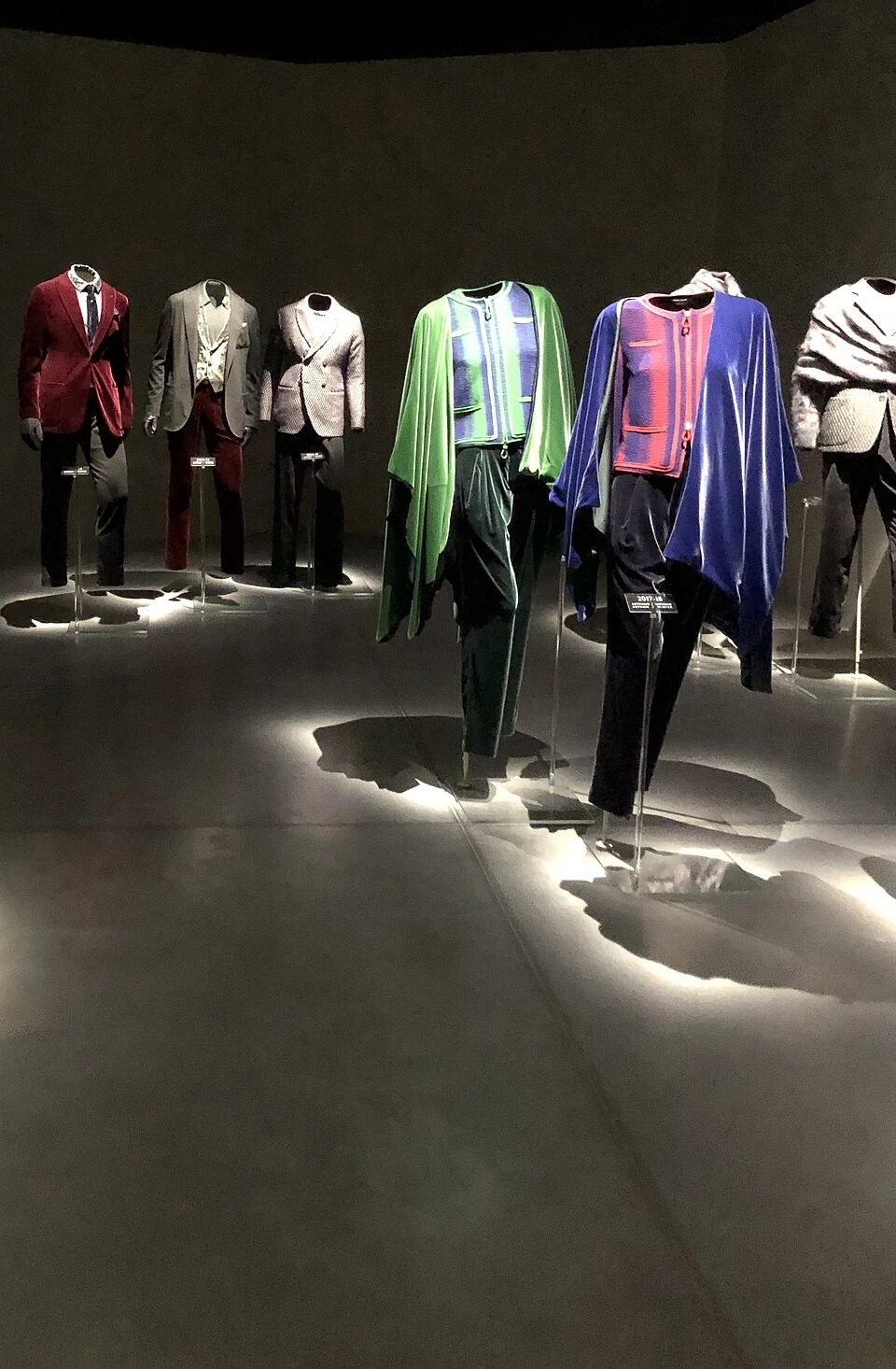
A soft jacket describes more than pleasant cloth. It involves how internal support at shoulder and chest meets movement. Giorgio Armani history begins usefully with design as adjustment of existing structure rather than added decoration. The V&A connects the founder’s tailoring with bringing a jacket closer to its wearer, allowing posture to register instead of imposing one rigid shape. This does not mean an absence of construction. Lapel direction, sleeve attachment and overlapping fronts still depend on decisions. A relaxed appearance should not be confused with careless making. Read subtle support and balance: the garment retains the language of formal dress while changing its bodily presence.
Designer and business partner
Sergio Galeotti’s business role belongs beside the designer at the 1975 starting point of Giorgio Armani history. Earlier experience in a department store and with Nino Cerruti preceded the independent label. Museum and encyclopaedia accounts place accumulated knowledge and organization beside personal vision. Milan’s production environment also mattered. Ready-to-wear reaches customers through standardized sizes and manufacturing systems, unlike individually ordered couture. One designer working across both does not make their processes identical. When person and company share a name, that distinction is especially necessary. Naming partners and manufacturing structures explains how a new appearance could reach an audience beyond a single exceptional garment.
The suit on film
Richard Gere’s clothing in American Gigolo in 1980 connected Giorgio Armani history with a wider public image. A soft jacket appears through gesture and narrative rather than as an isolated product photograph. Selecting and wearing clothes helps describe the character’s life; muted colour and eased lines organize that impression. Film is not identical to advertising, yet it affects how garments are remembered. Meaning depends partly on where and on whom something appears. An actor’s image cannot substitute for evidence about fit or fabric. Read screen and object together while preserving their difference, examining how movement gives the clothing its particular presence.
Proportions in 1994 menswear
The official spring/summer 1994 menswear archive makes Giorgio Armani history readable through an actual look. Compare descending shoulder lines with trouser volume; a jacket’s meaning depends on the ensemble around it. The museum’s suit from the same season reinforces menswear’s central place. Ready-to-wear is not synonymous with undemanding design. Reproducing a coherent form across sizes requires coordination of cutting and manufacture. Intended ease differs from simple misfit: shoulder, sleeve and trouser lengths establish relationships. Looking at those relationships gives the vague idea of comfort a concrete vocabulary of line and space, rather than treating looseness as an explanation in itself.
Couture expands the surface
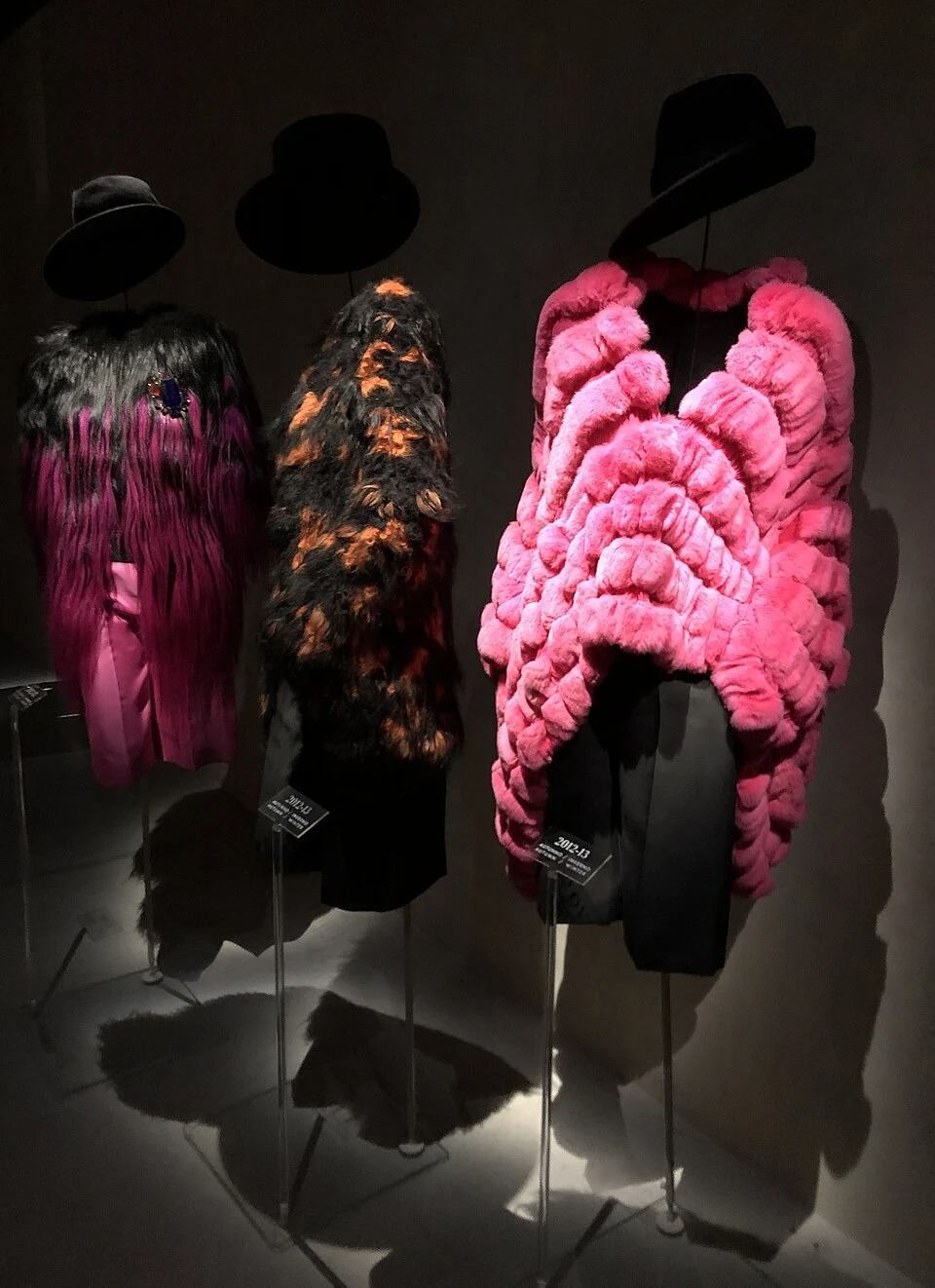
Armani Privé, first presented in Paris in 2005, forms a connected but distinct couture practice within Giorgio Armani history. It complicates a house defined solely by restrained jackets. A museum ensemble from autumn/winter 2012 pairs a long black skirt with an embellished top. Dark colours do not eliminate differences in texture or reflected light. Broad moving planes and small glints operate at different viewing distances. Workshops must reconcile decorated surfaces with bodily proportions, weight and flexibility. The official exhibition presents couture as another experimental space; surviving garments make that claim concrete through identifiable materials and construction rather than promotional language alone.

The record after the founder
Following the founder’s death in 2025, Giorgio Armani history continues through the brand and its archive. Current work should not automatically be attributed to him personally. The digital archive organizes looks by period and theme, while the 2025 exhibition reconsidered twenty years of Armani Privé. Distinguish the group’s different labels as well: Giorgio Armani, Emporio Armani and other lines are related but not interchangeable assortments or production categories. Identify line and season when recording an object. As a business expands, these are not trivial details but basic information needed to understand what is actually being examined and who was responsible for it.
Restraint and ornament in one wardrobe
These examples of Giorgio Armani history show that easing a jacket’s structure and enriching an evening surface need not contradict one another. Both adjust relationships between body and material. Film makes a suit visible through movement; museum examination reveals texture nearby. Neither image should erase the other. Observe shoulder direction, falling cloth and reflected light, then return to the proportions of the complete look. Limited decoration does not make every garment identical, and embellishment need not imply a break with earlier work. Cut and surface can change at different rates. Their coordination offers a concrete way to examine the meeting of ease and precision.
Timeline
- 1975 — Independent label launches
- 1980 — Clothing in American Gigolo
- 1994 — Spring/summer menswear archive
- 2005 — Privé begins in Paris
- 2025 — Founder’s death; twenty-year Privé exhibition
Questions and answers
When was the label founded?
Giorgio Armani launched the independent label in 1975 with Sergio Galeotti.
When did Privé begin?
It was first presented as a couture collection in Paris in 2005.
Are all Armani lines the same?
No. Assortments and production contexts differ; identify the exact label and season.