Alaïa history: Structures Around the Body
Alaïa’s story concerns a Paris house that treated clothes as structures around the body rather than flat decoration.
ÉPOPLI ·
- Brand
- Alaïa
- Origins
- Developed in Paris by a Tunisian-born founder
- Focus
- Luxury fashion
Alaïa history: Structures Around the Body
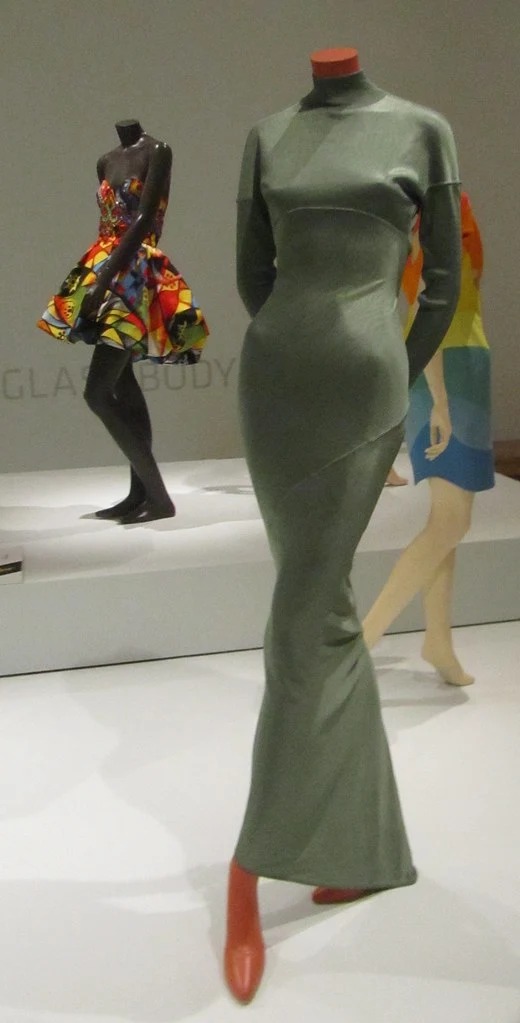
Alaïa history concerns a Paris house that treated clothes as structures around the body rather than flat decoration. Azzedine Alaïa’s commissioned work preceded the formal label, making it important to distinguish a workroom, a ready-to-wear debut and a growing business. Close fit does not simply mean a smaller garment. Leather pieces, knitted dresses and the Tati collection offer three ways to study the relation between body, material and surface. The question is how lines and density create form, not which body should be declared ideal. Museum and foundation records allow such analysis to remain attached to actual objects.
From workroom to label
Alaïa history has an important marker in 1982. The foundation records an official presentation of the first ready-to-wear collection at Bergdorf Goodman in New York that September. This widened the audience without making earlier commissioned work disappear. The company’s establishment was not the beginning of every creative activity. An exhibition covering the formative decades used drawings, photographs and garments to reconsider the years before international recognition. Supporters, clients and colleagues helped build that recognition. Personal involvement in making clothes should not be confused with carrying out every commercial and manufacturing task alone.
Making leather follow a body
Alaïa history gives early leather work a central role. The foundation’s account identifies pieces developed for Charles Jourdan as an important step. Cut panels can direct a substantial material around shoulders and waist; hardware does not remove the importance of the cutting beneath it. Leather need not be interpreted automatically as toughness, nor cloth as delicacy. Thickness, treatment and seams affect how either bends. Looking at side and back views reveals how flat pieces become a volume. This offers a more precise comparison than assigning a fixed personality or gender to a material.
Knitting and fastening as lines
Alaïa history is also visible in knitted dresses, where the textile structure helps determine the silhouette. Foundation exhibition material includes fastened examples from autumn–winter 1986–87. A zipper functions as both an opening and a visible line. Stretch alone does not explain the resulting form: density, widening and weight all matter. The zipper can direct attention vertically or around a curve, alongside the softer-looking fabric. Photographs of different views offer useful evidence when the object cannot be examined in person. They cannot, however, establish every internal seam or guarantee a particular wearer’s experience of comfort.
A discount-store pattern enters fashion
Alaïa history crossed another boundary with the spring–summer 1991 Tati collection. Foundation documentation describes the discount retailer’s familiar pink-and-white check entering the collection, alongside a separate bag, T-shirt and espadrille offer sold through the retailer. Tati therefore provided a social reference as well as a pattern. This does not mean every runway garment was inexpensive. The separate products and their commercial conditions must be distinguished. On a body, checks bend and change direction, making a familiar flat surface newly legible. The exchange can be studied through both material construction and the movement of a recognisable everyday sign.
The grid also offers a visual measure: its lines change direction around the waist and hips, allowing pattern to reveal construction as well as decorate it.
Making and interpreting clothes
Alaïa history requires collaborators as well as its founder’s hands. The Design Museum emphasised his direct engagement with making and his own working rhythm. Fittings reveal problems through movement; models and clients therefore participate in the conditions of creation without automatically becoming co-designers. Knit technicians, manufacturers and photographers contribute in different ways. Making a dress, installing an exhibition and photographing it remain separate acts. Sculpture is a useful analogy for form, but cannot remove clothing’s conditions of wear. A fixed display and a moving body reveal different aspects of the same construction.
Founder and continuing house
Alaïa history after the founder’s death in 2017 must distinguish preservation from continuing brand design. A foundation exhibiting his garments and a house producing new collections have different responsibilities. Later work should not be described as his direct intention. Today, asking how a shape is produced is more informative than asking only whether it fits closely. Early leather panels, engineered textile structures and relocated checks provide different answers. Current products still need individual material and production evidence. The reputation of a historical object cannot automatically prove the construction or quality of a new one bearing the same name.
Timeline
- 1982 — First official ready-to-wear presentation in New York
- 1991 — Tati check collection
- 2017 — Founder dies
- 2018 — Design Museum exhibition
Questions and answers
When was ready-to-wear officially presented?
The foundation records a September1982 presentation at Bergdorf Goodman in New York.
What was the Tati collection?
A spring–summer1991 collection using the retailer’s check, alongside separate collaborative retail products.
Does the foundation create every new collection?
Preserving and exhibiting the founder’s work differs from the continuing house’s new design activity.