Son Jung Wan: Glamour between Runway and Wardrobe
Wearable glamour built from contrasting surfaces and textures.
ÉPOPLI ·
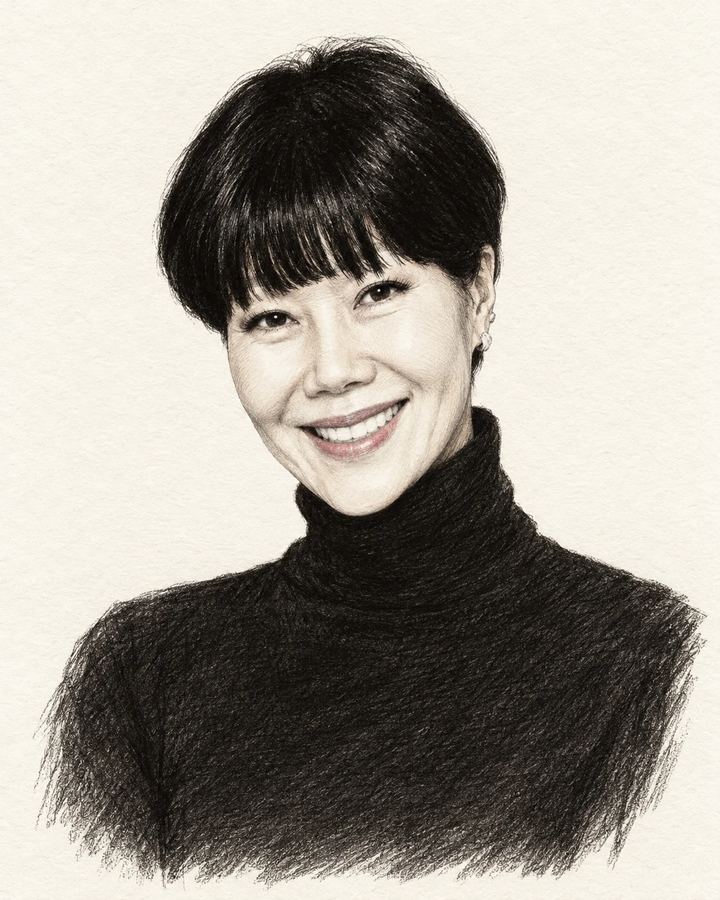
Two settings for clothing
Son Jung Wan history connects Korean department-store womenswear with a New York runway. Her 2011 New York debut combined gold and silver effects with fur, silk and knitwear, drawing on images of the 1970s. Rather than treating glamour only as added decoration, the work asks how different textures balance within a garment. Reflective surfaces beside soft knits change the perception of a colour while leaving room for movement. New York collections enlarged this question beyond an established domestic clientele. Details viewed at close range in a shop and a silhouette seen at the end of a runway operate at different distances.
Art, training and an early shop
Son Jung Wan history begins with art and practical training. Born in Seoul in 1958, she studied industrial craft at Sookmyung Women’s University and then clothing at the Kukje institute. A 1997 interview records her starting at womenswear company Ppyong Ppyong in 1984 and opening an Apgujeong shop in 1986; her university’s alumni interview also gives 1986. Later interviews identify 1989 as the establishment of the brand, a distinction between the early shop and the organised business. Her experimental clothes initially struggled with the first employer’s clientele. Independence gave her space to test that taste, while sales continued to connect material and form to the lives of wearers.
A family organisation
Son Jung Wan history also depends on an organisation. Her sisters Son Soon-hye and Son Eun-hee joined the business, sharing management and design responsibilities; incorporation followed in 1994. In 1997 she joined SFAA and launched the casual ZD 99.99 line. A Paris Who’s Next presentation in 2006 preceded New York collections from 2011, requiring an established Korean designer to introduce herself to another audience. The home-shopping collaboration SJ.WANI began in 2012, followed by the menswear line WANINI in 2021. These were different channels and wearing situations rather than identical copies of runway garments: materials, production quantities and distribution shaped how the design direction became products.
Simple outlines, complex surfaces
Spring–summer 2015 makes material contrasts especially visible in Son Jung Wan history. Rough-edged hemp was combined with delicate silk and metallic thread. Sequins of different shapes and sizes built a densely worked surface on relatively simple forms, including sleeveless hoodies and shift dresses. This sequin embroidery could therefore carry complexity while the outline remained legible. The collection’s yin-and-yang reference is most tangible in the differences of texture and reflection. These material contrasts make each neighbouring surface more apparent. Seen from a distance, small components form a field of light; up close, they separate again. Distinguishing a straightforward shape from its elaborate surface helps locate the source of the glamour.
Translating the past
Autumn–winter 2015 and spring–summer 2020 use historical imagery differently within Son Jung Wan history. In a preview interview for the former, she cited 1950s MGM films and Gordon Parks’s fashion photography, describing merino wool, handmade knits, brown, olive, orange and violet, metallics and leather. Mood was translated through materials and colour rather than a printed film still. Coverage of spring–summer 2020 instead emphasised layered dresses, lustrous fabrics and embroidery. Overlapping layers created depth and movement. This sequin embroidery likewise reads differently when encountered between layers rather than across a flat surface. Comparing the seasons makes retro glamour a changing approach, with the weight of winter materials distinct from summer layering.
Beyond the runway
Son Jung Wan history extends beyond complete runway outfits. Kelly Rutherford wore one of her jackets with a different label’s top and jeans in 2011 and continued attending the shows. A single garment could function within another wardrobe. Go With the Flow in autumn–winter 2025 was followed by Blazing Opulence for autumn–winter 2026. The official film framed the latter through restraint and abundance; independent runway photography recorded vivid colour and curved silhouettes. These changing proportions are more useful to examine than one fashionable slogan. The management led by Son Soon-hye, the designer’s work and photographers’ records remain separate contributions to a business bearing an individual name.
Spring–summer 2027
The latest verified presentation in Son Jung Wan history is spring–summer 2027, Ever Becoming, shown in September 2026. Aqua, milky white, purple and red structured the palette, with silk, sheer material, lace, fringe and patent leather. Fringe makes movement visible through hanging strands, while glossy leather reflects light differently from open lace. These material decisions give substance to the brand’s stated continuity between past and present. Rutherford attended with her children. As of the October 2026 check, this presentation and the official retail channel establish continuing activity. Readers can compare what surface is placed on what basic form: layered dresses, embellished hoodies and neighbouring finishes offer different ways to make glamour wearable.
Timeline
- 1958 — Born in Seoul
- 1986 — Opened an Apgujeong shop
- 1989 — Brand establishment in later accounts
- 1994 — Company incorporated
- 1997 — Joined SFAA
- 2006 — Presented at Who’s Next in Paris
- 2011 — New York Fashion Week debut
- 2026 — Presented spring–summer 2027 Ever Becoming
Sources
- Korea JoongAng Daily: New York debut interview, 2011
- Sookmyung Women’s University: alumni interview
- Hankyung: Son Jung Wan interview, 1997
- Maeil Business: interview and biography, 2025
- Stitches: spring 2015 construction review (PDF)
- Style Wylde: designer’s autumn 2015 preview
- Guild Magazine: spring 2020 backstage and show
- Son Jung Wan: official autumn 2026 film
- VRAI: autumn 2026 runway photography
- Dong-A Ilbo: spring 2027 presentation
- Son Jung Wan: official retail and company information
- Glass: interview on 1989 brand launch