Norman Norell: Everyday Movement, Evening Light
Everyday Movement, Evening Light
ÉPOPLI ·
Light with room to move
Norman Norell history can begin with a gown combining brilliance and movement. The University of North Texas holds a 1967 pink sequined dress on silk jersey. Knitted jersey can stretch with the body. Long dolman sleeves narrow toward zipped cuffs; ordered rows mark the waist, while internal ribbons and snaps manage bra straps. These details address dressing and wearing beneath the glitter. The name “mermaid” need not imply a flared fishtail skirt: here light transforms a long, narrow outline.
From Indiana to costume and fashion
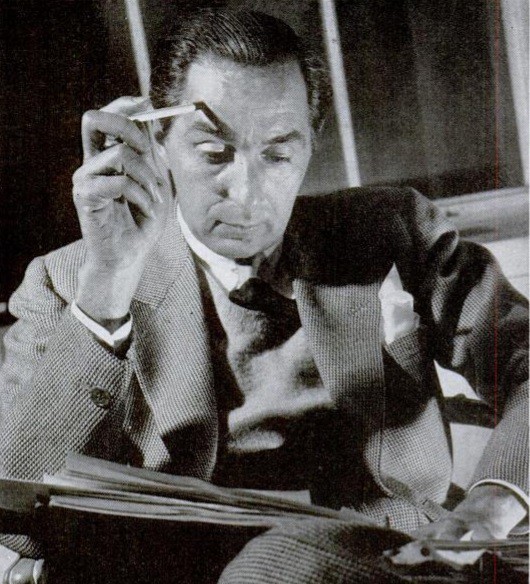
Born Norman David Levinson in Noblesville, Indiana, in 1900, he developed an interest in theater and costume drawing before studying in New York at Parsons and Pratt. Norman Norell history includes early work connected with Brooks Costume Company and Paramount, followed by Hattie Carnegie. Carnegie’s business taught him about making and selling expensive clothes within an American market shaped by Paris fashion. Working without a prominently displayed personal label also clarifies the significance of later establishing his own named business.
A designer and a manufacturer
The early-1940s Traina-Norell partnership marks a commercial turn in Norman Norell history. Manufacturer Anthony Traina helped connect demanding craftsmanship to retail distribution. His ready-to-wear did not necessarily mean inexpensive mass clothing. In 1960 Norell bought out his investors. FIT describes wool shaped with heat and steam and supported by light interfacing; specialist Ben King made the belts. Their width and position changed proportion, making this apparently small accessory a significant contribution to the silhouette.

Evening clothes inside a coat
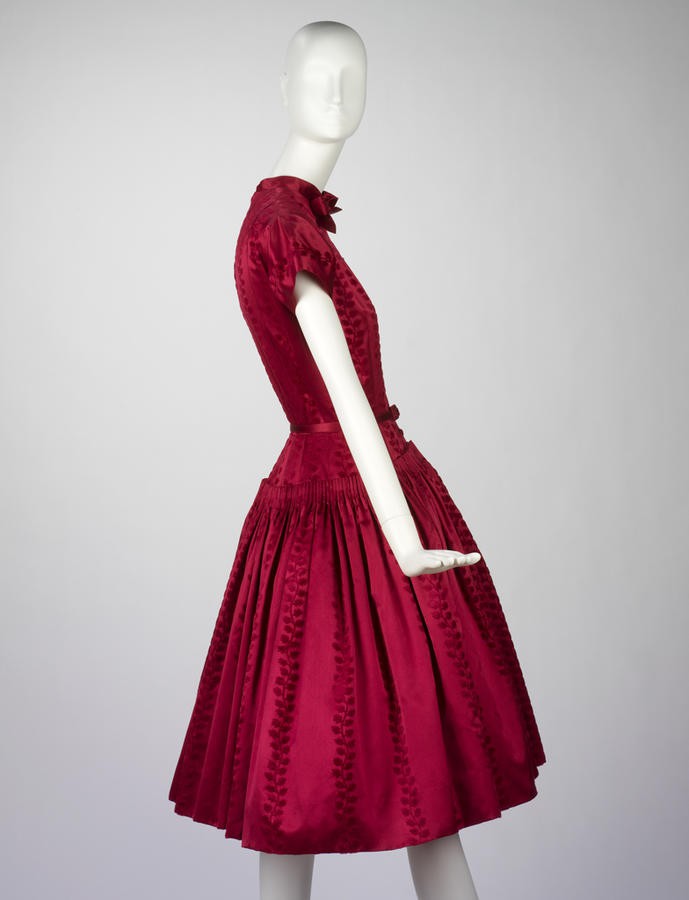
The Subway ensemble links urban movement and evening formality in Norman Norell history. Lauren Bacall’s late-1950s example pairs a restrained cashmere exterior with sequins inside and a matching dress. Removing the coat changes the visible surface. Its title suggests discretion while traveling, but does not establish that Bacall actually wore it on a subway. A red wool-crepe evening gown from 1962 likewise gives an everyday material formal impact through length, color and shape rather than extensive ornament.
Between trousers and skirts
The culottes introduced in 1960 are another proposition within Norman Norell history. Their divided legs offer movement while their breadth can retain a skirt-like appearance. A pale pink beaded version from 1961 carries this idea into evening dress. In 1965 he revisited dropped waists and tubular silhouettes associated with the 1920s, supported by period-inflected hair and makeup. These references are better understood as deliberate reworking than as wholly unprecedented invention. His culottes and historical revival addressed different possibilities for contemporary dressing.
Models, clients and students
Norman Norell history also includes those who presented and preserved the clothes. William Helburn’s 1959 photograph of Dovima in a striped sequined sheath joins the model’s proportions with reflected light. Bacall’s donations turned worn garments into research material. His long relationship with Parsons included criticism of student work and participation in the school. These activities extended standards of construction beyond his own label. They do not imply a simple opposition between practical American clothing and decorative French design.
Separating the founder from his successor
After his death in 1972, Norman Norell history must distinguish the designer’s work from later clothes carrying the company name. LACMA attributes a 1972–76 blouse to Gustave Tassell for Norman Norell Ltd. FIT’s 2018 retrospective and The New School’s photographs, sketches and scrapbooks offer other routes into his legacy. Looking at closures, belts and linings alongside glitter reveals how he placed demanding craftsmanship within ready-to-wear. Refinement across successive versions was as important as dramatic novelty.
Timeline
- 1900 — Born in Noblesville, Indiana.
- 1928 — Began working for Hattie Carnegie.
- 1940s — Traina-Norell partnership.
- 1960 — Took control of his company and presented culottes.
- 1967 — Created the pink sequined dress.
- 1972 — Died; later house designs are attributed separately to Tassell.
- 2018 — FIT retrospective.
Sources
- UNT Texas Fashion Collection: Mermaid dress,1967
- Mount Mary University: Norman Norell
- FIT: Norell exhibition press release (PDF)
- FIT: Compartment Couture, Hattie Carnegie
- FIT: Norell exhibition, construction and signatures
- FIT: Luxury, Subway ensemble
- FIT: Lauren Bacall, The Look
- FIT: Norell, Dean of American Fashion
- FIT: Norell, Flappers Back in Fashion
- The New School: Famous Faces of Parsons Fashion
- FIT: Lauren Bacall object labels (PDF)
- LACMA: Gustave Tassell for Norman Norell blouse
- The New School: Norman Norell collection