Chris Seydou: Cloth Recut for a New Wardrobe
Cloth Recut for a New Wardrobe
ÉPOPLI ·
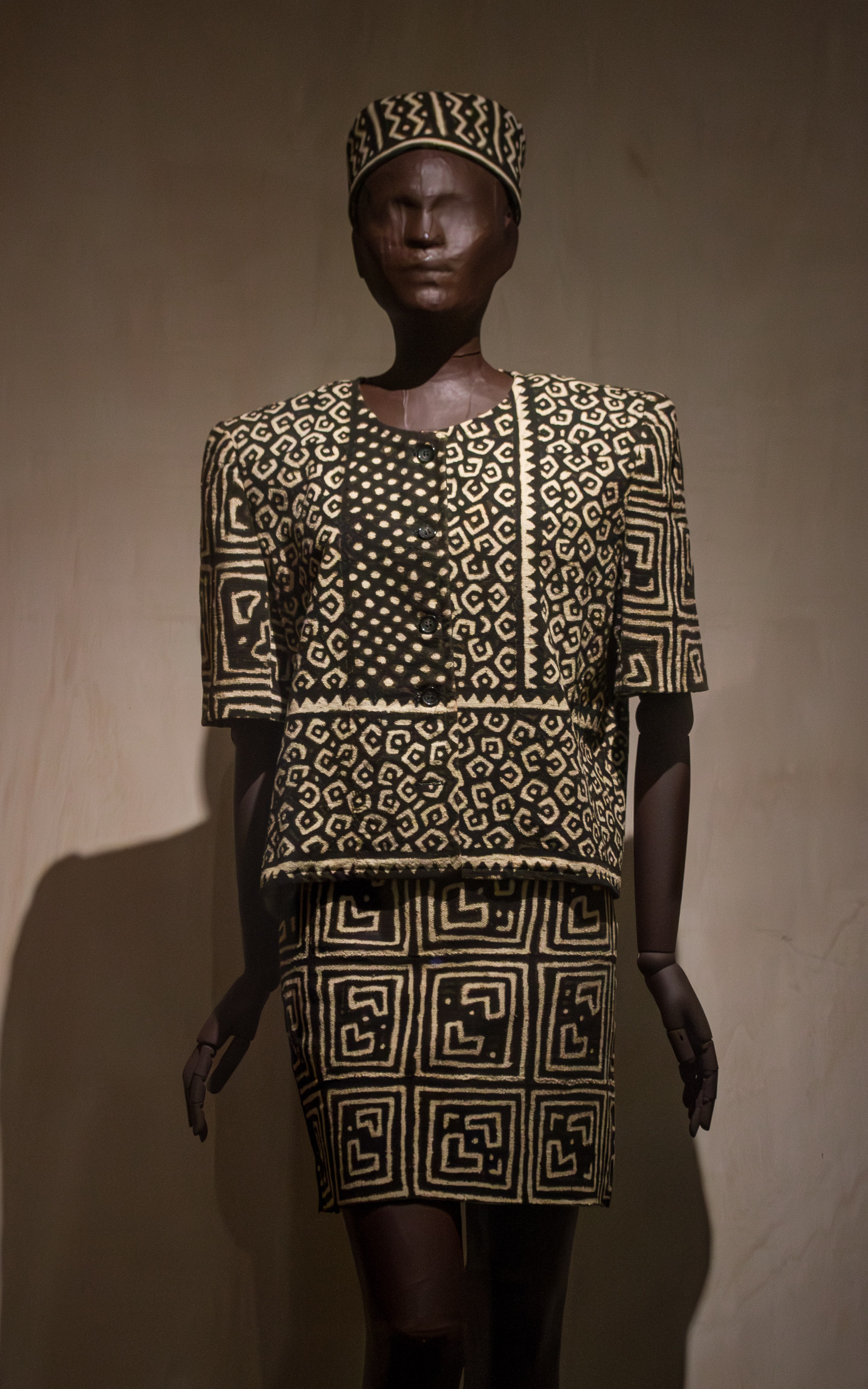
Finding a pattern that can be cut
Where can scissors enter a patterned cloth? Chris Seydou history includes commissioning modified bogolan whose motifs could work across garment pieces. A sleeve, a jacket front and a skirt impose relationships different from those of an intact cloth.
Intervening before cutting changes the problem: production of the surface already anticipates the garment. The result involves selection and transformation rather than preservation without alteration.
A career across cities
Born Seydou Nourou Doumbia in Kati in 1949, he encountered cloth through his embroiderer mother and trained with a tailor as a teenager. Chris Seydou history then moves through Ouagadougou, Abidjan and Paris in the 1970s.
Clients in different cities could encounter the same garment differently: a familiar silhouette in an unfamiliar cloth, or a regional material in an internationally circulating form. The career is better understood through those encounters than through a notion of cultural purity.
Contrasting surfaces in the late 1970s
Chris Seydou history is not confined to mud-dyed cotton. The NGV checklist records a late 1970s Paris dress in synthetic taffeta and velvet. Their different surfaces provide a useful comparison: crispness and directional pile do not behave identically under light.
This surviving work makes the range of his materials visible. Working with regional cloth was one choice within a broader practice, not a requirement that every garment express the same identity.
Silk and luminous thread in 1983
A 1983 evening dress in silk and lurex adds another surface to Chris Seydou history. Metallic-looking thread participates in the fabric’s effect rather than functioning only as a separate ornament. Movement changes how that light is registered.
The V&A selected this garment for Africa Fashion. Beside the earlier dress and a later cotton suit, it shows why a designer’s regional identity should not become a restriction on materials or methods.
A suit and hat in 1991
A 1991 Bamako skirt suit and hat brings bogolan into a coordinated ensemble within Chris Seydou history. The exhibition checklist records resist-dyed cotton. Pattern now occupies separate components whose proportions work together.
The process of cutting organizes the relationship between cloth and body. The combination can make a familiar urban clothing format carry a different surface without erasing the skills involved in producing that surface.
Production at another scale
Returning to Mali in 1990, he worked with a textile manufacturer on printed cloth inspired by local patterns. Chris Seydou history thus includes industrial production as well as handworked material. Similar appearance does not imply an identical process.
Professional networks, including his connection with Paco Rabanne, helped designs circulate. He died in 1994. Exhibitions and later influence extend the record, while the authorship of lifetime works remains distinct from subsequent activity.
A regional material in the present tense
Chris Seydou history treats regional cloth as available to the present rather than fixed in the past. Suits, short skirts and eveningwear pose different requirements. Respect for an existing material and the desire to change it can remain in tension.
Comparing the three surviving garments reveals different questions of light, movement and construction. A textile already carries histories of making and use. The adjustments required to bring it into another wardrobe are the substance of this practice.
Timeline
- 1949 — Born in Kati,Mali
- 1970s — Worked in Paris
- 1983 — Silk and lurex evening dress
- 1990 — Returned to Mali
- 1994 — Died
Sources
- Victoria L.Rovine — Chris Seydou, Encyclopedia of Clothing and Fashion
- British Council — Chris Seydou biography (PDF)
- NGV — Africa Fashion checklist (PDF)
- V&A — Africa Fashion exhibition release (PDF)
- Smithsonian — Mali textiles and Seydou