
Basic structures after Rome
Byzantine dress demonstrates that clothing did not become entirely different overnight after Rome. The tunic covering the body and the outer cloak remained important. The same basic structure could nevertheless acquire new textiles, decoration and social meanings. This article considers Byzantine examples alongside related early medieval evidence. Check each object's date and place of manufacture rather than merge a vast region and a long period into one uniform costume.
Covering the body and defining the waist
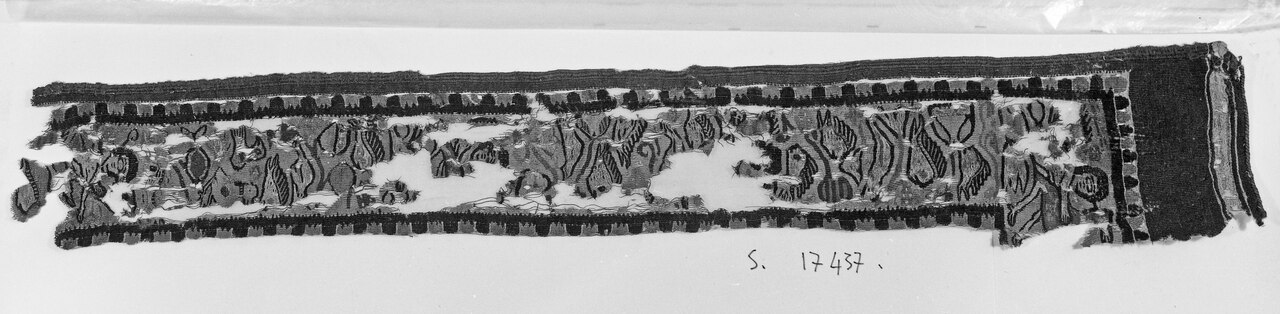
The British Museum's Silk Roads exhibition describes a belted tunic as one element of Byzantine clothing. In Byzantine dress, the belt's position helps us read proportions and fabric allowance. Even an apparently simple long garment has sleeves, side lines and a hem worth examining. Where only a textile fragment survives, first establish how securely its original shape is known. Distinguish the reconstructed whole from the surviving portion to judge the certainty of the interpretation.
Fastenings and outlines
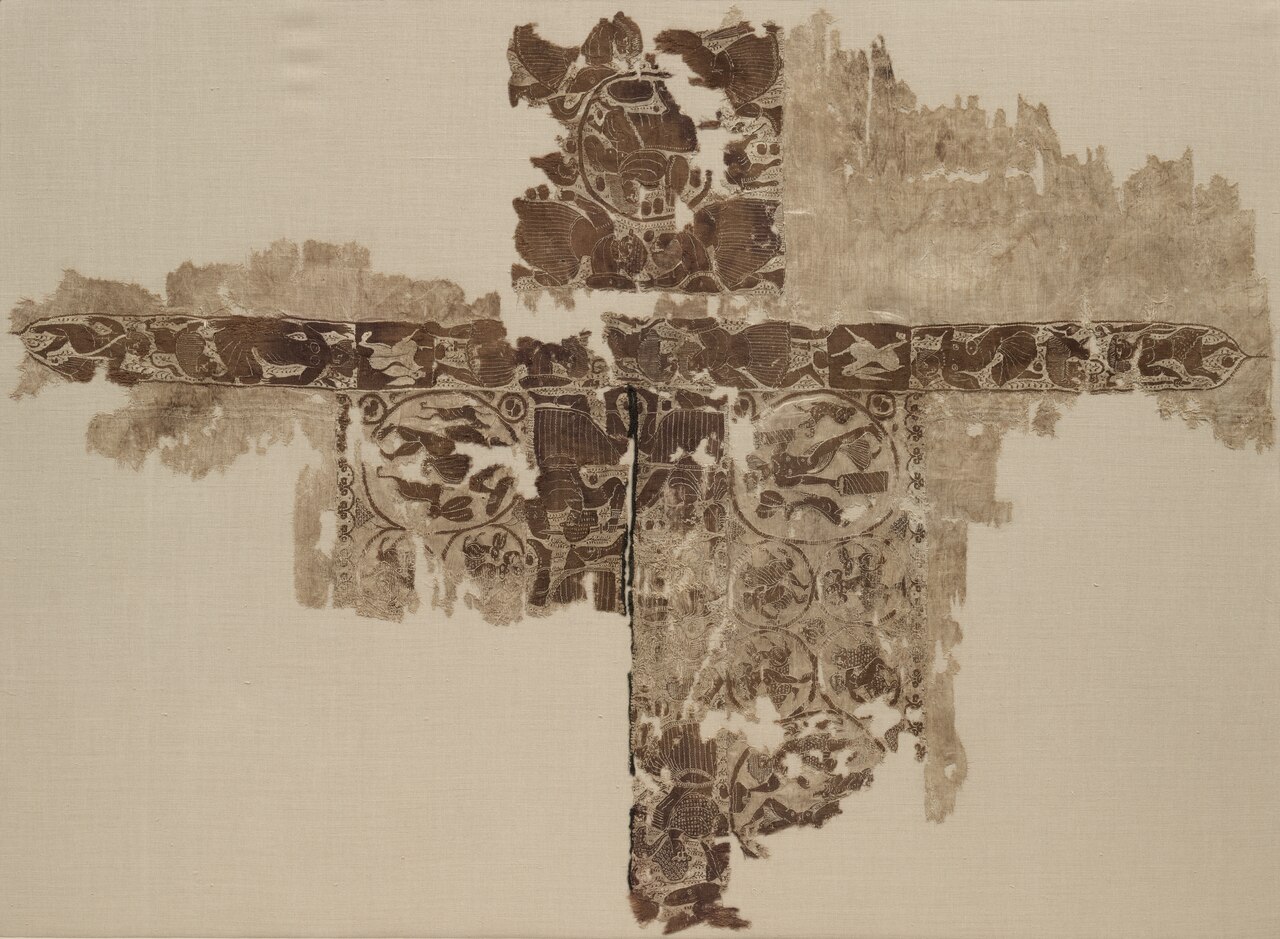
A brooch fastening a cloak brings function and ornament together in Byzantine dress. Its position near the shoulder can affect the fall of cloth and the arm's movement. Separating the inner tunic from the outer fabric reveals the layered construction. A metal fitting alone cannot establish the complete appearance of a garment, however. If a museum describes an attachment as a possibility, retain that uncertainty. Small components can prompt questions about a whole outfit without proving its missing parts.

Court clothing and social position
Court mosaics and portraits provide evidence of connections between color, ornament and status in Byzantine dress. A ruler in an elaborate cloak does not represent everyone in that society. Expensive textiles and intricate decoration also invite questions about the resources needed to make and circulate them. Establish the figure's role and the scene's purpose first. In official imagery, clothing can communicate authority. Appreciating a richly worked surface and reconstructing daily clothing are different activities and should be approached accordingly.
Textile trade as a context
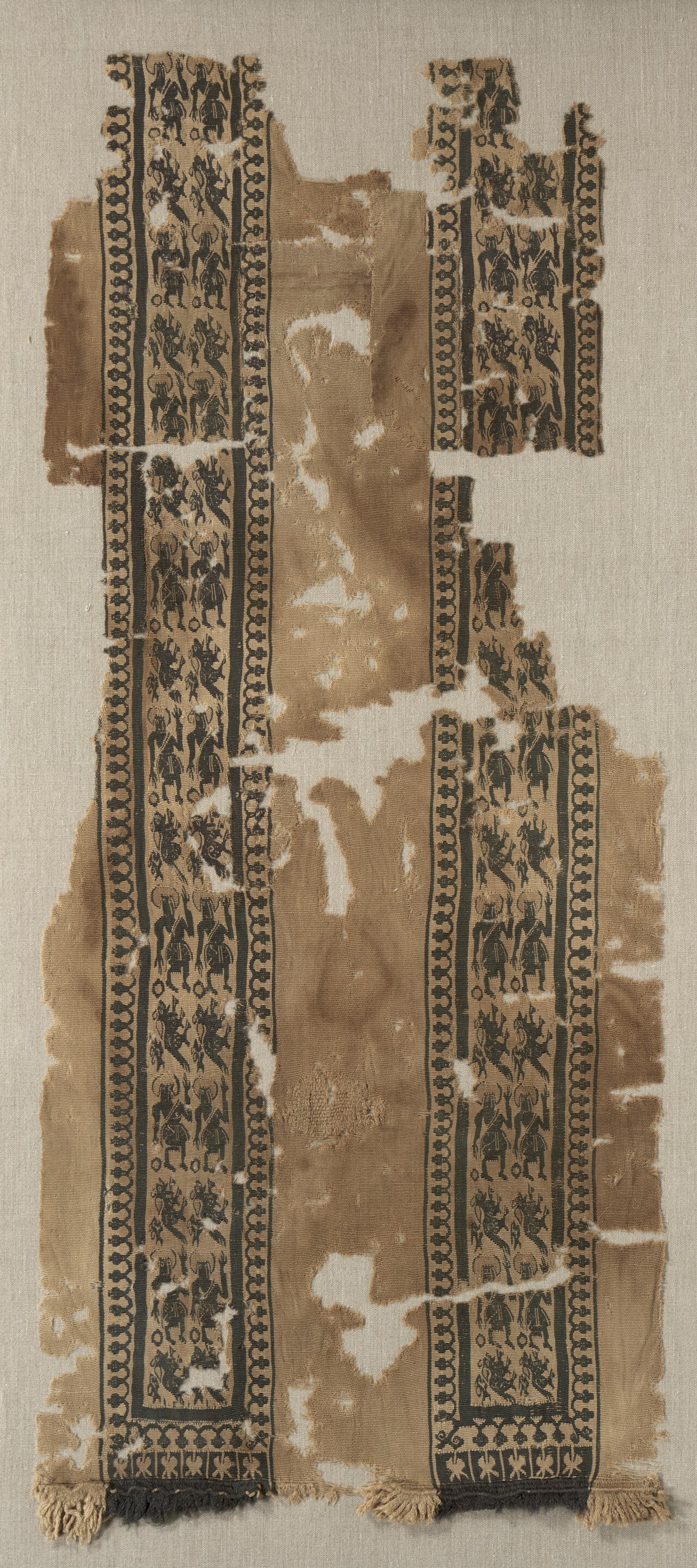
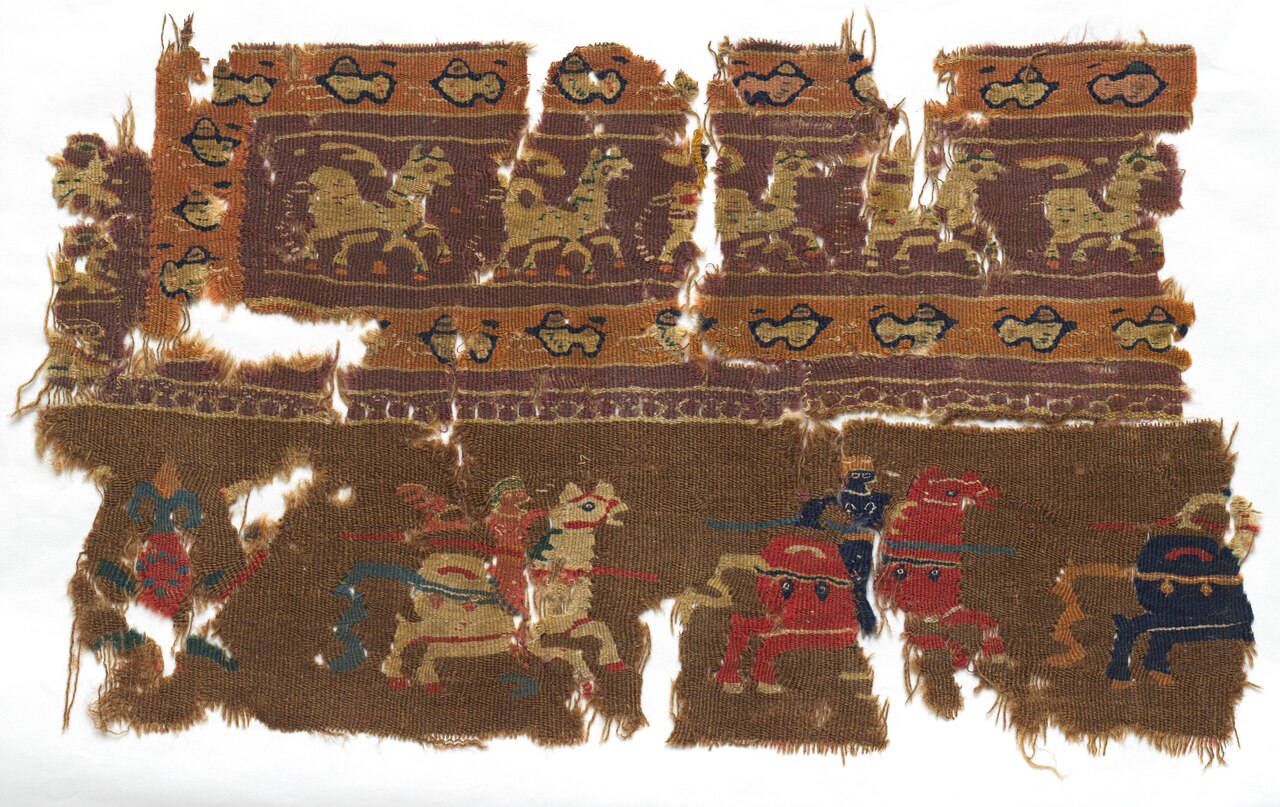
Once familiar with the tunic, ask where its fabric was made and how it traveled. Byzantine dress gains depth when viewed within wider east–west exchange. Do not assume that a finished garment and its textile were produced in the same place. Read material descriptions separately from findspot information. The movement of cloth, the movement of people and stylistic resemblance can be connected, but they are not interchangeable evidence. A single motif cannot by itself establish a trade route or direct influence.
Comparing western European evidence
The shoulder clasps from Sutton Hoo encourage questions about early medieval western European clothing. They should not be treated as identical to examples of Byzantine dress. How a fitting attached to a cloak or another garment may be more or less certain for each object. Compare the materials, shapes and archaeological contexts first. Shared elaborate metalwork does not prove a shared clothing system. Distinguishing evidence from inference helps explain regional differences more effectively than visual similarity alone.
A basis for later medieval comparisons
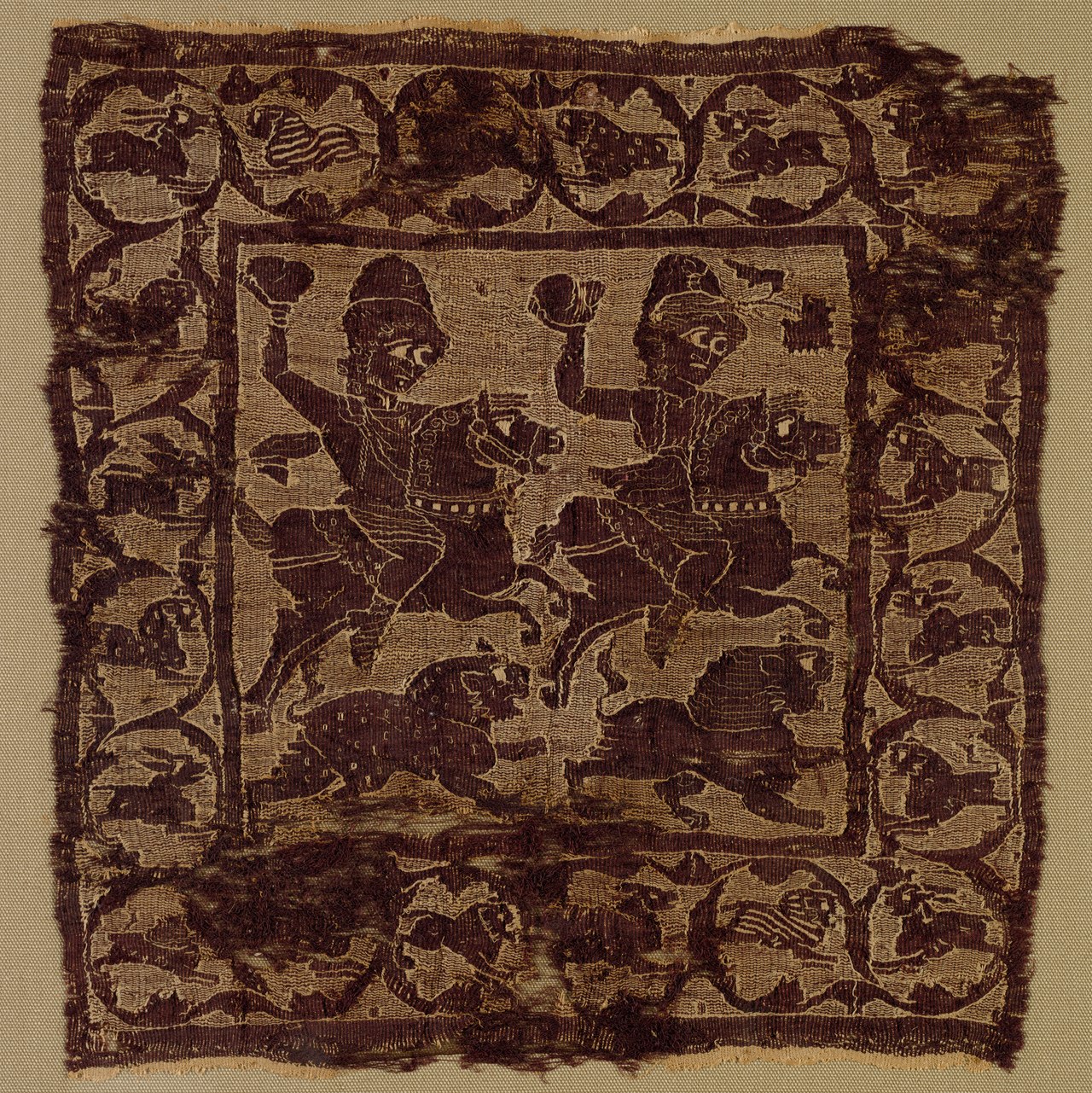
The layered tunic and cloak of Byzantine dress provide a starting point for later comparisons. Consider fit, length, textile surface and fastenings separately. Similar long garments can produce different silhouettes and movement through changes in cutting and ease. The Middle Ages should not be treated as one unchanging period. If only a decorated fragment is displayed, ask where it originally belonged: sleeve and torso ornaments can use the same motif in different arrangements. A textile laid flat for exhibition also differs from its worn appearance. Establish whether the current display represents the original garment before drawing conclusions.